














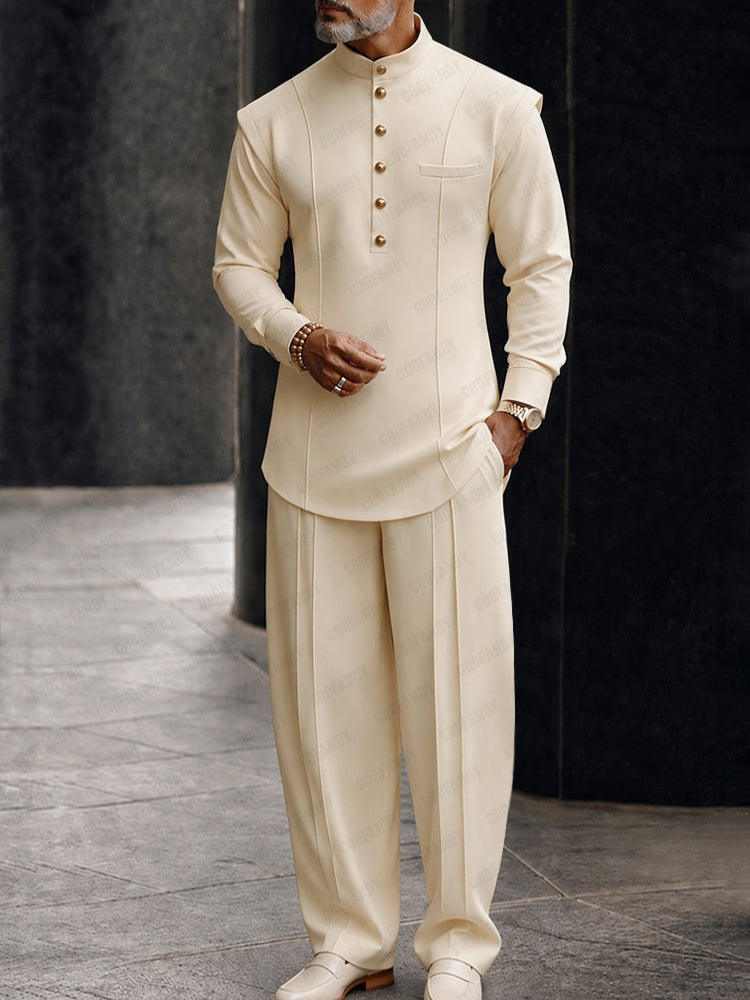


Fall Clothing Deals for Men: Offers and Checkout Basics
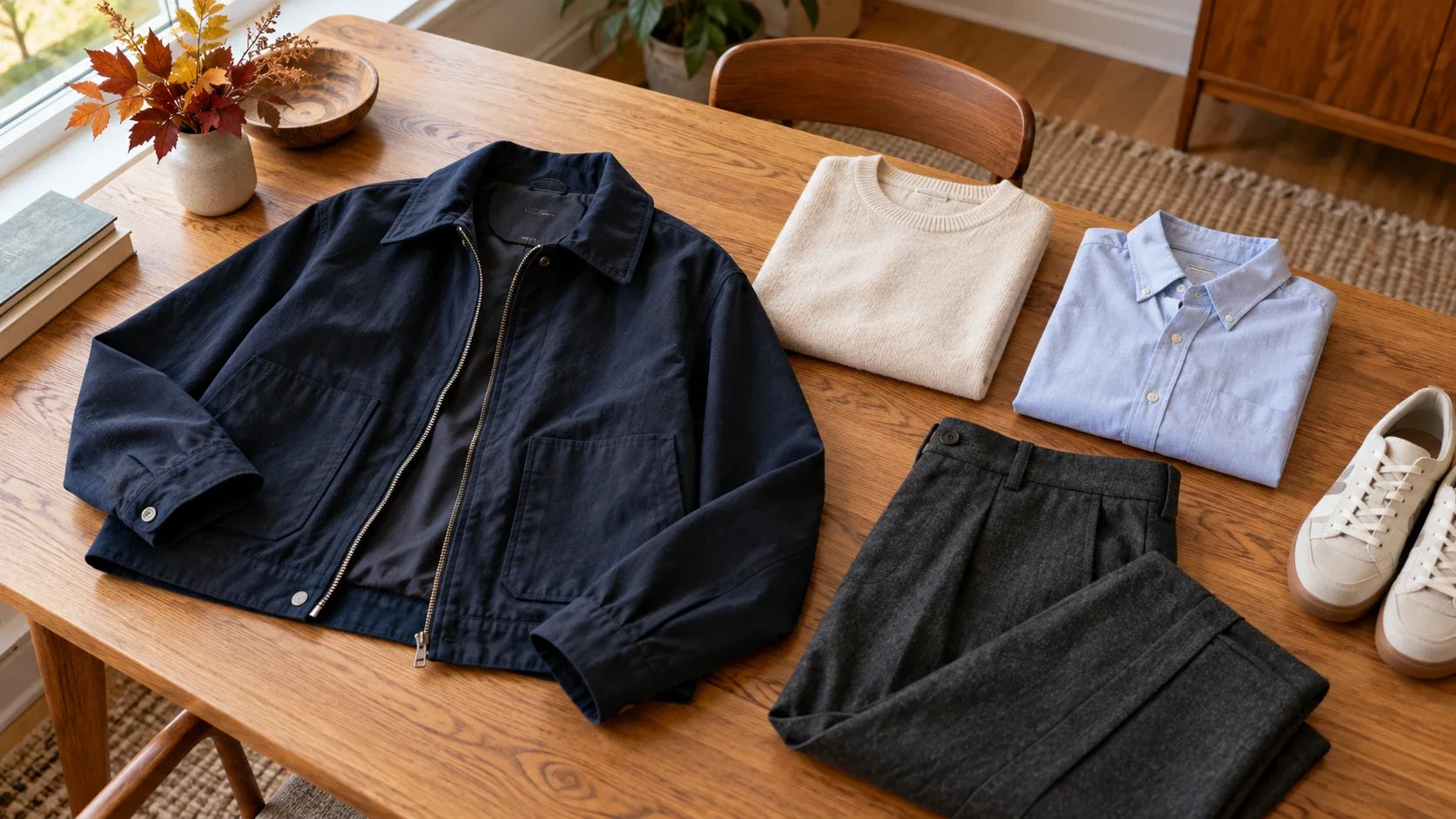
Fall clothing offers can reduce the price of a single sweater, reward a larger order, or discount one piece in a group. Those are different savings calculations, even when the banners look similar. Start with the clothes you need, open the relevant shopping collection, and compare the offer that actually applies to your selected items at checkout.
For COOFANDY, the Fall Prime Day Sale collection is the fall campaign destination. The Men's Party Outfits collection is a separate place to browse for party and Halloween plans. Check each offer's current terms rather than assuming one collection's promotion follows you into another.
The calculations below illustrate common offer formats. They are not a list of currently available COOFANDY discounts or a promise that a particular code will work. Their purpose is to make the cart easier to understand before you pay.
Start at the Right Fall Shopping Destination
A fall shopping trip and a Halloween shopping trip may involve the same garment, but they do not necessarily involve the same promotion. You might want a shirt for office layering in October, a knit for weekend dinners, or an orange-toned piece for a party. Browse the destination that matches the occasion, then check the product and offer details together.
On the fall collection, narrow the selection to the category you need before comparing discount labels. If you already have shirts that work under your jackets, browsing more shirts because they appear first can distract from the missing layer. A collection is a useful starting point; it is not proof that every color, size, or garment receives the same discount.

For a Halloween outfit, distinguish a party-ready garment from an item specifically included in a Halloween offer. Color alone does not establish eligibility. Nor does appearing in a party collection tell you whether an item belongs to a multi-buy promotion. Read the qualifying-product language attached to the offer.
When you open a garment from either destination, keep its product page and the promotion terms available. The first answers what you are buying; the second answers which reduction, if any, applies. Treating those as separate questions prevents a collection name from becoming an assumption about your checkout price.
Understand the Three Main Offer Formats
Percentage discounts, order-threshold reductions, and multi-buy offers reward different shopping patterns. A percentage can help with one eligible piece. A threshold depends on your qualifying order amount. A multi-buy offer depends on both item count and the rules for the discounted item.
| Offer format | What changes the saving | What to check |
|---|---|---|
| Percentage off selected items | Eligible item price multiplied by the discount rate | Exact product, variant, exclusions, and whether a code is required |
| Fixed amount off above a threshold | Qualifying cart subtotal and the stated threshold | Which items count and whether the threshold is tested before or after other reductions |
| Buy two, get a third partly discounted | Eligible quantity, prices, and which item receives the reduction | Mix-and-match rules, price ordering, and treatment of returns |
For a percentage example, suppose an eligible garment costs $60 and an offer reduces it by 15%. The reduction is $9, so the item becomes $51 before any applicable tax or shipping. That result says nothing about other pieces in the cart. A nonqualifying $40 shirt would still be $40 unless a separate offer applies.
A threshold offer works differently. If the terms say "$10 off orders over $129," do not assume a cart of exactly $129 qualifies: "over" and "at least" are different wording. You also need to know which subtotal the store uses. A displayed merchandise total may not be the qualifying total after exclusions or another reduction.
For a multi-buy example, three eligible $40 items under a "buy two, get the third 50% off" offer cost $100 instead of $120, before tax and shipping. The $20 saving is about 16.7% of the three-item total, not 50% off the whole order.
Unequal prices make the rule more important. If the eligible pieces cost $60, $40, and $30, and the terms discount the lowest-priced piece by 50%, the reduction would be $15. If the terms identify the discounted item differently, the result changes. Do not choose a larger discount in your own calculation without checking how the offer assigns it.
Keep Website Offers and Message Codes Separate
An offer on the website and a code received through email, text, a social post, or an affiliate link may have different conditions. The same percentage does not make them interchangeable. One might apply only to a selected group of garments, while another requires a particular link or excludes items already reduced.
Open the message or post that supplied the code and look for the destination, expiration, and eligibility details. Then compare that destination with the cart where you intend to use it. A code for a named retailer cannot be assumed to work at another checkout, even when both sell the same brand.
If you have two possible offers, calculate each separately first. For example, a hypothetical $100 qualifying order would become $85 with 15% off, or $90 with a $10 reduction. That comparison is useful only if both offers cover the same items and charges. If one excludes a garment, comparing the headline amounts alone is misleading.
Do not assume you can apply both. If the terms explicitly allowed 15% off followed by a $10 reduction on that same $100 amount, the result would be $75. Applying the $10 first and then 15% would produce $76.50. These are illustrative calculations, not stacking instructions: eligibility, order of operations, and the checkout's rules determine whether either calculation is relevant.
When the cart accepts just one offer, compare the valid alternatives rather than repeatedly adding codes. When the terms are incomplete or the result differs from your calculation, resolve that question before paying. A larger promised percentage is not useful if it applies to a different set of clothes.
Read the Product Page Before the Promotion
The garment still needs to work for its intended outfit. A sale page cannot answer whether a jacket has enough room over your usual knit or whether its proportions suit the trousers you already wear.
For example, the Casual Suit Jackets (US Only) page gives you a specific jacket to inspect. Start with the selected color and size, compare the available measurements with a jacket you own, and consider the layer you intend to wear beneath it. This link is a product-detail example, not a statement that the jacket qualifies for a particular fall promotion.
For any fall layer, check chest room, sleeve length, and overall length rather than relying on the size letter alone. A jacket that works over a thin shirt may feel different over a thicker sweater. If the measurement information does not resolve that difference, do not let the offer deadline make the decision for you.

Read the care instructions as well. Ask whether the garment fits your normal laundry routine and whether any added care expense changes your planned spending. Where page information is unclear, confirm the requirements rather than assigning a wash method based on a fabric name.
Finally, check the exact variant in your cart. The product image you liked, the size you selected, and the variant included in the offer need to be the same purchase. That small check matters more than a broad "sale" label.
Compare the Cart You Need, Not the Biggest Headline
A threshold offer can encourage a larger cart, but adding an unnecessary item does not automatically reduce your spending. Suppose your qualifying clothes total $120, and an illustrative offer gives $10 off above $129. Adding a $20 item would bring the merchandise total to $140 and reduce it to $130. You would spend $10 more than on the original cart, before any difference in shipping or tax.
That extra item can still make sense if you already need it. The useful question is whether it replaces a planned purchase, not whether it unlocks a banner. If it duplicates a garment you already use comfortably, the threshold has changed the size of your order rather than solved a wardrobe problem.
Multi-buy offers deserve the same treatment. Consider two needed $40 garments versus three $40 garments with the third half off. The first cart is $80; the second is $100. The third piece adds $20 to your spending. It is a discounted addition, not a way to pay less for the two pieces you originally wanted.
Compare complete carts with the same necessary items whenever possible. If you change quantities, colors, or categories between comparisons, note that you are comparing different purchases. Keep delivery charges and taxes visible too; a merchandise saving is only one part of the amount charged.
Finish With the Terms That Affect Your Order
Before checking out, confirm the selected garments, qualifying subtotal, applied offer, and final amount. If a code is necessary, make sure the reduction appears in the cart rather than assuming it will be added after payment. Keep the offer terms available until the order is settled.
For a dated dinner, trip, or Halloween event, check delivery information separately from the sale. A collection title is not an arrival guarantee. Allow for processing as well as transit, and use the information applicable to your selected items and address. The official shipping information is the place to check those details.
Review the refund policy, including item condition, return costs, and any exclusions relevant to the order. If you are using a multi-buy offer, check how returning one item affects the discount. Do not assume the original saving survives a partial return unchanged.
The simplest fall offer comparison starts with a defined shopping list and ends with an understood checkout total. Use the fall and party collections to find relevant clothes, the product pages to inspect them, and the actual offer terms to calculate the reduction. Each source answers a different part of the purchase.
Frequently Asked Questions
Can I stack a fall sale discount with an email or text coupon?
Only if the terms for your exact checkout explicitly allow it. Website offers and message codes can have different eligible products, exclusions and expiration dates, even when they advertise the same percentage. Compare each valid offer separately, then confirm which reductions actually appear in the cart before paying. Do not assume a code works across the official store and another retailer or that two advertised percentages can simply be added together.
Is it worth adding another item to reach a discount or free-shipping threshold?
Compare the complete total for the clothes you need with the complete total after adding the extra item. A threshold reduction can still leave you spending more overall. An addition makes more sense when it replaces a purchase you already planned, not merely when it unlocks a promotion. Check which subtotal qualifies, whether exclusions apply, and any shipping or tax difference. An offer threshold is not a reason to buy a garment you cannot use.
What should I check before buying clothes in a multi-buy sale?
Confirm the eligible products and variants, required item count, which item receives the reduction, and any mix-and-match restrictions. Then compare that cart with buying only the pieces you need. A partly discounted third item still adds to your spending. Before paying, read how a partial return affects the original discount and check the final cart total. The promotion's headline alone cannot establish your saving or refund amount.
Related Reading
- Men's Fall Capsule Wardrobe: 10 Pieces, 30 Outfits
- How Many Fall Jackets Does a Man Need?
- Turtleneck Under a Blazer: The Complete Formula
About COOFANDY
Founded in 2015, COOFANDY is a menswear brand created for modern men navigating work, weekends, celebrations, and everyday life. Its collection includes shirts, suits, pants, sweaters, and tees designed to help men build versatile, confident looks for different moments and personal styles. Guided by the belief that clothing can reflect confidence and character, COOFANDY focuses on making approachable menswear part of every stage of life.

Leave a comment