










How Should a Casual Blazer Fit Through the Shoulders
A casual blazer should give you a shoulder outline that suits its intended design and feels comfortable during the movements you plan to make. Start with your arms relaxed, then reach forward, sit and let the jacket settle again. Do not choose a size from the shoulder seam alone: a soft shoulder, a deliberately extended shoulder and a persistent fit problem are different things. The useful question is whether the actual jacket works on you, at rest and in ordinary wear.
Start With the Shoulder Line at Rest
Try the blazer over the shirt or other underlayer you intend to wear. Keep that layer the same while comparing jackets. Empty bulky pockets, straighten an obviously twisted sleeve and let the jacket rest without repeatedly pulling it into a better position.
Stand as you normally would. Avoid drawing your shoulders back for the mirror, shrugging or holding your arms away from your sides. You are choosing a jacket for your everyday posture, not for a pose you will have to maintain.
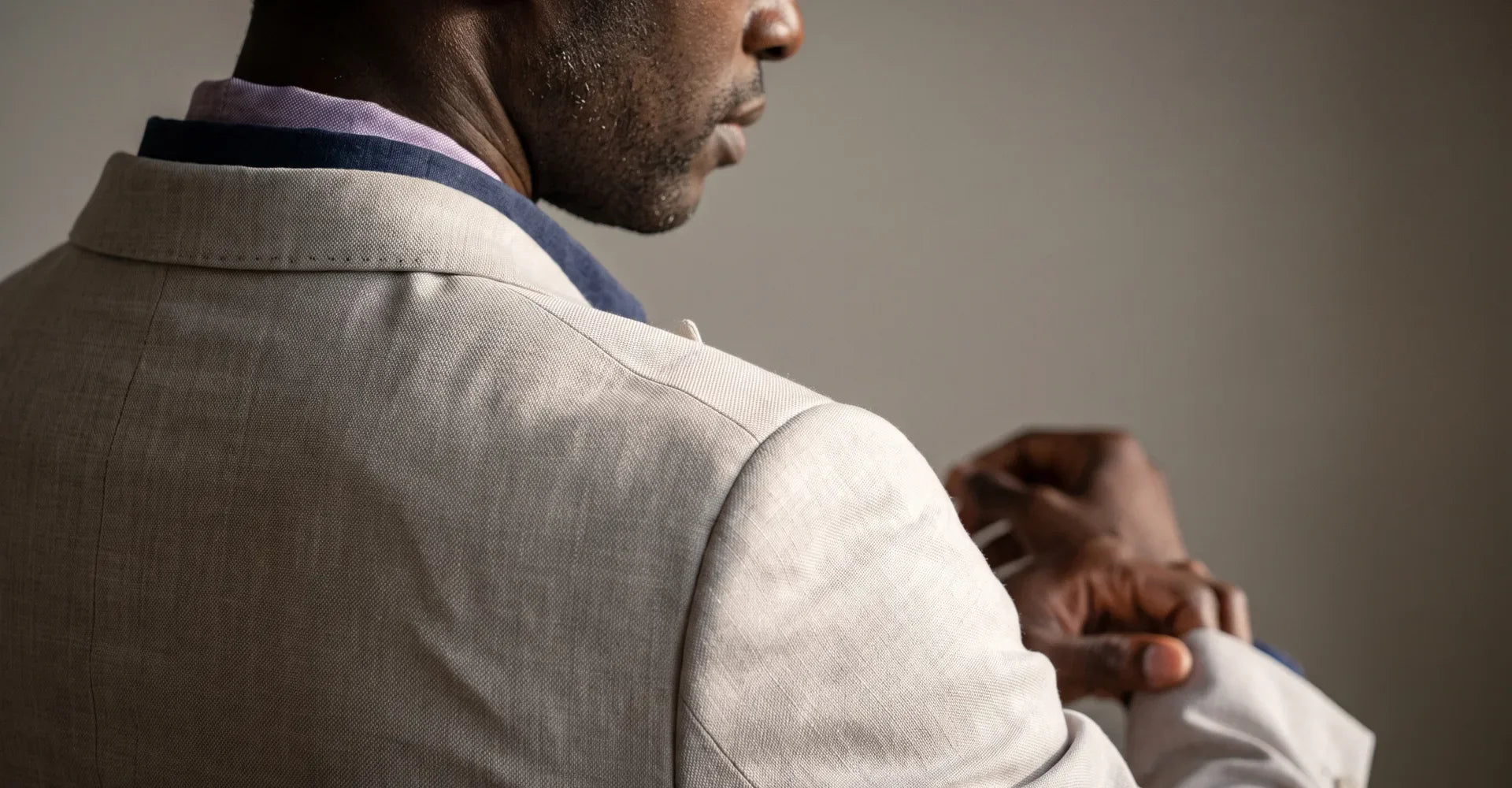
Look at both shoulders from the front, then check the back. Ask someone to take a straight-on photograph if you cannot see the back clearly. Notice the outline across the top, where the sleeve begins and whether a fold remains beneath that junction. Compare the two sides without trying to make your posture artificially symmetrical.

At this stage, describe what you see rather than naming a cause: "a hollow below the left shoulder," "fabric bunched behind the arm," or "pressure when standing normally." Those observations give you something specific to compare in another size or discuss at a fitting. "The shoulders look wrong" is harder to act on.
Separate Shape From a Fit Problem
A natural shoulder uses light or no padding and a softer sleeve head, following the wearer's shoulder line rather than building a squared line above it. An extended shoulder deliberately places the seam beyond the natural shoulder point to create a broader silhouette. Neither description tells you whether a particular jacket fits you.
Read the intended design before applying a seam-at-the-bone rule to every blazer. If you want a close, natural outline, use that goal when comparing the jacket with your own shoulders. If the design is deliberately extended, the extra width is part of the look to assess, not automatically evidence that you bought the wrong size.
Still investigate a dent, bunching or pulling that bothers you. Look at the same area after the sleeve is straight and your arms have returned to rest. Does it remain? Is there pressure as well as a visible fold? Do you dislike the outline even when the jacket is comfortable?
Do not assign one cause from one photograph. Record the location and compare another jacket. Likewise, a soft-looking shoulder is not proof of unfinished work, and a crisp-looking shoulder is not proof of comfort. Judge the intended shape and your actual experience separately.
Move, Then Let the Jacket Settle
Use movements from the day you are dressing for. Reach forward as you would toward a desk, bend your elbows and sit down. You do not need to make an exaggerated overhead reach to judge an office or dinner outfit. If a movement hurts or feels sharply restricted, stop; do not force it to make the jacket pass.

Notice where you feel the restriction. Is it across the upper back, near the upper arm or along the top of one shoulder? Check whether the underlayer has twisted or gathered in that spot. Correct an obvious fold once, then repeat the same ordinary movement.
Let your arms fall naturally afterward. Look again without immediately smoothing the blazer. A fold that appears while reaching is a different observation from one that remains when you return to rest. Record whether the jacket settles on its own or whether you keep having to reposition it.
Also check it while seated in the way you expect to wear it. If you prefer the blazer open when sitting, test it that way rather than judging a fastening arrangement you will not use. Keep the comparison consistent across the jackets you try.
Compare a Different Size and a Different Cut
If the shoulder check raises a concern, change one thing at a time. Try another size in the same design while keeping your underlayer and posture constant. Repeat the rest, reach and seated checks; do not decide from the size label or a single improved view.
Inspect the rest of the blazer after that change. Does the chest sit the way you want? Are the sleeves now too long for your preference? Do you like the body length and the outline from the back? A size that solves one complaint is not automatically your choice if the rest of the jacket no longer works.
Then, if possible, try a different cut closer to the outline you want. Use a practical comparison note rather than "bigger is better":
- Original size: Where is the pressure, and what remains visible at rest?
- Another size, same design: What improved, and what became less suitable?
- Another cut: Does it give you the shoulder outline and ordinary movement you want without sacrificing the chest, sleeves or length?
If all three disappoint, keep looking or ask for fitting advice. You do not have to settle on the least uncomfortable option just because its shoulder seam looks closer to your preferred position.
Know When to Ask a Tailor
Ask a tailor to inspect the actual blazer when a persistent problem is difficult to locate, or when the jacket matters enough to consider alterations. Show the area at rest and during the movement that troubles you. A useful question is, "Can you improve this pulling without changing the shoulder shape I want?"

Shoulder work can involve the armhole and resetting the sleeve, depending on the construction and proposed change. Widening a narrow shoulder also depends on available seam allowance. Do not assume either a quick repair or an impossible one from the outside view alone.
Before buying a jacket that depends on alterations, ask what change is feasible, what result the tailor expects and what the work would cost. Compare that with choosing a different jacket. For a blazer you already own, weigh its condition and how often you expect to wear it alongside the proposed result.
Do not authorize cutting or other irreversible work while the plan is still vague. Agree on the intended outline and movement first. A professional assessment is a way to understand the options, not a promise that every shoulder issue can be corrected.
Inspect Before You Buy
Online, compare front, side and back views where available. Look for the intended shoulder outline rather than trying to judge a model's personal fit as your own. Check whether the listing describes natural, structured or extended shoulders, and ask about the design if the images and wording leave you uncertain.
Read the measurement instructions as well as the numbers. Establish whether the chart gives body or finished-garment measurements and how shoulder width is taken before comparing it with a blazer you own. A photograph cannot tell you where you will feel pressure, so leave room in your decision for an actual try-on and review the seller's applicable return terms.
COOFANDY Signature is COOFANDY's premium menswear collection, with a design focus on fabric, fit, and finishing details. For shoulder fit, bring those questions to the actual garment: read its fabric information, assess its outline and movement, and inspect the shoulder and sleeve junction. Collection positioning does not guarantee an individual fit or an easy alteration.
Read the COOFANDY Signature overview and visit the COOFANDY Signature collection. Choose the blazer whose intended shape you like and whose fit works in your ordinary movements, not the one that passes a single seam rule in a photograph.
FAQ
Where should a casual blazer shoulder seam sit?
Consider the intended shoulder design. For a close, natural outline, compare the seam with your own shoulder point; an extended shoulder deliberately reaches beyond it. Check the whole outline, comfort and return to rest rather than using the seam as the only sizing test.
Should I size up if a blazer pulls at the shoulders?
Not automatically. Keep the underlayer constant, compare another size and repeat the same movements. Check the chest, sleeves and length afterward. If the larger size solves one issue but creates others, try another cut or ask for fitting advice.
Can a tailor fix the shoulders of a blazer?
Sometimes, but feasibility depends on the construction, available fabric and proposed change. Shoulder work may involve the armhole and sleeve setting. Have the actual blazer assessed before buying it on the assumption of an easy fix or authorizing irreversible work.

Leave a comment