










Before You Buy a Blazer Online Seven Fit Checks

Buying a blazer online has two separate jobs. Before you order, you can screen your measurements, read the current size guide and check whether the garment's shape matches the way you plan to wear it. After delivery, you can judge the actual shoulders, closure, sleeves, length and movement on your body. The first stage reduces avoidable size mistakes. The second stage decides whether the blazer is genuinely usable.
The sequence below is a practical seven-check screen, not a promise that a product page can guarantee fit. Start with the clothes you expect to wear under the blazer and the setting where you plan to use it. If a measurement is missing, a size guide conflicts with your measurements, or the garment fails a structural check after delivery, pause before trying to solve the problem with styling.
The Online Fit Question Has Two Stages
An online listing can show a product's identity, visible design and current size-selection information. It cannot show how a particular shoulder line, chest width or sleeve length behaves on your body. Your usual letter size is useful as a starting reference, but it is not a substitute for measuring yourself or reading the current product size guide.
Use a two-stage rule:
| Stage | Evidence you can collect | Decision it supports |
|---|---|---|
| Before ordering | Your measurements, the current size guide, the product's visible shape, intended base layer and return terms | Whether the order has enough information to be a sensible trial |
| After delivery | Shoulder placement, closure, sleeve and body length, seated fit, movement and complete outfit | Whether the actual blazer fits the intended use |
The difference matters because a size selector is an ordering tool, not a fit verdict. A blazer may have the right listed size and still feel wrong through the shoulders or chest. Conversely, a small styling disagreement may be fixed with a different shirt or trouser without changing the blazer size. The checks help you separate those cases.

Seven Blazer Fit Checks
1. Record your measurements before you open the size selector
Measure yourself in the kind of base layer you expect to wear under the blazer. Keep your posture natural and use a tape that lies flat without compressing the body. Record at least your chest, shoulder width, sleeve reference and the body-length reference you use when comparing jackets. If someone can help with the shoulder and back measurements, use that help; a self-measured shoulder line can easily become uneven.
Write the measurements down with the date. Then open the current product page and read its size guide from the page itself. Compare the guide's measurement labels and units with your notes before choosing a size. Do not convert a familiar size from another brand into a COOFANDY size without checking the actual chart. Brands use different grading, and even two garments with the same letter can sit differently.
If the chart does not expose the measurement you need, treat that as missing evidence. You can continue researching, ask the retailer for clarification or choose a garment with clearer information. Guessing is not a fit strategy.
2. Check where the shoulder seam lands
The shoulder is the first structural checkpoint because it establishes the jacket's frame. On the delivered garment, stand naturally and look at where the shoulder seam meets your arm. It should not sit far down the upper arm because the jacket is too large, and it should not pull inward across the shoulder because it is too small or the construction does not suit your shape.
Look at the seam from the front and side. A small difference between left and right can come from posture, so repeat the observation with your arms relaxed. Then raise one arm and lower it again. If the shoulder line collapses, creates a persistent diagonal pull or stops the jacket from sitting where it should, record that as a structural issue before thinking about shoes, trousers or accessories.
For a shoulder-only explanation, see How Should a Casual Blazer Fit Through the Shoulders. That page narrows the shoulder question; the remaining checks here keep the online purchase decision connected to the rest of the garment.
3. Check the chest and the front closure
Button the blazer in the way you would actually wear it. Stand straight, breathe normally and look for strain lines that begin at the button or run toward the side seams. Then sit down and stand up. A front that only looks acceptable while standing still has not passed the check.
The goal is a controlled closure that does not force the front into a stretched X shape or leave a large collapsing gap. Do not judge this by the button alone. The shirt underneath, the lapel, the chest and the side seams all contribute to the result. Try the same base layer you named before ordering; a thin T-shirt and a collared shirt can create different demands.
If the chest is tight but the shoulders are correct, do not assume a larger size will automatically solve the problem. A larger size may change the shoulder and sleeve relationship. If the chest is loose but the shoulders are correct, do not assume a belt or a different trouser will correct the jacket. Note the actual area that fails and compare it with the garment's construction and the available size options.
4. Check the sleeve length and the cuff position
Let your arms rest naturally at your sides, then bend them as you would when using a phone, carrying a bag or reaching for a door. Look at the sleeve end in both positions. The sleeve should make sense with the shirt cuff and the intended styling; it should not ride so far up the forearm that ordinary movement changes the whole proportion, or fall over the hand in a way that hides the base layer.
Check both sleeves because posture and shoulder height can differ. If one sleeve looks longer, repeat the test with the jacket settled evenly across the shoulders. A sleeve problem can come from the size, the shoulder position or the garment itself. Identify which one before seeking a tailor or changing the rest of the outfit.
Online, the useful pre-order step is to compare the sleeve measurement in the current size guide with a blazer you already own that fits well. Lay the reference blazer flat and measure it using the same method as the product's chart where possible. This comparison is more useful than remembering that your last jacket was a medium.
5. Check the jacket length against your proportions and use case
Look at the jacket while standing in the trousers and shoes you expect to wear. Check the balance between the shoulder line, hem, shirt exposure and trouser rise. The question is not whether one universal jacket length is correct. The question is whether the length supports the outfit and the role you assigned to the blazer.
Try the jacket with your arms at your sides and while walking. If the hem lifts or shifts because the chest or seat is pulling, fix the underlying fit question before judging the length. If the jacket hangs smoothly but the proportions feel wrong with your planned trousers, that may be a styling or garment-choice issue rather than a size issue.
This is also where the intended base layer matters. A blazer you plan to wear over a shirt may be judged differently from one you plan to wear over a fine knit. Decide the layer first, then perform the comparison. Do not order a size based on an imaginary outfit and test it later with a thicker layer.
6. Run a movement and seated test
After the standing checks, perform ordinary movements in the complete outfit. Sit in a chair, stand up, reach forward, turn your torso, lift your arms partway and walk several steps. You are looking for repeated strain, restriction or shifting, not for a single wrinkle caused by movement.
Check the shoulder, chest, armhole, back and sleeve together. If the jacket pulls when you reach, ask whether the issue starts at the shoulder or chest. If the back rides up when you sit, check whether the body length, closure or layer underneath is causing the change. If the sleeve twists, compare the arm position and the shoulder seam before deciding that a different size is needed.
Use the movement test for the real plan. A blazer for a brief seated dinner has a different movement requirement from one for a commute, presentation or long event. The test does not prove comfort or performance. It tells you whether the actual garment allows the movements your own schedule requires.
7. Check the complete outfit and separate fit from styling
Put on the shirt, trousers and shoes you named before ordering. Look at the outfit from the front, side and back. Then remove one accessory or swap one supporting item. This helps you see whether the blazer itself is the problem or whether color, proportion and visual contrast are creating the discomfort.
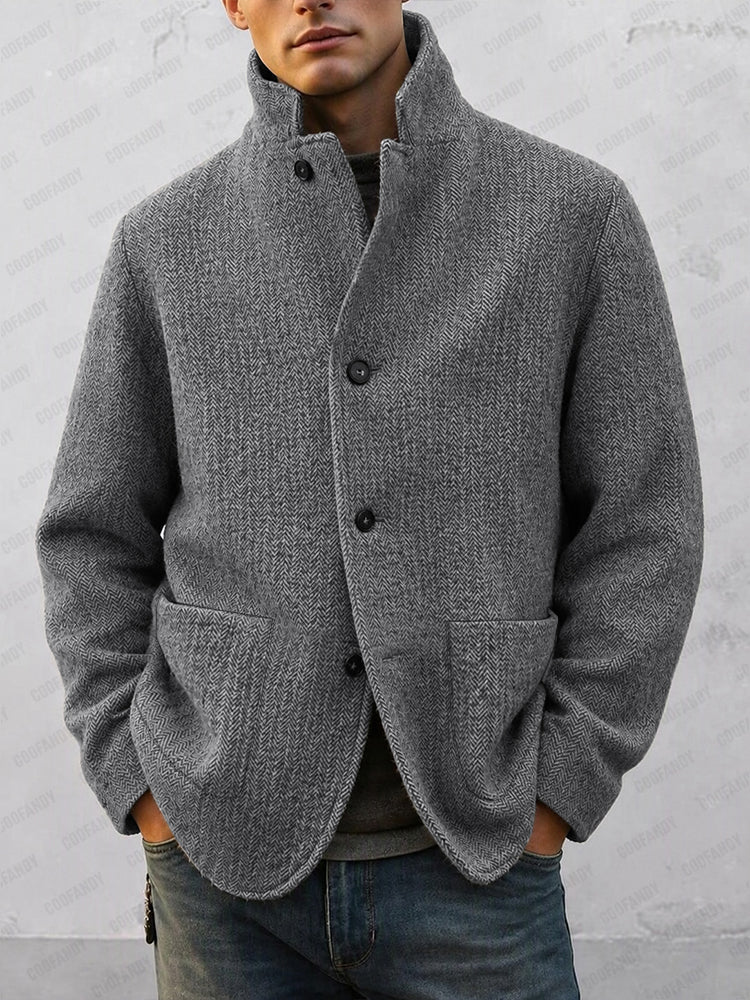
Use one current Signature product as a concrete example of why this distinction matters. The Classic Textured Sheep Wool Blend Blazer is listed with a notched lapel, two-button front, chest and lower patch-pocket layout, slim/streamlined fit wording and Gray or Khaki options on its current official page. Those are identity and visible design details. They do not establish that the blazer will fit every body or suit every dress code.
With a design like this, test the whole front rather than asking whether the lapel looks good in isolation. Check whether the shirt collar sits cleanly beneath it, whether the pocket layout works with the items you carry, and whether the trouser rise and shoe level support the intended outfit. If the shoulder, chest or movement test fails, changing color will not solve the structural problem. If the structural checks pass but the outfit feels unbalanced, change one supporting piece at a time.

Pre-Order and Try-On Decision Table
Use this table after running the seven checks. It keeps the evidence in the right order.
| Observation | Most likely question | Next action |
|---|---|---|
| Your measurement is between chart points | Which measurement is most important for this garment and use? | Recheck the chart's units, compare a well-fitting blazer and seek clarification before ordering if the difference affects the shoulders or chest. |
| Shoulder seam is wrong after delivery | Is the size wrong, or does the construction not suit your shoulder shape? | Try the complete fit once more with the intended layer; do not rely on styling to hide a structural issue. |
| Button strains but shoulders pass | Is the chest or base layer creating the problem? | Test with the intended layer and compare the next size only if the shoulder and sleeve trade-off remains acceptable. |
| Sleeves or hem look wrong while standing | Is the jacket settled correctly and is the proportion right with the planned trousers? | Repeat the position and movement checks before considering a size or alteration decision. |
| Movement fails | Where does the repeated pull begin? | Treat the failed area as a fit stop until the cause is resolved. |
| Fit passes but the outfit looks wrong | Is the issue color, contrast, shirt treatment or trouser proportion? | Change one supporting item, then reassess the base blazer. |
When to Stop the Order
Stop and collect better evidence when you cannot measure the relevant body area, cannot interpret the current size guide, or cannot decide which base layer the order is meant to accommodate. A familiar size label is not enough to overcome missing information.
After delivery, stop the styling experiment when the shoulder seam remains wrong, the chest cannot close without repeated strain, the sleeves or length are materially out of proportion, or ordinary movement fails in the actual use case. Stop when the only proposed fix is several new purchases that change the entire outfit. A blazer may be a poor answer for the wardrobe role even when another size could technically close.
Also check the invitation or workplace requirement before you buy. A blazer with separate trousers is not a substitute for a matching suit, tuxedo, uniform or another defined category. If the plan requires a category the blazer cannot provide, choose that category or wait. Fit accuracy is useful only after the garment is appropriate for the job.

Seven-Check Blazer Buying Checklist
Before ordering or keeping an online blazer, confirm:
- You recorded your own measurements and read the current product size guide.
- You know where the shoulder seam should sit and what to inspect after delivery.
- You have checked chest closure, sleeves and length with the intended base layer.
- You have run a seated and movement test in the complete outfit.
- You can tell whether a problem is structural fit or supporting-item styling.
- The blazer matches the dress code and wardrobe role you actually need.
- You have a clear stop decision if the evidence remains unresolved.
For broader series context, visit the COOFANDY Signature page, then browse the COOFANDY Signature collection only after the measurement and use-case checks are clear. The purpose of the sequence is to make one online order more deliberate: measure first, test the structure, then decide whether the garment earns a place in the outfit.
FAQ
Can I know whether a blazer fits before I buy it online?
You can screen the order before purchase by measuring yourself, reading the current size guide, comparing a blazer you already own and checking the intended base layer. You cannot settle the final fit until you inspect the target garment on your body. Use the pre-order checks to reduce uncertainty, then use the shoulder, closure, sleeve, length and movement tests after delivery.
Which blazer measurement should I check first?
Start with the shoulders because the shoulder line affects how the jacket frame sits, then check the chest, sleeve and body-length measurements against the current size guide. There is no single measurement that overrides the rest for every body or use case. Compare the full set with a garment that fits you and test the delivered blazer in the complete outfit.
What should I do if my usual size and the size chart disagree?
Use your measured body and garment references first, then check the current product chart's labels and units. Do not choose by habit when the shoulder or chest measurement conflicts. If you cannot resolve the difference, pause the order, ask for clarification or choose a product with enough measurement information to make the decision responsibly.



Laissez un commentaire