










Sweater vs. Sweatshirt: Which Layer Fits Your Day?

Choose between a sweater and a sweatshirt by the setting, the layers you need around it and the care routine you will follow. For a workplace that accepts knitwear but restricts athletic-looking tops, start with a suitable sweater. For a casual day, compare both: a sweatshirt is a valid choice, not a less successful attempt at wearing a sweater. Neither category automatically wins on warmth, comfort or value.
The useful question is not just “Which name should I buy?” It is “Which actual top works with my trousers, base layer, jacket and destination?” Two similar crewnecks can answer that question differently.
The Difference Is Not Knit Versus Non-Knit
A sweater is knitwear. Its surface can be smooth, ribbed, cable-patterned or otherwise textured. A sweatshirt is a casual top commonly cut and sewn from knitted fabric, often fleece or French terry. Both categories can therefore involve knitting. Calling one “knitted” and the other “not knitted” creates a false distinction.
The Thygesen apparel manufacturer's comparison describes these typical constructions. They are a starting point for reading a listing, not a guarantee that every garment follows one manufacturing method. Do not assume that every sweater is knitted directly into its final shape, or that every sweatshirt has a brushed interior.
Separate three questions when shopping:
- Category: Is this sold and described as a sweater or a sweatshirt?
- Opening: Is it a crewneck, turtleneck, quarter-zip or another design?
- Fabric and construction: What do the official details say about its material, surface and interior?
“Crewneck” names a round neckline, not an exclusive garment category. A quarter-zip likewise describes an opening; the zipper does not turn knitwear into a sweatshirt. Ribbed cuffs alone are not a reliable dividing line either. Read the description alongside the name, and ask the seller when they conflict rather than guessing from one photograph.
Once you know that you want a sweater, our sweater type guide can help narrow the neckline and opening. Here, the decision comes one step earlier: which category and actual garment suit the day?
Start With What the Day Requires
Begin with the least flexible requirement. A dress code, a required shirt collar or an existing jacket may rule out a candidate before its color matters. For an unrestricted weekend, you have more room to choose by the silhouette and outfit you prefer.
| Your main requirement | Start by comparing | What could change the choice |
|---|---|---|
| Office permits restrained knitwear, not sweatshirts | A sweater consistent with that policy | A bulky, dramatic or unsuitable sweater is not approved merely by its name |
| Relaxed lunch, errands or casual gathering | Either category with your intended trousers and shoes | One may fit the jacket or stand alone better |
| A collared shirt must remain part of the outfit | Tops whose openings and fit accommodate that shirt | A crowded neckline or folded shirt can rule out either candidate |
| Existing jacket must close over the top | The actual sweater and sweatshirt under that jacket | Physical room matters more than a presumed category thickness |
| You expect to remove the middle layer | Both the complete outfit and the base alone | The remaining outfit must still suit the destination |
A plain sweatshirt with chinos may be a reasonable choice in a workplace that explicitly permits it. It is not automatically business casual everywhere. Equally, a large graphic or strongly oversized sweater does not become conservative office wear because it is knitwear.
If you cannot clarify a stricter dress code before leaving, choose an outfit you already know complies. Do not rely on adding a blazer to make an otherwise restricted top acceptable. That resolves the immediate uncertainty without turning a local workplace rule into a universal fashion rule.
Compare the Actual Layers, Not the Names
Do not award warmth to the sweater and ease to the sweatshirt before inspecting either. The manufacturer's comparison notes that sweater warmth varies with yarn, knit density and thickness. A category label cannot establish which of two particular garments will be warmer, or whether either suits your outdoor exposure.
Start with the base you intend to wear. Put on each candidate in turn with the same trousers, then sit and reach forward. Look at the shoulder, underarm and waistband. Does the top pull across the chest? Has the base folded into a ridge? Is the neckline comfortable to you in that position? These are checks on your combination, not proof of long-term comfort or performance.
Next, add the same jacket. Close it and bend your elbows. Compare whether each candidate leaves enough room through the sleeves and back, and whether the collars can sit without crowding. If the jacket fits over the sweatshirt but not the sweater, that is a reason to prefer that sweatshirt for this outfit. It does not establish that sweatshirts are always thinner.
Remove the jacket before deciding. The top's hem, neckline and overall proportion should still work with the trousers. If you plan to remove the middle layer as well, inspect the base by itself. A tee that you would only wear hidden is not a complete fallback outfit simply because you can take the top off.
For weather, check the forecast, your time outdoors and your existing outerwear plan. Do not treat a seller's product description or a fabric name as certification of the entire outfit. If conditions require protection beyond an ordinary casual top, solve that need separately rather than choosing a supposed category winner.

Use Product Details to Resolve the Choice
Use specific products to identify styles you want to inspect, not to manufacture a head-to-head performance ranking. Two examples from our range show why the description matters:
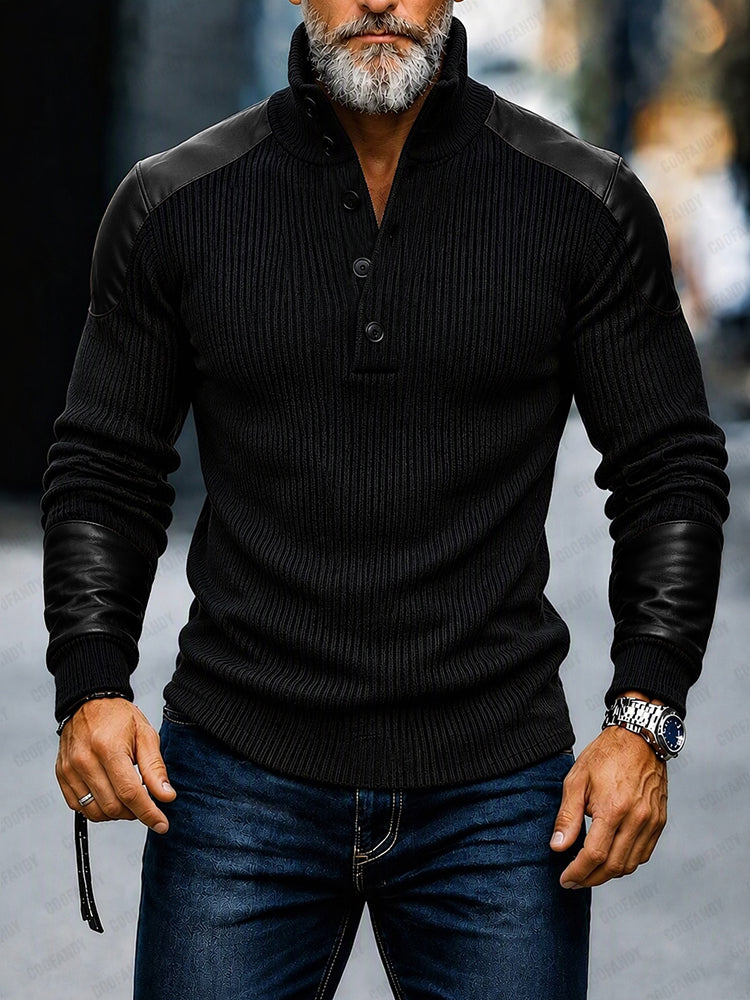
- The Slim Fit Turtleneck Twisted Knitted Pullover Sweater is a sweater example with a turtleneck and twist pattern identified in its official description. Consider that higher neckline and visible texture as outfit choices, then check the actual fit with your base and jacket.
- The Trendy Quarter Zip Pullover Quilted Sweatshirt is a sweatshirt example with a mock neck and quarter-zip closure identified in its description. Consider whether that opening fits the look you want. The word “quilted” does not, by itself, establish a fleece lining or a warmth advantage.
These are different designs as well as different categories. A preference for one neckline would not prove that its entire category is better. Neither example is presented as a matched wear test, and neither is a substitute for checking the details relevant to your purchase.
If the sweater direction fits your day, browse our sweater collection and shortlist styles by the opening and shape you want. Then read each product's own details. If you need a specific interior, thickness or layering measurement and the listing does not resolve it, ask before ordering. Missing information is a question to settle, not evidence that the garment lacks that feature.

Two Days That Lead to Different Choices
A workday with an accepted-knitwear policy
Suppose your office accepts restrained sweaters over collared shirts but does not permit sweatshirts. Try a simple navy sweater with a pale shirt, charcoal trousers and appropriate office shoes. Keep a suitable jacket for the commute. The sweater is the starting choice because of the stated policy, not because all sweaters are smarter than all sweatshirts.
Check the shirt and sweater together before adding the jacket. If the shirt collar is crowded or the waist gathers, try a compatible opening or a different base within the dress requirements. The dress-shirt layering guide covers those adjustments in detail.
If the sweater still does not work, a known-compliant shirt-and-jacket outfit may be the better fallback. Do not keep an unsuitable sweater just to satisfy the category choice. If your actual office instead permits plain sweatshirts, a restrained sweatshirt becomes another candidate; check the same shirt, jacket and removal requirements rather than assuming permission guarantees a good fit.
A casual weekend with a jacket you already own
For a casual lunch followed by errands, start with a plain tee, straight dark jeans, clean casual shoes and your usual casual jacket. Compare a sweater and a sweatshirt over that base. You might prefer the sweater's visible knit texture or the sweatshirt's simpler-looking surface; the surrounding outfit can remain the same.
Suppose the sweatshirt fits beneath the jacket without crowding, while the sweater's sleeve creates an uncomfortable stack. Choose the sweatshirt for that combination, or use a different jacket if you prefer the sweater. Do not size up several garments automatically when the real issue is compatibility between two pieces.
If the sweatshirt is the one that bunches at the waist, reverse the decision. A sweater that sits cleanly with the same trousers and jacket can be the more useful weekend choice. The category does not dictate the outcome. For detailed sweatshirt collar, hood and hem adjustments after choosing that route, continue to our sweatshirt-and-jacket guide.

Let Care and Budget Break a Genuine Tie
When both garments work with the outfit, read their care instructions before deciding. Do not assume that a sweater requires hand washing or that a sweatshirt can go into the dryer. Check each actual garment's permitted washing and drying methods, including any instructions for its trim or decoration.
Picture the routine after an ordinary week. Can you follow the specified method with the facilities and time you have? If one candidate's required care does not fit that routine, choose the other only after checking its instructions too. Replacing one assumption with another does not solve the problem.
Compare current prices for the exact items and variants you are considering, together with applicable shipping and return terms. There is no need to declare that one category is always cheaper. A lower price is useful only if the garment also meets the job you are buying it for; a higher price does not establish better construction or durability.
Avoid assigning a cost-per-wear figure based on an imagined lifespan. Instead, name the real outfits in which you would use each piece. If one works with trousers, a base and a jacket you already own, while the other requires several additional purchases, that practical difference can settle the choice without inventing a quality ranking.
Make the Final Choice Before Buying
Write down five things for the candidate you prefer: the destination where you will wear it, the base underneath, the jacket above, the outfit remaining when a layer comes off, and the care method you can follow. An unanswered item tells you what to check next.
If the uncertainty is about dress code, ask the workplace or host. If it is about a garment detail, ask the seller a specific question about the exact item. If it is about fit with an existing jacket, compare the relevant measurements and try the combination when possible, within the store's current return conditions. Choose the top whose job is clear, not the category with the most flattering stereotype.
Frequently Asked Questions
Is a sweatshirt also knitted?
Commonly, yes. Sweatshirts often use knitted fabric cut and sewn into a garment, with fleece or French terry among the possibilities. “Sweater versus sweatshirt” is not a reliable shorthand for knitted versus woven, and not every sweatshirt has the same interior.
Is a crewneck a sweater or a sweatshirt?
It can be either. Crewneck describes the round neckline rather than the garment category. Read the product name, description and construction details together. A quarter-zip opening is likewise not exclusive to one category.
Which is warmer, a sweater or a sweatshirt?
There is no category-wide winner. Compare the actual garments' documented material, construction and thickness, then consider the base, outerwear and conditions in which you will wear them. A name or product photograph does not establish a thermal rating.
Can I wear a sweatshirt instead of a sweater at work?
Only if the workplace permits that type of sweatshirt and the whole outfit meets its requirements. A plain style may suit some relaxed offices, but a blazer does not override a restriction. If the policy is unclear, use an outfit already known to comply while you clarify it.
About COOFANDY
Founded in 2015, COOFANDY is a menswear brand created for modern men navigating work, weekends, celebrations, and everyday life. Its collection includes shirts, suits, pants, sweaters, and tees designed to help men build versatile, confident looks for different moments and personal styles. Guided by the belief that clothing can reflect confidence and character, COOFANDY focuses on making approachable menswear part of every stage of life.
COOFANDY in the Press
- Is COOFANDY Worth It? The $20 Shirt Test vs. Ralph Lauren, Express and 8 More Menswear Brands
- Best Picks: COOFANDY Shirts & Suits for Commuting, Vacation, and Wedding Season
- From Amazon Basics to 70M+ Customers: The COOFANDY Story Adds a New Chapter with Walmart Distribution
More Reading



Laissez un commentaire