









What Are Cargo Pants? Features, Types, and Key Differences
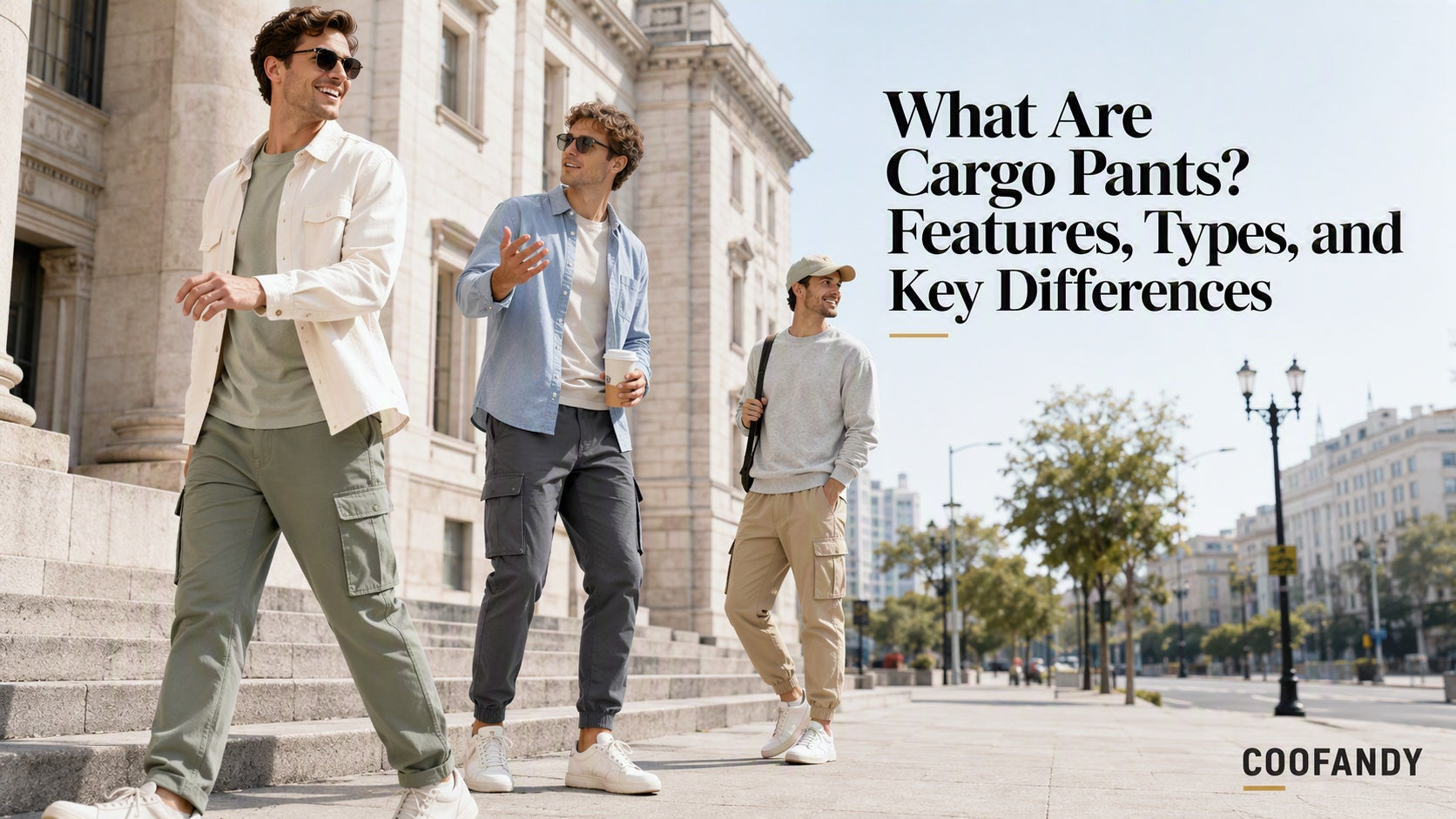
Definition: Cargo pants are trousers with a utility pocket set on the outside of the thigh or upper leg. That pocket—not the regular side-entry hand pocket at the hip—is the detail that makes them cargo pants in this guide. It may sit flat or expand with pleats, and it can have a flap, snap, button, or zipper. Beyond that, cargo pants vary widely: cotton or synthetic, straight or tapered, open at the hem or cuffed. Check the thigh pocket first. The other details tell you which version you are looking at.
Why call them “cargo”? The word refers to the extra carrying space. A Smithsonian collection record, for example, describes military trousers with flap pockets along the side seams. That history explains the name. Modern pairs can look very different.
How to Identify Cargo Pants: The One Required Feature
Looking at a pair in person or on a product page? Ignore the waistband for a moment and check the outside of the thigh. You should see a pocket that is separate from the usual hand pocket at the hip. It might be a flat patch pocket or a roomier pocket with pleats or folded sides.

| Detail to check | Why it matters | Required for cargo pants? |
|---|---|---|
| Outer-thigh utility pocket | The cargo pocket sits on the outer leg, away from the usual hip hand pocket. | Yes. Without it, this guide would not call the pants cargo. |
| Pocket closure | Changes how quickly you can reach an item and how likely it is to fall out. | No. Flaps, snaps, buttons, and zippers are optional. |
| Leg shape | Makes the pants look straight, relaxed, tapered, or wide. | No. Cargo pants can be straight, relaxed, tapered, or wide. |
| Waistband | Affects comfort and whether the pants stay put when the pockets carry something. | No. Fixed, elastic, belted, and drawstring waists can all appear. |
| Hem | Controls how the leg meets your shoes: open, cuffed, elastic, zipped, or drawcord-adjusted. | No. It separates open-hem, jogger-style, and adjustable versions. |
After you find the thigh pocket, the other details tell you how the pants will look and behave. A bigger pocket carries more, but it also sticks out and can bounce when full. A snap or zipper helps hold things in, though it takes an extra second to open. A relaxed leg gives the pocket room. A close ankle looks cleaner, but it makes a loaded thigh pocket stand out.
Do not let the product name do all the work. If a listing says “cargo” but the photos show only normal hip pockets, look for a better image or a clearer construction description. No separate thigh pocket? It does not pass the definition used here.
With that first check out of the way, you can read the rest of the design.
The Four Details That Shape a Pair of Cargo Pants
No single detail tells the whole story. Look at four things together: pockets, fabric, the shape from thigh to ankle, and where the pants are meant to be worn. That combination may give you a traditional utility look, a cleaner casual pair, a technical-inspired design, or a fashion-first silhouette. The rows below are a practical comparison tool, not official industry classes. Some pants will sit between two of them.
| Overall look | Pocket layout | Fabric | Leg and ankle | Best setting and trade-off |
|---|---|---|---|---|
| Utility-focused design | Prominent flap pockets, sometimes with expandable folds | Cotton or a cotton blend is common, but not required | Straight or relaxed leg; usually an uncuffed ankle | Everyday casual wear with a traditional cargo look. “Classic” says nothing about work-grade construction. |
| Clean casual design | Flatter thigh pockets and minimal zippers, straps, or buckles | Cotton or cotton-blend fabrics are common | Straight or mildly tapered; open hem or a subtle taper at the ankle | Casual outfits and some relaxed offices. Large pockets make the pants look less formal. |
| Technical-inspired design | Several compartments, zippers, or adjustable details may appear | Nylon or other woven fabrics may appear, sometimes with a ripstop grid or added stretch | Straight or tapered; sometimes an adjustable ankle | Travel- or outdoor-inspired styling. Zippers and ripstop alone do not make the pants weather-resistant or protective. |
| Fashion-led design | Oversized, numerous, or partly decorative pockets | Light synthetics, cotton, or blends | Wide, baggy, cropped, gathered, or adjusted with a drawcord | The silhouette comes first. Oversized pockets may look good empty and feel awkward when filled. |
A single feature can be misleading. Flat pockets may look tidy, but a baggy leg and lots of hardware change the overall feel. The same goes for zippers and ripstop: they can create a technical look, but they do not establish weather protection, durability, or professional performance.
Product names often pick out just one feature. “Tapered” tells you about the leg. “Jogger-style” usually points to the waist and ankle. The five type names below put those details back into context.
Five Common Cargo Pants Types
You will see these five labels often. Treat them as shorthand, then check the garment itself. “Work-oriented” needs the closest look because the stated construction should suit the job you need the pants to do.

Classic cargo pants. This is the picture many people have in mind: visible thigh pockets, a straight or relaxed leg, and an open hem. The pocket makes the pants cargo; the roomy leg and open ankle create the classic shape. Cotton and cotton blends are common, though not required. “Classic” describes the look, not a historical replica or a promise of job-site construction.
Tapered cargo pants. The cargo pocket stays, while the leg narrows from knee to ankle. That taper trims some of the visual volume. It also makes a full thigh pocket more noticeable against the closer lower leg. “Tapered” describes the leg shape; it does not automatically mean “jogger.”
Jogger-style cargo pants. A true cargo jogger needs both halves of the name. It has a cargo pocket on the outer leg and a jogger-like build, usually with an elastic or drawstring waist, a tapered leg, and a fitted or adjustable ankle. The hem might use ribbing, elastic, buttons, a zipper, or a drawcord. A tapered leg by itself is not enough. If the pants have only angled hip hand pockets, they are joggers.
Technical cargo pants. Treat “technical” as a reason to check the details, not as proof of performance. The pants still need a cargo pocket on the outer leg. They may also have several compartments, stretch woven fabric, or adjustable parts. Check the exact product for each claim. The label alone does not establish weatherproofing, protection, testing, or certification.
Work-oriented cargo pants. Here the thigh pocket is paired with features meant for a task, such as stated reinforcement or tool storage. Check those features against the job and any employer requirements. Casual cargo pants can borrow the look without being industrial workwear.
You will also find wide-leg, cropped, and convertible cargo pants. Those words add information about the cut or construction; they do not replace the thigh-pocket check.
That gives you five versions within the cargo category. Things get less tidy when a pair is also sold as a jogger, work pant, or parachute pant. Those terms describe shape, purpose, or overall design, so overlap is normal.
Cargo Pants vs. Joggers, Work Pants, and Parachute Pants: Differences and Overlap
Use two questions. First, is there a cargo pocket on the outer thigh? Second, what does the other label describe? A jogger-style waist and ankle can turn cargo pants into cargo joggers. Without the thigh pocket, they are simply joggers. The table follows that logic.

| Type | What to look for first | Cargo pocket required? | Choose it if | The trade-off |
|---|---|---|---|---|
| Cargo pants | A separate storage pocket sits on the outer thigh or upper leg. The waist, leg shape, and ankle can vary. | Yes. | You want easy-to-reach storage on the thigh. | The pockets add bulk and may swing or sag when filled. |
| Joggers | An elastic or drawstring waist, a leg that narrows toward the ankle, and usually a fitted cuff. | No. If present, it may be a cargo jogger. | You prefer a flexible waist and a hem that stays close to the ankle. | The fitted ankle looks more casual and limits how the leg sits over shoes. |
| Work pants | The product is designed and described for a specific job or workplace need; features vary by task. | No. Tool pockets, cargo pockets, or neither may appear. | You need pants for a stated job or workplace requirement. | Work-focused materials and details can feel heavier or stiffer. |
| Parachute pants | Lightweight fabric, a wide or baggy leg, and often a drawcord or gathered ankle. | No. If present, it may be parachute cargo. | You want a loose, lightweight silhouette. | The extra volume is less formal, and some fabrics may rustle. |
Fabric offers clues, not a verdict. Cotton, nylon, and stretch blends show up across several categories. Nylon alone does not make a pair parachute pants, just as ordinary hip pockets do not make it cargo.
For a hybrid name to make sense, the pants have to meet both definitions. Cargo joggers need the thigh pocket and jogger construction. In practice, that usually means an elastic or drawstring waist, a tapered leg, and a fitted or adjustable ankle. Cargo work pants need the pocket plus stated work features. Parachute cargo pants need a light, roomy silhouette as well as outer-leg storage.
Missing the thigh pocket? Leave “cargo” out of the name and see whether the remaining label still fits. Once you know what the pants are, check the waist, pocket position, leg room, and ankle opening on your body.
How Cargo Pants Should Fit
Try the pants on with empty pockets first. Then add the light items you would actually carry. There is no useful universal rule about sizing up or down; rise, fabric, waistband, and pocket volume all change the fit.
- Waist: the waistband should stay in place without a hard pull on the drawstring or belt. An elastic waist may feel fine when the pockets are empty and still slide down once you add weight.
- Rise: this is the distance from the waistband to the crotch. Sit down, take a high step, and bend. A rise that pulls or hangs too low can make the pants shift and the pockets swing.
- Thigh room: the fabric should not pull across an empty cargo pocket. If it is already tight with nothing inside, the pocket has little usable room.
- Pocket position: place a phone-sized object inside and notice where it lands as you walk, bend your knee, and sit. A low pocket may swing. A pocket set too far forward may press against your leg in a chair.
- Hem: an open hem should sit over your shoes without piling up heavily. A cuff, elastic ankle, or drawcord should hold the opening without bunching the whole leg.
- Balance with items inside: look for a slipping waistband, twisting side seams, pulling at the knee, or one side hanging lower. If your normal pocket load changes the fit noticeably, carry less or try another pocket layout.
Extra room helps only up to a point. You need enough space to sit and walk, while the waistband still holds its position with your usual items in the pockets. After that, pick the fabric and finishing details that make sense for the setting.
How to Choose Cargo Pants by Load, Setting, and Weather
Start with what you will actually carry. For keys, earbuds, and other small items, flat pockets may be plenty. Expandable pockets take bulkier items, but they also protrude, swing, and pull at the waistband. Keep valuables and anything heavy in a secure bag.
Now match the pants to the kind of day you have in mind.
| Use case | Look for | Watch out for |
|---|---|---|
| Everyday commute | Flat pockets, a waist that stays put, a straight or slightly tapered leg, and little hardware | Bulky pockets in dressier offices, or pockets that dig in while you sit |
| Travel | Closures you can fasten, a stable waist, a comfortable rise, and fabric that suits the climate | Cargo pockets are not theft-proof; secure valuables separately |
| Casual outdoor use | A listed fabric composition, room to move, closable pockets, and a hem that works with your shoes and terrain | Reading weather protection into a product that does not claim it |
| Job site | Work trousers that meet the task and your employer’s requirements | Casual cargo with no stated reinforcement or safety suitability |
| Fashion-first outfit | The size of the pockets, the volume of the leg, and how the hem meets your shoes | Filling decorative pockets just because they look roomy |
For hot days, lighter fabric and a little more leg room may feel less stuffy, though thin cloth can show every object in the pockets. In cooler weather, look for denser fabric and enough room for a base layer. Weather resistance is a separate product claim, so check for it rather than guessing from the look.
Putting the Checks to Work: Two COOFANDY Listings
On the official 100% Cotton Straight Leg Cargo Pants page, COOFANDY lists 100% cotton fabric and a straight leg. The page also names an elasticized back waistband, slant hand pockets, flap cargo pockets, and belt loops. Taken together, those details describe a straight-leg casual cargo design.
The Casual Cargo Style Jogger Pants listing takes a different route. It names athleisure/cargo styling, an elastic drawstring waist, slant hand pockets, flap pockets, and 85% polyester/15% cotton fabric. The page text does not say where the flap pockets sit, so use the current images to confirm their position before calling the pants cargo by this guide’s definition. Neither listing gives pocket dimensions, carrying capacity, job-site specifications, or safety claims.
The product names matter less than what is actually sewn into the pants. Check the pockets first, then the waist, fabric, and leg shape.
FAQ
How do I keep cargo pockets from losing their shape?
Empty the pockets before washing and fasten their closures so they are less likely to snag. Follow the care label. When the pants come out of the wash, smooth the flaps and ease any pleats or folded sides back into shape before drying. High heat and ironing are not safe for every fabric, so let the label decide.
Can cargo pants work in an office?
Yes, in some offices. A straighter or gently tapered leg, flat thigh pockets, little hardware, and a neutral color usually look tidier. Big expandable pockets, hanging cords, and gathered hems push the outfit in a more casual direction. The dress code at your workplace is the final check.
What does “cargo jogger” mean?
A cargo jogger has two clear parts: a cargo pocket on the outer leg and a jogger-style cut. That usually means an elastic or drawstring waist, a tapered leg, and a fitted or adjustable ankle. Check both. A taper on its own does not turn cargo pants into joggers, and ordinary hip hand pockets do not turn joggers into cargo joggers.
How should I wash COOFANDY cargo pants?
Use the sewn-in label for the exact pair. The two COOFANDY pages discussed above currently say to machine wash cold and separate light and dark colors. That guidance belongs to those listings, not every pair of COOFANDY pants, so check the current product page and label again.
Next step: Start with the thigh pocket. Once that checks out, choose the fabric and leg shape that fit your day-to-day use. Then compare the current COOFANDY men's cargo pants collection. Look at the pockets, fabric, fit description, and size chart before checking current colors, care, shipping, and returns.
About COOFANDY
Founded in 2015, COOFANDY is a menswear brand created for modern men navigating work, weekends, celebrations, and everyday life. Its collection includes shirts, suits, pants, sweaters, and tees designed to help men build versatile, confident looks for different moments and personal styles. Guided by the belief that clothing can reflect confidence and character, COOFANDY focuses on making approachable menswear part of every stage of life.

Laissez un commentaire