










What to Wear to an Office Halloween Party
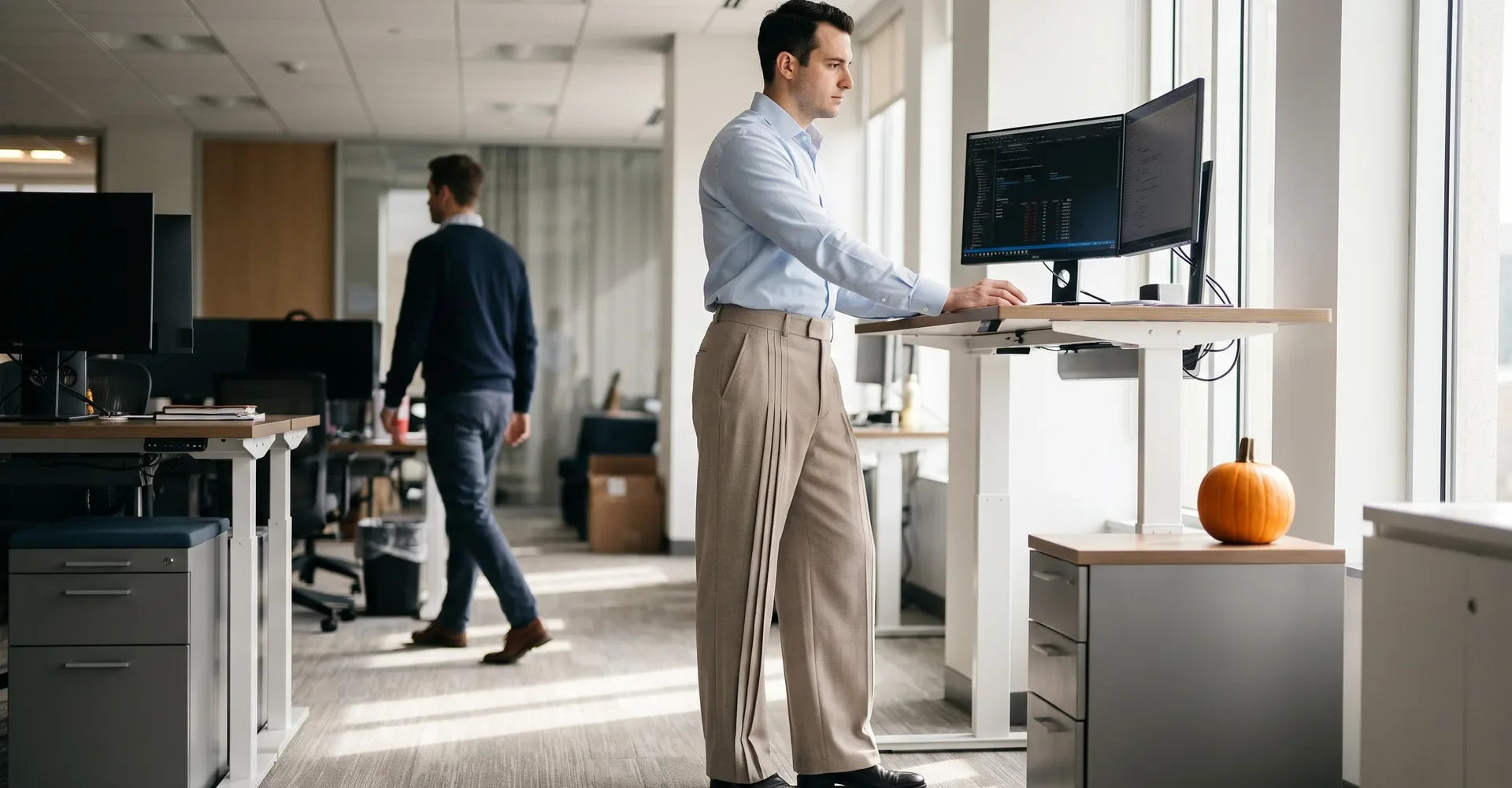
For an office Halloween party, wear a complete outfit that meets your normal work requirements, then add the festive or costume element at the time your employer allows. A seasonal shirt can work when themed everyday clothes are welcome; a character costume needs an accepted concept and usable identifying detail. Plan what you will remove after the gathering as carefully as what you will put on.
The useful question is not just “Does this look like Halloween?” It is “Can I wear this for the actual day?” Meetings, desk time, a team photograph and an after-work venue may need different versions of the outfit. We suggest building the normal work version first, so participating does not leave you without suitable clothes for the rest of your schedule.
Plan the Workday Before the Costume
Look at the event instructions alongside your ordinary workplace requirements. Find out whether costumes are encouraged or required, whether festive clothes are an alternative, and whether the permission applies all day or only during the gathering. A lunchtime celebration does not tell you what to wear in a morning client meeting.
Ask about the uncertain part of your own plan. “Can I add a costume accessory for the team photo and remove it afterward?” is more useful than asking whether every possible Halloween outfit is appropriate. If you want to wear a graphic top, confirm whether that top can replace your usual shirt and when. If you need to keep a collar, choose a look that starts with a collared shirt.
Write down the day's changes in plain terms: normal meeting outfit at nine, permitted festive detail at the gathering, ordinary work outfit afterward. For an evening party away from the office, check that venue separately. A company invitation does not establish the bar or restaurant's accessory and footwear rules.
If the instructions conflict, ask the organizer to resolve the actual outfit before buying anything. For example, a costume requirement alongside a no-accessories rule may need a clothing-only concept or an exception. Do not assume an orange shirt resolves that conflict. Likewise, do not decide that you must dress down because colleagues are planning elaborate costumes; your assigned duties remain part of the choice.
For the general clothing baseline, our business casual guide covers professional separates. This Halloween plan starts with the requirements you have already confirmed and works out how to move through the day.
Choose a Base for Your Actual Work Setting
Use these as conditional proposals rather than universal office uniforms. Each has a complete ordinary version and a specific way to acknowledge the gathering.
Client-facing day: a small accent on ordinary work clothes
Start with a plain light collared shirt, charcoal trousers, dark dress shoes and the blazer you would normally wear for the meeting. Add a tie if the meeting requires one. For a gathering that permits seasonal accessories instead of costumes, bring a rust pocket square and add it at the designated time.
Before and after the gathering, the shirt, trousers, shoes and required jacket remain the work outfit. Keep the pocket square folded in a small pouch or your bag when it is not being worn. If you do not have a suitable pocket square, an accepted seasonal shirt is another option only if it also meets the day's requirements; do not replace a required plain shirt without checking.
If the party requires a recognizable costume, this accent-only proposal is insufficient unless the organizer explicitly accepts it. Choose the character route below or settle an exception. Keeping a seasonal accessory small is a styling choice, not a way to bypass a costume instruction.
Casual team gathering: let the base top carry the theme
Where tees, denim and sneakers are permitted for the gathering, try a restrained Halloween graphic tee, straight dark jeans, familiar clean sneakers and a plain open overshirt. Wear dark socks and bring separate outerwear for your commute when needed. Keep the graphic something you are happy to show without the overshirt.
If casual clothes are also allowed throughout your working day, test this same base at your desk. If a collared shirt is required until the party, keep your ordinary shirt, appropriate trousers and shoes for work and plan a suitable place to change the top. Pack the removed shirt in your bag afterward; wearing an open overshirt over a tee does not necessarily satisfy a requirement for the base shirt to have a collar.
If there is no practical changing place, use a rust collared shirt with the required trousers and footwear, provided themed clothes are an accepted party alternative. You have changed the plan, not made the tee route work by hiding it. A graphic top and a seasonal-color shirt can both acknowledge Halloween, but neither automatically meets a character-costume requirement.
Costume-required gathering: a fictional reporter with a normal base
If the organizer accepts a fictional reporter concept, start with a dark suit, light collared shirt, tie and dark dress shoes. Everyday horn-rimmed glasses you already use can be the proposed identifying detail, where permitted. Bring a small ordinary notebook if the organizer accepts it as part of the concept, and store it during actual work. Do not create a pretend staff badge or press credential for this outfit.
Try the glasses with any headset you use. If you do not normally wear suitable glasses, do not buy unusable eyewear just to force this proposal. Ask the organizer to accept a notebook-led reporter concept, choose another permitted character, or settle an alternative. A suit alone remains normal clothing, not proof that the costume problem has been solved.
The goal is a fictional character built around clothes you can actually use. It is not an impersonation of a particular colleague, a real credential or a promise that everyone will recognize the reference. If your job requires a different uniform or clothing base, start from that requirement and ask which character addition is allowed instead of substituting this suit proposal.

Use Three States: Work, Gathering, Work Again
Imagine a morning meeting followed by a short office celebration, then another scheduled call. The organizer has accepted your reporter concept, glasses and a small notebook during the celebration. Your morning outfit is the dark suit, light shirt, tie and dress shoes. Keep the notebook in your bag and use your normal eyewear as you ordinarily would; there is no need to perform a character in the meeting.
At the gathering, take out the notebook and use the accepted detail for the photograph or costume activity. Afterward, return the notebook to your bag, remove any temporary costume addition and resume the complete meeting outfit. Your ordinary glasses can stay if you need them; reversibility means removing the costume addition, not making yourself unable to see.
If the notebook is not allowed, or the organizer no longer accepts it as the identifying detail, change the concept before relying on it. Do not add an unauthorized badge to make the character more obvious. Ask for a permitted alternative or an exception. The clothes may still work for your call even while the costume decision remains unresolved.
Now take the seasonal-accent route. Your normal base is a light shirt, charcoal trousers, dark shoes and required blazer. Add the rust pocket square only at the gathering, then put it away before returning to duties where you want or need the ordinary version. If festive details are allowed all day and you prefer to keep it, there is no requirement in this proposal to remove it. The timing comes from your actual instructions and preference, not a universal rule.
For an after-work event, add a fourth state: the journey home. Keep the coat and shoes that suit the actual conditions, and decide where any extra costume pieces go after the party. A prop that works for a short photo may be inconvenient to carry on the commute; choose the smaller accepted addition while you still have time to change the plan.

Try the Outfit at a Desk and on Camera
Put on the complete work version and sit where you usually work. Reach toward the keyboard, stand up and sit again. If the shirt repeatedly pulls out, compare a different tuck or shirt length where appropriate. If sleeves bunch under the jacket, change the top or layer rather than expecting the festive accessory to distract from the fit problem.
Our Polished Casual Front-Pleat Design Suit Pants are one optional example for the trouser decision. The description lists a pleated design, zip fly, belt loops, a back elastic waistband, two slant pockets and one back pocket, with 100% polyester composition. The elastic detail is at the back; this is not a drawstring-waist recommendation. Choose a current option using the corresponding product measurements and size chart.
Try the trousers with the shirt and any belt you intend to wear. If the seat or thighs still pull when you sit, change the size or cut rather than relying on the back elastic to solve everything. If the belt is carrying a bulky costume accessory, remove that accessory and check whether the normal outfit works first. Neither a pleat nor an elastic panel guarantees personal comfort or approval at your workplace.
For a video call, check the outfit in your usual camera frame. A festive graphic may be partly hidden by the desk; a headpiece may fill more of the screen than you expected. Decide whether the visible version is appropriate for that particular call, and remove the addition when it is not. You do not need to make the character readable in every work interaction.
Use the headset, chair and ordinary work items during the trial. If an accessory catches, blocks your view or prevents you from doing the task, remove it or choose another allowed detail. Keep any actual identification and access items usable; do not cover them with a costume label. These are practical rehearsal choices, not a claim that one outfit is certified safe for every job.

Keep the Costume About a Character, Not a Colleague
We recommend a fictional concept you can explain simply without making a coworker the joke. Avoid dressing as a colleague's body, accent, religion or personal circumstances. Keep political slogans, graphic violence and toy weapons out of these proposed office looks. Check the actual employer's boundaries rather than assuming a costume is acceptable because it appears in an online list.
For a group costume, agree on the concept and participation level before buying shared pieces. Ask whether someone can wear a smaller identifying detail, choose a standalone costume or attend in ordinary festive clothes. Those options depend on the event instructions; do not promise them on behalf of the organizer. A coordinated team photograph does not require everyone to choose the same fit or garment.
If you dislike the proposed group costume, say which part does not work and offer a usable alternative: the same color connection, a different approved character, or no costume where participation is optional. You can be clear without redesigning everyone else's outfit. If costumes are mandatory for the gathering, ask how an exception is handled rather than treating reluctance as an automatic exemption.
Keep the concept from interfering with your role. If you need to speak with customers, work on camera or move between rooms, choose an addition you can put away without reconstructing the whole outfit. Where role-specific clothing or equipment is required, follow those instructions and discuss any festive addition with the responsible person before the event.
Pack the Change You Can Actually Make
Choose the ordinary base, name the permitted gathering detail and decide where it will live before and after the party. Pack only the change you have a place and time to make. Keep the commute layer separate from the indoor costume decision; a seasonal shirt is not a weather-protection plan.
If a garment is missing, browse our Men's Party Outfits collection after defining its job. A shirt that works with your existing trousers may be more useful than a full novelty outfit. The collection does not determine what your employer permits. For the broader pre-work fit and layering check, use our fall office outfit checklist.
You are ready when the outfit works in all three states: normal duties, the allowed gathering and normal duties again. The Halloween detail can be small or more noticeable; what matters is that you have chosen it deliberately and can make the actual change without losing the clothing you need for the rest of the day.
Frequently Asked Questions
Is it appropriate to dress up for Halloween at work?
It depends on your employer's instructions and duties. Check whether costumes or themed clothes are allowed, whether participation is optional, and when the permission applies. A designated party does not automatically authorize costume details in every meeting or customer interaction.
What should I wear if I have client meetings before the party?
Start with the complete outfit required for the meeting. Add an accepted seasonal or character detail only at the allowed gathering, and decide where you will store it afterward. If the concept needs a different top, arrange a suitable changing place rather than relying on a jacket to hide an unsuitable base.
What if I do not want to join the office group costume?
Tell the organizer which alternative you prefer: a standalone concept, a smaller coordinated detail or ordinary festive clothes where those are welcome. Clarify whether group participation and costume participation are separately optional. A mandatory costume event may require an agreed exception.
Can a Halloween-colored shirt replace a required costume?
Only if the organizer accepts themed everyday clothes as an alternative. Rust, burgundy or black can be part of a festive outfit, but color alone does not establish a character. Ask about the proposed shirt before treating it as the answer to a costume requirement.
- Fall Office Outfit Checklist for Men
- The Complete Guide to Business Casual for Men (2026)
- How to Layer Clothes for Fall: A Men's Guide
About COOFANDY
Founded in 2015, COOFANDY is a menswear brand created for modern men navigating work, weekends, celebrations, and everyday life. Its collection includes shirts, suits, pants, sweaters, and tees designed to help men build versatile, confident looks for different moments and personal styles. Guided by the belief that clothing can reflect confidence and character, COOFANDY focuses on making approachable menswear part of every stage of life.

Laissez un commentaire