









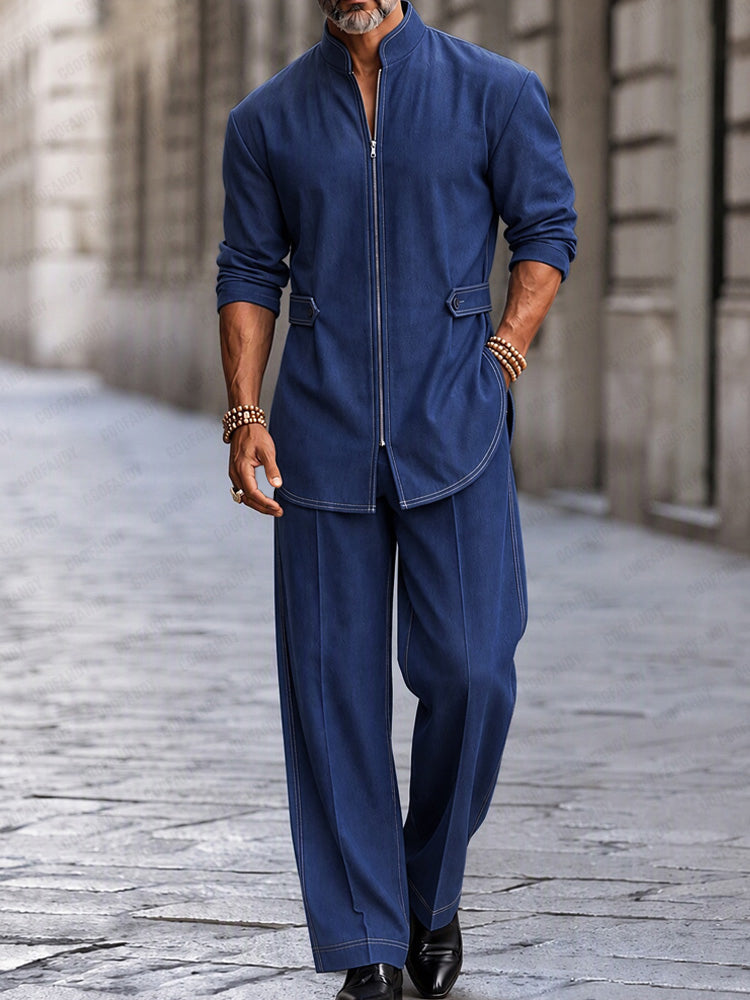
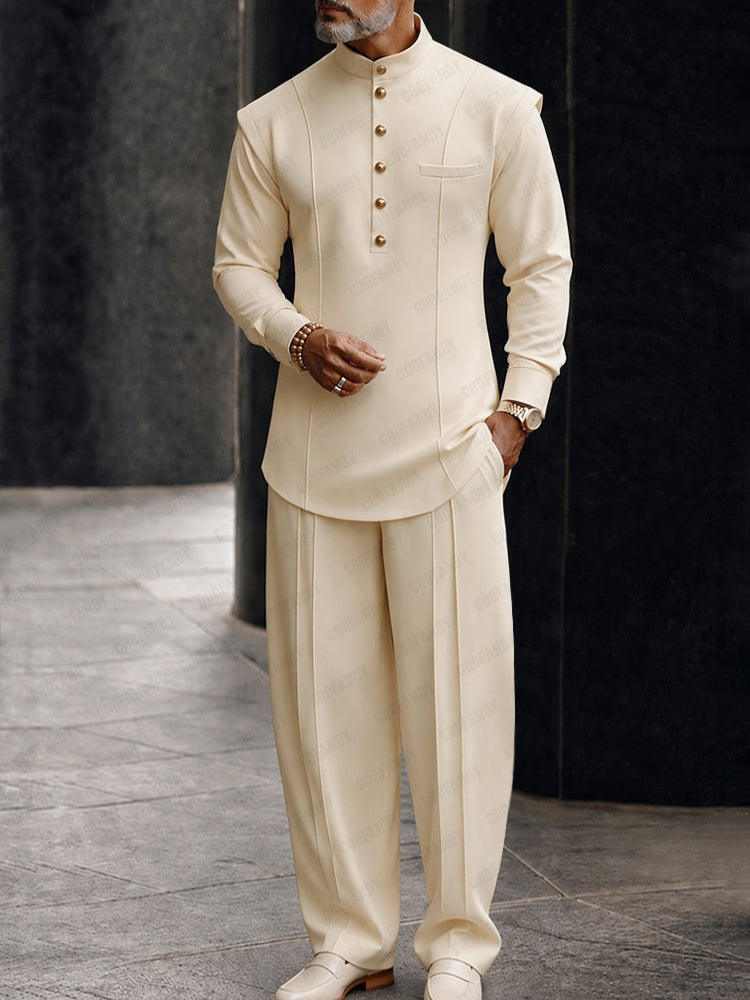
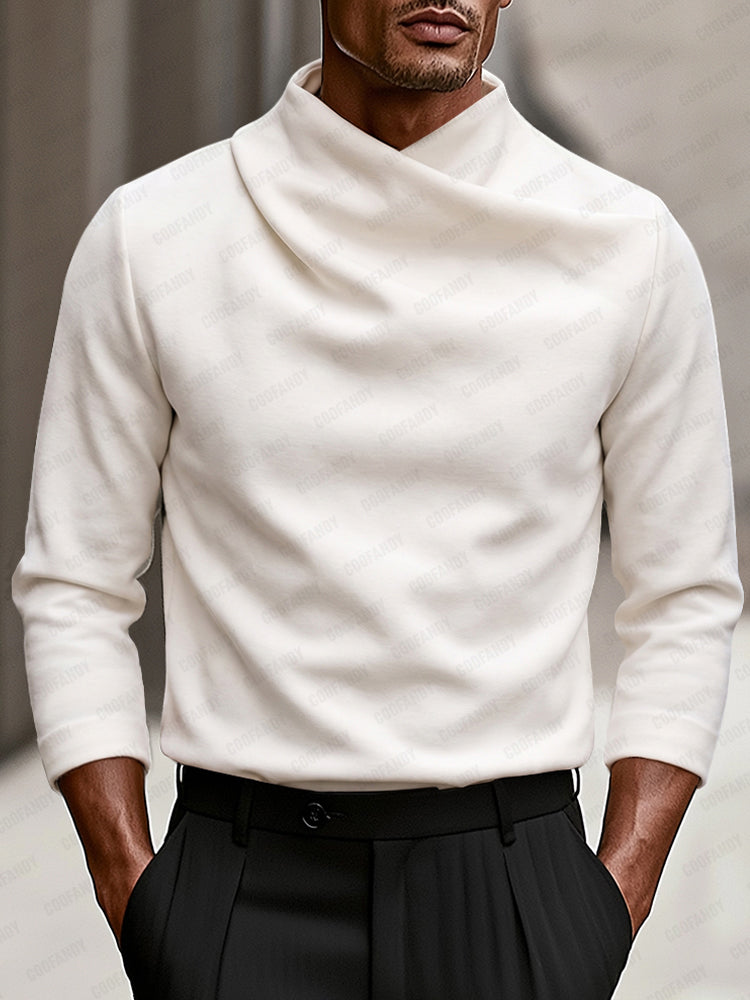
Cuban Collar or Point Collar for a Polished Look
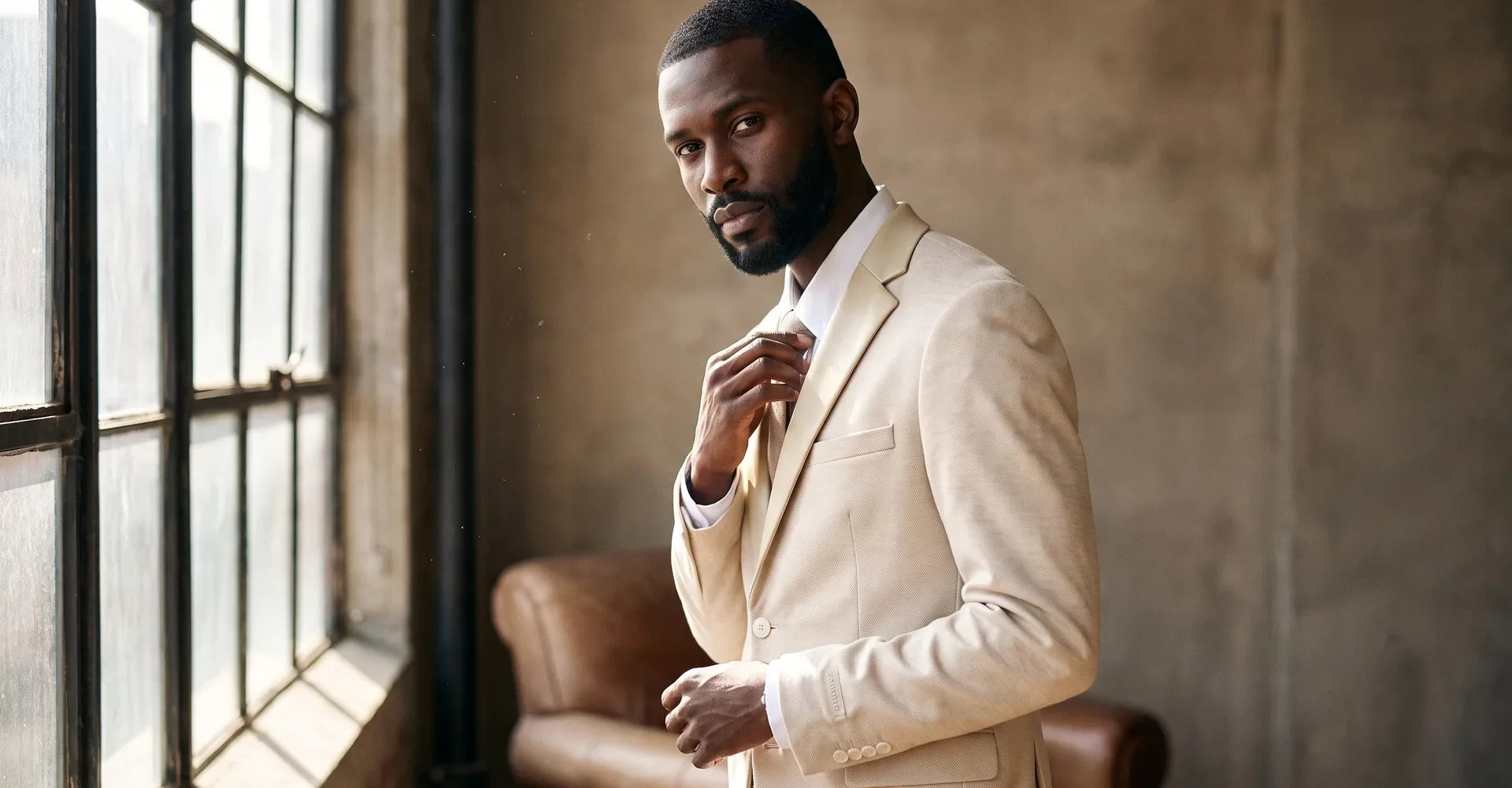
Choose your collar after you know the dress request, not before. If a tie is required, start with a shirt designed to close comfortably around the neck and accommodate one. If an open neckline is welcome, compare a Cuban collar and a point collar under the jacket you intend to wear. A polished outfit needs the right level of formality and a collar that behaves well on you; neither collar name settles both questions.
Know Which Collar You Are Comparing
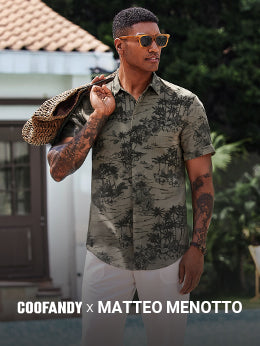
A Cuban or camp-style collar has an open, lapel-like shape. A classic point collar has longer tips and a relatively narrow space between them. Those are collar shapes, not descriptions of the shirt's fabric or pattern. A solid shirt can have an open collar; a printed shirt can have a point collar.
Look at the neckline rather than guessing from a vacation photograph. Is the collar arranged around an open front, or does it have distinct points meeting near a neck closure? Read the description alongside the front view. A shirt styled with several buttons undone does not automatically become a Cuban-collar shirt.
Keep shape separate from construction terminology, too. A one-piece collar describes how the collar is constructed; Cuban or camp describes an open-collar style. Do not assume every collar carrying one label has every feature associated with the other.
For this comparison, the useful distinction is the neckline you plan to wear: an intentionally open, lapel-like front versus a point collar worn closed or open. Color, print and sleeve length are separate choices.
Start With the Dress Request
Read the invitation or workplace guidance first. "Smart casual" can leave room for interpretation; "jacket and tie required" does not leave the same collar decision open. When the wording is unclear, ask the host or organizer rather than trying to read permission into an outfit photograph.
For a client-facing meeting, check whether an open-neck shirt is acceptable at all. If you are presenting and do not know the client's expectations, we would choose a point-collar shirt with an appropriate jacket, then confirm whether a tie is needed. That is a recommendation for uncertainty, not a rule that every meeting demands a tie.

For a relaxed restaurant dinner, an open Cuban collar may be an option if the venue welcomes that style. Still look at the whole outfit: the shirt's condition, the trousers, the shoes and the neckline. Do not use a blazer as permission to ignore the restaurant's stated requirements.
Your first decision is therefore permission, not preference. Once both collars fit the dress request, compare how each one looks and feels in the outfit.
Decide Whether You Need a Tie
A point collar can work with a tie when the knot fits the opening comfortably. It can also be worn open. You do not need to add a tie simply because the shirt has pointed tips, and a point collar does not make an otherwise unsuitable outfit appropriate for every formal occasion.
If you need a tie, try the actual shirt and knot together. Close the neck button, turn your head and look at the opening. Check whether the knot sits between the points without forcing them apart or leaving a gap you dislike. Notice pressure at the neck rather than choosing on the standing mirror view alone.
For the Cuban-collar option in this comparison, plan an open neckline. We would not choose it for a tie-required event without clear garment guidance supporting that use. If your plan depends on fastening the collar in a way the pictures never show, ask for that view before deciding.
Do not compensate for an uncomfortable closed collar by leaving it open under a tie. Reconsider the neck measurement or the shirt instead. Changing the neckline should be a deliberate styling choice, not a way to hide a fit problem.
Test the Neckline Under Your Jacket
Use the same jacket and trousers for both shirts. Otherwise, you may end up judging two different outfits rather than the collar change. Set the neckline as you would wear it, then leave it alone long enough to observe what it does.

- Check at rest. Face the mirror with your shoulders relaxed. Look for a neckline you like and collar edges that sit where you intended. Decide whether you want the open collar inside the jacket or deliberately outside it; avoid an accidental half-in, half-out arrangement.
- Turn and reach. Turn your head, then reach forward as you would across a table. Notice any point that rolls, catches under the lapel or presses against your neck. Do not hold the collar in place during the check.
- Sit and stand. Sit in the complete outfit, then stand without rearranging the shirt first. Compare its natural resting position with the one you started with.
Repeat the sequence with the other collar. If one needs constant adjustment, try a different shirt or jacket combination before deciding that the collar category itself is wrong. Photograph both from the same distance if that makes the difference easier to judge.
Compare One Meeting Outfit and One Dinner Outfit
For the meeting example, start with dark trousers, simple shoes and the jacket you normally wear to work. Add a solid point-collar shirt. If the meeting calls for a tie, test it fastened; if open neck is permitted, test the shirt with the neckline you will actually use. Check it seated as well as standing.
For the dinner example, keep the trousers and shoes and switch to an open Cuban-collar shirt. Keep the same jacket for the first comparison. Ask whether the open neckline looks intentional with its lapels and whether you are comfortable with the amount of chest showing. There is no need to choose an opening deeper than you want just because a model wears it that way.
Then consider whether you plan to keep the jacket on. If you expect to remove it at dinner, inspect the shirt on its own before leaving. This is not a second outfit formula; it is a check of the same outfit in the way you will use it.
If the point collar works better for both plans, choose it. If the Cuban collar suits the dinner and its dress request, that is a reason to choose it there, not to carry it into every meeting.
Check the Details Before Choosing
Pictures can show an open neckline, pointed tips and a styled jacket pairing. They cannot tell you how comfortable the collar will be on your neck or whether it stays where you want after sitting. Check the actual size information, fabric composition and care directions separately; none follows from the collar name.
Our recommendation is to use collar shape as the start of the comparison, then finish with the dress request and a try-on. COOFANDY Signature is COOFANDY's premium menswear collection, with a design focus on fabric, fit, and finishing details. Apply those as separate questions: what does the fabric information say, how does the neckline sit on you, and are the collar edges and stitching orderly? The collection positioning does not guarantee your fit or the outfit's suitability for a venue.
Read the COOFANDY Signature overview and visit the COOFANDY Signature collection. Keep your collar decision tied to your own plans: the right neckline is one you can wear as intended, within the occasion's requirements, without spending the evening adjusting it.
FAQ
Is a Cuban collar the same as a camp collar?
Both terms are used for an open, lapel-like collar style. Do not rely on the name alone to establish every construction detail. Compare the actual neckline and description, and keep one-piece construction separate from the open-collar shape.
Can I wear a Cuban collar with a blazer?
Consider it when an open-neck outfit suits the dress request. Try the actual shirt and blazer together, decide where the collar should sit, and check it after turning, reaching and sitting. A blazer does not override a venue's tie requirement.
Does a point collar always need a tie?
No. A point collar can be worn open or with a suitable tie. Choose by the occasion's requirements, then check the neckline and fit in the complete outfit rather than treating the collar shape as a dress-code guarantee.

Leave a comment