










Halloween Outfits for Men without a Costume
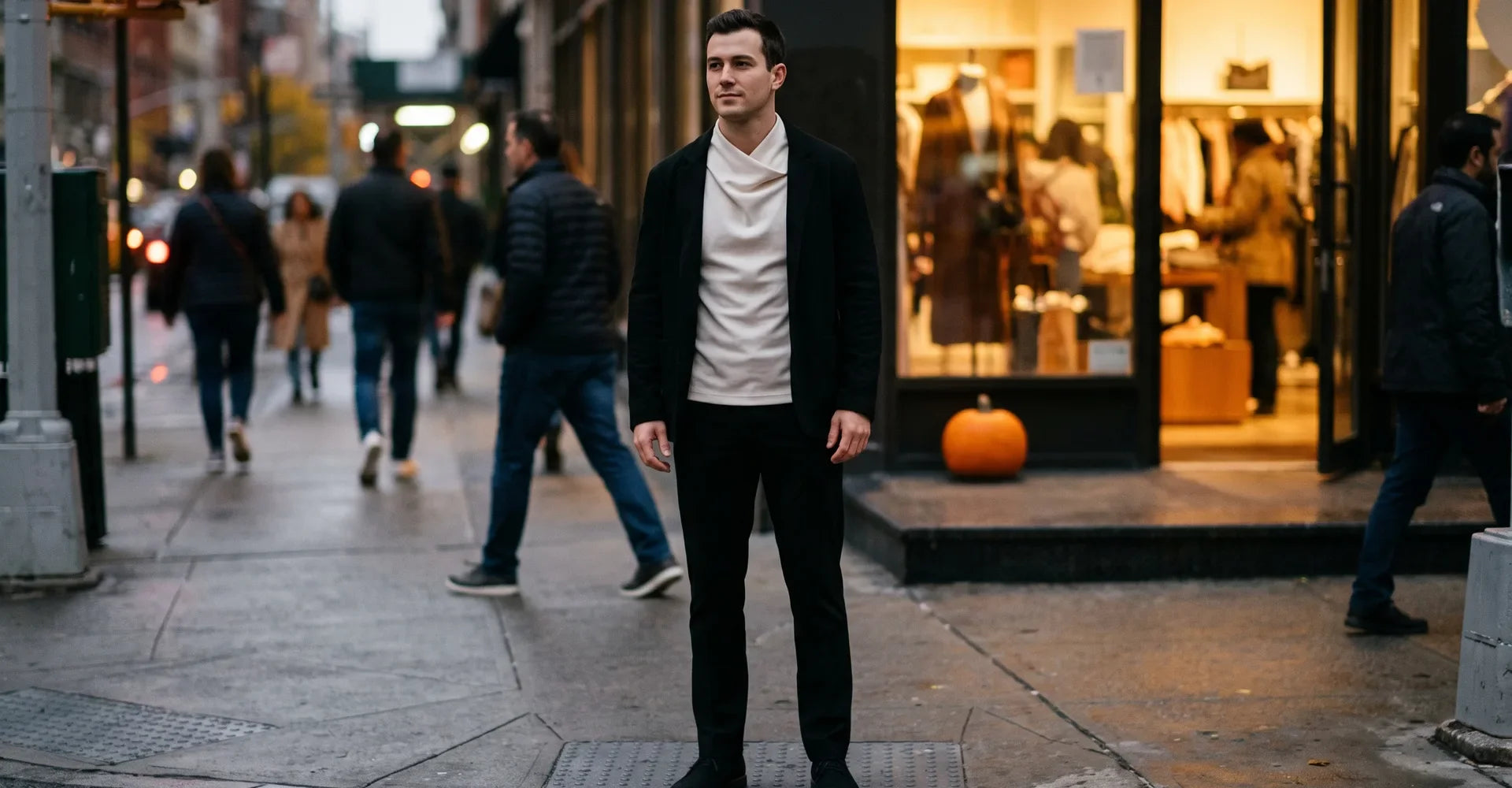
To dress for Halloween without a costume, start with an outfit you would wear on an ordinary evening and change one visible element. A dark tonal combination, a rust-colored top or a light top against black trousers can give you a seasonal direction without a character, mask or prop. Keep the trousers, shoes and outer layer suitable for the place you are going.
Our approach is to make the seasonal detail deliberate, not compulsory. You do not need to buy a novelty garment or explain that you are secretly dressed as someone. But check the invitation first: ordinary themed clothes are not automatically enough when a host has asked everyone to wear a costume.
Make Sure Normal Clothes Are the Right Choice
There is a difference between not owning a costume and not wanting to portray a character. If you want a character made from everyday clothes, use our easy costumes with normal clothes guide. That is a different project from dressing normally with a Halloween mood.
For this article, imagine that you want to go to dinner, meet friends or attend a gathering where seasonal clothing is welcome. You still want to recognize your own style in the mirror. Perhaps you like the occasion but do not enjoy props, or you need the same outfit to work before and after the party. Those are useful reasons to choose a non-costume outfit, provided the event allows it.
If the invitation says “Halloween party” and nothing more, ask whether themed everyday clothes are fine. If it says “costumes required,” agree on an alternative with the host or choose the character route. Wearing black does not itself resolve that requirement. The point is to make a considered choice, not to arrive with an outfit that solves a different problem.
Keep the venue's normal rules in view too. A restaurant's footwear requirement or your employer's clothing policy does not disappear because the gathering has a Halloween theme. Build within those boundaries, then decide how much seasonal detail you want.
Choose the Strength of Your Seasonal Signal
Before choosing clothes, decide how noticeable you want the change to be, then whether you want color or contrast to supply it. These are our styling recommendations, not objective ratings of how everyone will see you. The two more visible routes below are alternatives, not successive levels of intensity.
| Desired attention | Our suggested signal | Seasonal direction and wardrobe preference |
|---|---|---|
| A discreet change | A dark tonal outfit with one visible texture | Our quietest seasonal treatment; choose it if dark clothing already feels natural |
| A visible change through color | One rust, orange or burgundy top with a neutral bottom half | Choose it if you want this guide's seasonal palette and enjoy a colored top |
| A visible change through contrast | A pale top against dark trousers and shoes | Choose it if you prefer light clothing or black-and-white contrast to orange; the seasonal association is deliberately less explicit |
Dark clothing is our starting recommendation for a discreet change, not a promise that nobody will notice. With either visible route, check the full outfit in your own mirror. A vivid orange top or white-on-black combination may feel more attention-grabbing than you wanted. Try muted rust in the color route, or ivory with charcoal in the contrast route, then compare again. If neither feels restrained enough, return to the dark tonal option.
Choose from the pieces you already enjoy wearing. If orange feels unlike you, burgundy is a reasonable alternative for this palette-led approach. If you dislike a high neckline, a plain crewneck or shirt can replace it. The color or contrast is doing the styling work; a particular neckline is not an entry requirement.
Pick one lead detail. For example, if you choose a strong orange top, begin with quiet trousers and shoes instead of immediately adding a printed jacket. You can add more later, but first see whether one change gives you the amount of attention you wanted. Keep identifying props out of all three routes if you want ordinary clothing rather than a character.

Keep the Bottom Half and Change the Mood
For a useful comparison, keep the same straight dark trousers and familiar dark shoes across all three options. Choose a pair permitted at your destination. If you need dress shoes, use them throughout the comparison; do not evaluate one outfit in sneakers and then quietly rely on smarter footwear to fix the next.
Option one: dark, with texture rather than props
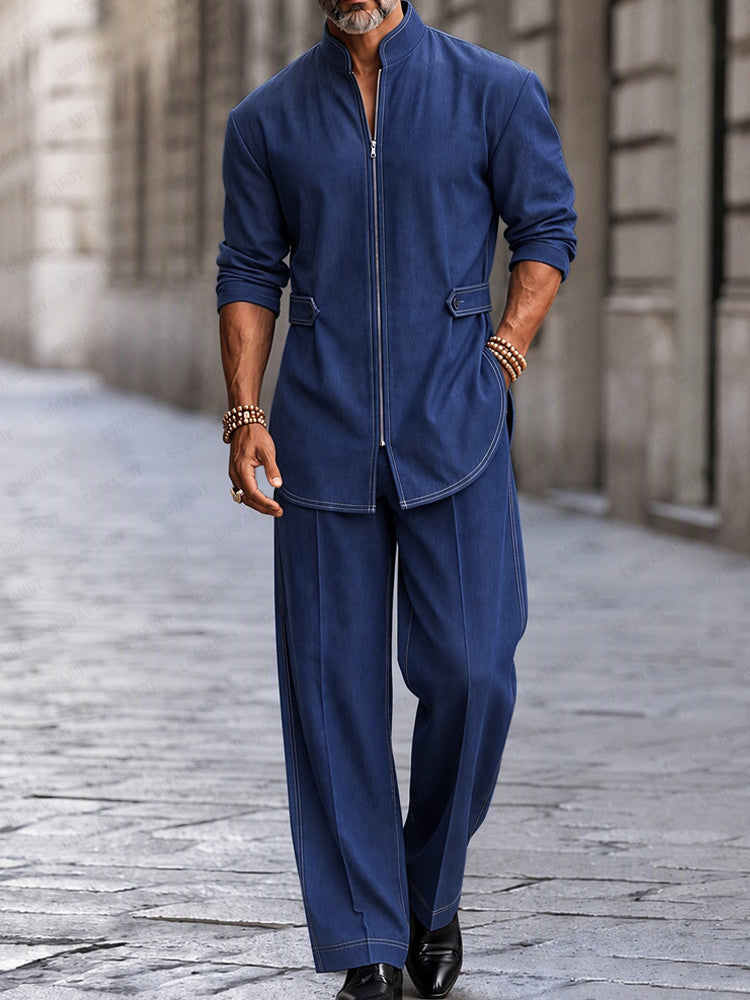
Put a plain black or charcoal top above the dark trousers and add an unpatterned jacket. A knit top is one option; a shirt you already own is another. We would keep jewelry and other details restrained so you can judge the silhouette first.
Check where the top finishes relative to the trousers and jacket. If several hems are visible and you dislike the result, remove an unnecessary base layer or try a shorter top. Do not force a thick knit into a tight waistband just to hide the hem. A different garment from your closet is often the simpler correction.
With the jacket removed, this becomes a straightforward dark evening outfit. That is intentional. If it feels too ordinary for your plans, change one detail, such as choosing a more visible knit texture or a burgundy accent. Do not add sunglasses and a character prop unless you actually want to switch into costume territory.
Option two: let one seasonal top lead
Keep the trousers and shoes, replace the top with rust, orange or burgundy, and wear a plain dark overshirt or jacket. Choose this route when you want a visible color accent and like the seasonal palette we are using. The base remains familiar, while the top supplies the change.
Try it with the jacket both open and closed. If most of the accent disappears, decide whether you want it to show during the journey or only indoors. You can leave an appropriate outer layer open when conditions allow, or simply accept that the outfit changes once you arrive. The coat does not need to be decorative for the indoor outfit to work.
If the combination feels too costume-like to you, first remove any themed accessory, then reassess the top. A muted rust or burgundy piece is an alternative to a vivid orange one. Keep the trousers rather than changing every garment at once; that lets you identify which change actually improves the outfit.
Option three: a light top within a dark frame
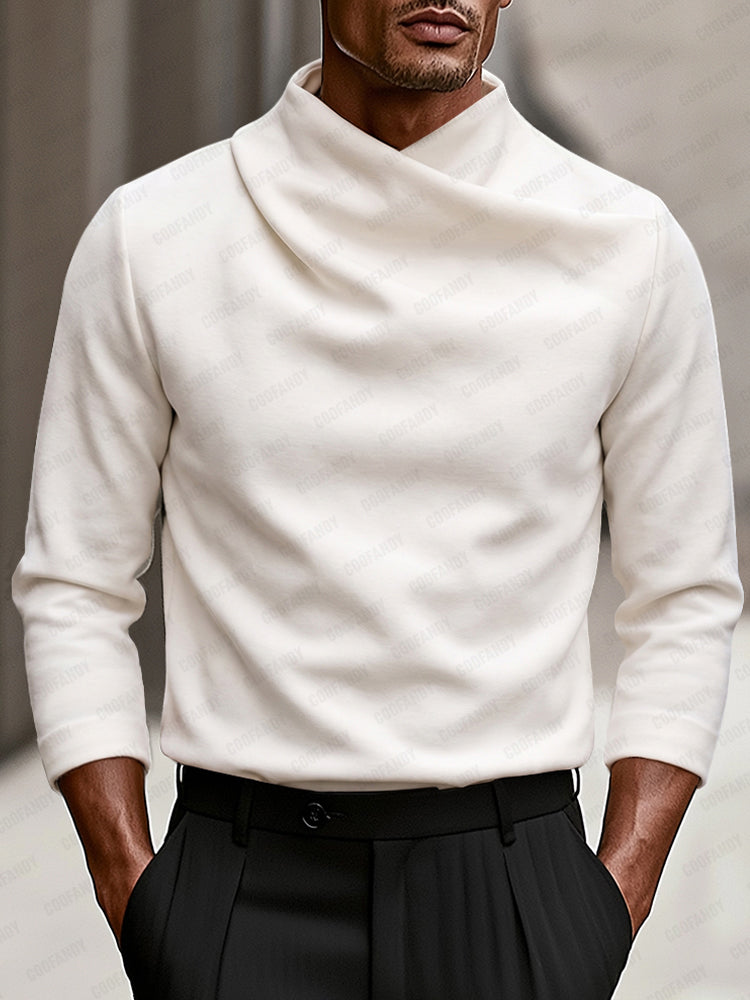
Try an ivory or white top with the same trousers and shoes, then add a dark jacket. Choose this route when you want a noticeable change but would rather wear light clothing than a seasonal-colored top. It is not automatically the low-key option: judge the light-dark contrast separately from how strongly it suggests Halloween. Leave the top plain if your aim is ordinary clothing rather than a ghost character.
Our Modern Stretch Crossover Mock Neck Top is one optional example for this direction. Its listed design is long-sleeved, pullover-style and crossover mockneck. It is a top, not a turtleneck sweater. Look at the selected product images and measurements to decide whether that neckline works with your jacket; the pictured light version is a styling reference, not a promise of current availability in every size.
To try a quieter version, use ivory rather than bright white or charcoal rather than black, and see whether you prefer the result. For more visible contrast, try white against black and keep the jacket open if appropriate; do not add a prop to make the combination count. If a collar competes with the mockneck, replace the jacket rather than adding another shirt collar underneath. Once the jacket is off, check that the top's hem still works with the trousers.

Correct the Details That Feel Like a Costume
Look at the complete outfit, not just the shirt. A group of ordinary items can suggest a character when you add an identifying accessory. That may be enjoyable, but it is not the aim of this particular plan. If you feel as though you need to announce who you are dressed as, decide whether you actually want a costume and choose accordingly.
For a non-costume reset, remove the prop or novelty accessory first. Then look for a second competing detail: a graphic, a conspicuous hat or another strong color. Keep the one you most want to wear and try the outfit again. You do not need a rule banning all graphics or accessories; you need a combination that feels like the level of participation you chose.
Take off the jacket and check the indoor state too. If your whole seasonal idea depended on the outer layer, the outfit may deliberately become less festive inside. If that bothers you, move the accent to the top rather than decorating both layers. For the light-top option, keep its everyday shape visible instead of adding ghost-specific details you do not want to wear.
Finally, sit down and move your arms in the full combination. If the jacket pulls or the trousers feel restrictive, change the problem garment. A neckline or color does not make up for a combination you cannot comfortably use at the actual gathering; the trial is yours, not a guarantee supplied by a garment label.
Take the Outfit From Dinner to the Gathering
For an evening with two stops, choose trousers, footwear and an indoor top that meet the stricter venue's requirements. Then choose a removable detail for the gathering if you want one. For instance, the dark outfit can remain plain at dinner and gain a burgundy accessory later, while the color-led outfit can use a neutral jacket during the first stop.
Do not assume that a jacket conceals a garment the restaurant does not allow. If the venue expects a shirt-and-jacket combination, start with that combination; save a graphic or casual top for another plan. A seasonal mood can be very restrained when the occasion requires it.
Work out where the removable item will go when you are not wearing it. Use a pocket or bag you already intend to carry, and avoid adding something that needs your attention all night. Check the forecast for the journey home and choose outerwear for those conditions. The outfit's Halloween palette does not establish warmth or weather protection.

Buy Only What You Can Use Again
Before ordering, try a top you already own with a similar color, shape or neckline alongside the trousers, shoes and jacket in your closet. That lets you judge the proposed combination without needing to try on an item you have not bought. Use the new product's images and individual size chart to assess the differences; the substitute is not proof of the new garment's fit. Identify the missing job precisely. You may need a different trouser length or a plain top rather than a festive accessory. Browse our men's party outfits collection only after you know which piece you are looking for.
Consider a second, ordinary occasion for any new garment. Would you wear the light top with jeans, or the burgundy knit on a normal dinner night? If the answer is no and you wanted a reusable outfit, try an existing piece instead. That is a wardrobe decision, not a requirement to avoid novelty clothing altogether.
Check your measurements against the individual product chart and review current delivery information for your destination. For a date-sensitive order, keep an outfit you already own as the fallback; a suggested product is not an arrival promise.
You can participate without portraying a character when the event allows it. Choose one signal, build the complete outfit around familiar pieces, and stop when the result feels right for the evening. Normal clothes do not need to become a costume to be a considered Halloween choice.
Frequently Asked Questions
Can I dress for Halloween without wearing orange?
Yes, when the gathering welcomes themed everyday clothes. Try a dark tonal outfit, use burgundy instead of orange, or pair a plain pale top with dark trousers. The pale-top route has a less explicit seasonal association, and strong light-dark contrast is not automatically discreet. Keep the outfit within the venue's ordinary clothing rules.
What if costumes are required but I do not want to wear one?
Ask the host whether a themed everyday outfit is an acceptable alternative before choosing it. If it is not, this non-costume approach does not meet the requirement; choose an accepted character idea or agree on another arrangement. Wearing black or adding a seasonal color is not, by itself, a character costume.
- Fall Colors for Men: Oatmeal, Brown, Burgundy & Olive
- Fall-to-Halloween Sweater Outfit Rotation: 5 COOFANDY Pieces, 10 Easy Looks
- Easy Costumes With Normal Clothes for Guys: Halloween Outfit Ideas From Your Closet
About COOFANDY
Founded in 2015, COOFANDY is a menswear brand created for modern men navigating work, weekends, celebrations, and everyday life. Its collection includes shirts, suits, pants, sweaters, and tees designed to help men build versatile, confident looks for different moments and personal styles. Guided by the belief that clothing can reflect confidence and character, COOFANDY focuses on making approachable menswear part of every stage of life.

Leave a comment