








How to Choose a Blazer as a Gift

A blazer is a higher-risk gift than a casual top because the shoulders, chest, sleeves and jacket length have to agree with the recipient's body and the clothes underneath. Start with a trusted jacket reference or the recipient's measurements. Then decide what role the blazer should play, inspect its visible structure and current care information, and check whether the recipient's wardrobe gives it a second use.
If you cannot verify the shoulders and chest, do not let a familiar letter size make the decision for you. A surprise gift is allowed to include one discreet question. It is better to ask for a jacket size or a measurement reference than to make the recipient solve an avoidable fit problem after the gift arrives. The method below moves in one direction: collect a reference, apply the size gate, confirm the wardrobe role, read the product facts, prove a second use and then verify the purchase terms.
Why a Blazer Gift Needs More Evidence
Before browsing, separate what you know about the recipient from what you are assuming. Write down the jacket size he wears successfully, the kinds of shirts he layers underneath, the occasions where he already wears a jacket and the colors he chooses without prompting. If you do not know any of these, mark them as open questions.
The shoulders and chest should control the first screen. Measure a jacket he owns and likes if you can, or obtain his body measurements and compare them with the current product size guide. Use the same measurement method and units throughout. Do not convert another brand's letter size by memory. A structured blazer can make a small measurement mismatch visible quickly.
Use this evidence split:
| Evidence | What it helps you decide | What it cannot guarantee |
|---|---|---|
| A jacket he wears successfully | A starting size and shoulder reference | That a different brand or cut will fit the same way |
| His actual measurements | Whether the current size guide is usable | The final behavior of the delivered garment |
| His usual occasions | The jacket's wardrobe role | That the jacket meets a specific dress code without checking it |
| A current product page | Visible structure, listed options, composition and care | Fit, formalness, comfort, performance, availability or delivery |
| Current store terms | The process to review before purchase | That an exchange will be effortless or guaranteed |
This distinction matters for a gift because the buyer often sees the product before the recipient does. The product page can describe the item. The recipient's body and wardrobe decide whether the item is useful.

Six Decisions for Choosing a Blazer Gift
1. Find a reliable size and shoulder reference
The best reference is a jacket the recipient already wears and likes. Confirm the size label, then measure the shoulder, chest, sleeve and body-length references if possible. A flat garment measurement and a body measurement are different kinds of evidence, so do not compare them as if they were interchangeable. Use the current size guide to understand which type the product page requests.
If the jacket is a surprise, ask someone who can check the label or use a low-pressure question about his usual jacket size. Do not infer the size from height, weight or the size of a shirt. Those clues may help you start a conversation, but they do not replace shoulder and chest information.
Do not choose a size from this first note alone. The next decision applies the current size guide to the reference and decides whether the shoulder and chest evidence is strong enough to continue.
2. Apply the shoulder and chest size gate
Now open the current product size guide and compare the recipient reference with its measurement labels and units. When a measurement sits between options, identify the trade-off before ordering. A larger size may change the shoulder and sleeve relationship; a smaller size may create chest or movement problems. If the chart does not give enough information to make that comparison, pause and ask.
This is the pre-order shoulder and chest gate. After the gift arrives, inspect where the shoulder seam lands, button the jacket over the intended base layer and look for repeated strain at the chest. Check sleeves, body length and ordinary movement while standing, sitting and reaching. A product page and size chart can screen the order; the actual garment settles the fit question.
For a focused shoulder explanation, read How Should a Casual Blazer Fit Through the Shoulders. That page narrows the shoulder question; this guide keeps it connected to the larger gift decision, including use, care and wardrobe support.
If the shoulder or chest gate fails after delivery, do not try to solve it with a different shirt, pocket square or trouser color. Styling can refine a good fit. It cannot make a failed structural fit reliable.
3. Decide whether the jacket's role is real
Name two occasions where he could wear the blazer with clothes he already owns. A work presentation and a dinner, or a reception and a smart-casual weekend gathering, are more useful than “special occasions.” Then check that those occasions allow a blazer with separate trousers. A blazer should not be presented as a substitute for a matching suit, tuxedo, uniform or another required category.
Look at his current wardrobe for supporting pieces. Does he own trousers that work with the jacket? Does he have shirts and shoes at the same level? If the gift only works after buying several additional items, the blazer may be an expensive starting point rather than a useful gift.
4. Match visible structure to his existing style
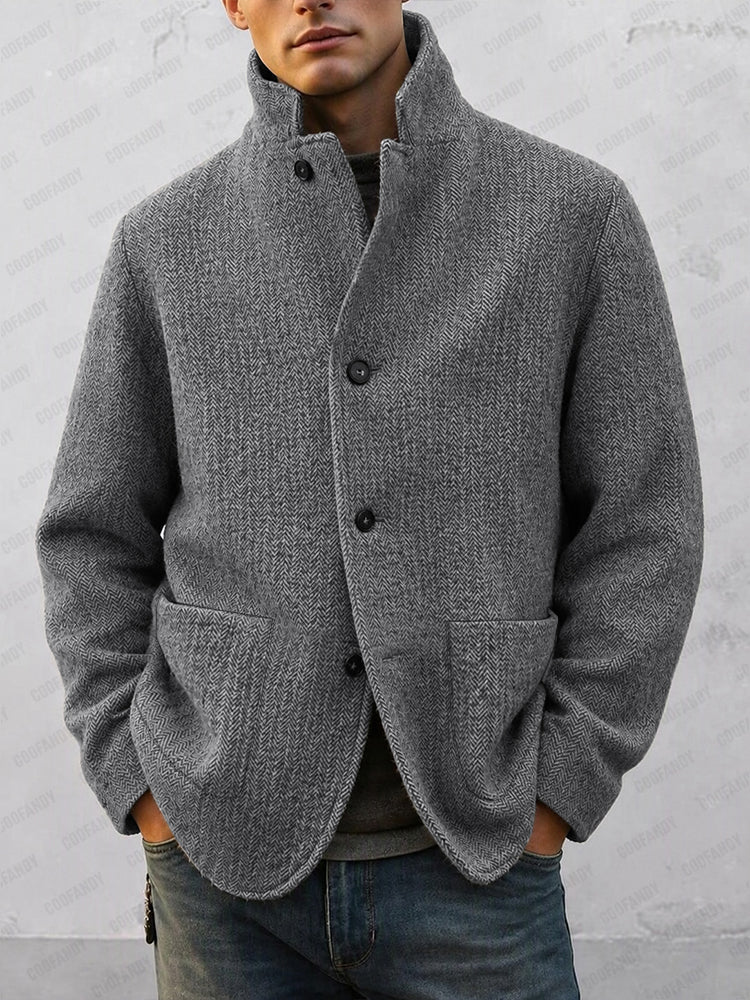
Inspect the lapel, button arrangement, shoulder line, pockets, length and any lining or construction details shown on the current product page. Ask whether those details repeat something he already wears or create a deliberate but manageable change.
One current Signature example shows why this step belongs after the fit gate. The Tailored Fully-Lined Peak-Lapel Wool Blend Blazer is listed with an extended peak lapel, structured waist, crisp shoulder line, single welt chest pocket, two flapped pockets and fully lined construction. The current page lists Black and Gray options. Those are identity and visible design fields. They do not make the blazer universally formal, universally flattering or automatically right for the recipient.
If he usually wears softer, less structured layers, a crisp shoulder line may be a significant style change. That can be the point of the gift, but only if you can name an occasion and supporting outfit where the change makes sense. If his wardrobe already uses tailored jackets, the same details may be a safer continuation. Let the recipient's choices decide how much change is appropriate.
5. Read composition and care as part of the gift
A blazer becomes the recipient's responsibility after the present is opened. Read the current composition and care fields before buying, then compare them with his routine. For the example above, the page currently lists 37% wool, 36% polyester, 25% viscose and 2% spandex, with professional dry clean only as the care instruction.
Those are current page facts. They do not prove warmth, comfort, stretch, durability or performance. The useful gift question is simpler: can the recipient follow the listed care instruction, and does that routine fit how often he expects to wear the jacket? If the answer is unclear, ask or choose another gift.
Composition should also be read alongside the occasion. A product name or fabric label does not determine whether an invitation accepts the jacket. Check the event language separately and follow the stated requirement. A well-researched gift still fails if it asks the recipient to wear the wrong garment category.
6. Choose color and prove a second use
Color should connect to the recipient's trousers, shirts and shoes. Look for colors he already selects, then decide whether the gift should blend into that wardrobe or provide a controlled new option. Black and Gray can lead to different outfit decisions, but neither is universally safer without context.
Build one complete outfit on paper: jacket, shirt, trousers and shoes. Then write a second version using the same jacket. If you cannot make two realistic combinations, the jacket may be tied to one hypothetical event. Check the design at the level of the complete outfit, not just the product image.
If the color and two-use test pass, continue to the final purchase gate. Keep the decision attached to the specific product and the date you checked it; a color preference should never override unresolved shoulder or chest evidence.

Final Purchase Gate: Verify the Current Terms and Fit Plan
Before purchase, recheck the current product page, size guide, composition, care instruction and store terms. Prices, stock, delivery and return conditions can change; this guide does not establish any of them. Confirm what the recipient will need to do if the actual shoulder, chest, sleeve or length check fails after delivery. The current product page and current store terms are the source for that operational decision.
After the gift is opened, use the intended base layer and run the standing, seated and movement checks from decision two before removing tags or treating the jacket as ready for an event. If the fit is unresolved, follow the current terms and stop the styling experiment until the structural question is settled.
Blazer Gift Decision Table
Use this table to turn your research into an action rather than a vague impression.
| Gift question | Evidence to collect | Action |
|---|---|---|
| Can I choose the size? | Jacket reference or measured shoulders/chest plus current size guide | Proceed only when the comparison is understandable; ask when it is not. |
| Will the blazer have a real job? | Two occasions and the trousers/shirts/shoes he already owns | Keep the gift only when both uses are plausible and the dress code allows it. |
| Does the structure match him? | Current lapel, buttons, shoulder line, pockets and his existing jackets | Choose a continuation of his style or make a deliberate change with a named use. |
| Can he maintain it? | His care routine and the current composition/care fields | Check that the listed care is realistic before buying. |
| Will the color earn a second use? | His recurring shirt, trouser and shoe colors | Select the option with two complete outfit paths, not the one that looks best alone. |
| What happens if the fit is wrong? | Current store terms and a clear stop point | Verify terms before ordering and avoid making a fit promise to the recipient. |
The table is intentionally conservative. A gift decision has to survive the moment when the recipient tries on the actual garment, not only the moment when the buyer sees the product photograph.
When Not to Guess
Pause the order when you do not have a shoulder or chest reference, when the current size guide cannot resolve the recipient's measurements, or when the recipient's usual jacket size is unknown and cannot be checked discreetly. A blazer has too many structural variables for a height-based guess.
Pause when the recipient has no trousers, shirts or shoes that can form a second outfit, when the listed care instruction conflicts with his routine, or when the only use is an event whose garment requirement the blazer does not meet. Pause when the product's visible structure would be a major style change that you cannot connect to a real occasion.
If the size evidence, intended use or current review path is unclear, waiting is a responsible gift decision. A smaller, easier-to-size present can be more useful than a blazer chosen from incomplete information.

The Blazer Gift Checklist
Before you order, confirm these seven points:
- You have the recipient's jacket reference or measured shoulder and chest information.
- You compared that evidence with the current product size guide.
- You named two real occasions and checked that separate trousers are allowed.
- You inspected the blazer's visible structure and matched it to his style signals.
- You read the current composition and care fields without inferring performance or formalness.
- You built two complete outfit paths with the jacket.
- You checked the current store terms and have a plan for the post-arrival fit check.
For broader series context, visit the COOFANDY Signature page, then browse the COOFANDY Signature collection after the size and use-case checks are clear. The right blazer gift is chosen through evidence: fit first, wardrobe role second, product details third and purchase timing last.
FAQ
How can I choose the right blazer size as a gift?
Use a jacket the recipient already wears and likes as a reference, or obtain measured shoulder and chest information. Compare that evidence with the current product size guide and check the sleeve and body-length references as well. If the shoulder or chest comparison is unresolved, ask or pause instead of choosing from height, weight or a familiar letter size alone.
What should I check first on a gifted blazer?
Check the shoulder seam and chest closure with the intended base layer, then test sleeves, body length and ordinary movement. These structural checks come before color or accessories. If the jacket fails through the shoulders or chest, styling changes cannot make the fit reliable.
What if I do not know his measurements?
Try to check a jacket label or measure a jacket he already wears, ask a discreet sizing question or choose a gift that does not depend on precise shoulder and chest fit. Before buying, review the current product page and store terms. If you cannot resolve the size, intended use and review path, waiting is better than guessing.



Leave a comment