











Summer 2026 Matching Sets for Men: How to Choose Proportions That Do Not Read as Loungewear
A matching set handles color coordination before you have even put on shoes. It does not automatically handle proportion. Two pieces in the same shade can look sharp and easy, or they can lose their shape and read too relaxed for the place you are headed. The difference usually appears in a full-length mirror: where the shirt ends, how the lower piece meets the shoe, and whether the outfit keeps a visible line when you move.
This is not about strict rules or trying to make every set look formal. It is about seeing the outfit as other people will see it: from several feet away, across a table, and after you have sat down and stood back up.
The Mirror Test Should Be a Little Boring
Put on the exact shoes you plan to wear, then step back from a full-length mirror. Do not begin by adjusting a collar or adding accessories. Look at the complete outline first. Does the top end in a place that lets the lower half stay visible? Is there a clear relationship between the hem, trouser line, and footwear? Does the color look like one calm shape or one large block with no direction?
Take a few ordinary steps. Turn to the side. Then sit in a chair for a few minutes and stand up again. A set can look balanced in a still photo but change once the shirt settles or the lower piece moves at the knee. That is ordinary, and it is why a quick seated check is useful before a lunch, a flight, or a dinner reservation.
Pay attention to the first thing you want to fix. If it is the shirt length, changing the footwear may not solve it. If the shoes feel disconnected from the rest of the outfit, another bracelet or a hat will not repair the line. Find the actual issue, then make one change.
Shoes Set the Ground Level
Shoes do more than finish a matching set. They establish where the outfit belongs. A clean, simple shoe can keep an easy set pointed toward a city lunch, while a different choice may suit a relaxed outdoor afternoon. The right pair depends on the venue, terrain, walking, and the level of dress expected there.
Check the hem while you walk. Does the lower piece land cleanly near the shoe, or does it gather in a way that makes the outfit feel accidental? Look once from the side and once while seated. The shoe you like on its own may not support the proportions of that particular set.
This is also a good place to resist overcorrecting. One clear shoe decision is often enough. A matching set does not need every detail sharpened at once. Too many competing finishes can make the result look more studied, not more intentional.
Tuck, Untuck, Then Decide for This Outfit
An untucked top can work when its hem and the lower-piece shape create a readable break. A tuck can work when the top construction, waist, and occasion call for more definition. Neither is a default answer for every coordinated set.
Try both versions in the mirror with the actual shoes on. Sit down in each version. If a full tuck feels too controlled for the destination, a partial adjustment may not be the answer either; the untucked finish may simply be the more natural choice. Conversely, if the set loses all shape when the top is left loose, the occasion may need a different finish or a different outfit.
The best option is the one that still makes visual sense when you are not holding a pose. That is the standard worth keeping.
Let the Place Narrow the Styling Choices
A daytime outdoor gathering, a neighborhood dinner, a vacation restaurant, and an office-adjacent appointment ask different things of the same set. Name the plan before styling it. Will you walk on uneven ground? Will you spend most of the time seated? Is the restaurant casual but busy, or does the host expect a more structured look? Those details are more helpful than a generic label such as "smart casual."
For a daytime plan, a clean hem and appropriate shoes may be enough. Dinner may make the shirt finish and footwear more important. At an office-adjacent event, the set should be judged against the people, setting, and expected dress level rather than assumed to replace a more structured combination.
The venue can also tell you when not to force the set. A good outfit choice is sometimes deciding that a matching color story is less useful than a trouser and shirt that better fit the day.
Check the Pieces Together and Apart
Once the set looks right as a pair, test each piece with one thing you already own. Put the top with a real trouser and your usual shoe. Put the lower piece with a real shirt for a place you expect to go. This is not a requirement that every set split into several outfits. It is a way to learn whether the pieces will be useful outside the coordinated look.
Keep the test concrete. "I could wear this sometime" does not tell you much. "This top works with these trousers for Saturday lunch" does. If the pieces are strongest together, that is fine too; the set may simply have a more specific role in your wardrobe.
Try the Details Against Your Own Shoes
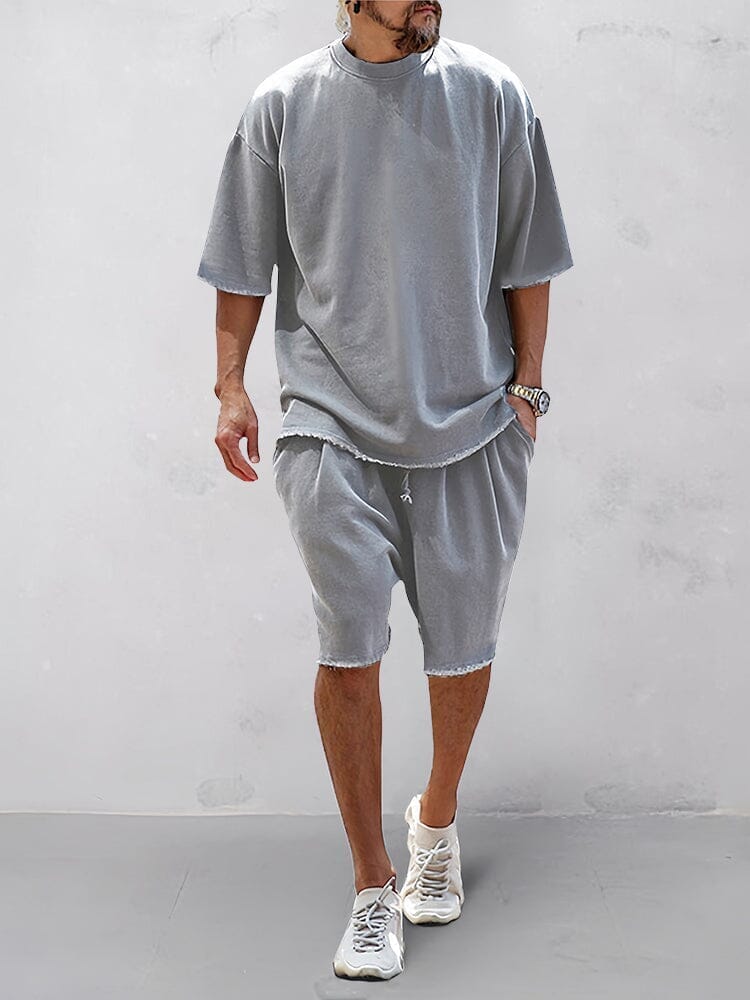
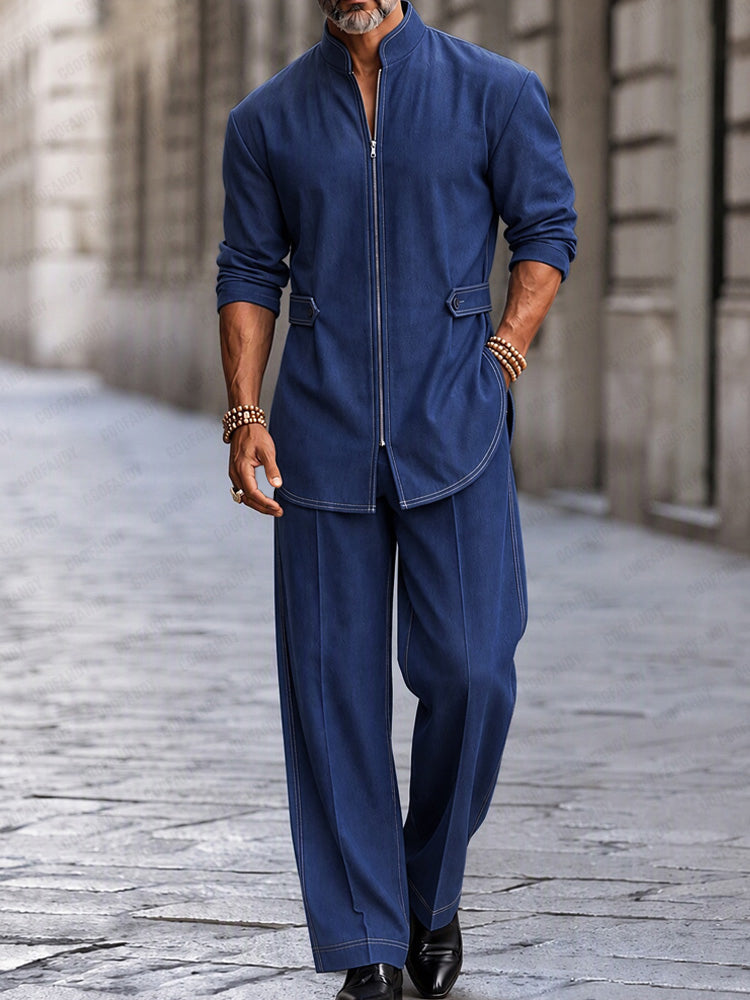
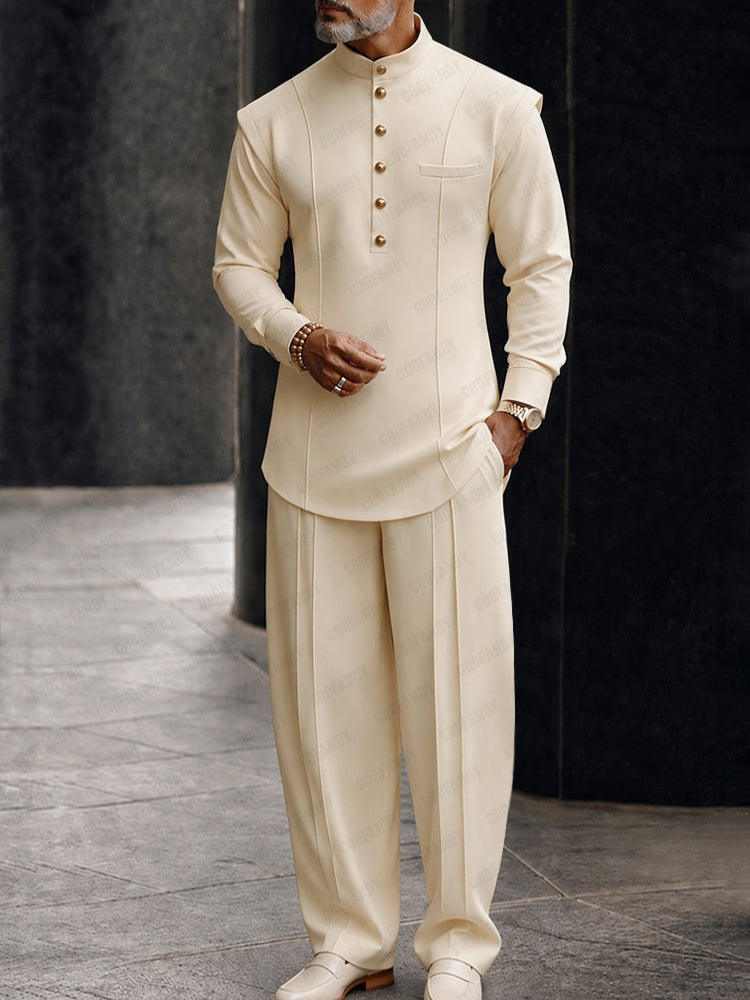
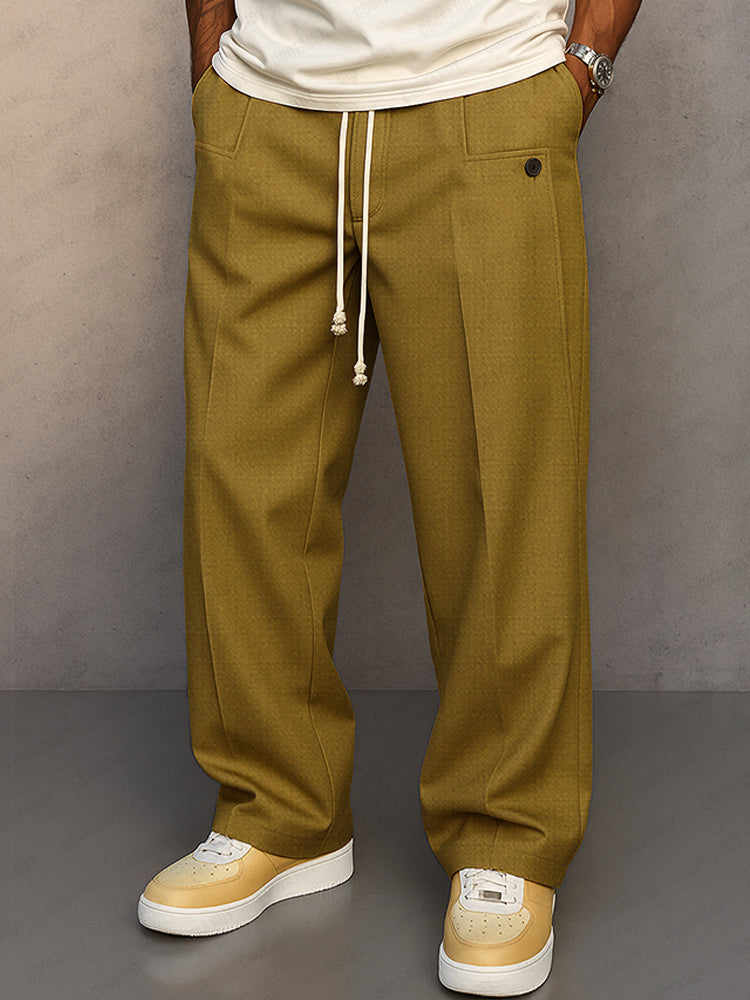
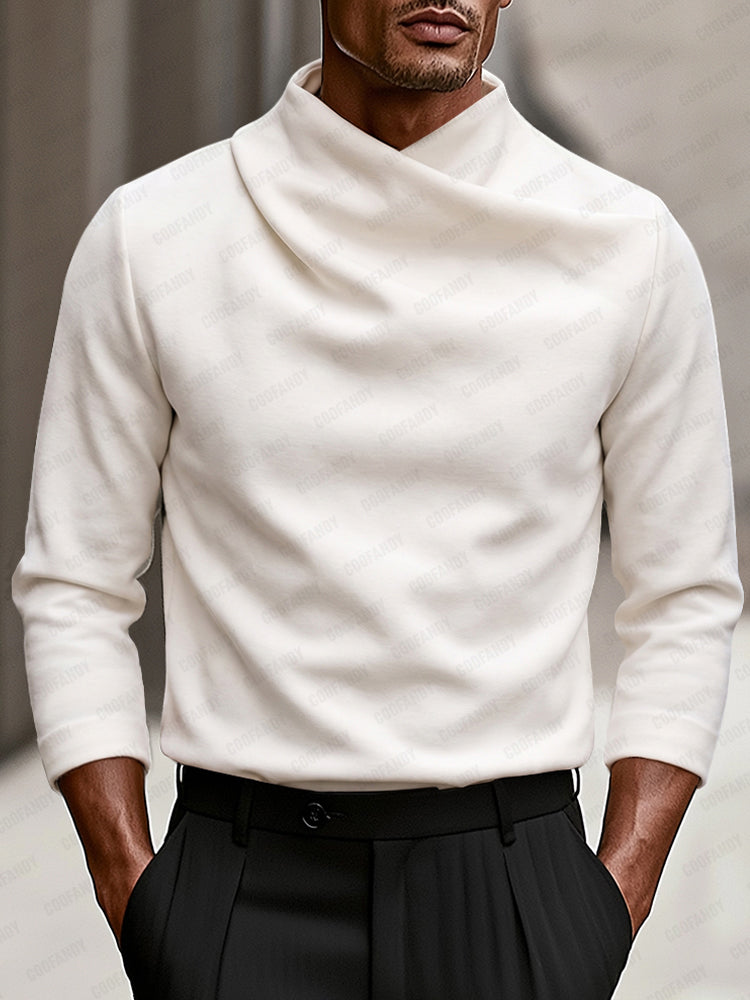
The Essential Urban Casual Matching Set and Effortless Simple Style Matching Set give you two different silhouettes to try against your own shoes and destination. Put each top length and lower-piece shape through the same mirror, walking, and seated checks.
The details for the exact selection matter most when you are deciding whether to wear it. Look at the material and care information with the actual plan in mind, then let the shape, shoes, and venue make the final call. A coordinated name can get you started; it cannot choose the dinner, office, or travel setting for you.
One Last Look From Across the Room
Before leaving, move several steps away from the mirror and check the outline one more time. Look at the waist, the hem, and the shoes. Sit, stand, and see whether you still like the balance. Remove the extra detail that is only making noise.
Then stop adjusting. A matching set works best when it looks like you chose it quickly because you knew what you were doing, not because you spent an hour trying to force it into a role it does not have.
FAQ
Can a matching set work for dinner?
It can, depending on the set's shape, shirt finish, footwear, and the restaurant's expected dress level. Try the whole combination before relying on it for the reservation.
How do I keep a matching set from looking too relaxed?
Check the full outline instead of adding more accessories. The hem, top-to-bottom break, shoes, and venue usually give you the clearest answer.
Should I tuck in the top?
Try tucked and untucked versions with the planned shoes, then sit and walk in both. Choose the one that keeps a clear line for that particular destination.
Can I wear the two pieces separately?
Possibly. Test each item with one real piece from your wardrobe and a specific occasion rather than assuming it will work in every combination.

Leave a comment