







Hot Weather Office Pants: Stay Cool, Look Professional
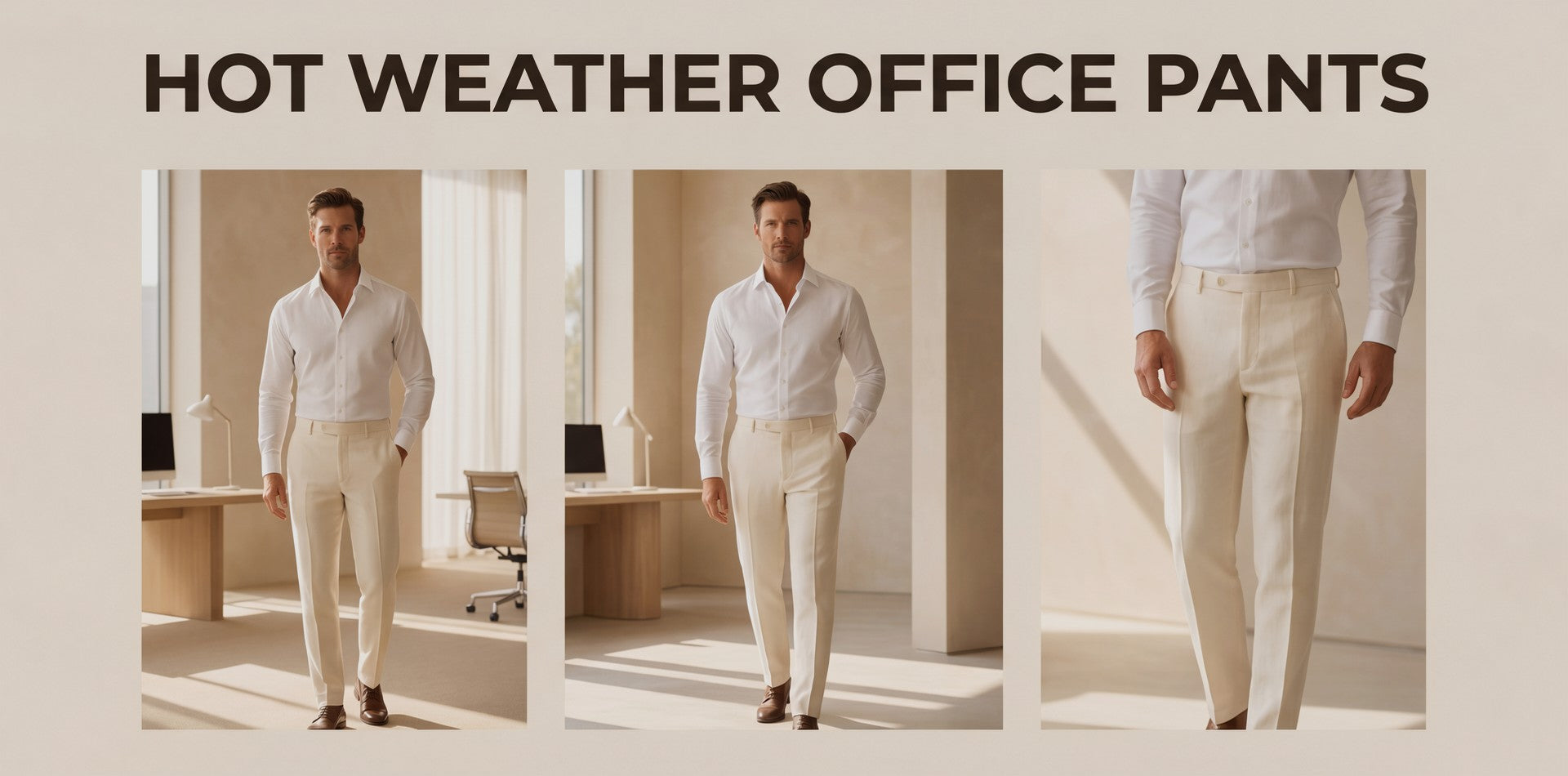
The best men's pants for a hot weather office are linen, cotton-linen blends, and lightweight cotton chinos — in that order. If your office runs warm or you commute through summer heat, your pants should work as hard as your air conditioning does. The wrong fabric (looking at you, heavyweight denim and synthetic dress pants) traps heat, creates visible sweat marks, and makes every meeting feel ten minutes longer than it is.
Here is a breakdown of what actually works, why, and what to buy.

The Fabric Hierarchy: Ranked by Breathability
Not all "lightweight" pants are created equal. Fabric weight (measured in GSM — grams per square meter) and fiber composition determine how much heat your pants trap. Here is how common office-appropriate fabrics stack up:
|
Fabric |
GSM Range |
Breathability |
Wrinkle Resistance |
Office Formality |
|---|---|---|---|---|
|
100% Linen |
130–180 |
Excellent |
Low |
Smart-Casual |
|
Cotton-Linen Blend (55/45) |
150–200 |
Very Good |
Moderate |
Business-Casual |
|
Lightweight Cotton Chino |
180–220 |
Good |
Good |
Business-Casual |
|
Tropical Wool |
200–240 |
Good |
Very Good |
Business-Formal |
|
Polyester Dress Pants |
200–260 |
Poor |
Excellent |
Business-Formal |
|
Heavyweight Denim |
340–400+ |
Very Poor |
N/A |
Casual |
The takeaway: if your office dress code allows anything below business-formal, you should not be wearing polyester dress pants in summer. They retain heat, do not wick moisture effectively, and the wrinkle resistance advantage is meaningless if you are visibly uncomfortable.
Option 1: Linen and Cotton-Linen Pants (Best for Breathability)
Linen is the king of summer fabrics. The hollow fiber structure allows maximum airflow — it can absorb a significant amount of moisture (up to 20% of its own weight by some textile industry estimates) before feeling damp.¹ In practical terms: you stay dry longer.
For office wear, cotton-linen blends hit the sweet spot. The cotton component adds structure and wrinkle resistance. The linen component delivers breathability. A 55/45 cotton-to-linen ratio retains most of pure linen's cooling performance with significantly fewer wrinkles by end of day.
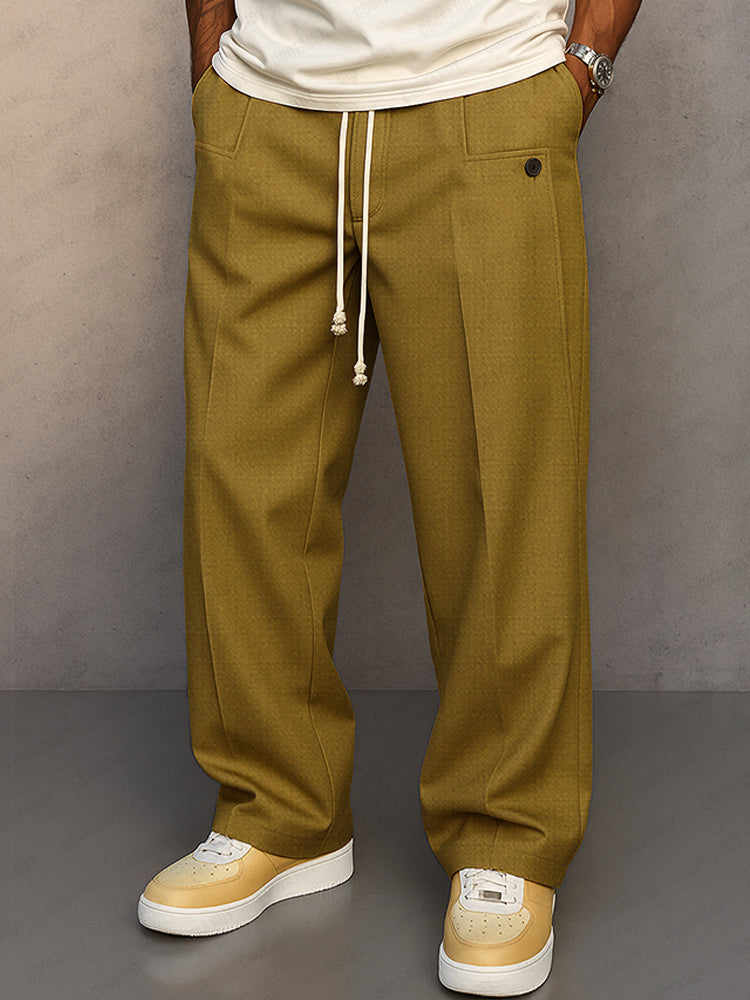
At COOFANDY, we built our cotton-linen pants specifically for this use case, with options such as the Casual Solid High Waist Cotton Linen Straight Pants. The tapered cut and clean waistband keep the silhouette professional. The fabric blend keeps you cool through a full workday without looking like you just stepped off a resort shuttle. Price per pair sits around $30–40 — less than half of what Banana Republic or J.Crew charges for comparable fabrics.
Best for: offices at 74°F+ or outdoor commutes in 80°F+ weather. Pair with leather loafers and a button-down for a clean look.
Option 2: Lightweight Cotton Chinos (Best All-Rounder)
If your office leans closer to business-casual and linen feels like a stretch, lightweight cotton chinos are the safe pick. Look for 7–9 oz (200–260 GSM) chinos — anything heavier than that and you lose the summer benefit.
Lightweight chinos offer the broadest dress-code compatibility. They work with blazers for client meetings and untucked shirts for casual Fridays. The tradeoff: they breathe noticeably less effectively than linen or cotton-linen blends in peak summer heat.
Key brands in this space: Bonobos Lightweight Chinos ($98), J.Crew 770 Stretch ($79.50), and COOFANDY Cotton-Blend Tapered Pants ($28–35). If value per dollar is your metric, the gap is significant.
Best for: business-casual offices where linen is borderline. Commuters who need a single pair that handles both the subway and the conference room.
Option 3: Tropical Wool (Best for Business-Formal)
For offices that require dress pants — no linen, no chinos — tropical wool is the answer. It is a lightweight weave (typically under 240 GSM) designed for warm climates. It breathes better than standard wool and significantly better than polyester.
The catch: tropical wool costs more ($100–300 per pair from most brands) and requires dry cleaning. For most men, this is a niche option reserved for high-formality workplaces.
Best for: law firms, finance, and any environment where "dress pants" is a non-negotiable requirement.

What to Avoid in Summer
Synthetic dress pants. Polyester and polyester-blend dress pants are the worst performers in heat. They do not breathe, they trap moisture, and they generate static in dry air-conditioned environments.
Heavyweight denim. Some offices permit jeans. Even then, heavy 12+ oz denim in July is an endurance test, not a style choice.
Dark colors in direct sunlight. If you walk or bike to work, darker fabrics absorb more heat. Navy is fine indoors but brutal during a fifteen-minute outdoor commute at noon. Lighter shades (khaki, stone, light gray) reflect more heat.
Frequently Asked Questions
Are linen pants too casual for an office?
In most smart-casual and business-casual offices, no. Choose a dark color (navy or charcoal) and pair with leather shoes. Avoid white or cream unless your office is very relaxed.
Can I wear shorts to a hot weather office?
Most offices still do not permit shorts, even in summer. Lightweight pants in breathable fabrics are the professional alternative.
How much should I spend on summer office pants?
You can find quality options between $28 and $100. Higher price does not always mean better fabric — check the GSM and fiber composition, not just the brand.
Do wrinkle-resistant pants breathe well?
Generally, no. Wrinkle resistance often comes from synthetic blends or chemical treatments that reduce airflow. If breathability is your priority, accept some wrinkling and choose natural fibers.
Learn More
-
Sewport Fabrics Directory — What Is Linen Fabric: Properties, How It's Made and Where (sewport.com/fabrics-directory/linen-fabric)
-
Wikipedia — Linen: History, Properties, and Uses (en.wikipedia.org/wiki/Linen)
Shop COOFANDY Men's Linen Pants
Leave a comment