








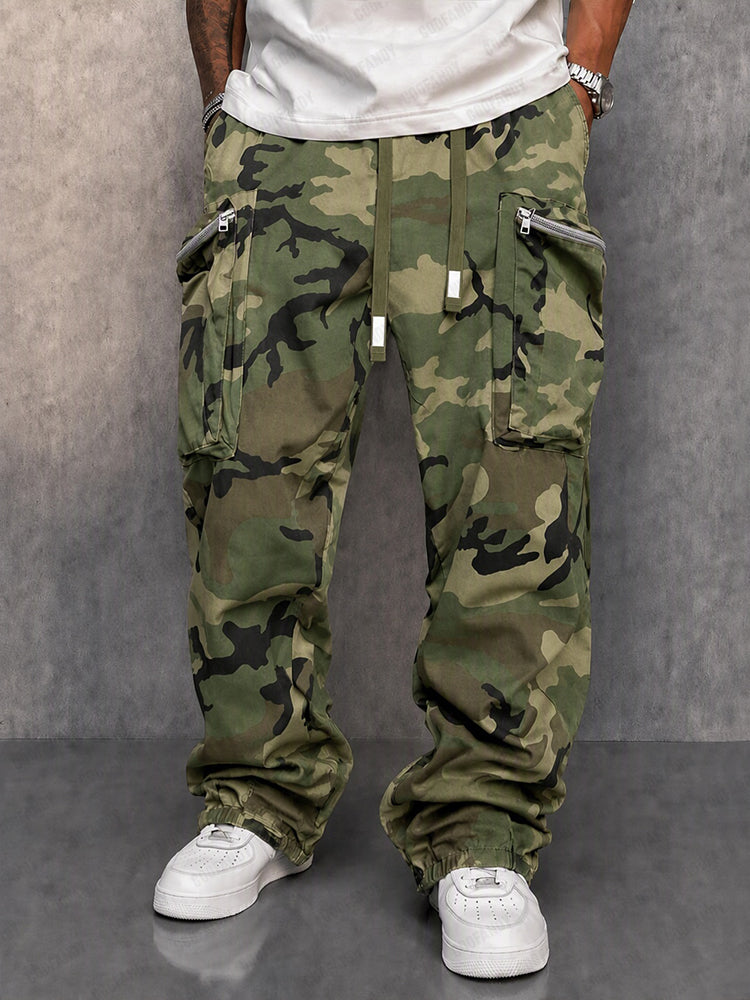
15 NASCAR Outfit Ideas for Fans Who Want to Stand Out

Build your race-day look around a camp-collar shirt, a knit polo, or a light matching set. These 15 NASCAR outfit ideas cover sunny grandstands, hospitality seats, and group photos, with combinations you can wear again after the weekend.
Choose a look that suits your plans: the men's NASCAR outfit guide helps with fabric and fit, while knowing what to wear to a NASCAR race keeps shoes, sun protection, and evening layers in the picture.
Key takeaways
- Let one neckline, texture, or pattern lead the outfit.
- Change proportions and layering, not just accessory colors.
- Use a statement shirt with quieter bottoms rather than competing patterns.
- Matching sets, jackets, and hooded looks can remain general styling options.
- Coordinate friends through a shared visual idea without assigning identical clothes.
Start with a clear color combination
One main color and one or two neutrals give the eye a clear path. Navy with stone creates a crisp division; olive and cream feel gentler; charcoal and pale blue emphasize the edges of a layered shirt. Contrast can sit at the collar, waist, or shirt opening rather than appearing in every accessory.
Texture matters most when colors are close. A knit polo above smooth chinos separates the surfaces without adding a pattern. A textured shirt and visibly faded jeans create a busier combination, so decide which one should carry the attention. These looks are alternatives, not a shopping list: start with the outfit closest to clothes you already own.
Camp collars and lightweight shirts
The first five ideas explore open necklines, visible shirt fronts, and different relationships between an outer shirt and the base beneath it.
1. Textured Cuban-collar shirt, dark straight jeans, understated sneakers.
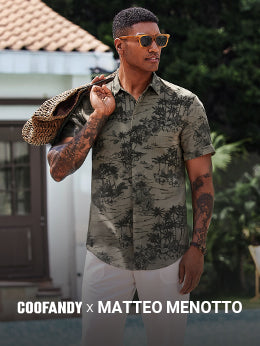
COOFANDY's Cuban Collar Textured Stripe Short Sleeve Shirt gives this combination its focal point. The 100% polyester fabric has a 3D vertical-stripe jacquard, with wood buttons, a full button placket, a Cuban collar, short sleeves, and a loose fit. The interest comes from the raised pattern and open neckline rather than a large graphic. White, khaki, and dark brown offer three distinct starting points.

For this look, choose white or khaki above dark denim so the texture remains easy to read. Button the shirt as the main top and let the collar sit naturally; a visible undershirt creates another neckline and changes the intended effect. Straight jeans give the loose upper half a clear foundation without making the whole silhouette oversized.
The full opening also makes the shirt useful for a different occasion over a plain tee. That is a meaningful second use, not simply a new cap color: the shirt changes from the central surface to a frame around the base. Compare chest and hem length before choosing the size, and keep any belt or jewelry restrained around the textured front. Cold machine wash with like colors supports regular rotation after race weekend.
2. Navy linen-blend shirt, open over a white tee, khaki shorts.
The white center panel breaks up the darker upper half. Choose an outer shirt that leaves room at the armhole over the tee, and keep their hems close enough that the layering looks deliberate. A much longer tee changes the shape rather than merely adding coverage.
Straight shorts balance the open shirt without adding more fabric around the hips. This is a useful outfit when the tee needs to work alone during the warmest part of the day. The outer shirt has a real role: it creates a frame when worn and can come off without leaving an incomplete base.

3. Olive woven shirt, cream shorts, a simple neckline.
Wear this shirt buttoned rather than open so the upper half reads as one surface. Olive and cream create softer contrast than the navy-and-white layers above. A relaxed neckline and visible weave provide enough interest without another top showing underneath.
Keep the shorts relatively clean through the front. Large patch pockets or a heavily distressed finish would change the quiet character of the outfit. An untucked shirt should leave enough of the shorts visible to preserve the proportions; a long shirt covering most of them can make the lower half look accidental.
4. Pale blue outer shirt, charcoal tee, black shorts.
Here the light color moves to the outside of the layers. The dark center makes the open shirt edges prominent, while black shorts continue the darker line below. It is a different composition from a pale tee framed by navy, not just a substitute shirt color.
A curved hem makes the shirt's layered role more visible. Keep the tee free of a large graphic if you want that frame to remain the main detail. Try reaching forward with both tops on: a roomy chest does not guarantee comfortable armholes when one garment sits over another.
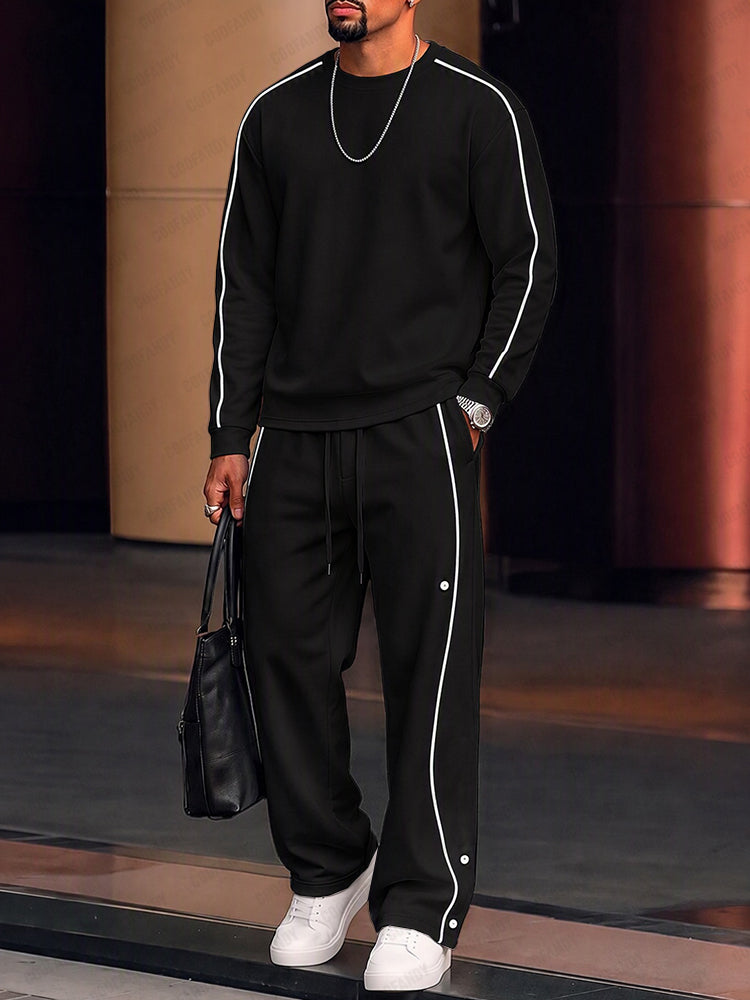
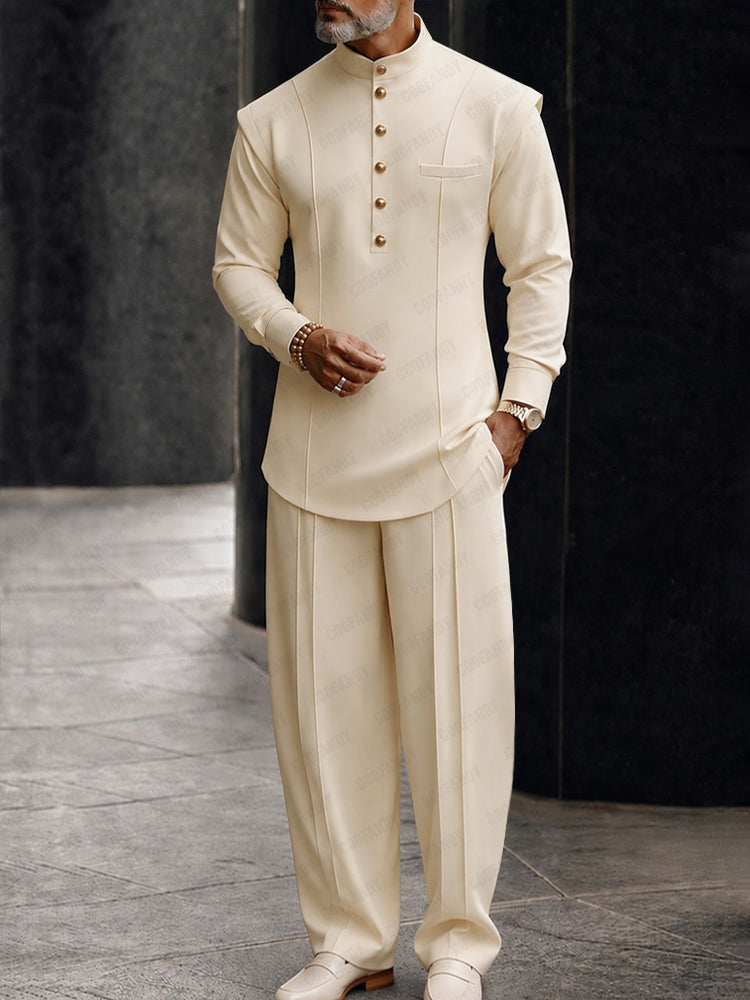
5. Same-fabric top and bottom in ivory or navy.
A coordinated set carries a single surface through the waist, so proportion becomes more noticeable than color matching. A loose top over straight bottoms gives the outfit direction; two very wide shapes create a deliberately larger silhouette. Decide which version you want before choosing a size.
An open neckline can keep the continuous block from feeling visually closed. With trousers, a clean hem matters because it completes that long line. With shorts, the amount of exposed leg separates the two pieces. Keep the footwear visually simple so it does not interrupt the continuous color above it.
Polo, chinos, and quieter support
A polo defines the neckline without an outer shirt. The next four looks explore the difference between knit texture, a striped loose fit, a tucked waist, and a coordinated set.
1. Black knit polo, olive chinos, a clean trouser line.
The Classic Solid Color Knit Polo Shirt is the textured option for this look. It combines 80% viscose and 20% polyester in an ultra-soft, breathable knit with high stretch. Black keeps the upper half quiet; navy is another option if that works better with your existing trousers. Choose it for a distinct knitted surface rather than expecting a conventional woven-shirt appearance.

Olive chinos provide enough color below the waist without competing with the knit. Straight legs balance the top, while a neat hem keeps the lower half from looking heavy. If you tuck it in, the belt becomes an intentional dividing line; left untucked, the polo creates a softer transition. Decide from the garment length and how it settles when you sit rather than treating either option as compulsory.
High stretch does not mean the smallest wearable size is the best choice. Check the shoulder placement and whether the front lies smoothly instead of clinging where you would prefer ease. This shirt earns consideration if you want a polo that can return to lunches or a casual work wardrobe, not just the stands. Cold machine wash as directed. The product is marked US Only, so check delivery eligibility for your address before ordering.

2. Loose striped polo, stone chinos, restrained accessories.
The Fashion Loose Fit Polo Shirt offers a different shape from the solid knit. Its 95% polyester and 5% spandex fabric is lightweight, breathable, and anti-wrinkle, with a stripe pattern, short sleeves, and a polo collar. The loose fit makes it worth considering when you prefer space through the upper half rather than a close outline.

Use plain stone chinos to let the stripes remain the only repeated motif. A cap with a busy graphic or trousers with a strong pattern would create another competing rhythm. The collar already defines the face area, so you do not need an open overshirt to give this outfit structure.
Pay particular attention to length. A loose polo can look balanced above straight trousers, but an unexpectedly long hem adds volume below the hips as well as across the chest. Compare it with a relaxed top you like before selecting a size. If you prefer a tuck, try it seated to see how much fabric collects at the waist.
Anti-wrinkle does not mean crease-proof or that the shirt needs no care. Cold machine washing suits its place in a repeat-wear casual wardrobe. Choose this one for pattern and a roomier silhouette; choose the solid knit when texture without a stripe is the missing element.
3. White polo, mid-wash jeans, a visible brown belt.
Tucking the polo makes the waist the main transition in this look. The white upper area ends at a clear belt line, while denim grain supplies texture below it. Check that the shirt has enough length to remain tucked when you reach, without a large amount of surplus fabric gathering above the belt.
Mid-wash jeans keep the contrast less severe than black denim. A straight cut makes this feel familiar rather than sharply tailored. If you prefer an untucked polo, reassess its length instead of copying the same proportions: removing the visible belt changes the structure of the outfit.
4. Zip-neck polo and matching shorts.
The zipper creates a different neckline from a button placket. A slightly open front interrupts the matching color without introducing another garment. The top and shorts need to work together in length as well as shade.
Check both halves independently. A comfortable shirt does not compensate for shorts that pull across the seat, and sizing for the shorts alone may leave more top volume than you wanted. The useful second life is as separates: the top with plain trousers, the shorts with a contrasting tee. That versatility matters most if the individual pieces suit clothes already in your wardrobe.
Tailoring, sporty sets, and a statement neckline
These three looks change the outline more decisively. A jacket defines the shoulders, a hood adds volume, and a henley draws attention to a small vertical opening.

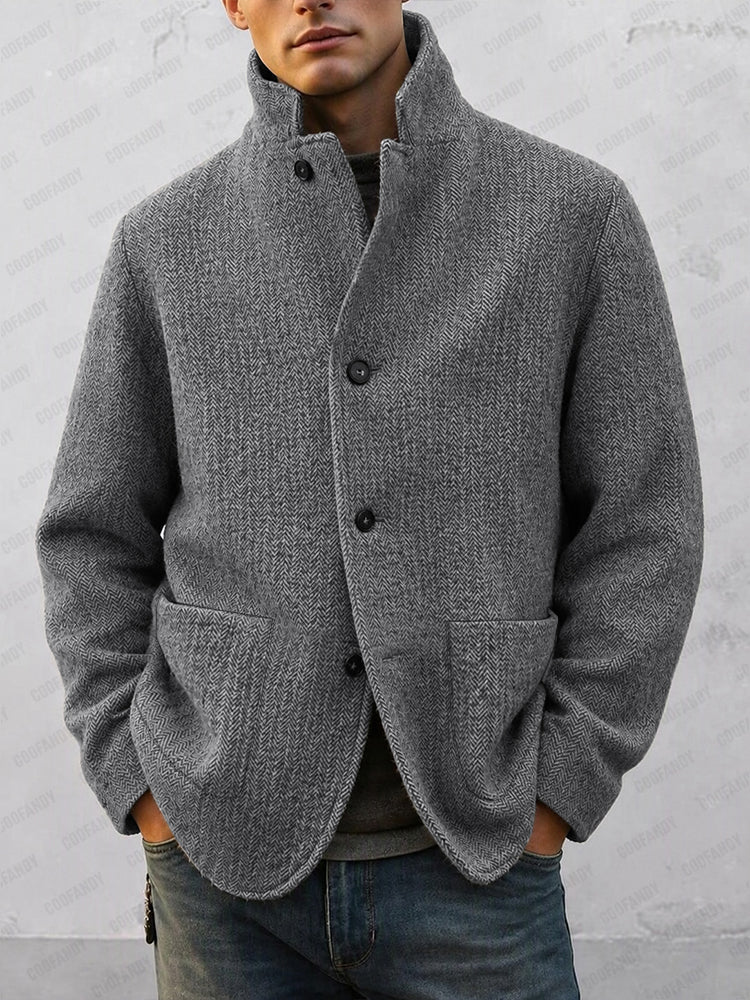
1. Casual tailored jacket, polo, dark jeans — hospitality or dinner.
A tailored outer layer gives the shoulders and front more definition than an open casual shirt. Start with a base that lies smoothly underneath it, and settle the polo collar inside the jacket neckline. Dark, straight jeans keep the lower half simple while the jacket carries the structure.
Choose this for a setting where the host's dress notes and conditions make it appropriate, not to complete a hot, exposed grandstand outfit. Try the jacket buttoned and seated before committing. Its role is to sharpen a casual base without requiring matching trousers; deliberate contrast usually reads better than an almost-matching imitation suit.
2. Relaxed short-sleeve hooded top with shorts.
This silhouette places volume around the neck and upper body rather than adding a sharp collar. Keep the front simple and let the hood rest behind the shoulders. A close outer collar can crowd that area, so the look works most clearly without several competing necklines.
Balance the upper volume with shorts whose length remains visible below the top. A wider top need not also be excessively long. This is a casual daytime idea, not a claim about insulation or a substitute for an appropriate separate layer. Judge coverage from the actual garments rather than the presence of a hood.
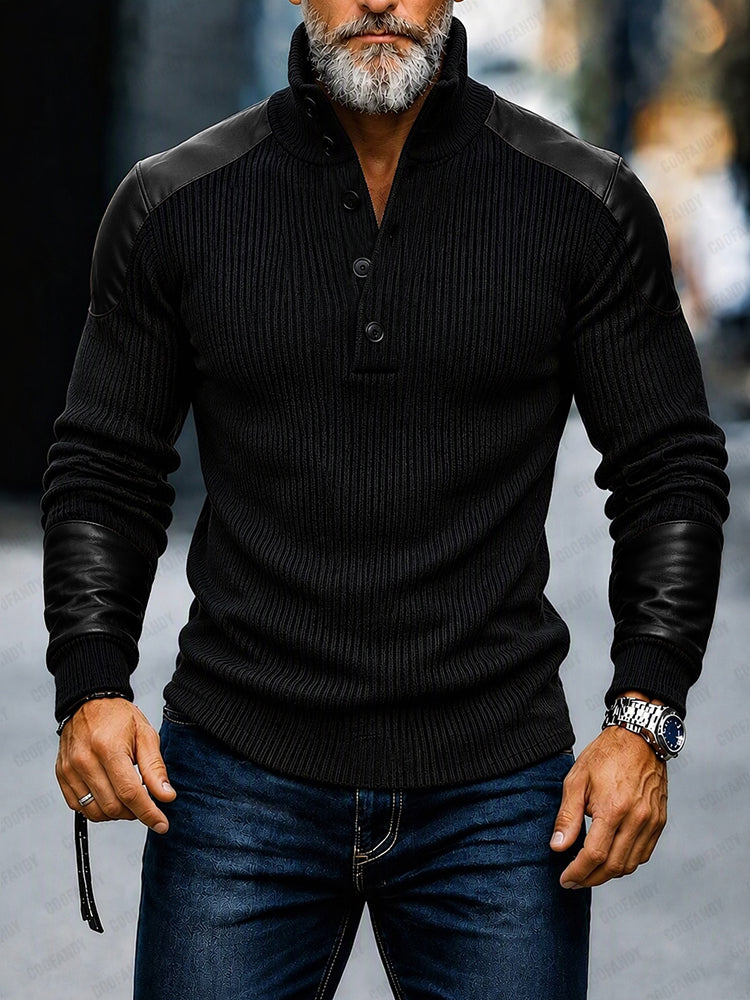
3. Henley neckline with plain chinos or shorts.
A short button opening creates a small vertical detail without a folding polo collar. Use that neckline as the point of interest and keep the surrounding clothes uncomplicated. Plain trousers let the button line stand out; shorts make the same approach more casual.
Decide whether the top works better tucked or untucked by its hem shape and length. A straight hem can give the loose version a clean edge, while a longer hem may be easier to control with a tuck. If you choose a patterned version, take one quiet color from it for the bottoms instead of adding another print. The shape should remain comfortable through the chest when seated.
| Outfit family | Main styling decision | Useful setting |
|---|---|---|
| Cuban collar + jeans | Raised texture against a plain lower half | Relaxed daytime plans |
| Knit polo + chinos | Texture without a repeated pattern | Stands or casual lunch |
| Striped polo + plain trousers | Pattern with a roomier top | Casual race-day plans |
| Tailored jacket | A defined outer silhouette | Hospitality or dinner |
| Hooded top + shorts | Volume and visible hem proportions | Casual daytime plans |
Coordinating outfits with friends
The final three ideas work at group scale. Choose a rule people can follow with their own clothes instead of assigning everyone the same outfit.
1. Same cap color, different shirt shapes.
A navy cap can connect an open-collar shirt, a polo, and a plain tee. The shared accent sits in the same visual position while each person keeps a preferred neckline. This works when everyone already has clothes they want to wear and needs only one point of coordination.
Do not extend that agreement to every garment. Shorts and trousers can coexist, and someone who does not wear caps can carry the shared shade in a shirt. The aim is recognition across the group, not a uniform that ignores individual comfort or style.
2. One shared neutral, placed differently.
Put stone in one person's trousers, another's overshirt, and a third person's cap. Moving the common color around creates a looser connection than matching headwear. The larger clothing areas can then vary through navy, olive, or denim blue.
Texture keeps that neutral from looking copied: a woven shirt, a knit top, and smooth trousers have different surfaces even within a similar shade family. Agree on a broad color direction rather than trying to make separate fabrics match exactly. It is a useful approach when people want coordination without purchasing identical pieces.

3. One person carries the graphic focal point.
Start with a driver shirt someone genuinely wants to wear. Others can pick up one quiet color from the graphic in a larger plain garment, leaving the printed shirt as the clearest point of attention. This is a different group structure from matching accessories because one outfit intentionally leads.
With a red, white, and black graphic, a white polo and dark denim can sit beside a black tee and stone shorts. There is no need for a second large red area. Anyone can take the focal role; the arrangement should support personal preferences rather than assigning a costume for the photograph.
Accessories that finish the outfit
Look at what is already happening near the face before adding details. A Cuban collar opens that area, a polo defines it, and a hood adds volume behind it. Sunglasses and a cap should sit comfortably alongside hearing protection rather than competing for the same space.
A visible belt deserves attention when you tuck a shirt. It can separate similar top and trouser colors or connect with another dark element. Jewelry is optional; one textured or patterned shirt often provides enough interest without several additional focal points.
Check the details before choosing
Measure a familiar garment at the same points used in the size diagram. Chest width, shoulder position, and hem length help predict the silhouette more usefully than a size label alone. For a set, compare both halves; for an open layer, allow space over the actual tee.
Think about the intended second use, too. If you want a shirt for ordinary lunches, consider whether you enjoy it buttoned as a main top, not only in a styled race-weekend photograph. Check delivery eligibility and care requirements before ordering.
Adjust the look for your seat
An exposed daytime seat may favor a single top and shorts over denim and several layers. That is a change in clothing weight and coverage, not simply palette. Keep the defining idea — an open collar or a quiet knit — while choosing garments for the conditions.
Hospitality gives tailoring a clearer purpose, subject to the host's dress notes. A removable jacket works best when the base is complete without it, so the outfit can move outside without depending on every piece remaining on.
From the track to Monday
The three shirt recommendations offer distinct reasons to buy: raised jacquard and a Cuban collar, a solid stretch knit, or a loose striped polo. Choose the one that adds a surface or silhouette your wardrobe lacks instead of buying three versions of the same role.
COOFANDY was founded in 2015. Its “Dress the Journey” philosophy connects menswear with everyday changes of setting: travel, the stands, lunch, and life after the weekend. A piece with a clear second use fits that approach better than a look assembled only for the event.
Christopher Bell, driver of the No. 20, is COOFANDY's global spokesman through the brand's partnership with Joe Gibbs Racing. His achievements include:
- 2025 NASCAR All-Star Race winner
- 2024 Coca-Cola 600 winner
- 2017 CRAFTSMAN Truck Series champion
- Three Chili Bowl wins
The ambassador page introduces Bell, while the JGR No. 20 collaboration brings that team connection into the clothing collections. It adds context to a race-weekend purchase without requiring every outfit to look like team kit.
Conclusion
Choose the element you want people to notice, then make the other pieces support it. These NASCAR outfit ideas vary texture, neckline, layering, and silhouette, giving you more than fifteen color substitutions. A good combination should suit the setting and still feel like clothes you would choose afterward.
FAQs
What are simple NASCAR outfit ideas for men?
An open shirt over a tee with shorts is relaxed; a knit polo and straight chinos look more defined. Start with the shape you already enjoy wearing.
Can I wear a suit jacket?
Yes, for suitable hospitality or evening plans. Check the dress notes and use a base that also works when you remove it.
How do I look coordinated with friends?
Agree on one shared accent or neutral, then vary the shirts and silhouettes. Exact shade matching is unnecessary.
Are matching sets a good idea?
They simplify the color relationship, but both halves still need to fit. Assess the top length and the seated fit of the bottoms separately.


Leave a comment