











Intern Pants Dress Code Decoder: Jeans, Chinos, Linen, or Drawstring Trousers?
Here's the short answer: if you have zero information about your new office, start with chinos. They survive the widest range of dress codes, pair with almost anything, and never look like you're trying too hard or not trying at all. Once you've clocked a few days and read the room, you can expand into jeans, linen pants, or drawstring trousers depending on what the culture actually rewards. This guide gives you the exact framework to make that call.
How to Read Your Office Dress Code Before Day One
Most internship offer letters say something vague like "business casual" or "dress appropriately." That tells you almost nothing. Here's how to actually decode what your office expects.
Check the Company's Social Media
Pull up the company's Instagram, LinkedIn, or careers page. Look at team photos, not executive headshots. What are the mid-level employees wearing in candid shots? That's your baseline. If everyone's in dark jeans and button-downs, you're in casual-leaning territory. If you see pressed trousers and tucked-in shirts, aim higher.
Read the Offer Email Again — Slowly
Some HR teams bury dress code language in onboarding packets. Phrases like "professional attire" signal traditional expectations. "Come as you are" or "we're a relaxed environment" mean you have more range. No mention at all? Default to the middle — chinos and a collared shirt.
Use Your First Three Days as Recon
Your first week isn't just about learning names. Observe what your direct manager wears. Notice whether anyone's in sneakers. Pay attention to whether Friday looks different from Tuesday. By day three, you'll have a reliable read. Adjust from there.
The Quick Decoder
Use this decision flow to pick your starting point:
- Your office has a formal dress code or says "business professional" → Chinos in navy, charcoal, or khaki. Pair with leather shoes. Skip this guide's other options for now.
- Your office says "business casual" or the team photos show collared shirts with no ties → Chinos are still your safest bet. Dark jeans may work after your first week confirms it.
- Your office says "casual" or you see hoodies in team photos → Dark jeans on day one. Chinos and drawstring trousers in rotation after that.
- Your office is a creative studio, startup, or summer-heavy environment → Linen pants and drawstring trousers both work. Chinos for meetings.
The Comparison Matrix: Four Pants Types for Interns
Based on our editorial team's assessment across common office scenarios, here's how each option stacks up:
| Dimension | Jeans | Chinos | Linen Pants | Drawstring Trousers |
|---|---|---|---|---|
| Formality range | Casual to smart casual | Smart casual to business casual | Smart casual to relaxed business | Casual to smart casual |
| Best office types | Tech, creative, startups | Finance, consulting, corporate, any | Media, architecture, summer offices | Creative agencies, casual startups |
| Safe for day one? | Only if you've confirmed casual culture | Yes — nearly universal | Depends on the office; better after recon | Better after your first week |
| Temperature comfort | Moderate; depends on weight | Moderate; lightweight options exist | Excellent in heat; very breathable | Good airflow; relaxed fit helps |
| Wrinkle factor | Low — denim holds shape | Low to moderate | High — linen wrinkles naturally | Low to moderate |
| Pairs well with | Loafers, clean sneakers, henleys | Oxfords, loafers, polos, button-downs | Leather sandals, linen shirts, camp collars | Minimal sneakers, relaxed-fit shirts |
| Risk level for interns | Medium — some offices still ban denim | Low — rarely offends anyone | Medium — can read too relaxed if styled wrong | Medium — needs intentional pairing |
| Versatility score | ★★★☆☆ | ★★★★★ | ★★★☆☆ | ★★★☆☆ |
Jeans: When They Work and When They Don't
Dark, slim-straight jeans in indigo or black can pass in plenty of modern offices. The key word is dark. Light wash, distressed, or ripped jeans read as weekend wear no matter how you style them. For an internship, treat jeans as a second-week option — something you introduce after confirming that your team actually wears them.
Pair dark jeans with a tucked-in oxford shirt and loafers, and most people won't even register that you're wearing denim. That's the goal.
When to skip jeans entirely: Client-facing roles, law firms, banks, and any office where your manager wears a tie more than twice a week.
Chinos: The Default for a Reason
Chinos sit in the exact middle of the formality spectrum, which is why they're the go-to recommendation for interns who haven't decoded their office yet. A pair in navy or charcoal works with everything from a polo to a blazer. Khaki chinos lean slightly more casual but still hold up in most business-casual environments.
The fit matters more than the color. Too baggy and they look sloppy. Too tight and they restrict movement — not ideal when you're running between conference rooms and coffee runs. A tapered or slim-straight cut hits the right note.
Our men's pants collection covers several of these styles if you want to compare cuts side by side.
Linen Pants: The Summer Specialist
If your internship runs from June through August, linen pants deserve serious consideration. They handle heat better than any other option on this list, and they've moved well past the "vacation only" stereotype in most creative and media-adjacent offices.
The tradeoff is wrinkles. Linen creases throughout the day — that's the nature of the fiber, not a flaw. Some offices appreciate the texture. Others might read it as unkempt. Know your audience.
Styling tip for interns: Stick to neutral tones — sand, olive, light grey. Pair with a structured shirt rather than a tee, and the whole outfit reads intentional instead of accidental.
Drawstring Trousers: The Underrated Option
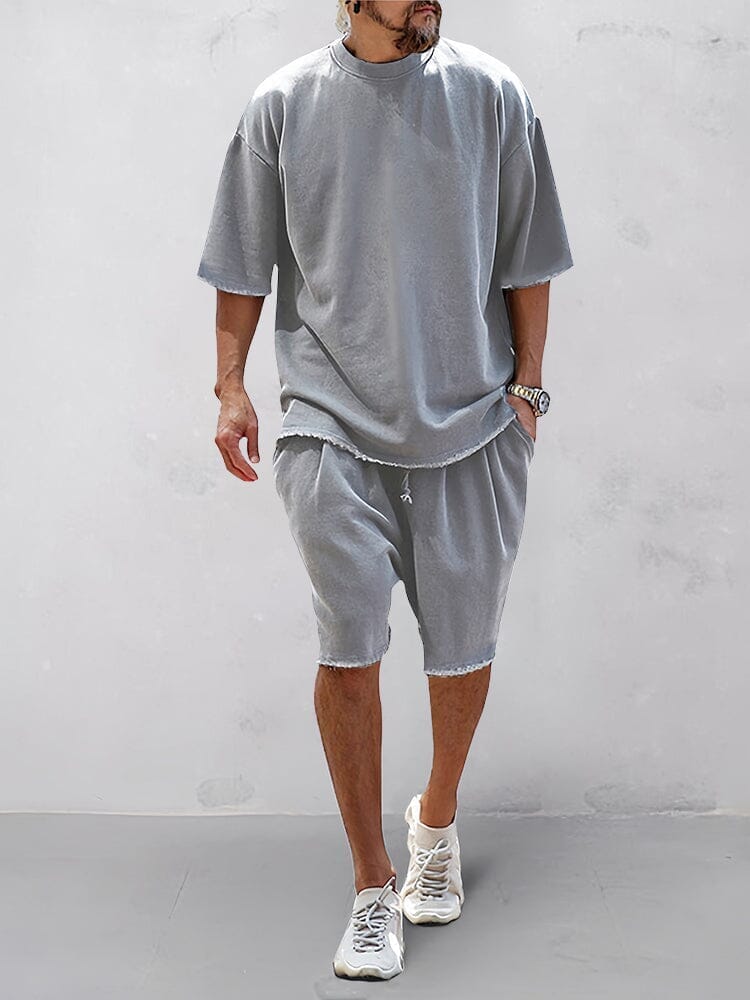
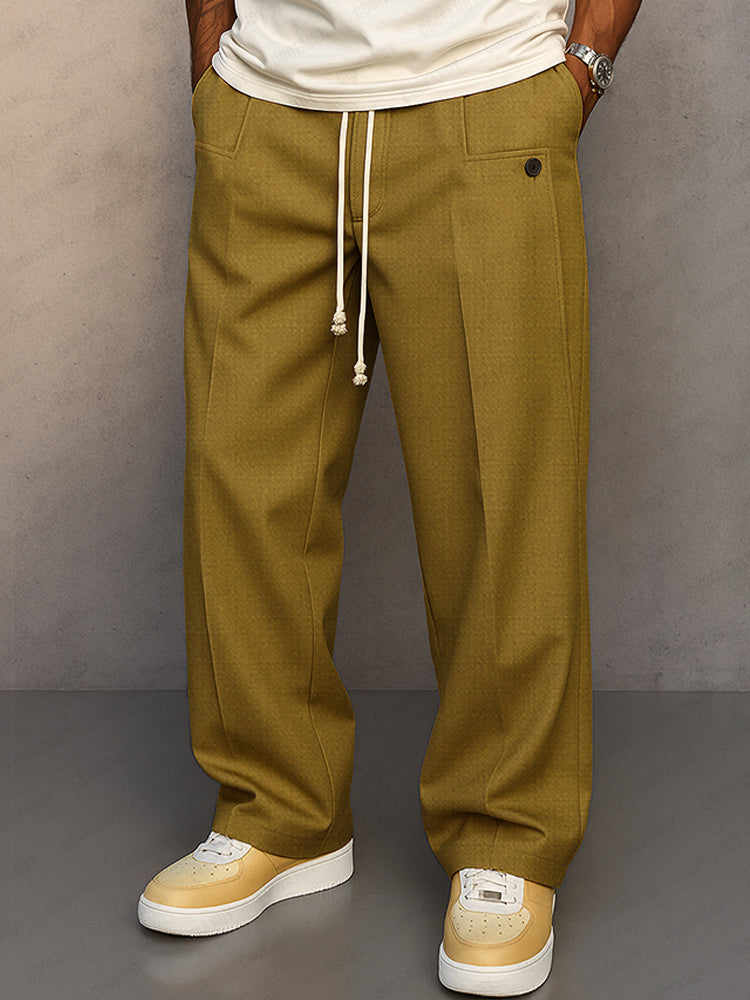
Drawstring trousers occupy interesting territory. They're more polished than joggers but more relaxed than chinos. In the right fabric — think cotton-linen blends or structured woven materials — they work in casual-to-smart-casual offices without looking like you wandered in from a yoga class.
The drawstring waist is also genuinely practical. After a few hours sitting at a desk, that comfort difference adds up. For interns pulling long days to prove themselves, that's not a small thing.
When drawstring trousers work best: Offices with no external client visits, creative teams, and any environment where the dress code conversation starts with "just be presentable."
Building Your Intern Pants Rotation
You don't need ten pairs of pants. You need three that cover your range:
- One pair of chinos in a dark neutral — your anchor for any dress code uncertainty.
- One pair that matches your specific office — jeans if it's casual, linen if it's summer and relaxed, drawstring if it's creative-leaning.
- One backup pair — a second chino color or a versatile alternative from your men's business clothing options.
That rotation handles Monday through Friday without repeating the same look and without overspending before your first paycheck.
FAQ
Can male interns wear jeans to work?
It depends entirely on the company. Tech firms, startups, and creative agencies often allow dark jeans with no issues. Traditional industries like finance, law, and consulting typically don't. Check team photos or ask your HR contact directly — there's no shame in that question, and it shows you care about fitting in.
What color pants are safest for an internship?
Navy and charcoal work across nearly every office environment and pair well with most shirt colors. Khaki is a strong third option for business-casual settings. Save lighter tones like sand or cream for after you've confirmed the office vibe leans relaxed.
Are linen pants appropriate for an office internship?
In summer-season internships at creative, media, or casual-culture companies, yes. Linen pants in neutral tones paired with a structured shirt can look polished. For more traditional offices, wait until you've observed what your team actually wears before introducing them.
How many pairs of work pants does an intern need?
Three pairs will carry you through a full work week comfortably. Start with two pairs of chinos in different colors, then add a third pair based on your office's actual dress code once you've had a few days to observe. Rotating three pairs also extends the life of each one.
Should interns dress more formally than full-time employees?
Slightly, yes — at least for the first week or two. Overdressing by one notch signals that you take the opportunity seriously without looking out of place. Once you've read the room, you can calibrate down to match your team's everyday standard. Nobody faults an intern for starting sharp.

Deixe um comentário