









Can You Wear Khaki Pants in a Smart Casual Office?
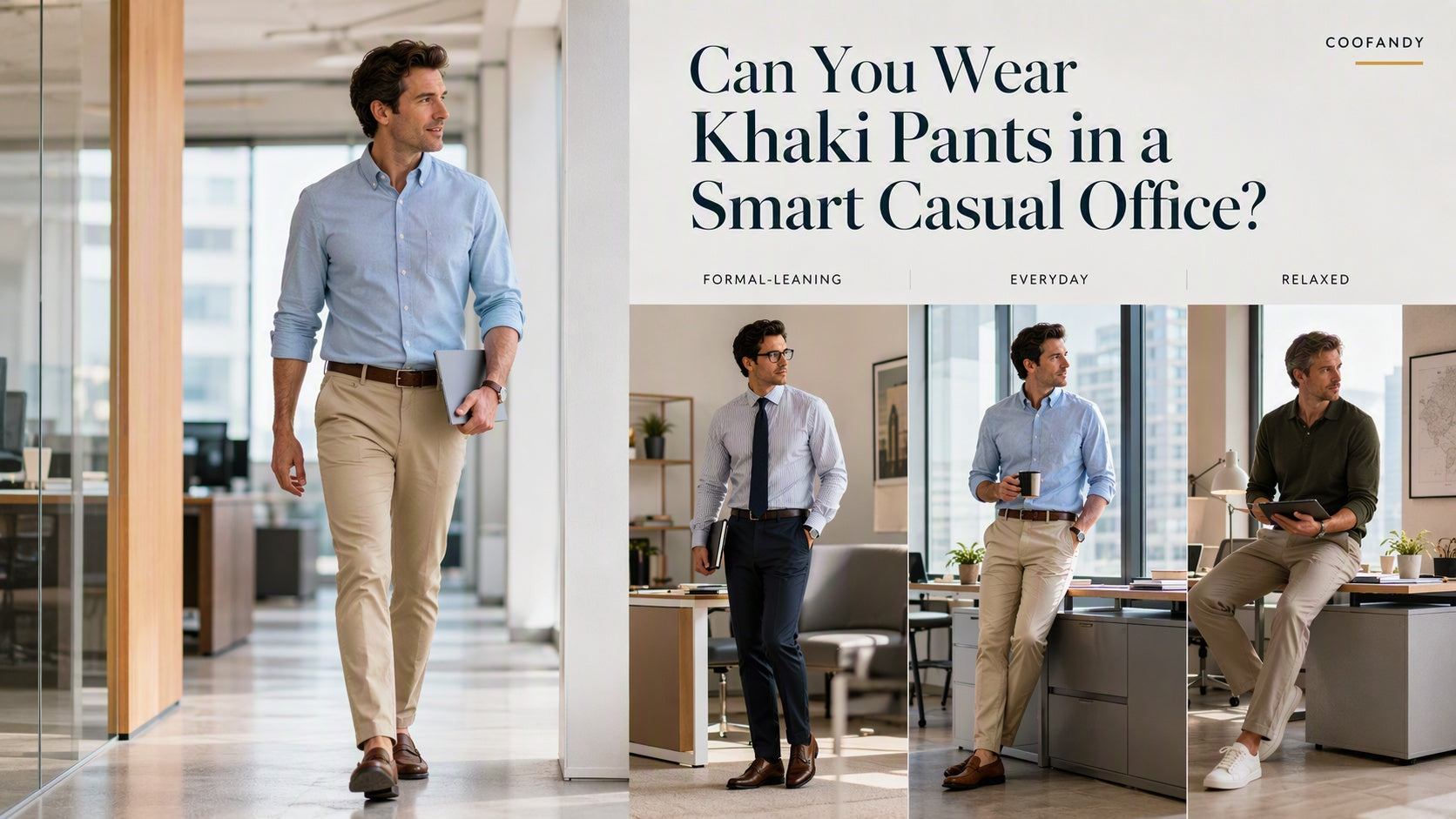
Short answer: Most of the time, yes. If chinos already show up on a regular Tuesday and the handbook, uniform rules, and safety requirements do not say otherwise, a neat pair of khaki pants can fit right in. First, read the room. Then check the cut and condition of the pants. Finish with a shirt and shoes that belong at the same level. If your office leans formal, navy or charcoal trousers are still the safer move.
Start With the Dress Code, Then Look Around
Smart casual means different things in different workplaces. The University of North Georgia advises checking written rules and watching what coworkers wear. Georgetown University’s interview guide treats smart casual as its own category and shows sample outfits. Those examples can help, but your employer still gets the final say.
Look at a regular Tuesday or Wednesday. Interviews, holiday parties, and casual Fridays can give you the wrong idea. These questions will tell you more:
- Who sees you? Do you regularly meet customers, executives, or outside partners?
- What do managers wear? Pay attention to people in roles similar to yours, especially on an ordinary workday.
- How formal are the meetings? Presentations, board meetings, interviews, and formal lunches usually call for a step up.
- What happens on Friday? If chinos appear only on casual Friday, do not assume they are fine from Monday through Thursday.
- Does the job come with clothing rules? Uniforms and protective clothing matter more than style advice, especially in labs, kitchens, warehouses, and jobsites.
| Your office type | What a normal workday looks like | Are khaki pants a good choice? |
|---|---|---|
| Formal-leaning | Clients are in and out. Managers often wear jackets or dress trousers, and jeans rarely show up. | Not the first choice. Start with navy or charcoal tailored trousers. Bring in khaki-colored chinos only after you have seen coworkers in similar roles wear them. |
| Everyday smart casual | Button-downs, polos, sweaters, and chinos are all common. A jacket comes out for certain meetings. | Usually, yes. Look for a clean flat front, a straight or gently tapered leg, and a tidy hem. Loafers or simple leather shoes are easy choices. Save sneakers for offices where they are already normal. |
| Relaxed smart casual | Jeans and clean sneakers are part of the regular rotation. Client meetings and formal presentations do not happen as often. | Usually, yes. Khaki-colored chinos work, but so do navy, olive, and stone. Clean sneakers can fit here if your coworkers already wear them. |
When the signals are mixed, dress for the biggest thing on your calendar. The client presentation matters more than the quiet afternoon that follows. Uniform and safety rules win every time. OSHA says employers must provide protective equipment and ensure its proper use when other controls are not feasible or sufficient. An outfit guide cannot overrule that. Once that boundary is clear, take a closer look at the pants themselves.
What Makes Pants Look Smart Casual?
Now look at the pants, not the color on the tag. A pair feels right for a smart casual office when the fabric, cut, hem, and details make sense together. One polished feature cannot rescue pants that otherwise look built for yard work or the weekend.

- Fabric and finish: Smooth or lightly textured fabric tends to look neater than heavy fading, distressing, or rugged utility cloth. Matte is perfectly fine. Office pants do not need a sheen.
- Leg shape: A straight or gently tapered leg should fall from the thigh without clinging to the calf. Pleats should stay closed. Pull lines around the fly, hips, or pockets are a sign that the cut is too tight.
- Length: The “break” is the fold where the hem meets the shoe. A small break, or none at all, usually looks clean. A stack of folds over the shoe can make the pants look unfinished.
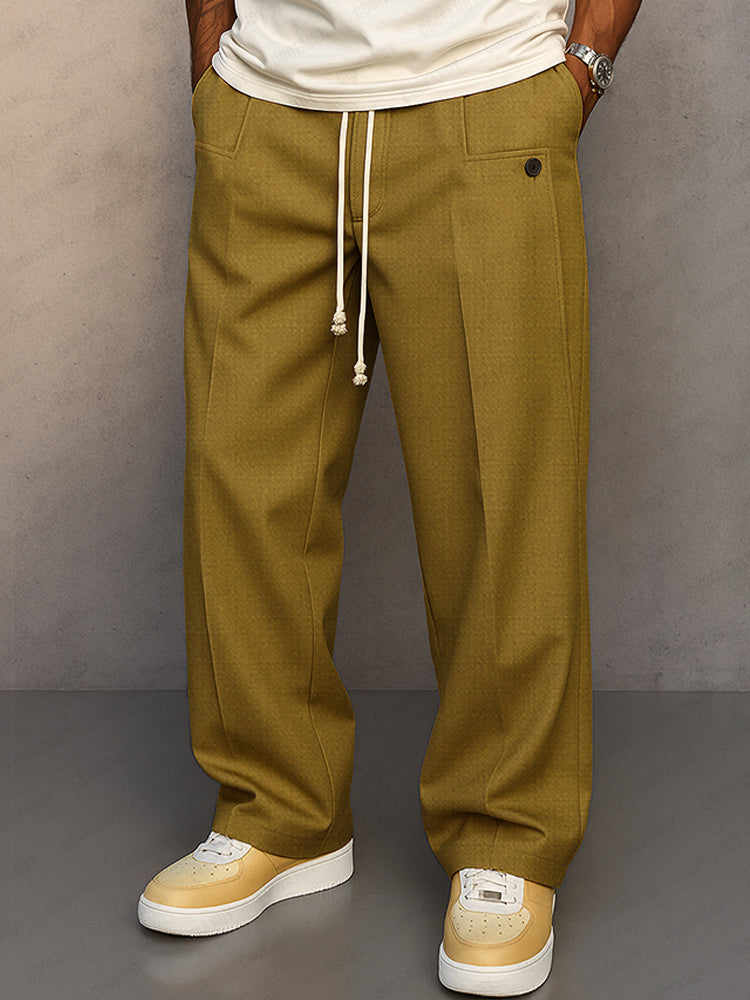
- Pockets and waistband: Slant pockets, welt back pockets, a zip fly, and belt loops give the front a cleaner look. Large cargo pockets, utility loops, and an obvious drawstring pull the pants in a more casual direction.
- Condition: Check the seat, knees, hems, seams, and pockets. Frayed hems, stretched knees, stains, twisting seams, and flared pockets are hard to hide.
Do a quick mirror check from the front, side, and back. The fly and pockets should sit flat. The waistband should stay level, and the seat should not sag or strain. Then look at the hem. A little fabric at the shoe is fine; several folds usually are not. This will not tell you what HR allows, but it will tell you whether the pants look tidy enough for the office you just described. If the pair passes, the word khaki still needs some unpacking.
When Do Khaki Pants Work at the Office?
The same checklist applies to any pair of office pants. In an everyday smart casual workplace, khaki pants usually work when the front is clean, the leg is straight or gently tapered, and the hem is tidy. A formal-leaning office may still call for navy or charcoal trousers. If denim and sneakers are common, you have more room to play with color and footwear.
A quick shopping note: Product names get messy. Khaki can mean a yellowish- or greenish-brown color, and in US usage, “khakis” can also mean pants. Chinos are a type of trouser, and they come in khaki, navy, stone, olive, and plenty of other colors. In this guide, khaki refers to the color and chinos to the type of pants.
Tan fabric is not automatically office-ready. Cargo pockets, patch pockets, heavy fading, a fully gathered elastic waist, or a visible drawstring can push the pants toward weekend wear. For a cleaner look, check that the waistband stays put, the pockets lie flat, and the seat and thighs do not pull. The hem should meet the shoe without bunching. With light tan or stone fabric, check in good light to make sure the material does not turn see-through around the pockets and seat.
One COOFANDY option: The COOFANDY Business Casual Stretch Chino Pants (US Only) come in a color the product page calls Khaki. The product page describes the fit as “tailored yet relaxed.”
Materials are listed as 97% cotton and 3% spandex. The page also lists a flat front, straight leg, zip fly with button closure, two front slant pockets, and one back welt pocket.
For an everyday smart casual office, try the Khaki color with a white or light blue shirt and brown leather shoes. Add a navy blazer when the room calls for something dressier.
If the pants pass that check, styling gets easier. Match the rest of the outfit to the room.
What to Wear at Each Office Level
Pick the card that sounds most like your workplace. A blazer or darker leather shoe can nudge an outfit up. A knit polo or clean sneaker can bring it down. Just do not expect the top half to rescue pants that are too casual to begin with.

1. Formal-leaning office
Start here: Wear a pale blue or white button-down with navy or charcoal tailored trousers. Add dark brown or black lace-up leather shoes and a simple leather belt.
Dial it up or down: Meeting with a client? Tuck in the shirt and add a navy blazer. On a quieter day, skip the blazer. If coworkers already wear lighter trousers, you can swap them in and keep the leather shoes and belt.
2. Everyday smart casual office
Start here: Pair khaki-colored chinos with a button-down or knit polo. A fine-knit crewneck works too. Finish with loafers or simple lace-up leather shoes and a plain leather belt.
Dial it up or down: Tuck in the shirt, add a lightweight jacket, and choose darker leather shoes when you need more polish. For a regular desk day, lose the jacket or wear the knit polo on its own. Try clean leather sneakers only if they already belong in the office.
3. Relaxed smart casual office
Start here: Try a textured polo or casual button-front shirt with chinos in tan, olive, stone, or navy. A crewneck T-shirt under a lightweight shirt jacket also works. Choose loafers, low-key suede boots, or simple leather sneakers.
Dial it up or down: For a dressier version, choose a clean-front waistband, tuck in a button-front shirt, and wear leather shoes. For a more relaxed day, add the shirt jacket and simple sneakers. Save visible drawstrings for offices where that detail is already common.
Once the shape of the outfit feels right, color becomes the easy part.
Pairing Tan, Stone, Olive, and Navy
Color is the last adjustment, not the first decision. Product names vary, so check the swatch and photos instead of trusting the label alone. One small warning: tan pants, a crisp navy polo, and perfectly matched brown shoes and belt can drift into school-uniform territory. If that is not the look you want, loosen the formula. Try a textured navy knit, a softer blue shirt, or brown leather pieces that coordinate without matching perfectly.

Tan: Navy, white, pale blue, burgundy, and deep green all work well with tan. Navy and tan is a classic combination, but it can feel predictable. A textured navy knit or pale blue button-down makes it less uniform-like.
Stone: Stone has more gray and less gold than tan. Charcoal, navy, chocolate brown, and medium blue give it enough contrast. Include at least one darker piece so the outfit does not wash out.
Olive: Olive is not khaki just because both colors are earthy. Pair it with cream, light blue, navy, gray, or brown. In a formal-leaning office, keep the olive muted and leave cargo pockets and military-style details for another setting.
Navy: Navy chinos are not khaki pants. If tan feels too casual, though, navy is an easy first move. White, pale blue, and soft gray keep the outfit simple. Let the shoes and belt share a brown family without trying to match them perfectly.
Before you settle on a color, make sure the fit is not working against you.
Fit and Styling Mistakes That Throw Off the Outfit
A good color pairing will not save pants that fit badly. Check these trouble spots before you decide a pair can carry a full workweek.
Too much fabric at the shoe: Several folds at the hem break up the line of the pants. Try a shorter inseam or have the hem adjusted.
The belt is holding everything up: If the waistband keeps sliding, the seat may sag and the pockets may flare. Try another waist size or a cut that sits higher.
Pockets pulling open: Horizontal lines at the fly or hips, pleats that spread, and pockets that stand away from the body usually mean you need more room.
Workwear details in a dressier room: Cargo pockets, hammer loops, contrast zippers, heavy distressing, and visible drawstrings all make the pants look more casual. Save them for offices where those details already show up.
Shoes from a different outfit: Highly polished dress shoes can feel odd with rumpled drawstring pants. Bright technical running shoes can make pressed trousers look accidental. Loafers, simple leather lace-ups, understated boots, and clean leather sneakers are easier to match to the middle ground.
One last test: sit for a few minutes, then stand up. If the knees stay baggy, the center crease or side seam twists, or the hem rides much higher than expected, the pants may not hold the clean shape you want at work. If they still look clean after that test, they are ready for the weekly rotation.
A Five-Day Office Outfit Plan
You do not need five different pairs of pants. Use this table as a rotation, not a shopping list. Pick the office column that fits your workplace, then adjust for the day’s meetings, weather, and written rules.
| Day | Formal-leaning | Everyday smart casual | Relaxed smart casual |
|---|---|---|---|
| Monday | Navy tailored trousers + white button-down + dark brown leather shoes | Tan chinos + blue button-down + brown loafers | Olive chinos + knit polo + clean leather sneakers |
| Tuesday | Charcoal trousers + pale blue shirt + black or dark brown lace-up shoes | Navy chinos + gray fine-knit sweater + lace-up leather shoes | Stone chinos + crewneck T-shirt under a lightweight shirt jacket + suede boots |
| Wednesday | If khaki is accepted: smooth tan trousers + tucked shirt + navy blazer + brown shoes | Repeat Monday’s tan chinos + navy knit polo + brown shoes | Tan chinos + casual button-front shirt + loafers |
| Thursday | Repeat navy trousers + pale blue shirt + dark brown leather shoes | Olive chinos + white button-down + brown loafers | Navy chinos + polo + clean leather sneakers |
| Friday | If Friday rules allow: stone trousers + blue button-down + navy blazer + loafers | Khaki-colored chinos + knit polo + loafers | Repeat the best-fitting chinos + another knit polo + loafers or accepted clean sneakers |
Repeating the pair that fits best is normal. It is usually smarter than forcing a new color every day. In a formal-leaning office, wait until you have seen a similar khaki outfit accepted. Khaki-colored chinos can become a regular part of the rotation in an everyday smart casual office. In a relaxed workplace, they are simply one option beside navy, stone, and olive.
FAQ
Can you wear khaki pants in a smart casual office?
Usually, yes. Khaki-colored chinos often fit an everyday or relaxed smart casual office when they have a clean front, a straight or gently tapered leg, and a tidy hem. In a formal-leaning workplace, check what coworkers in similar roles wear and choose navy or charcoal tailored trousers when you are unsure.
Are khaki pants business casual?
They can be, but the color alone does not make them business casual. Fabric, fit, pockets, waistband, condition, shirt, and shoes all affect how formal the outfit looks. Cargo pockets, heavy fading, visible drawstrings, and stacked hems make khaki pants look more casual.
What shirt should you wear with khaki pants to the office?
A white or pale blue button-down is a dependable starting point. Knit polos, fine-knit sweaters, and understated patterned shirts can also work in less formal offices. Tucking in the shirt and adding a navy blazer makes the outfit more polished for meetings.
What shoes go with khaki pants for a smart casual office?
Brown loafers, simple leather lace-ups, and understated suede boots are versatile choices. Clean leather sneakers may work in a relaxed office if coworkers already wear them. Match the shoes to the workplace rather than assuming every smart casual office follows the same rule.
How should office khaki pants fit?
The waistband should stay level without relying on a tightly cinched belt. The pockets and fly should lie flat, the seat should not sag or strain, and the leg should fall cleanly without clinging to the calf. A small break at the shoe—or no break—usually looks neater than several folds of fabric.
Can you wear khaki pants with sneakers at work?
Sometimes. Simple, clean leather sneakers can fit a relaxed smart casual office, but they may look too casual in client-facing or formal-leaning workplaces. If sneakers are uncommon in your office, choose loafers or understated leather shoes instead.
Ready to narrow it down? Choose the cut and finish that fit your office first. Then use color and shoes to adjust the outfit. You can browse COOFANDY men’s pants and compare the cut, color, waistband, and fabric.
Related Reading
- Smart Casual Pants for Men: Look Polished Without Overdressing
- Hot Weather Office Pants: Stay Cool, Look Professional
- Which Shirt-Pant Combinations Work Best for Men's Outfits?
About COOFANDY
Founded in 2015, COOFANDY is a menswear brand created for modern men navigating work, weekends, celebrations, and everyday life. Its collection includes shirts, suits, pants, sweaters, and tees designed to help men build versatile, confident looks for different moments and personal styles. Guided by the belief that clothing can reflect confidence and character, COOFANDY focuses on making approachable menswear part of every stage of life.
Deixe um comentário