







Men’s Turtleneck Sweater Guide: Fit, Fabric, and 10 Ways to Wear It
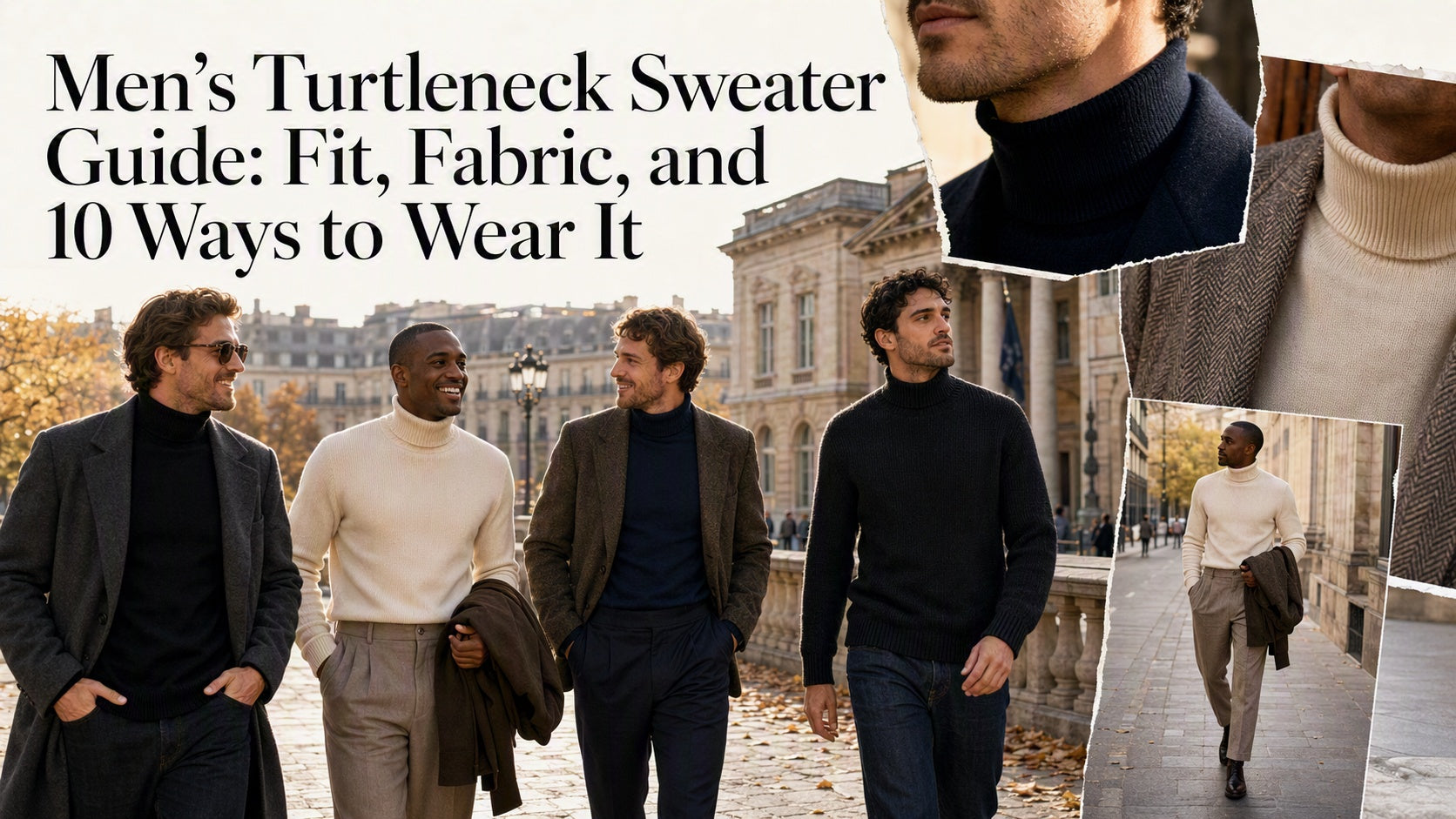
Short answer: A men’s turtleneck sweater should sit close at the shoulders and chest without pulling. The collar should touch your neck, not press against it. Fine knits work best under suits and blazers, while midweight styles are easier for everyday wear. Save chunky knits for cold days and roomier coats. Black suits office, evening, and tonal outfits; white or cream looks especially good with camel, navy, and brown. Before ordering, compare your measurements with the product chart and leave enough room to sit, move, and add a layer.
Most men don’t need a stack of turtlenecks. One dark neutral and one lighter color can cover workdays, dinner, and a slow Sunday. Decide on the collar, weight, and fit, then browse COOFANDY men’s sweaters with that job in mind.
Turtleneck vs. Mock Neck vs. Roll Neck
These names get mixed together. Start with the collar shape.
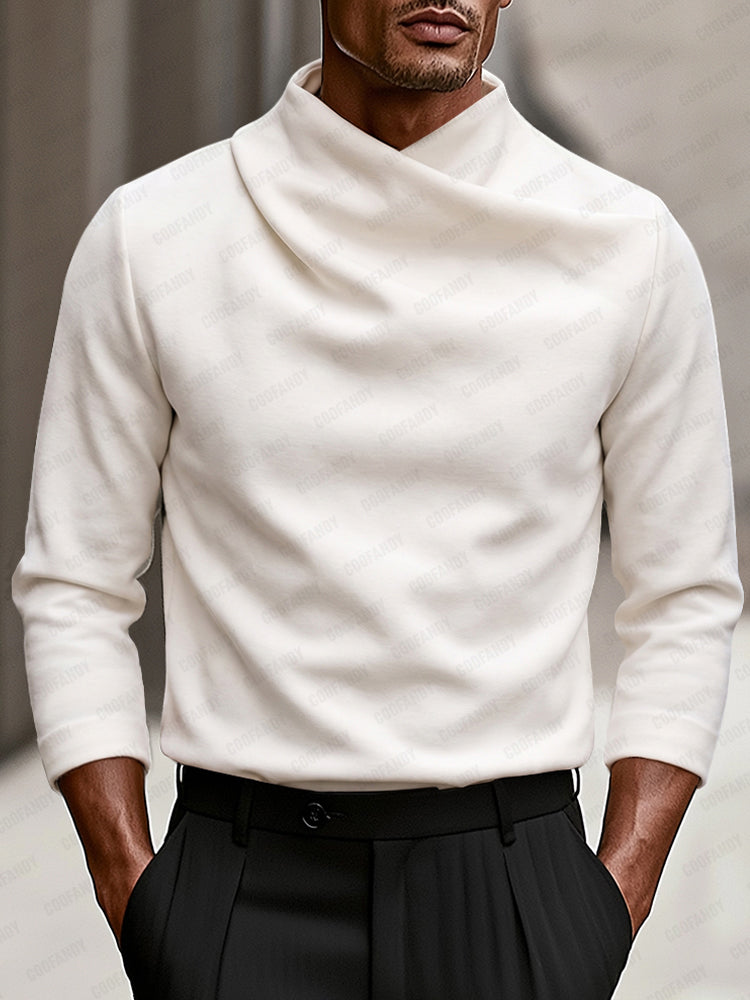
A turtleneck has a high collar that usually folds once. It gives a suit or blazer a more dressed-up line. A mock neck ends lower and stays unfolded. If fabric under your jaw bothers you by lunchtime, it’s often the easier choice.
A roll neck is another common name for a turtleneck, particularly in British English. Some brands use it for a softer collar that rolls instead of making a firm fold. Front and side photos usually tell you more.
A full turtleneck works well with winter tailoring. For mild weather or a long day in a heated office, try a mock neck. If collar height isn’t listed, check the photos.
How Should a Men’s Turtleneck Sweater Fit?
Put the sweater on, relax your shoulders, and sit down. A good fit stays neat and doesn’t make you fuss with the collar.
Shoulder seams
On a standard shoulder, the seam should land near the shoulder bone. Too low looks droopy. Too far inward can pull the chest and lift the sleeves.
Raglan and dropped-shoulder knits play by different rules. For those, pay more attention to chest comfort and sleeve length.
Chest and torso ease
You should be able to pinch a little fabric at the chest and waist; horizontal lines, stretched ribbing, or a clearly outlined undershirt usually mean the fit is too tight.
A slim fit won’t suit every build. Men with a broad chest or fuller middle may prefer more room, especially in ribbed knitwear. One COOFANDY ribbed turtleneck page recommends sizing up for muscular, sturdy, or fuller builds.
Sleeve length
The cuff should meet the wrist bone. A little sweater cuff can show under a blazer, but fabric shouldn’t pile around the hand.
Lift your arms and bend your elbows. Sleeves that pull halfway up the forearm will be annoying under a jacket.
Hem length
Untucked, the hem should cover the waistband and finish near the upper hip. Extra length bunches; too little shows the waistband when you sit.
Planning to tuck the sweater into tailored men’s pants? Choose a thin knit with enough length to stay put. Chunky sweaters are usually happier left untucked.
Collar height and tension
The collar should feel close but calm. You should be able to turn, swallow, and finish the afternoon without pulling at it.
A collar that keeps collapsing may be too soft for the look you have in mind. If it presses under the jaw, try a mock neck or lower collar instead of making the whole sweater larger.
A verified measurement benchmark
COOFANDY’s general Size Guide provides Tops reference measurements in inches. Chest measurements are 40.55 for S, 42.52 for M, and 45.51 for L. XL, XXL, and 3XL list 48.50, 51.50, and 54.49. Shoulder measurements run from 18.43 inches in S to 21.73 inches in 3XL.
These are category references, not finished measurements for every turtleneck. Fit changes by cut, so use the individual product chart when available. The tag gets you started; the measurements make the call.

Choosing the Right Knit Weight
Knit weight changes the look and the way a sweater layers. Think about where you’ll wear it most.

Fine-knit turtlenecks for men
Fine knits slide neatly under suits, blazers, and fitted coats, so they suit presentations, dinner, or an office where a shirt and tie feels too formal.
There is a catch. Thin fabric shows undershirt seams and waistband bulk more easily. A smooth, low-neck base layer in a similar color keeps those lines quieter.
Midweight knits for everyday use
Midweight knit is easy to live with. Wear it alone with jeans or trousers, or under a relaxed blazer or coat.
For a small fall and winter wardrobe, we’d buy midweight first. It’s less sleek than fine knit and lighter than chunky knit, but easier to use.
Chunky knit for cold days
Chunky and cable knits bring texture and warmth. Pair them with straight-leg jeans or wool trousers, plus a coat with room in the sleeves.
A fitted blazer and a thick sweater rarely get along. The sleeves feel cramped, and the jacket starts pulling around the button. Check the product photos and stated knit weight before choosing the outer layer.
How to Read Fabric Content
Read the fiber percentages, knit density, thickness, stretch, and care instructions together, because the fiber name by itself can’t tell you exactly how the finished sweater will feel.
Two sweaters can list the same fibers and still hang differently. A tightly knitted surface behaves differently from a loose rib, and a small amount of stretch fiber can change how the sweater recovers after wear. Photos and measurements help fill in what the label leaves out.
Be careful with broad performance claims. “Cotton,” “viscose,” or “polyester” alone doesn’t prove warmth, breathability, wrinkle resistance, or quality. We also won’t call something cashmere or certified unless the product page says so.
If you wear tailored jackets most days, smooth fine fabric is easier to layer, though it reveals more underneath. Thicker fabric gives you coverage and texture, but your jacket will need extra room.
10 Men’s Turtleneck Outfits by Color and Occasion
The best turtleneck outfits for men begin with the weather and dress code. Then comes color. These are ten combinations we’d wear across a workweek and weekend.

1. Black turtleneck sweater with gray trousers
Wear a fitted black turtleneck sweater with medium-gray trousers and black leather shoes. It works from the office through dinner without feeling severe.
Lighter gray feels more relaxed in daylight. Charcoal works better after dark. Add a belt only when the trousers need one.
2. Black turtleneck sweater with a navy blazer
Black and navy look good together when you can clearly see the difference, so try a fine-knit black sweater, a true navy blazer, and gray or stone trousers.
This turtleneck sweater with blazer pairing fits business-casual offices and client dinners. Very dark navy can look mismatched in dim light, so check the pieces together before leaving.
3. Black turtleneck with dark jeans
For the weekend, add dark indigo or washed-charcoal jeans and leather boots. Denim without heavy distressing can go from lunch into an informal evening.
Jeans are still jeans, even in a dark wash. We’d keep this one away from traditional business settings unless the office dress code is genuinely relaxed.
4. White or cream turtleneck with a camel coat
A white turtleneck sweater gives camel or chocolate outerwear a fresh contrast. Brown trousers or dark denim finish the outfit quietly.
Bright white feels crisp. Cream is softer and a little easier on a casual day. Before leaving home, check a lightweight pale knit in natural light; a dark undershirt may show through.
5. Turtleneck sweater with a suit
Swap the dress shirt for a fine-knit turtleneck in black, charcoal, navy, or cream, then make sure the suit still closes comfortably and the sleeves don’t pinch.
This works for dinner or a creative office where a tie isn’t expected. When the dress code calls for a shirt and tie, follow it.
6. Turtleneck sweater with a cardigan
A thin turtleneck under an open men’s cardigan feels relaxed without looking unfinished. Pair smooth and textured knits so the layers stay distinct.
Cream under charcoal is easy. So is black under camel. When both collars are thick, though, the neckline can get crowded fast.
7. Turtleneck sweater with a leather jacket
A black or charcoal turtleneck works under a brown or black leather jacket. Add straight dark jeans and boots; the jacket brings enough texture.
Stay with fine or light midweight knit. Heavy ribbing under a fitted leather jacket can bunch at the shoulders and make reaching for your keys less comfortable than it should be.
8. Monochrome turtleneck outfit
Use several shades from the same color family: black with charcoal, cream with oatmeal, or navy with washed blue. Texture keeps the layers from looking flat.
Don’t spend too long hunting for a perfect match. A visible shade difference usually looks more considered than two pieces that are almost, but not quite, identical.
9. Office smart casual
Wear a navy, charcoal, or black turtleneck with tailored trousers and a structured coat; the outfit stays tidy after the coat comes off in a warm office.
If a midweight sweater is part of the plan, look for men’s coats with enough room in the sleeves and chest.
10. Date-night turtleneck outfit
A dark turtleneck with textured trousers and a short jacket makes an easy evening outfit. Black stays quiet; wine red or deep green adds restrained color.
Comfort still wins. If you keep fixing the collar during dinner, try a softer mock neck or a roomier cut next time.
Choosing Turtlenecks for Different Builds
There isn’t one “correct” body for a turtleneck. Focus on the detail that needs the most attention on yours.
Lean or narrow frame
Fine and midweight knits can add definition without swallowing the body. Keep an eye on the shoulder line. A large dropped shoulder may look more borrowed than relaxed.
Broad chest or muscular build
Give the chest room to move without horizontal pulling. A regular cut may feel better than close ribbing, which follows the torso closely. Size up when the chart or fit note points that way.
Fuller midsection
A smooth midweight knit can skim without clinging. Dark neutrals under an open blazer or coat keep things quiet. Thin, shiny, or tight ribbed fabric shows more.
Shorter height
Look for a hem near the upper hip and trousers with a clean rise. Similar colors reduce hard visual breaks. A long, bulky sweater can shorten the leg line.
Long or shorter neck
A full fold-over collar often feels balanced on a longer neck. If your neck is shorter or wider, a mock neck leaves more space below the jaw and may be easier to wear all day.
Common Turtleneck Styling Mistakes
Buying from the size label alone. Measure the chest and shoulders, then read the chart. Two slim-fit sweaters can sit differently because the cuts and knits differ.
Squeezing chunky knit under a fitted blazer. The result is usually tight sleeves and a lapel that won’t lie properly. Keep fine knit for close tailoring and give thick sweaters a roomier coat.
Forgetting the base layer. A crewneck undershirt can peek above the collar, while a dark layer may show through white or cream. A low-neck, close-toned option is less distracting.
Crowding the neckline. The collar already frames the face. A simple chain can work, but a thick scarf and a folded neck often compete for the same space.
Assuming every turtleneck is dressy. A smooth black fine knit can sit under a suit. A thick cable knit belongs to a more casual outfit. The fabric and cut set the mood as much as the color.
FAQ
Can a man wear a turtleneck with a suit?
Yes. Choose fine knit that sits close without pulling, and check that the suit has room in the chest and sleeves. Black, charcoal, navy, and cream are dependable. Wear a shirt and tie when the dress code asks for one.
Should men tuck in a turtleneck sweater?
A thin, smooth turtleneck can be tucked into tailored trousers. Leave midweight and chunky knits untucked, with the hem near the upper hip. Bulky fabric at the waistband becomes uncomfortable once you sit down.
What jacket looks best with a black turtleneck?
For smart casual, start with a navy or gray blazer. A leather jacket feels more relaxed; a camel or gray coat adds winter contrast. Check that the sleeves have room for the knit.
How tight should a turtleneck collar be?
It should touch the neck without making swallowing, breathing, or turning your head uncomfortable. Pressure marks and constant adjusting are good reasons to try a mock neck, a softer collar, or another style.
Build a Practical Fall and Winter Rotation
We’d begin with one dark neutral and one lighter option. A black or charcoal men’s turtleneck sweater covers work and evenings. White, cream, or beige lightens camel, navy, and brown layers.
Browse the COOFANDY sweater collection when you’re ready. Check the product measurements and think about when you’ll actually wear the sweater: commuting, working, going out, or relaxing at home.
Related Reading
- Mock Neck Office Dress Code Matrix for Interns: When It Beats a Dress Shirt
- COOFANDY Starter Kit: Build Your First Wardrobe with 5 Essential Pieces
- The Complete Guide to Business Casual for Men (2026)
About COOFANDY
Founded in 2015, COOFANDY is a menswear brand created for modern men navigating work, weekends, celebrations, and everyday life. Its collection includes shirts, suits, pants, sweaters, and tees designed to help men build versatile, confident looks for different moments and personal styles. Guided by the belief that clothing can reflect confidence and character, COOFANDY focuses on making approachable menswear part of every stage of life.
COOFANDY in the Press
- The Best Summer Pants for Men to Stay Cool in the Heat — Yahoo Shopping
- How to Pack for a Summer Trip, According to a Style Editor — Men’s Health
- The Best Linen Pants, According to a Shorts Hater — Rolling Stone

Deixe um comentário