







Fall Business Casual for Men: Office Outfits That Handle the Commute
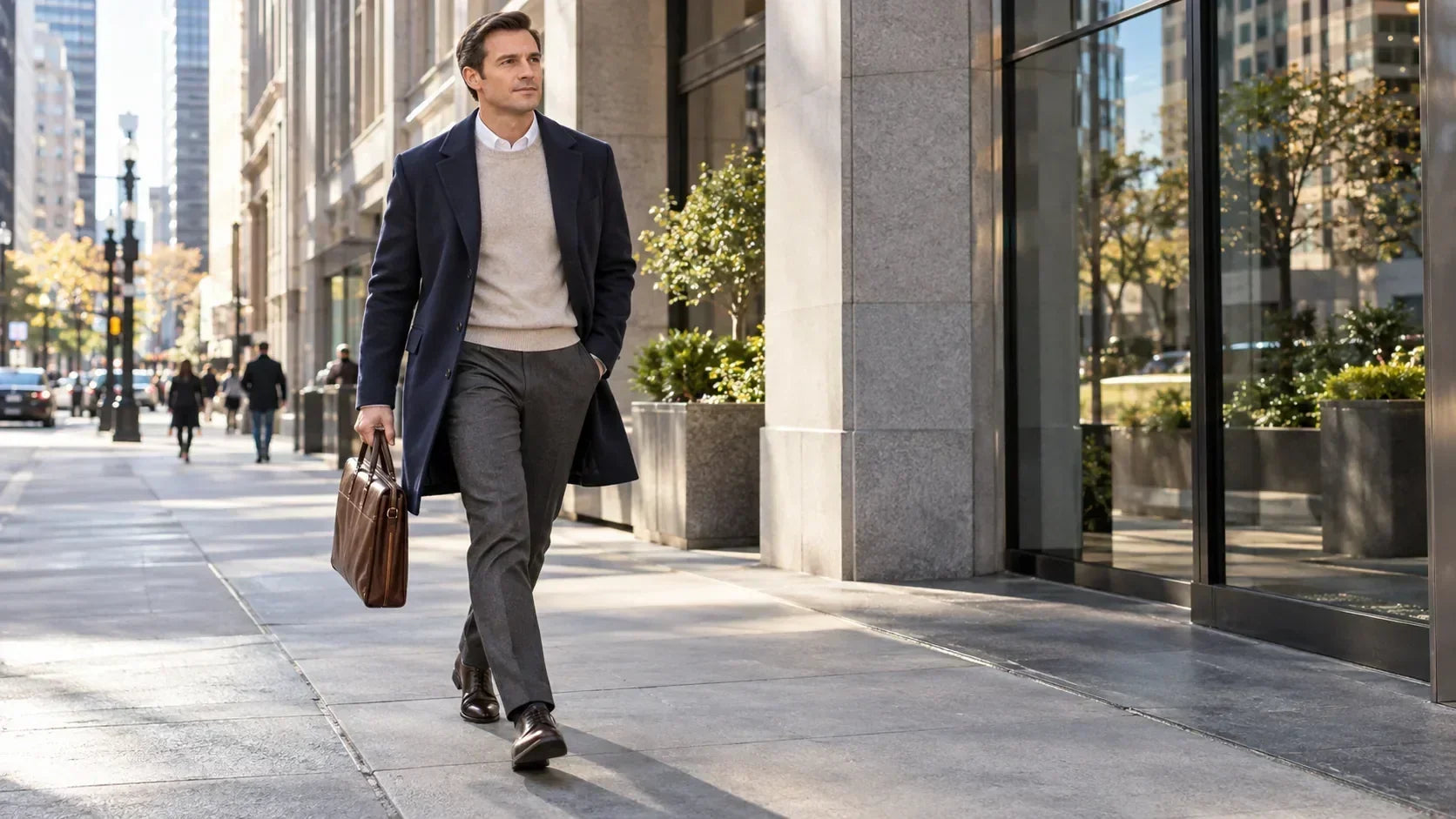
Fall business casual should solve two environments: the trip to work and the workplace after outer layers come off. Start with an office-appropriate shirt or knit and tailored pants, add a removable mid-layer, then choose outerwear for wind, rain and time outside. Seasonal texture can make the outfit feel current, but workplace expectations still set the formality.
For definitions, do-and-don't boundaries and the full formality ladder, use the complete business casual guide for men. This guide focuses specifically on fall conditions.
TL;DR
- Build the indoor office outfit first; commute layers should come off cleanly.
- Use tailored trousers as the safest default when expectations are unknown.
- Fine cardigans, quarter-zips and polo sweaters can work as mid-layers when their fit and design match the office.
- Keep a more structured layer available for client meetings or conservative settings.
- Check wind, rain, activity and transit time before choosing a coat; temperature alone is incomplete.

The Fall Business Casual Layering Matrix
| Commute condition | Office base | Mid-layer | Outer layer | Indoor adjustment |
|---|---|---|---|---|
| Mild, short commute | Shirt or knit polo + trousers | Optional fine knit | Light blazer or jacket | Remove outer layer |
| Cool morning, heated office | Button-down + trousers | Cardigan or quarter-zip | Light coat | Open or remove mid-layer |
| Windy platform or walk | Shirt + trousers | Fine sweater | Wind-appropriate coat | Store coat; keep knit if needed |
| Rainy commute | Office-ready base | Low-bulk removable knit | Rain-appropriate outer layer | Change or dry outer layer away from desk |
| Client meeting after commute | Dress shirt or refined knit + tailored trousers | Fine optional layer | Structured blazer or coat | Restore polished outer layer before meeting |
This matrix does not promise comfort at a given temperature. Individual preference, fabric weight, movement and exposure change the result.
Step 1: Set the Office Formality Before Checking the Forecast
Start with the most formal event on the calendar. An internal desk day, presentation and client dinner may all sit under “business casual” while requiring different levels of polish.
When the standard is unclear, tailored trousers and a clean button-down are the lower-risk base. A knit polo can suit a relaxed or contemporary office, but an athletic polo or unstable collar may pull the outfit too casual. Dark jeans should be used only when the company clearly accepts them.
The forecast decides warmth and protection after the dress-code base is set. It should not turn a conservative client day into a sweatshirt outfit simply because the morning is cold.
Step 2: Choose an Indoor Base That Looks Finished
The base must work after the coat, scarf and possibly the mid-layer come off.
Button-down shirt
This is the safest choice for standard business casual. Check that the collar remains clean beneath a sweater or jacket and that the shirt does not bunch heavily when tucked.
Knit polo
A knit polo provides its own collar and can pair with trousers in offices that accept contemporary styling. Our Casual Knit Polo Shirts are described as long-sleeved, regular-fit tops with a polo collar. The Casual Stretch Polo Sweater Shirt has a three-button polo opening and waffle-pattern texture. Try either with your intended blazer or jacket and check the shoulder and sleeve fit; workplace suitability still depends on the dress code.

Fine crewneck or turtleneck
A fine knit can serve as the visible base in modern offices, particularly beneath a blazer. A turtleneck needs a clean neck fit and enough room beneath the jacket. When the workplace is traditional, a shirt remains the safer fallback.
Step 3: Add a Removable Mid-Layer
The mid-layer handles the temperature change between outdoors and indoors. It should fit over the base without pulling and beneath the outer layer without compressing the shoulders.
Cardigan
A fine cardigan is easy to remove and can remain at the desk. Keep the placket clean and the design restrained. Hooded, draped or highly textured cardigans usually belong in casual workplaces rather than formal client settings.
Quarter-zip
A quarter-zip offers neckline adjustment during travel. Over a shirt, leave enough space for the collar to sit intentionally. Pair it with tailored trousers to prevent the zipper detail from drifting toward athletic wear.
A quarter-zip lets you adjust the neckline during the journey. Our Zip Up Slim Fit Lightweight Pullover Polo Sweater has a quarter-zip closure and a ribbed stand collar, hem and cuffs. Try it over the shirt you intend to wear, then check the fit beneath your coat. The opening is an adjustment option, not a guarantee of warmth or weather protection. All three linked knit products are marked US Only; check the current product and checkout information for your destination and timing.

Crewneck sweater
A fine crewneck over a shirt is a conventional office layer. Show the shirt collar evenly and avoid excessive shirt fabric at the waist. A thick crewneck may work better as the main layer on a casual day than beneath a close-fitting blazer.
Step 4: Pick Outerwear for the Commute
Outerwear should answer the actual exposure: time outside, wind, rain and activity. A five-minute drive and a 25-minute walk need different solutions even at the same reported temperature.
For a short mild commute, an unstructured blazer or light jacket may be enough. Longer exposure can call for a coat that fits over the chosen knit. Rain requires an appropriate protective layer; a decorative fall texture is not a substitute for weather suitability.
Before buying, try the outer layer over the thickest intended office combination. Reach forward, sit and check whether the shoulders pull. If they do, switch to a finer mid-layer or a coat designed with more layering room.
When Fall Layering Needs a Winter Adjustment
Keep the office outfit you like, but reconsider the journey when winter adds an uncovered wait, a longer walk from parking, or a different forecast for the trip home. Count the outdoor stretches separately: home to car, parking lot to entrance, platform wait, and any walk between connections. A short drive does not make a distant parking space a short outdoor commute.
Decide which part needs changing. If your indoor combination still meets the dress code, start with the commute coat and shoes rather than adding another sweater. If you need a removable knit indoors, choose one that leaves a finished shirt underneath. A scarf can be part of the outfit, but do not use it to justify keeping an outer layer that does not meet the weather requirements.
Try the winter coat over everything you intend to wear. Close it, sit, and reach forward. Pulling across the back or crowded sleeves calls for a different pairing, not a promise that the outfit will settle into place.
The examples below specify styles, not weather certifications. Neither a coat silhouette nor a shoe style guarantees warmth, dry feet, traction, or comfort at a particular temperature. Check the actual items' stated suitability against the forecast, expected exposure, and your needs; change the outfit or travel plan when those requirements are not met. Your employer still decides what is acceptable indoors.
Three Complete Outfits for Winter Commutes
Short drive, nearby parking, internal desk day. For a workplace that accepts a plain knit without a shirt collar, we'd start with a fine charcoal crewneck, navy tailored trousers, dark brown Derby shoes, and a navy knee-length single-breasted coat. Choose the actual coat and shoes for the brief outdoor stretches and the forecast, including the return trip. There is no indoor layer to carry or store.
Before driving, remove the coat while parked and check your reach in the crewneck. Put the coat back on before the parking-lot walk. At your desk, the crewneck, trousers, and Derbies remain the complete look. If the office requires a collar, replace the crewneck with a light blue button-down. If parking moves several blocks away or your shoes do not meet the conditions underfoot, reject the short-drive plan and choose a different coat-and-footwear combination for that longer exposure.
Exposed bus stop or train platform, then a heated office. Start with a pale blue button-down tucked into charcoal straight-leg tailored trousers, a fine navy button-front cardigan, dark lace-up ankle boots, and a dark knee-length hooded parka. Choose the specific parka and boots only if their stated weather suitability meets the walk, uncovered wait, and evening journey. Boots and a hood are style details, not proof of protection.
If you drive to the station, take the parka off while parked; the shirt, cardigan, trousers, and boots remain on. Put the parka back on before leaving the car. Once aboard a heated bus or train, open or take off the parka first, then open or remove the cardigan if needed. At work, store the parka and remove the cardigan if the room calls for it: the pale blue shirt, charcoal trousers, and boots remain. If those boots are too casual for your workplace, bring plain black Derbies to change into indoors. If the parka cannot close over the cardigan without pulling, try a finer cardigan or a roomier coat. If outerwear or footwear falls short of forecast conditions, reject this pairing rather than adding decorative layers.
Client meeting soon after arrival. Choose a white dress shirt, navy blazer, medium-gray tailored trousers, plain black Derby shoes, and a charcoal knee-length overcoat. Use this when the client and employer accept a blazer-and-trousers combination; if a suit is required, set this outfit aside. Select the actual overcoat and footwear for the journey, not just their polished appearance.
For a drive, remove the overcoat while parked. If the blazer restricts your reach, carry it and put it back on at the destination. At the office, take off the overcoat; for desk preparation, you can also remove the blazer and remain in the white shirt, gray trousers, and Derbies. Put the blazer back on before meeting the client. If wet or icy conditions rule out the Derbies for travel, use dark lace-up commute boots whose stated suitability meets those conditions and carry the Derbies for an indoor change. If the overcoat pulls across the blazer, choose a roomier coat rather than squeezing in another knit.
Check the Outfit Before You Leave and After You Arrive
Before leaving: Lay out the indoor outfit without the coat. Check the collar, shirt tuck or knit hem, trouser line, and shoes against today's calendar. Then add the commute layers. Sit, reach toward your bag, and take a few steps; change a pairing that pulls or restricts movement. Check the forecast for both journeys and allow for waiting, not just scheduled travel time. Pack any shoe change and decide where the coat will go on arrival.
After arriving: Store the commute coat away from your desk, then open or remove the knit as needed. Straighten the collar and tuck, check the trouser hems and shoes for visible wetness or dirt, and change footwear before the meeting if planned. Keep the blazer available instead of leaving it in the car when you will need it indoors.
Before heading home: Recheck conditions and retrieve every layer or pair of shoes you set aside. If a gap keeps recurring, name the missing role before shopping: a coat that fits over your blazer, a removable office knit, or footwear for the actual route. Our recommendation is to solve that one gap, not replace an indoor outfit that already works.
Five Fall Business Casual Outfit Formulas

1. Button-down + tailored trousers + cardigan
This is the most adaptable desk-to-commute formula. Keep the cardigan fine or medium in weight and remove it if the office is warm. Add a coat only when conditions require one.
2. Knit polo + tailored trousers + unstructured blazer
The polo softens the jacket without eliminating structure. Use restrained colors and a stable collar. This is suitable for offices that accept modern business casual, not a guaranteed substitute for a dress shirt.
3. Button-down + quarter-zip + trousers
Use the zipper for temperature control and keep the collar visible. Add a structured outer layer for meetings; remove the quarter-zip if the combined bulk changes the jacket fit.
4. Fine turtleneck + trousers + blazer
This creates a clean contemporary neckline. Choose a fine knit and verify that the blazer sleeves and shoulders remain smooth. The combination may be inappropriate where conventional shirts are expected.
5. Polo sweater + chinos + clean coat
Use this for the relaxed end of business casual. Chinos should have a clean line, and the coat should preserve the outfit's polish. If the polo sweater or pants read athletic, the formula no longer serves the assigned dress code.
How to Use Fall Color at Work
Keep the largest fields dependable: navy, charcoal, brown or stone. Oatmeal can lighten the area near the face, while olive or burgundy can provide one seasonal accent.
Avoid treating an autumn palette as a reason to combine every warm tone. One seasonal color, one supporting neutral and one optional accent are usually enough. Strong patterns and pronounced textures should not compete in the same small outfit.
What Changes for a Client Meeting
A client meeting raises uncertainty as well as formality. Use the more conservative interpretation when you do not know the other party's expectations.

- Replace dark jeans or casual chinos with tailored trousers.
- Replace a relaxed polo with a button-down or refined knit.
- Add a blazer or structured layer.
- Keep the commute coat clean and easy to remove before the meeting.
- Check the full outfit in seated positions and under indoor lighting.
The goal is not to wear every formal item available. It is to remove details that create ambiguity at the moment when the dress code matters most.
Common Fall Office Mistakes
Letting the commute layer become the office outfit
A weather-facing jacket may be correct outdoors and too casual at the desk. Plan where it will be stored and what remains after removal.
Wearing two bulky knits under a blazer
Bulk changes sleeve and shoulder fit. Use one fine mid-layer or a roomier coat rather than forcing several pieces beneath tailored outerwear.
Assuming every sweater is business casual
Hoods, graphics, heavy distressing, athletic details and extreme proportions can lower formality. Garment category alone does not establish dress code.
Ignoring the return commute
Temperatures often fall after work. Carry the layer you will need later instead of dressing only for the morning or heated office.
Shop and Continue the Decision
Use COOFANDY's business casual collection to review current shirts, pants, blazers and coordinated options. Confirm that each product's live details and styling suit your workplace before purchasing.
For broader autumn layering, explore the fall outfit guide in Related Reading. For cardigan fit and buttoning, use the cardigan guide. Start with the office outfit you already wear, then add only the layer that solves a specific problem on your journey to work.
Frequently Asked Questions
What should a man wear for fall business casual?
Start with office-appropriate trousers or chinos and a collared shirt, polo or fine knit that works without outerwear. Add a removable cardigan, quarter-zip, overshirt or blazer according to workplace formality, then use a weather layer for the commute if needed. The indoor outfit must still meet the employer's dress code after every outer layer comes off.
What is not acceptable for business casual?
The answer depends on employer policy, but visibly distressed clothing, athletic layers, beachwear, party-focused pieces and poorly maintained shoes are common risks. A garment name alone does not make an outfit appropriate: dark jeans may work in one office and fail in another. When expectations are unclear, follow the more polished examples already worn by colleagues or ask the employer directly.
How should men layer business casual clothes for a cold commute?
Build a complete office outfit first, add an indoor-adjustable knit or blazer, and place weather protection on top. Each layer should fit without pulling, and the outermost piece should address the actual forecast rather than a generic idea of fall. On arrival, remove wet or bulky outerwear so the remaining outfit preserves the intended business-casual formality.
Related Reading
- Men's Fall Outfits: The Complete 2026 Style Guide
- How to Wear a Cardigan: A Men's Styling Guide for Fall 2026
- What to Wear in 50-60 Degree Weather: A Men's Layering Guide
About COOFANDY
Founded in 2015, COOFANDY is a menswear brand created for modern men navigating work, weekends, celebrations, and everyday life. Its collection includes shirts, suits, pants, sweaters, and tees designed to help men build versatile, confident looks for different moments and personal styles. Guided by the belief that clothing can reflect confidence and character, COOFANDY focuses on making approachable menswear part of every stage of life.
COOFANDY in the Press