









Men's Fall Outfits: The Complete 2026 Style Guide

The easiest way to build a men's fall outfit is to dress for the actual temperature and occasion, then add layers that can come off without leaving the base outfit unfinished. Start with trousers or dark denim, add a shirt or lightweight knit, and carry one purposeful outer layer. That simple sequence works better than buying a separate look for every autumn day.
TL;DR
- Build from the lightest layer outward so the outfit still works indoors.
- Let the occasion set the formality: denim for relaxed plans, cleaner trousers for work or events.
- Use one textured or seasonal piece at a time. A cable knit, cardigan or suede-like layer has more impact when the rest is restrained.
- Check wind, rain and time outdoors, not just the headline temperature.
- Treat the formulas below as starting points. Use the linked specialist guides when color, capsule size, office rules, weddings or a specific temperature is the real decision.

Start With Weather and Occasion
Fall is not one dress code. A sunny 68 F afternoon and a damp 48 F morning may happen within the same week, while a client meeting and a Saturday coffee run demand different levels of polish. Before choosing a sweater or jacket, answer two questions:
- How long will you be outside, and will wind or rain make the air feel colder?
- What is the most formal moment of the day?
The second answer controls the base outfit. If the day includes an office, dinner reservation or ceremony, begin with the trousers and shirt that suit that moment. Warmth can then be added without lowering the formality. For a casual day, dark denim or chinos give you more freedom to use relaxed knits and sweatshirts.
| Fall condition | Occasion | Base layer | Mid-layer | Outer layer |
|---|---|---|---|---|
| Mild, dry afternoon | Weekend or travel | T-shirt or polo | Optional lightweight knit | Unstructured jacket if needed |
| Cool morning, warmer indoors | Office or dinner | Button-down or refined polo | Fine-gauge sweater or cardigan | Blazer or light coat |
| Breezy outdoor plans | Casual social event | Long-sleeve tee or shirt | Quarter-zip or crewneck | Wind-resistant jacket |
| Cold, mostly outdoors | Spectating or walking | Comfortable close-fitting base | Substantial sweater | Weather-appropriate coat |
| Changeable or wet | Mixed indoor/outdoor day | Quick-drying base appropriate to the venue | Removable knit | Rain-ready shell or coat |
This is a planning framework, not a warmth guarantee. Personal comfort, fabric weight, wind and activity level all change how an outfit feels.
Build the Outfit in Four Decisions
1. Set the formality with the pants
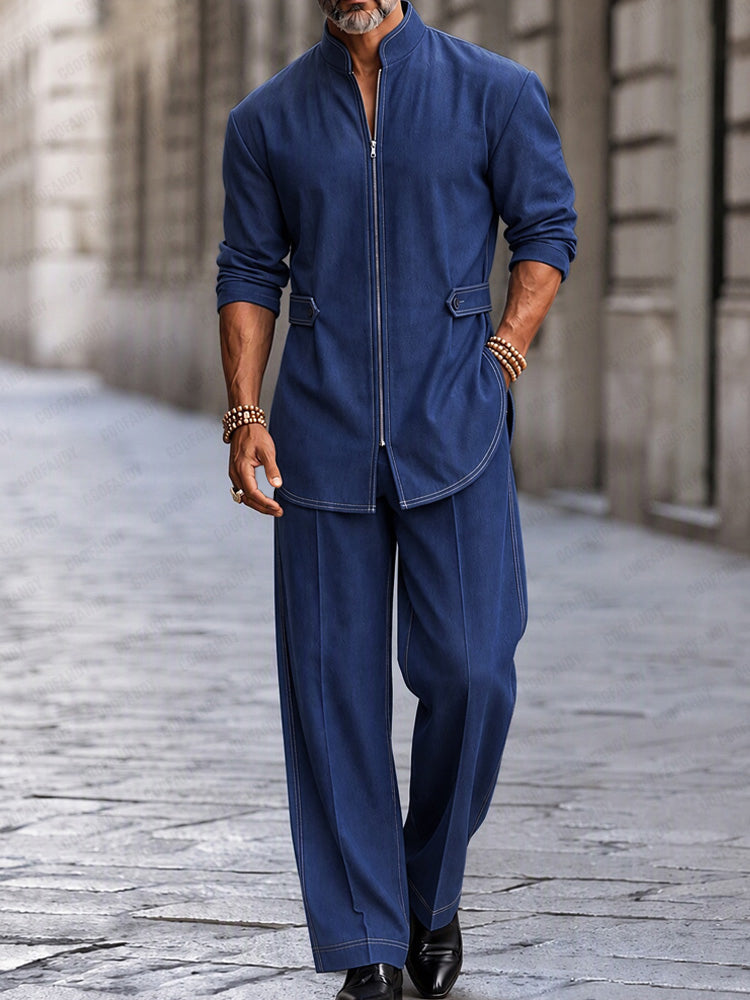
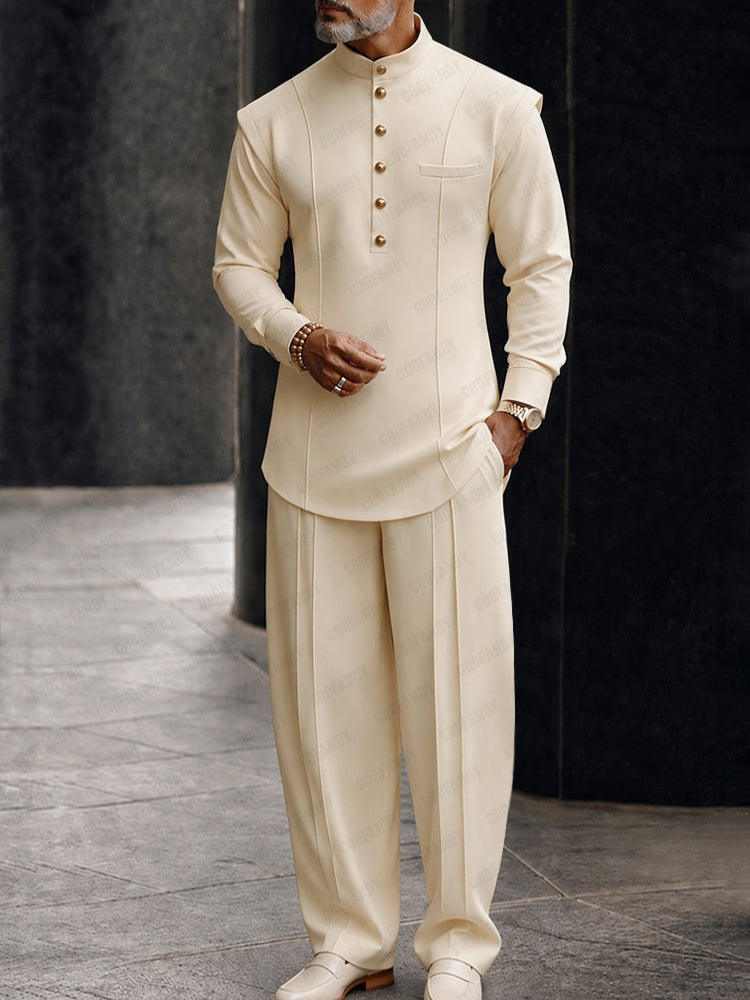
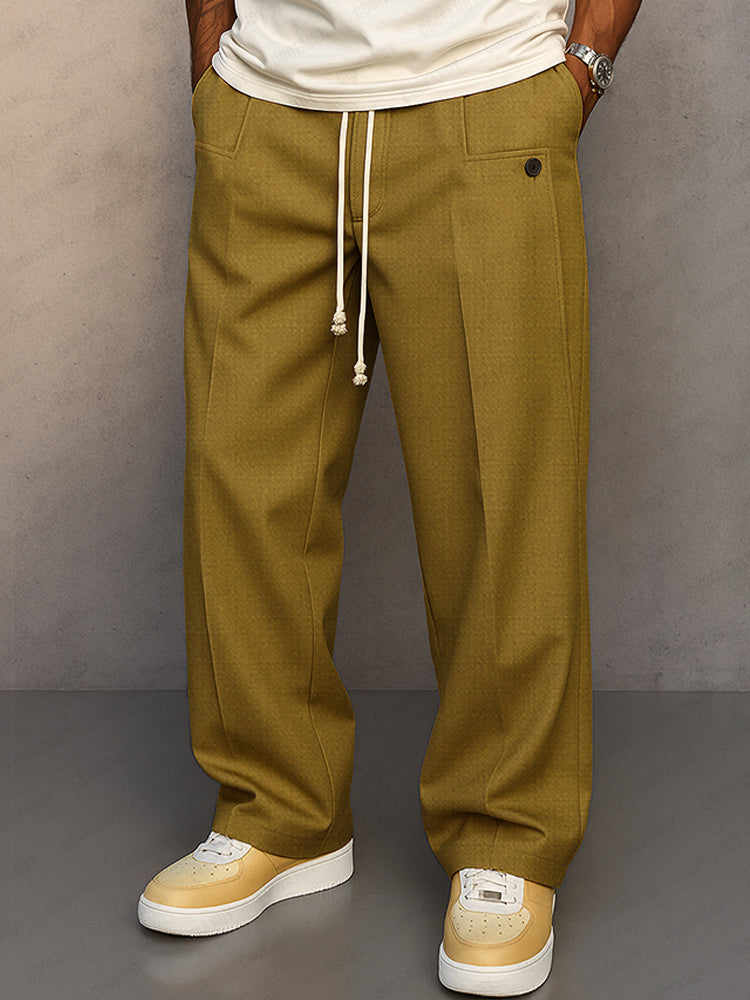
Pants create the lower boundary of the look. Dark denim works for relaxed weekends. Chinos bridge casual and smart casual settings. Tailored trousers make a knit or polo appropriate for more polished plans. Pick the pair that fits the most formal part of the day before thinking about seasonal texture.
A clean fit matters more than chasing a particular silhouette. The waistband should stay comfortable when seated, the rise should suit how you tuck a shirt, and the hem should meet the shoe without heavy stacking. If the pants already have a bold pattern or pronounced texture, keep the layers above them quieter.
2. Choose a base that can stand alone
Indoor heating is the reason many fall outfits fail. A heavy sweater may feel right on the walk in, then become uncomfortable once the outer layers come off. The base should therefore look complete by itself.
A plain T-shirt suits casual combinations. A knit polo adds structure without requiring a tie. A button-down supports business casual and dressier social settings. Choose a neckline that remains deliberate when a cardigan, quarter-zip or jacket is removed.
3. Add one useful mid-layer
The mid-layer should solve a real problem: warmth, texture or a small increase in formality.
- A crewneck sweater is the simplest option over a tee or collared shirt.
- A quarter-zip adjusts easily when temperatures change and works with casual trousers or dark denim.
- A cardigan opens fully, making it particularly easy to remove indoors.
- A sweater vest adds warmth through the torso while keeping the arms unrestricted, but its proportions and underlayer require more attention.
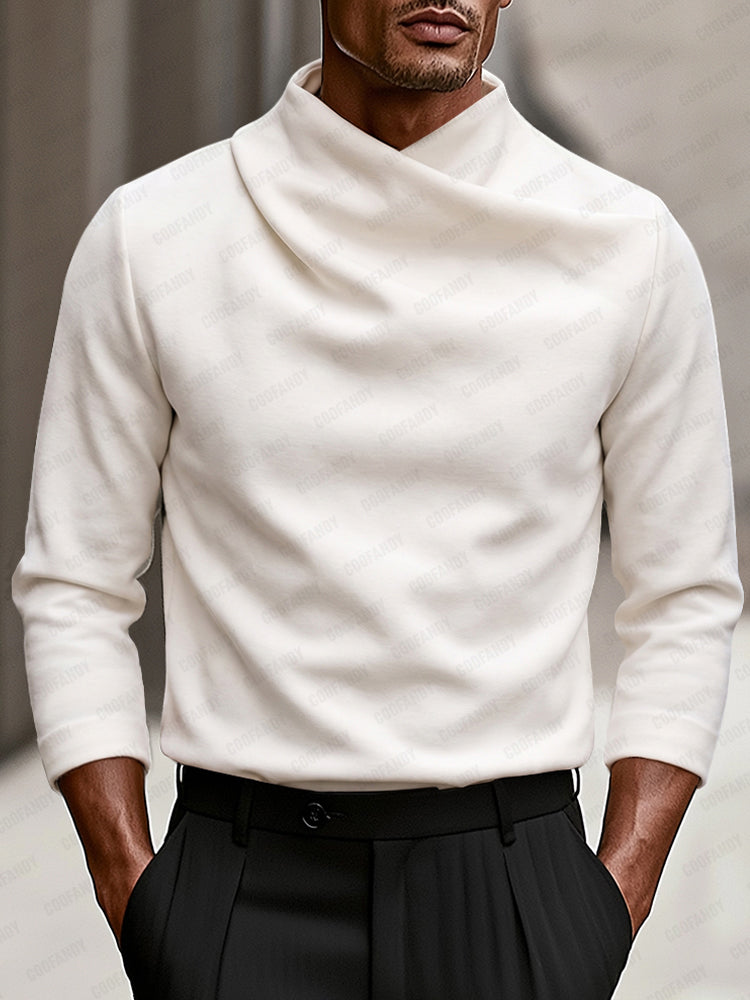
- A turtleneck creates a clean, continuous neckline and can work under a jacket when the knit is not too bulky.
COOFANDY's current US storefront evidence for this guide includes a casual knit polo, a quarter-zip pullover sweater, and a slim-fit turtleneck sweater. Availability and price can change, so confirm the product page before choosing a specific variant.

4. Use the outer layer to answer the forecast
The final layer handles wind, rain and longer exposure. It should also fit over everything beneath it without pulling at the shoulders or compressing a bulky knit.
An unstructured blazer raises the formality of a fine knit. A casual jacket works with denim and chinos. A coat gives a cleaner finish over tailored trousers. If rain is likely, prioritize weather suitability over texture alone. The most stylish layer is still the wrong choice when it cannot handle the conditions.

Six Reliable Men's Fall Outfit Formulas
Mild weekend: polo + chinos + light jacket
Use a polo as the complete indoor outfit, then add a light jacket for the cooler morning or evening. Keep the colors low-contrast if you want a refined result, or use the jacket as the one stronger accent.
Everyday casual: T-shirt + crewneck + dark denim
This combination works because every layer can function independently. Let a small amount of the T-shirt show at the collar, keep the sweater hem controlled, and choose denim without heavy distressing when the destination is more than purely casual.
Smart casual: button-down + cardigan + chinos
Choose a cardigan that closes without pulling and a shirt collar that sits cleanly above it. The COOFANDY shawl-collar cardigan is one current US option in the approved product snapshot. For more fit and buttoning detail, use the dedicated cardigan guide linked below.

Relaxed workday: knit polo + tailored trousers + blazer
The knit polo softens the blazer while tailored trousers preserve the office signal. This is a useful fall business-casual formula, but workplace rules still control whether it is appropriate. Keep athletic polos and visibly casual drawcord pants out of conservative settings.
Changeable day: shirt + quarter-zip + chinos
A quarter-zip gives you more ventilation control than a fixed crewneck. Wear the collar open enough that the shirt neckline remains intentional, and avoid stacking a high shirt collar, high zip and bulky scarf in the same small area.
Evening plan: fine turtleneck + tailored pants + jacket
Keep the turtleneck smooth enough to sit under the jacket without changing its shoulder line. Dark, related colors create a clean evening effect; stronger contrast makes the knit the focal point. This formula suits contemporary smart casual settings, not every formal dress code.
Make Layering Look Intentional
Good layering is less about adding more pieces than controlling what each visible edge does. Check the neckline, cuffs and hem in a mirror after all layers are on.
- Show one clear neckline rather than several competing collars.
- Keep a longer base from hanging below a tailored mid-layer unless the casual proportion is deliberate.
- Make sure sleeves move without bunching inside the jacket.
- Use contrast to separate adjacent layers, but repeat at least one color family elsewhere in the outfit.
- Remove one statement element when texture, pattern and color are all competing.
If a look feels busy, simplify the smallest visible area first. A plain base layer or quieter trouser often fixes the problem without replacing the seasonal piece you wanted to wear.

Choose Texture Without Turning the Outfit Into a Costume
Cable knits, ribbing, brushed surfaces and suede-like finishes make an outfit read as autumnal. They also add visual weight. Use one pronounced texture as the lead and support it with smoother pieces.
For example, pair a cable-knit sweater with flat-front trousers, or a textured cardigan with a plain shirt and dark denim. When both the sweater and trousers are heavily textured, the outfit can look bulky even if the fit is technically correct.
Seasonal color works the same way. Brown, burgundy, olive and oatmeal are useful, but wearing all four at once is not required. Start with one autumn color and two dependable neutrals. The separate fall-color guide goes deeper into combinations without turning this hub into a palette encyclopedia.
Common Fall Outfit Mistakes
Dressing for the calendar instead of the forecast
September does not automatically require a heavy sweater. Check the day's high, low, wind and precipitation, then consider how much time you will spend moving outdoors.
Building an outfit that only works with the coat on
You will probably remove the outer layer indoors. Make sure the shirt, knit and pants still form a finished outfit when you do.
Adding bulk at every layer
A substantial sweater needs room under a coat. If the outer layer fits closely, use a finer knit or simplify to a single warm layer.
Confusing product category with dress code
A cardigan is not automatically business casual, and a blazer is not automatically formal. Fabric, fit, color and the other pieces determine the full outfit's level.
Treating footwear as an afterthought
Shoes finish the formality set by the pants. Clean minimal sneakers can suit relaxed combinations; loafers or other polished footwear raise chinos and tailored trousers. COOFANDY does not sell shoes, so footwear references here are styling guidance rather than product recommendations.
Use This Guide as the Fall Starting Point
Begin with weather and occasion, choose a complete base outfit, then add one mid-layer and one forecast-appropriate outer layer. That gives you a repeatable system instead of a closet full of disconnected seasonal purchases.
When the real question is narrower, move to the page that owns it: use the formula guide for ready-made combinations, the capsule guide for a limited wardrobe, the business-casual guide for office boundaries, and What to Wear in 50-60 Degree Weather: A Men's Layering Guide for a temperature-specific decision.
Frequently Asked Questions
What do guys wear in the fall?
Men can build most fall outfits from a complete indoor base plus one or two removable layers. Start with dark denim, chinos or trousers; add a shirt, polo or lightweight knit; then choose a cardigan, overshirt or jacket for the forecast. Match the pants and shoes to the occasion, and adjust the number and weight of layers for wind, rain and time outdoors.
What is the 3-3-3 rule for men's clothing?
The 3-3-3 rule is a small-wardrobe exercise built around three tops, three bottoms and three pairs of shoes. It can simplify fall dressing, but it is not a universal dress rule. Choose pieces with compatible colors and formality, then treat outerwear and weather protection as separate needs. A fall capsule can use the idea without being limited to exactly nine items.
Related Reading
- What to Wear in Fall: 12 Easy Men's Outfit Formulas
- Men's Fall Capsule Wardrobe: 10 Pieces, 30 Outfits
- Fall Business Casual for Men: Office Outfits That Handle the Commute
About COOFANDY
Founded in 2015, COOFANDY is a menswear brand created for modern men navigating work, weekends, celebrations, and everyday life. Its collection includes shirts, suits, pants, sweaters, and tees designed to help men build versatile, confident looks for different moments and personal styles. Guided by the belief that clothing can reflect confidence and character, COOFANDY focuses on making approachable menswear part of every stage of life.
COOFANDY in the Press
Leave a comment