









What to Wear in 50-60 Degree Weather: A Men's Layering Guide
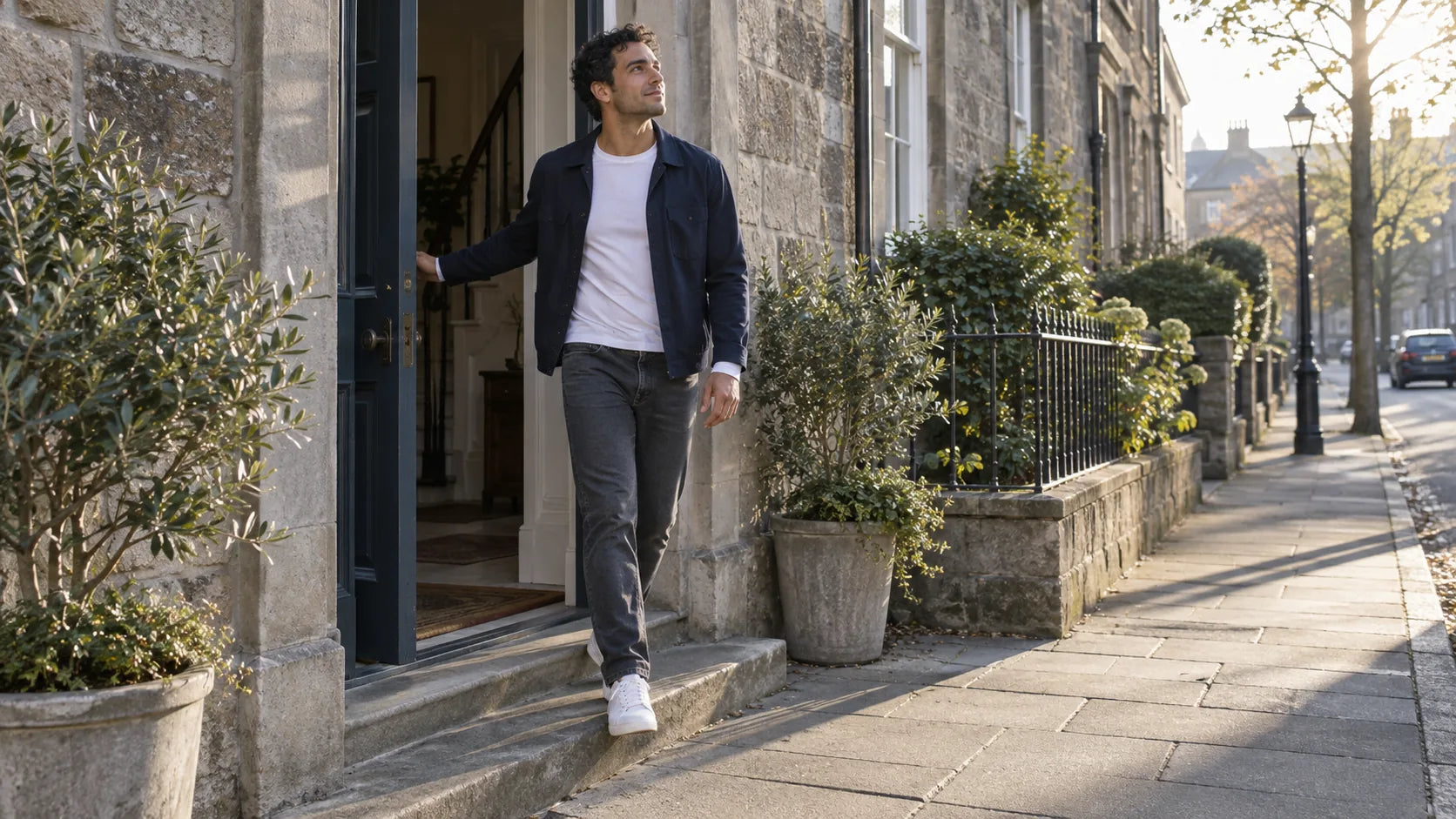
In 50-60°F weather, most men need a complete base outfit plus one removable layer. Around 60°F, a long-sleeve shirt, polo or light sweater may be enough during active daylight hours. Near 50°F, or with wind, rain and long outdoor exposure, add a jacket or coat that fits over the base. Personal comfort and activity level can change the answer substantially.
This guide uses degrees Fahrenheit for a US audience. It covers ordinary day-to-day dressing, not medical safety, severe weather or specialized outdoor activity.
TL;DR
- At 60°F: start with pants and a long-sleeve base; carry a light layer if you will be out late.
- At 55°F: use a base plus cardigan, crewneck or quarter-zip.
- At 50°F: add an outer layer, especially for wind, shade or extended sitting.
- Rain and wind can matter more than a five-degree change in the forecast.
- Build an indoor outfit that remains finished when the jacket comes off.

50-60°F Outfit Matrix
| Condition | Base layer | Mid-layer | Jacket | Adjustment |
|---|---|---|---|---|
| 58-60°F, sunny, active | Long-sleeve tee, shirt or polo | Optional light knit | Usually carry rather than commit | Remove layer during sustained walking |
| 54-57°F, mixed sun | Tee or shirt | Cardigan, crewneck or quarter-zip | Light jacket for longer exposure | Open or remove mid-layer indoors |
| 50-53°F, calm | Long-sleeve base | Sweater | Light-to-medium outer layer | Add coverage for evening or shade |
| 50-60°F, windy | Close-fitting base | Low-bulk knit | Wind-appropriate jacket | Protect exposed neck and hands as needed |
| 50-60°F, rainy | Indoor-ready base | Removable knit | Rain-appropriate outer layer | Keep wet layer away from indoor outfit |
| Outdoor event with little movement | Shirt or tee | Sweater | Coat with layering room | Dress for time outside, not just arrival |
These ranges are planning prompts, not universal prescriptions. Humidity, sun, wind, clothing construction, metabolism and activity all affect comfort.
Step 1: Read More Than the Temperature
A headline high of 58°F does not describe the whole day. Check:
- The temperature when you leave and return.
- Wind speed and exposure.
- Rain probability and whether shelter is available.
- Sun versus shade.
- How long you will be outside and how much you will move.
A 15-minute brisk walk in sun can feel different from sitting for two hours at an outdoor event. Dress for the coldest or least active meaningful part of the plan, then use removable layers to handle the rest.
Step 2: Build a Complete Base Outfit
The base is what remains indoors. Choose it according to the occasion.
Casual base
A long-sleeve tee or short-sleeve tee with full-length pants can work near the warmer end of the range. Add a sweater or overshirt that is easy to carry.
Smart casual base
A polo, button-down or fine knit with chinos creates a finished outfit for lunch, travel or social plans. A cardigan or quarter-zip can sit above it without changing the fundamental formality.
Business casual base
Use a shirt or office-appropriate knit with tailored trousers. Build weather protection outside that base. The commute should not force an athletic or overly casual layer to remain at the desk.
Step 3: Choose the Mid-Layer by Adjustability
Cardigan
A cardigan opens fully and is easy to remove, making it useful when a cool morning leads to a warm interior. COOFANDY’s Ultra-Soft Versatile Knit Cardigan gives you a simple layer to add or remove as conditions change.
Quarter-zip
A quarter-zip lets you adjust the neckline without removing the whole layer. COOFANDY’s Zip Up Slim Fit Lightweight Pullover Polo Sweater works as a neat mid-layer that can be opened slightly indoors and zipped higher when the air cools.
Crewneck sweater
A crewneck provides simple coverage and works over a tee or shirt. A fine knit fits more easily beneath a jacket; a substantial knit may need to act as the main outer layer in calm, dry conditions.
Overshirt
An overshirt is a casual, easy-removal option near the mild end. It offers less weather protection than a purpose-built jacket, so wind or rain may require another solution.
Step 4: Decide Whether You Need a Jacket
Ask whether the mid-layer alone handles the least comfortable part of the day. Add a jacket when:
- the temperature is near the low end of the range;
- wind or rain increases exposure;
- you will be outside for a long time;
- activity will be low;
- the day extends into a colder evening; or
- the occasion requires a more structured finish.
The jacket must fit over the chosen layers. Test shoulder movement and sleeve room. If it pulls, use a finer mid-layer or a roomier compatible outer layer rather than simply increasing every size.

What to Wear Around 60°F
For a sunny, active day around 60°F, begin with chinos or jeans and a long-sleeve base. A polo or button-down can work alone for part of the day. Carry a light sweater, cardigan or jacket if the plan extends into shade or evening.

Formula: long-sleeve polo + chinos + carried jacket
The polo creates a complete look indoors and outdoors. The jacket remains available without forcing you to wear it during movement.
Formula: T-shirt + overshirt + dark denim
Open the overshirt during activity and close it when the air cools. Add proper rain protection if needed; the overshirt should not be assumed to handle wet weather.
What to Wear Around 55°F
At the middle of the range, a removable mid-layer is the most dependable starting point.
Formula: button-down + cardigan + chinos
This works for smart casual plans and offices that accept knitwear. Remove the cardigan indoors and keep the shirt outfit complete.

Formula: tee + quarter-zip + dark denim
Use the zipper for ventilation and carry a light jacket when wind or a late return is expected.
Formula: knit polo + trousers + unstructured jacket
This raises the formality for dinner or work. Confirm the jacket has room for the knit and remove it indoors as conditions change.
What to Wear Around 50°F
Near 50°F, most plans benefit from an outer layer, particularly when there is wind, rain, shade or limited movement.
Formula: shirt + fine sweater + coat
Use a fine knit so the coat fits correctly. The shirt and sweater should remain a finished indoor combination.

Formula: long-sleeve base + cardigan + casual jacket
This gives two adjustable layers for a relaxed day. Avoid pairing a bulky cardigan with a close-fitting jacket.
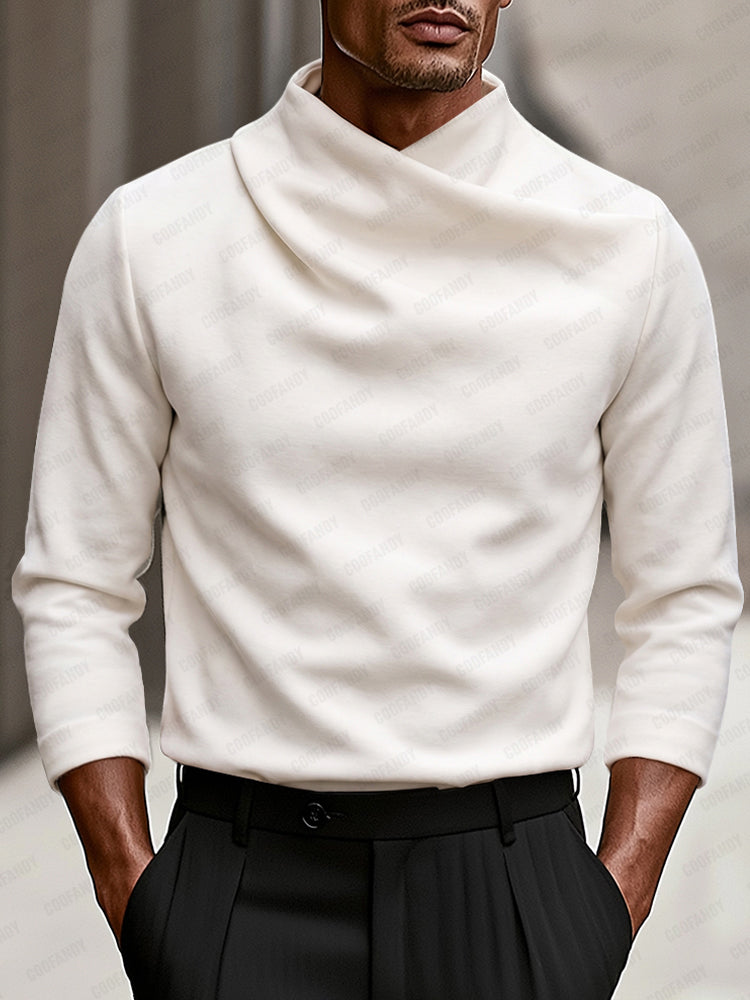
Formula: turtleneck + trousers + jacket
A turtleneck increases neck coverage and creates a clean smart-casual base. It still does not prove sufficient warmth for every person or condition.
Wind, Rain and Time Outside
Wind
Wind can make an open cardigan or loose knit feel less effective. Use an outer layer intended to reduce exposure and close adjustable openings. Do not rely on fabric appearance as proof of wind resistance.
Rain
Use a rain-appropriate outer layer and footwear suited to wet conditions. Plan where to store the wet layer indoors. Product pages and labels, not visual texture, should establish care and weather features.
Extended outdoor time
Standing or sitting generates less heat than walking. Add a compatible layer and consider exposed areas. For long events, specialized activities or rapidly worsening conditions, use appropriate weather guidance beyond a fashion article.
Common 50-60°F Dressing Mistakes
Wearing the warmest layer from the start
This can lead to overheating during transit and leaves no adjustment when you go indoors. Begin with removable layers.
Dressing only for the afternoon high
Morning, shade and evening may be meaningfully cooler. Check the hours that match your actual plan.
Assuming garment names equal performance
“Thermal,” “lightweight,” “quilted” or “sweater” in a title does not by itself establish warmth, wind resistance or rain protection. Check verified specifications and use conditions.
Forgetting the indoor outfit
If removing the jacket reveals an unfinished undershirt or mismatched base, the layering plan has failed. Build from inside out.
Quick Decision Checklist
- Is the forecast in Fahrenheit, and what are the hourly conditions?
- How long will you be outside, moving or stationary?
- Does the base fit the occasion without outerwear?
- Can the mid-layer be adjusted or removed easily?
- Does the jacket fit over the full combination and address wind or rain when needed?
Use the answer to choose a base, one mid-layer and an optional jacket. For broader seasonal formulas, continue to the fall outfit hub; for office-specific transitions, use the fall business-casual guide.
When the forecast is closer to mild than cool, compare the lighter layering options in what to wear in 70-degree weather rather than carrying the 50-60°F matrix into a different temperature range.
Frequently Asked Questions
Do men need a jacket in 50-degree weather?
Many men will want a jacket around 50°F, especially with wind, rain, shade, long outdoor exposure or low activity. A complete long-sleeve base plus a removable jacket is a practical starting point. Personal comfort varies, so consider the hourly forecast and how long you will be outside rather than treating 50°F as a universal clothing threshold.
What should men wear in 50-degree weather?
Use pants, a long-sleeve base or light knit, and one removable outer layer. A cardigan or quarter-zip can work as a mid-layer, while a jacket becomes more useful in wind, rain or extended outdoor time. Build the shirt-and-pants combination to suit the occasion after the jacket comes off, and do not infer warmth or weather protection from a product name alone.
Related Reading
- Men's Fall Outfits: The Complete 2026 Style Guide
- What to Wear in Fall: 12 Easy Men's Outfit Formulas
- Fall Business Casual for Men: Office Outfits That Handle the Commute
About COOFANDY
Founded in 2015, COOFANDY is a menswear brand created for modern men navigating work, weekends, celebrations, and everyday life. Its collection includes shirts, suits, pants, sweaters, and tees designed to help men build versatile, confident looks for different moments and personal styles. Guided by the belief that clothing can reflect confidence and character, COOFANDY focuses on making approachable menswear part of every stage of life.
COOFANDY in the Press

Laissez un commentaire