








What Makes a Blazer Look Expensive?

A blazer looks considered when its overall shape, surface and finishing work together—and the rest of the outfit gives those details room to show. Start with the silhouette, then examine the fabric's appearance, the visible edges and the supporting clothes. A striking button or dramatic lapel cannot settle the whole result by itself.
“Expensive-looking” is a visual impression, not a reliable estimate of price or proof of hidden workmanship. You may prefer an easy, textured jacket to a sharper silhouette. The useful question is whether the blazer looks deliberate in the outfit you want to wear. Here is how to make that judgment, including two design examples from COOFANDY Signature.
Read the Whole Silhouette Before the Details
Step back far enough to see the jacket and trousers together. With your arms relaxed, look at the shoulder line, the front closure and the hem. Ask where your eye stops. Is it following the jacket's outline, or going straight to a section that seems pulled, collapsed or out of balance?
Check the jacket in the way you intend to wear it. A blazer that works open over a shirt has not necessarily passed the buttoned version you want for a meeting. Try both positions if both matter, then sit down and stand up again. Look for a repeated problem rather than treating every movement wrinkle as a defect.
Next, separate a fit issue from a proportion preference. If the front repeatedly strains when fastened, inspect the fit and the layer beneath it. If the jacket hangs freely but feels too long with your trousers, try a different trouser rise or shirt treatment before deciding that the size is wrong. Change one element and compare the result.
Do not force every blazer into the same narrow shape. A relaxed outline can be intentional. Judge whether the selected shape looks coherent on you and supports the occasion, rather than using tightness as a shortcut for refinement.
Distinguish Texture From a Distracting Surface
Look at a fabric close-up and a full-length view together. The close-up helps you choose the surface you like; the full view helps you decide how strongly it reads across the outfit. A texture you enjoy near the camera may be quiet at conversational distance. Another may become the jacket's main feature.
Compare the photographed views under different lighting when they are available. A bright highlight in one image is not enough to classify a cloth as glossy. Nor does a textured surface make a jacket inherently less polished. Keep the judgment tied to what the images actually show and confirm the impression on the garment when you can.
During a try-on, distinguish the surface's intended character from distractions you would want to address. Is the visible line part of the fabric texture, or a crease from storage? Is a mark present on the garment, or only a shadow in the photograph? If you cannot tell, inspect it more closely rather than guessing at a fabric-quality explanation.
For a quiet outfit, try a visibly textured blazer with a plain shirt and trousers. If you prefer a stronger combination, add contrast in one supporting piece first. The goal is to choose the amount of visual activity, not to erase every sign of texture.
Check the Finish You Can Actually See
After the outline and surface, move closer. Inspect the lapel edges, pocket mouths, front edge, cuffs and visible button attachments. Look for the relationship between the details: whether the pockets sit as intended, whether an edge is folding awkwardly, or whether a loose thread needs attention.
These checks have different limits online and in person:
| View | Useful observation | What remains unresolved |
|---|---|---|
| Full front and back photos | Overall balance and placement on the photographed sample | How your selected size will sit on you |
| Detail photos | Visible edges, texture and decorative elements | Hidden seam work and attachment strength |
| Indoor try-on | How the actual garment sits and moves with your clothes | Long-term behavior after wear and care |
An even-looking stitch line is a visible detail, not a durability test. A covered interior is not proof of a particular tailoring method. You do not need to identify an unseen construction technique to decide whether the visible finish suits you.
If one detail concerns you before ordering, ask for the view that would answer it. A clear cuff or lapel photograph is more useful than another general assurance of quality. After delivery, resolve a loose button or an unfamiliar mark with the seller before treating it as a styling problem or attempting a repair.

Let One Detail Lead the Outfit
Choose the feature you want people to notice first. It could be the blazer's outline, its texture, a contrast collar or a distinctive button. Then make the surrounding choices support that feature.
For example, if the lapel creates a strong outline around your face, begin with a plain shirt and restrained trousers. If the shirt carries a pattern, try removing the pocket square before replacing the jacket. This gives you a clear comparison: did the outfit need another garment, or simply fewer competing details?
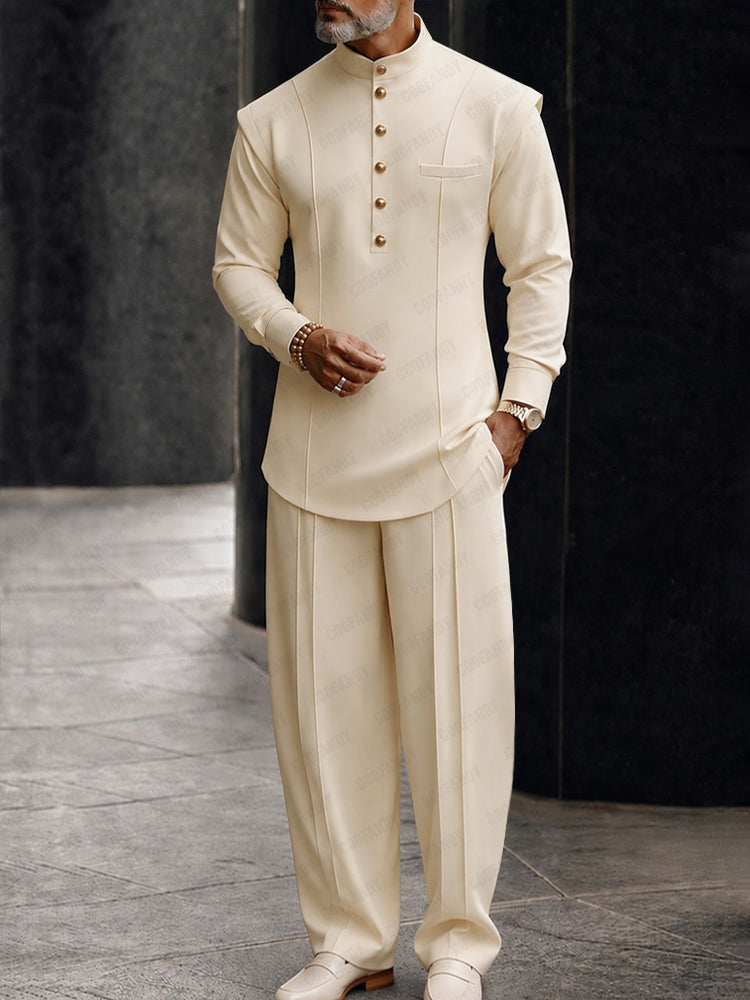
Treat buttons the same way. Gold-tone buttons can be a detail you enjoy, but their color does not establish a jacket's price or construction quality. Look at them beside your belt, watch and other visible accents. Keep the combination if it feels deliberate to you; simplify it if the small details compete for attention.
Check the lower half before adding accessories. A carefully chosen blazer over trousers with a distracting proportion may still feel unresolved. Try the actual shoes, look at the trouser length, and compare the outfit from a normal standing distance. Let the base combination work before adding the finishing piece.
Use Two Signature Details as Styling Anchors
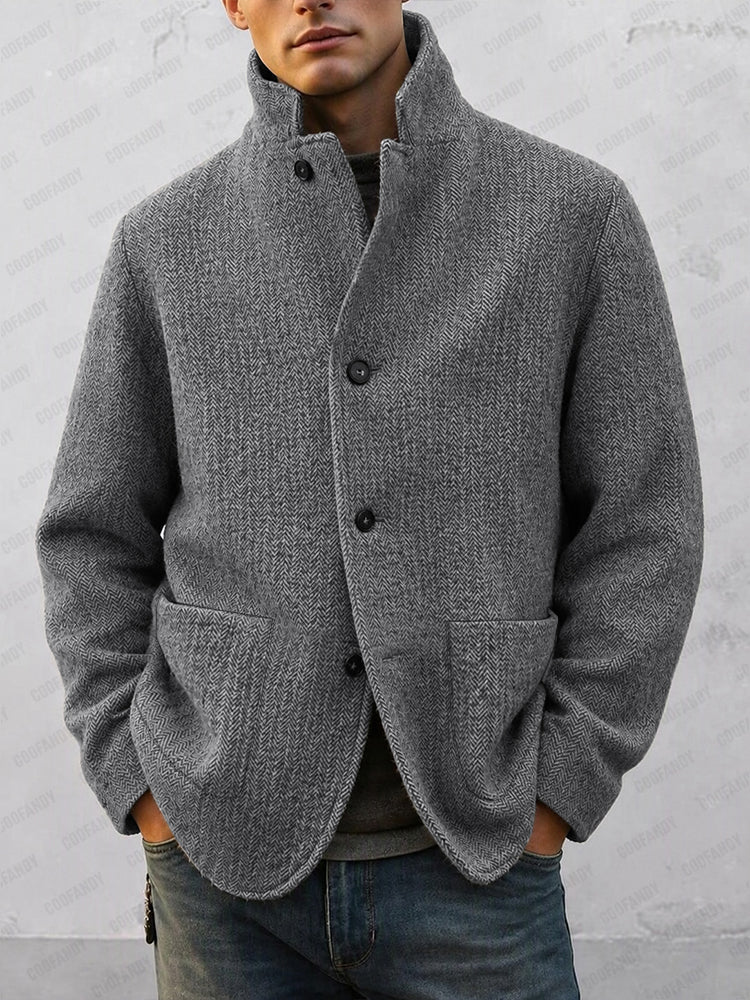
The Classic Textured Sheep Wool Blend Blazer offers a useful surface-and-pocket example: subtle vertical texture, a notch lapel, a chest patch pocket and lower patch pockets. Begin by deciding how much of that texture you want to see. A plain shirt and trousers give you a clear starting point for judging it.
Keep the pockets visually quiet during the first try-on. Then add the items you would normally carry and reassess the front. If the outline changes in a way you dislike, decide whether those items belong elsewhere. This is an outfit test, not a claim that the pocket layout makes the blazer more or less valuable.
The Tailored Fully-Lined Peak-Lapel Wool Blend Blazer provides a different anchor: a peak lapel with a welt chest pocket and lower flap pockets. Start with the neckline. Try the shirt you intend to wear, then look at the collar and lapels together rather than judging each piece separately.
If you prefer the lapel to lead, keep the shirt front simple for the comparison. If you want to introduce a pattern or pocket square, add one at a time and view the complete outfit again. Neither design is automatically the more expensive-looking choice; the useful choice is the one whose details you want and can coordinate.
The COOFANDY Signature collection lets you explore the current designs. Use the individual product information to check the garment, rather than turning the collection name into a workmanship or price conclusion.

Make One Change Before You Buy Anything
If the blazer looks unresolved, identify the first thing you would change: the fit, the surface presentation, the supporting clothes or an accessory. Work on that one issue, then compare the complete outfit again.
A fit problem deserves a fit decision. A visible care issue calls for the garment's care instructions or appropriate advice. A competing shirt or shoe calls for a styling change. None automatically calls for a higher-priced jacket.
Keep the outfit when its shape, surface and details work together for you. The result you are looking for is a composed appearance you can actually wear—not a collection of supposed luxury signals.

FAQ
Do gold buttons make a blazer look more expensive?
Not by themselves. They are a visible design choice, not proof of price or workmanship. Judge them with the jacket's shape, the shirt and your other accessories, and simplify the supporting outfit if several details compete for attention.
Can a textured blazer look polished?
Yes. Try the texture as the outfit's main feature with a plain shirt and trousers, then assess the complete silhouette. Intentional texture is different from a distracting crease or mark; inspect the actual garment and follow its care instructions when attention is needed.



Laissez un commentaire