









Navy and Burgundy Outfits for Men
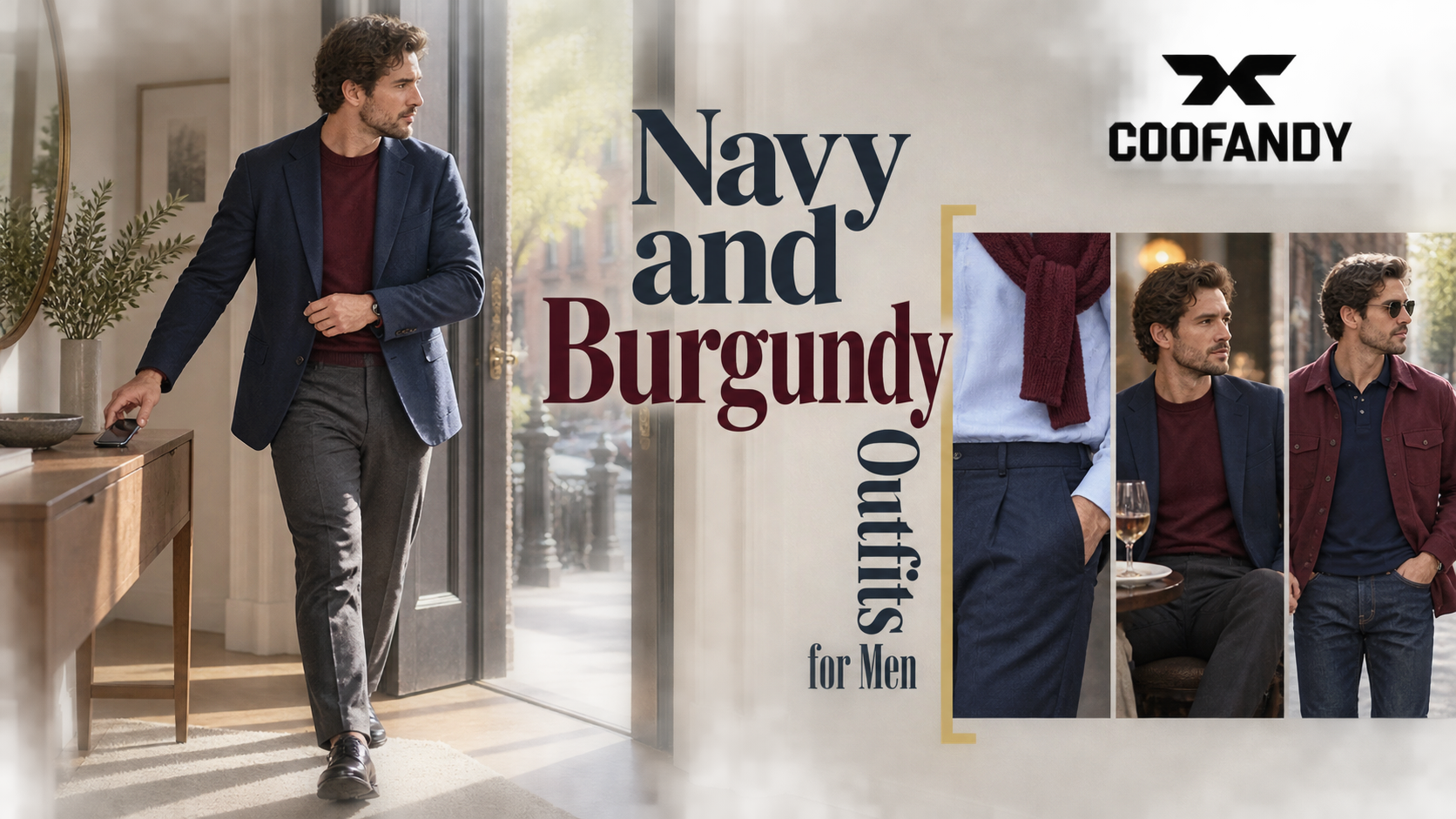
Navy and burgundy work together when one color leads and the other acts as a controlled accent. Navy can supply the dark foundation; burgundy can supply the seasonal emphasis. Add one neutral—white, gray, charcoal, black, tan or dark denim—then match the texture and formality before adding anything else. The result should look deliberate, not like two dark colors competing for attention.
TL;DR
- Start with navy when you want the safest foundation; let burgundy lead only when the rest is quiet.
- Choose the neutral by setting: white or gray for polish, charcoal or black for evening, and denim or tan for a relaxed plan.
- Keep the color ratio simple: one lead, one accent and one neutral.
- A smooth jacket or trouser helps two deep colors look intentional.
Do Navy and Burgundy Go Together?

Yes, provided the shades have enough separation and the outfit has a clear lead color. A dark navy trouser with a burgundy knit is an easy starting point because the trouser behaves like a neutral foundation. A burgundy top with a navy blazer can also work, but the shirt, shoes and trousers should stay quieter. If both colors are equally saturated, add a light or gray neutral to create space between them.
Navy-and-Burgundy Color Matrix

| Lead | Accent | Third neutral | Best setting | Texture and weather cue |
|---|---|---|---|---|
| Navy trousers | Burgundy knit or layer | White or light gray | Office or dinner | Smooth trouser with one visible knit; useful for a cooler evening |
| Burgundy top | Navy blazer | Black or charcoal | Dinner or an evening event | Keep the jacket surface clean; add a removable layer if the plan changes |
| Navy polo | Burgundy overshirt or accessory | Dark denim | Weekend | Keep the shapes relaxed but the color ratio controlled |
| Navy jacket | Burgundy shirt | Tan or cream | Seasonal gathering | Use one soft neutral to stop the dark colors from merging |
| Burgundy sweater vest | Navy trousers | White shirt | Low-key Halloween plan | Let the seasonal color do the work; avoid costume graphics or several warm accents |
A Four-Step Color Test

- Choose the lead. Put navy or burgundy on the largest visible area, usually trousers, a jacket or the main knit. Do not let both colors lead at once.
- Place the accent. Use the second color on one layer or a small visible detail. If the accent spreads to the shirt, shoes and outer layer, remove one of those repeats.
- Add the neutral. Select white or gray to increase contrast, charcoal or black for a quieter evening, or tan, cream or denim to relax the outfit.
- Check texture and formality. A smooth trouser can balance a knit; a structured blazer can balance a relaxed polo. If both pieces are heavy, shiny or strongly patterned, change the texture before changing the color.
Occasion Formulas
Work
Start with navy trousers, a light shirt and one burgundy layer. A burgundy knit under a navy blazer is more controlled than a burgundy shirt, blazer and shoe all together. Keep the trouser line clean and use a simple shoe. If the office is formal, let the shirt and blazer provide structure while the burgundy remains an accent.
Dinner
Reverse the emphasis: use a burgundy top with a navy blazer, then ground the look with black or charcoal trousers. A smooth jacket keeps the colors from feeling heavy. If the top already has visible knit texture, avoid a textured scarf or patterned shirt beneath it.
Weekend
Let navy carry the outfit with a polo or overshirt, then introduce burgundy through one layer. Dark denim is a useful neutral because it keeps the formula relaxed without adding a fourth strong color. Use straightforward sneakers or boots and keep the fit easy, not oversized.
Seasonal gathering
Use a navy jacket, burgundy shirt and tan or cream neutral. This formula creates contrast without looking like formal suiting. A light shirt edge, pocket detail or shoe can supply the neutral; you do not need the same light color in every piece. Keep one removable outer layer for a plan that moves indoors.
Low-key Halloween
Use a burgundy sweater vest over a white or pale shirt, then add navy trousers. The color pairing gives a seasonal signal without a novelty graphic. If you want more emphasis, change the shoe or one small accessory, not every layer. The outfit should still read as menswear after Halloween.
COOFANDY Color References
The COOFANDY Slim Fit Turtleneck Twisted Knitted Pullover Sweater currently offers Wine Red and Navy Blue options, making it a useful reference for deciding which color should lead. Because colors, sizes, and availability can change, check the product page for the options available when you shop. The COOFANDY Casual Knit Polo Shirts is another option for a navy-led weekend formula; review its current color, fabric, and fit details before choosing it for your outfit.
For the broader color system, read Fall Colors for Men: Oatmeal, Brown, Burgundy and Olive. If the outfit needs more texture guidance, see How to Mix Fall Textures Without Looking Busy. You can also browse the men's blazer collection or men's pants collection when you need a starting point for the foundation piece.
Common Failure Conditions
- Two lead colors: if navy and burgundy cover equally large areas, the outfit can look muddy. Reduce one to an accent.
- No neutral: add white, gray, charcoal, black, tan, cream or denim before adding another color.
- Texture conflict: a knit, textured jacket and patterned shirt compete. Keep at least two surfaces quiet.
- Formality mismatch: a polished blazer with very casual distressed denim can make the color pairing feel accidental. Align the setting before adjusting the shade.
- Seasonal overload: burgundy plus rust, orange and a novelty graphic can read as costume. Keep one Halloween signal.
Frequently Asked Questions
Do navy and burgundy go together?
Yes. The easiest formula is navy as the foundation, burgundy as the accent and one neutral to separate them. Try navy trousers with a burgundy knit and a white or gray shirt for work or dinner. You can reverse the emphasis with a burgundy top and navy blazer, but keep the trousers and shoes quiet. If both colors look equally bright or equally dark, add more contrast through the neutral or use a smoother texture so the outfit does not merge visually.
What colors go with burgundy for men?
Navy, white, gray, charcoal, black, tan, cream and dark denim are practical partners. Choose by the job of the outfit: white or gray opens a polished look, charcoal and black keep an evening formula restrained, and tan, cream or denim relax a weekend outfit. Burgundy should not need several supporting colors. Pick one partner as the foundation, add one neutral, and check whether the fabric texture and formality match before adding shoes or accessories.
What is the three-color rule in menswear?
It is a useful editing rule: choose a foundation color, an accent and a neutral so the outfit has a clear hierarchy. It is not a requirement to use exactly three colors or a guarantee that any three shades work together. In a navy-and-burgundy outfit, navy can be the foundation, burgundy the accent and gray or tan the neutral. Small variations in shoes, metal hardware or denim do not automatically break the rule; the goal is controlled contrast.
Related Reading
- Fall Colors for Men: Oatmeal, Brown, Burgundy and Olive
- Men's Fall Outfits: The Complete 2026 Style Guide
- How to Mix Fall Textures Without Looking Busy
About COOFANDY
Founded in 2015, COOFANDY is a menswear brand created for modern men navigating work, weekends, celebrations, and everyday life. Its collection includes shirts, suits, pants, sweaters, and tees designed to help men build versatile, confident looks for different moments and personal styles. Guided by the belief that clothing can reflect confidence and character, COOFANDY focuses on making approachable menswear part of every stage of life.

Leave a comment