








What Is a Pea Coat? A Guide to Wearing It Well

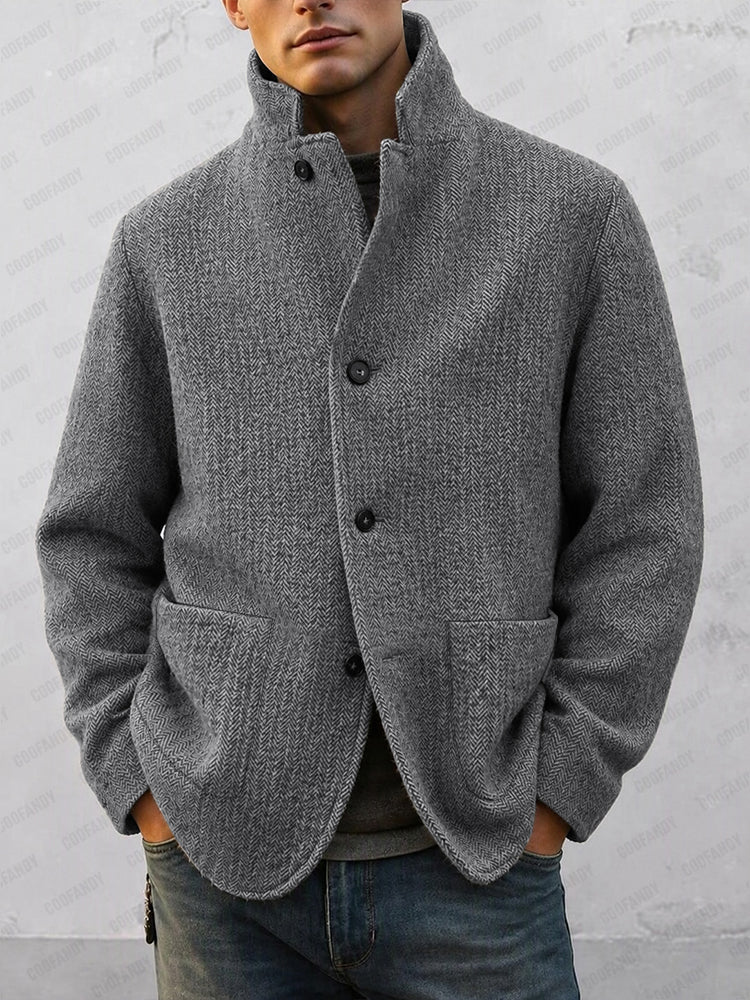
A pea coat is a traditionally short, double-breasted outer coat with broad lapels and substantial wool fabric. Its sailor origins explain the familiar shape: an overlapping front, a generous collar and a shorter body than many overcoats.
Modern versions vary in fabric, length and detailing. Those changes matter when choosing one, but the name alone does not promise a particular level of warmth or rain protection.
The styling possibilities extend well beyond a turtleneck. An Oxford and V-neck, a simple Henley, or a cardigan and pleated trousers each bring out something different in that broad-fronted silhouette. Here is how to make those combinations work.
Key Takeaways
- Pair a pale Oxford with a fine V-neck and straight chinos to show the shirt collar without crowding the coat's lapels.
- An off-white Henley and dark straight jeans create a relaxed outfit with fewer layers around the neck.
- Keep a cardigan's hem near or above the coat's hem, and give pleated trousers enough room to hang without the pleats pulling open.
- For dinner, try a dark plain shirt and grey tailored trousers; check the venue's dress code rather than relying on dark colors to make the outfit formal.
What Is a Pea Coat—and How Is It Different From Other Coats?
The classic pea coat combines a relatively short body, broad lapels and a double-breasted closure: the fronts overlap, with buttons arranged in two columns. Heavy wool is traditional, and hand pockets are another familiar feature. The pea coat's connection to sailors is well established; you do not need a long origin story to recognize the garment. Look at those details together rather than treating one large collar or a particular button count as proof.
| Coat | Typical identifying details | What changes in an outfit |
|---|---|---|
| Pea coat | Shorter body, broad lapels, double-breasted front | Shirt collars and trouser volume remain prominent |
| Overcoat | Broader category, often longer and tailored | More coverage over a jacket and upper legs |
| Trench coat | Commonly belted, with a double-breasted front and storm details | Belt and longer skirt create a different waistline |
| Car coat | Usually a simpler, relatively straight, mid-length shape | Less emphasis on a wide, overlapping front |
These are typical distinctions, not rigid length measurements. A pea coat can also be described broadly as an overcoat, while a long double-breasted coat is not necessarily a classic pea coat. Modern pea-coat-inspired designs may use blends, different pockets or altered closures. Choose them for what they actually offer, not for an assumed connection to heavy wool. For the outfits below, picture a hip-to-upper-thigh coat with enough room for the specified layers, rather than a very long coat or cropped blazer.
Pea Coat With an Oxford Shirt, a Fine V-Neck and Chinos
Start with a navy pea coat, a pale blue Oxford, a fine grey V-neck and stone straight-leg chinos. The Oxford brings a distinct collar into the opening, while the V-neck leaves that collar visible instead of competing with it. Keep the shirt's collar points inside the coat's lapels, not spread across them. If the shirt has a button-down collar, fastening those small buttons gives the collar a tidy position beneath the knit. Leave the shirt's top button open for an easy daytime finish.
When layering a sweater over a dress shirt, choose a knit that lies close enough to the shirt to avoid loose folds across the chest, without clamping the shirt underneath. Tuck the Oxford into the chinos and let the sweater sit around the waistband. That separates the upper layers from the trousers and stops a long shirt tail from hanging below the short coat. Straight chinos give the wide front a steady base; very narrow trousers can make the coat look disproportionately heavy. Stone also creates a clear division below navy without adding another pattern to the outfit.
Finish with dark brown boots or simple lace-up shoes for a lunch date or a workplace that accepts this level of casual dressing. Keep accessories restrained: the shirt, V-neck and lapels already create three clear edges around the chest. A crewneck can replace the V-neck, but it will show less of the shirt front and may press against the collar if the neck opening is tight. Choose that version when you want just a small glimpse of blue above the knit, rather than trying to pull the collar over the sweater.
A Relaxed Pea Coat Outfit With a Henley and Dark Denim
A charcoal pea coat, off-white long-sleeve Henley and dark indigo straight jeans make an easy weekend combination. Unlike the Oxford outfit, this one leaves out a folding shirt collar and a separate middle layer. The Henley's short button placket adds interest in the center without introducing another set of lapels. Start with one button undone, then adjust for your preferred neckline. The aim is a modest opening that sits comfortably inside the coat, not a deep opening that pulls attention away from the rest of the clothes.
Pick a relatively flat-looking Henley rather than a heavily textured version when the coat already has a pronounced surface. Its light color gives charcoal and indigo some breathing room, especially with the coat open. Keep the Henley hem above the coat hem; if it hangs much lower, either tuck it neatly or choose a shorter top. Dark straight denim continues the coat's substantial outline without gripping the calf. A clean wash makes this combination feel considered, while strong fading or distressed panels would introduce a different, more casual focal point.
Plain boots or understated sneakers are enough for coffee, a casual lunch or browsing shops. Avoid stacking a long tee under the Henley simply to create another visible stripe at the hem: this outfit works because the neckline and waist are uncomplicated. When the coat is buttoned, the off-white opening still provides contrast near the face, so there is no need to add a patterned scarf just to make the combination interesting. A turtleneck remains a useful alternative, as does a crewneck with jeans, but neither needs to be the default every time you reach for a pea coat.
Pea Coat With a Fine Cardigan and Pleated Trousers
Try a dark pea coat over a thin grey cardigan and plain white tee, with charcoal pleated trousers. Here the cardigan supplies the vertical detail that a shirt placket provided in the first outfit, but the round tee neckline keeps the top softer. Start with the cardigan partly buttoned through the middle, leaving the bottom button open if that lets the hem settle naturally. The tee should show as a small, clean shape at the chest rather than a long panel hanging below the cardigan. Leave the coat open to see the layered front.
The most important relationship is between the cardigan hem and the trouser waist. A cardigan that finishes near the upper hip leaves the trousers visible and helps the outfit retain its shape after you remove the coat. If the cardigan hangs below the outer hem, it can make the short coat seem accidentally undersized. Choose a shorter cardigan or a different coat rather than bunching the knit at the waist. For this combination, fine, relatively smooth knitwear is easier to organize than a thick shawl-collar cardigan, which adds another bulky collar beneath the lapels.
Pleated trousers offer room through the upper leg, balancing the coat without requiring a very wide hem. Let the pleats lie closed while standing; if they spread immediately, the waist or seat may be too tight. Keep the trouser front clear of a long cardigan and an exposed tee hem, otherwise several horizontal edges collect in the same small area. Tonal grey layers make these construction lines easier to manage without a distracting print. Simple loafers or plain boots finish an outfit suited to a gallery visit or a relaxed dinner where a suit is not expected.

A Shirt-Led Dinner Outfit Without a Suit Jacket
For dinner, build around a navy or charcoal pea coat, a dark plain shirt and grey tailored trousers. This is not the Oxford-and-knit combination with one layer removed: the shirt becomes the main upper garment, so its collar, front and tucked waist carry more of the outfit. A relatively even-looking fabric keeps the result restrained; a subtle surface texture is also fine. Avoid combining a prominent shirt pattern with strongly patterned trousers when the coat already has broad lapels and two rows of buttons. Give the eye somewhere quiet to rest.
Tuck the shirt into trousers with a clean waistband and enough room through the seat. A straight or gently tapered leg keeps the outfit tailored without producing a large contrast between a broad coat and tight ankles. Mid-grey trousers distinguish a navy shirt from a navy coat; a charcoal shirt can work with a somewhat lighter grey below. The colors do not have to match exactly. What matters is that the collar stays within the lapels and the shirt front does not balloon above the belt when you sit down or remove the coat.

Without a blazer underneath, there is one fewer pair of lapels and less fabric across the shoulders. That makes the pea coat's own shape more visible and gives you a straightforward outfit indoors: shirt, trousers and simple dark shoes. It also means the shirt must look complete on its own, so do not depend on keeping the coat on all evening to hide an awkward fit. This is a polished casual option, not a substitute for a required suit jacket or formalwear. Check the restaurant or invitation before choosing it for an occasion with specific expectations.
Keep the Coat, Change the Trousers and the Proportions
Hold the coat and a plain shirt or fine knit constant, then compare three trouser shapes. Straight chinos give a fairly continuous line from hip to hem, particularly when the top finishes near the waistband. Pleated trousers introduce more room at the top, so keep a long untucked shirt from covering the pleats. Dark straight jeans make the same upper half feel more relaxed through their denim surface and pocket construction. This is a more useful change than buying several nearly identical tops in different colors and expecting four distinct outfits.
Trouser rise matters as much as leg width. A higher waistband can meet a shorter knit neatly, while a low waistband may leave a conspicuous gap of shirt or tee underneath. Neither is automatically wrong, but choose the relationship intentionally. If the coat is generous through the chest, try trousers with enough thigh room before assuming you need a tighter lower half to balance it. Avoid excessive fabric pooling at the shoes, which can make an otherwise clean outfit look unfinished. A simple hem adjustment may do more than another accessory.
Fit the coat over the layers you actually plan to wear, fastening it and reaching forward to check the chest and upper arms. Do not solve every layering problem by buying a larger coat. If you add a blazer, check that its hem is covered and its shoulders fit comfortably underneath; a longer overcoat may suit that job better. Finally, fabric composition, lining and construction matter when deciding what protection a specific coat offers. None of these outfit combinations establishes a temperature range, and a wool label is not a waterproof rating.
COOFANDY Pieces for These Pea Coat Outfits
COOFANDY was founded in 2015 with the belief that men should feel confident in their clothing through different stages of life. That everyday focus suits a wardrobe built around pieces you can wear together, rather than a separate purchase for every plan. Start with the layer missing from your preferred outfit. The three options here are shirts and a cardigan to wear with your pea coat, not recommendations for a classic COOFANDY pea coat.
For the Oxford-and-V-neck outfit, choose the Cotton Oxford Long Sleeve Button Down Dress Shirt (US Only). Its 60% cotton, 40% polyester Oxford fabric, button-down collar and regular fit create a classic base beneath fine knitwear. Try Light Blue beneath a grey V-neck and navy coat, with the curved shirt hem tucked into stone chinos. The adjustable cuffs let you arrange the wrist opening beneath the sweater rather than leaving a loose cuff folded awkwardly inside it.
For the cardigan-and-pleated-trouser combination, the V Neck Lightweight Button Down Knitted Sweater (US Only) brings a lightweight cotton-polyester blend, button closure, slim fit and ribbed cuffs and hem. Choose Dark Grey over a white tee with charcoal trousers, using the front buttons to control how much tee shows. Its V-neck avoids adding another folding collar beneath the coat. Check the actual hem position on your body before layering; lightweight construction does not guarantee that every coat will accommodate it equally well.
For a softer-textured version of the shirt-led dinner outfit, try the Soft Wrinkle Free Dress Shirts (US Only) in Black or Navy Blue. The 70% polyester, 27% viscose and 3% spandex fabric has a linen-like texture, while the long sleeves, button front, lapel collar and button cuffs keep the arrangement straightforward. Pair it with plain grey tailored trousers and let the shirt provide the inner outfit's texture. This variation works for relaxed dining where a collared shirt is welcome, without needing another knit layer.
Conclusion
A pea coat's short body, broad lapels and overlapping front give you a clear starting point, not a single prescribed outfit. Show a shirt collar through a V-neck for a layered daytime look, simplify the neckline with a Henley, or use a cardigan and pleated trousers for a softer arrangement. For dinner, let a well-chosen shirt stand on its own beneath the coat. Keep the hems coordinated and give the trousers enough room to balance the upper half. The most useful combination is the one that works both with the coat on and after you take it off. To explore shirt options for these combinations, browse men's shirts and compare them with the layers you already own.
FAQ
Is a pea coat always double-breasted?
The classic design is double-breasted. Some retailers use pea-coat-inspired names for altered styles, including single-breasted versions. If you want the traditional silhouette, look for the overlapping front alongside broad lapels and a shorter body, not the name alone.
Does a pea coat have to be navy?
No. Navy is traditional, but charcoal, black and other colors can retain the characteristic shape. Choose a color that works with your existing shirts and trousers; changing the color does not require changing the entire outfit formula.
Can you wear a pea coat over a suit?
Sometimes, provided the coat covers the jacket hem and allows room across the shoulders, chest and sleeves. Try the actual suit underneath. If the jacket protrudes or the coat pulls when fastened, a longer, roomier overcoat is a better choice.
Can you wear a pea coat open?
Yes. Wearing it open shows the shirt, knit and trouser waist, making the layering relationships more visible. Still check the fit while fastened: wearing it open should be a styling choice, not the only way it fits.
Is a pea coat warm and waterproof?
Warmth depends on the particular fabric, lining, construction and layers beneath it. The name does not establish a temperature rating or waterproof performance. Check the individual garment's specifications rather than treating a classic appearance as a weather-protection guarantee.
References
Merriam-Webster: Peacoat. The dictionary defines a peacoat as a heavy woolen, double-breasted jacket originally worn by sailors. This supports the classic definition and sailor background discussed above; it is not a source for the outfit recommendations or a guarantee of any modern coat's warmth or weather protection.


Leave a comment