








What to Wear in Fall: 12 Easy Men's Outfit Formulas

When you do not know what to wear in fall, use a four-part formula: pants that match the occasion, a base layer that works indoors, one removable warm layer, and footwear at the same formality level. The 12 combinations below cover mild weekends, cool commutes, casual offices, dinners and outdoor plans without requiring a separate wardrobe for each.
TL;DR
- Pick the formula by occasion first and temperature second.
- Keep the indoor outfit complete; outerwear should be removable.
- Swap within the same formality level: chinos for tailored trousers, or a crewneck for a quarter-zip.
- Use no more than one strong pattern or pronounced texture in a simple outfit.
- Check current product pages before buying because colors, prices and available variants change.

How to Use These Fall Outfit Formulas
Each formula has a base, a mid-layer and an optional outer layer. Start by choosing the row closest to your day. Then make one substitution at a time. If you replace chinos with distressed denim, for example, the outfit becomes more casual; the shirt and jacket may also need to change.

| Formula | Best condition | Formality | Easy swap |
|---|---|---|---|
| Tee + crewneck + dark denim | Mild to cool, mostly casual | Casual | Crewneck to quarter-zip |
| Polo + chinos + casual jacket | Mild, mixed indoor/outdoor | Smart casual | Chinos to dark denim |
| Shirt + cardigan + chinos | Cool and changeable | Smart casual | Cardigan to fine crewneck |
| Knit polo + trousers + blazer | Office or dinner | Business casual | Blazer to clean coat |
| Shirt + quarter-zip + trousers | Cool commute | Business casual | Trousers to chinos in relaxed offices |
| Turtleneck + trousers + jacket | Cool evening | Smart casual | Jacket to overcoat |
The remaining formulas extend these building blocks for weekends, travel and outdoor plans. For a complete explanation of temperature, occasion and layering order, use the men's fall outfit guide.
Formula 1: T-Shirt, Crewneck Sweater and Dark Denim
This is the dependable casual starting point. Choose a T-shirt that can stand alone indoors and a crewneck with enough room to layer without pulling across the chest. Dark denim keeps the result cleaner than a heavily faded or distressed pair.
Use related neutrals when you want the sweater texture to lead: white or grey under navy, charcoal or olive is difficult to overcomplicate. Add a casual jacket only when the forecast requires it.
Formula 2: Polo, Chinos and a Lightweight Jacket
A polo gives more structure than a tee without making the outfit formal. Pair it with straight or gently tapered chinos, then add a jacket that clears the polo sleeves without bunching. The formula works for travel days, lunch and relaxed social plans.
The current US COOFANDY snapshot includes a casual knit polo. Confirm the chosen color, size and current price on the product page before ordering.

Formula 3: Button-Down, Cardigan and Chinos
Use this when you want warmth that is easy to remove. The shirt collar should sit cleanly above the cardigan, and the cardigan should close without pulling. Leave the bottom button open if that improves movement and prevents the hem from bunching.
Keep the shirt plain when the cardigan has a strong cable, shawl collar or pattern. The COOFANDY shawl-collar cardigan is one approved current US example, subject to live availability.
Formula 4: Knit Polo, Tailored Trousers and Blazer
This combination occupies the relaxed side of business casual. The trousers and blazer create the professional frame; the knit polo softens it. Use restrained colors and a stable polo collar so the neckline remains clean beneath the jacket.
Workplace rules still decide whether a polo is appropriate. When expectations are conservative or unknown, replace it with a button-down.
Formula 5: Button-Down, Quarter-Zip and Tailored Trousers
A quarter-zip helps regulate changing temperatures. Keep the zip low enough to show a deliberate shirt collar, but not so open that the sweater collapses around it. Tailored trousers prevent the combination from reading as athletic wear.
COOFANDY's approved snapshot includes a quarter-zip pullover. The product page, rather than the campaign workbook, is the source for current variants.
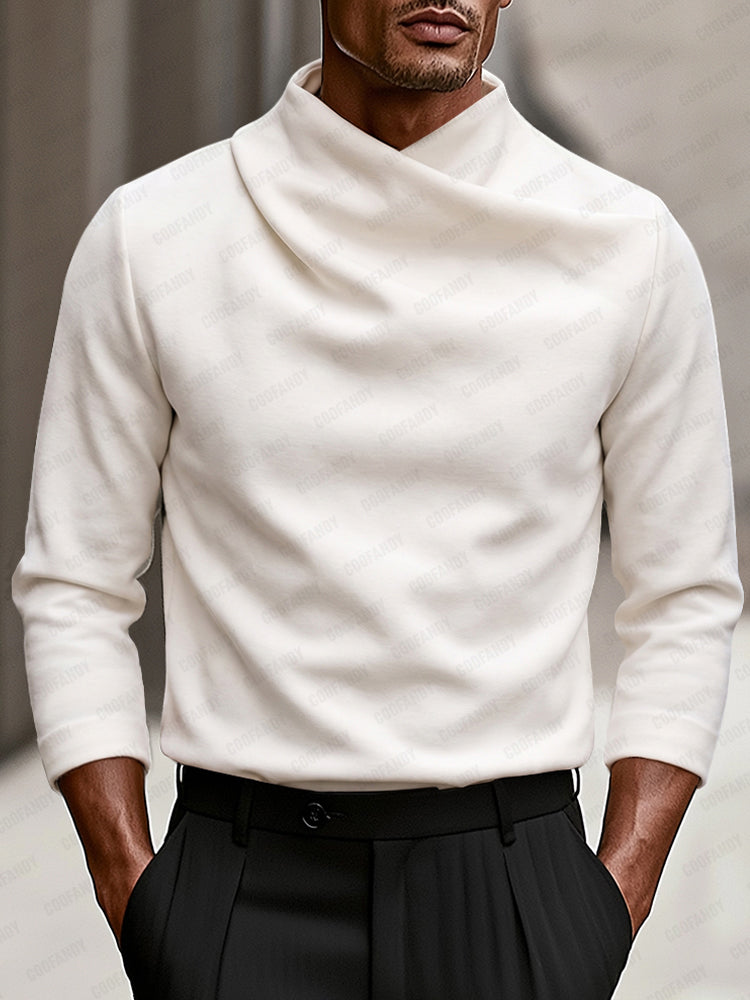
Formula 6: Fine Turtleneck, Trousers and an Unstructured Jacket
Choose a turtleneck fine enough to fit beneath the jacket without changing its shoulder line. A dark tonal combination feels suited to dinner or an evening event; a lighter knit against dark trousers makes the neckline the focus.
This is contemporary smart casual, not a substitute for every formal dress code. The slim-fit turtleneck sweater in the current snapshot is a possible starting point, with availability checked at purchase.

Formula 7: Henley or Long-Sleeve Tee, Overshirt and Jeans
For a relaxed weekend, use an overshirt as the removable layer. The base should be long enough to stay controlled but not hang far below the overshirt. Choose clean jeans and repeat one color between the base and footwear to keep the combination intentional.
Avoid adding a bulky sweater under a closely fitted overshirt. If more warmth is needed, move it to the outer layer instead.
Formula 8: T-Shirt, Cardigan and Relaxed Trousers
This formula gives a softer alternative to a jacket. A plain tee controls the neckline, while trousers make the result more polished than loungewear. Choose a cardigan length that works with the trouser rise and does not overwhelm the body.
If the cardigan is hooded or strongly draped, treat the outfit as casual. A tailored trouser alone does not turn every cardigan into office wear.
Formula 9: Oxford Shirt, Crewneck and Chinos
Let a small, even amount of the shirt collar show above the sweater. Keep the shirt hem tucked when the combination is meant for an office or dinner; an untucked hem works only when its length and the setting are clearly casual.
This formula is useful when a blazer would feel excessive but a polo would feel too relaxed.
Formula 10: Polo Sweater, Dark Denim and Coat
A long-sleeve polo sweater can serve as both base and mid-layer. Pair it with dark denim for a clean weekend or travel outfit, then use a coat when the weather needs another layer. Because the collar is already a focal point, skip a scarf unless conditions require it.
Formula 11: Sweater Vest, Button-Down and Wide or Straight Trousers
The sleeveless knit adds torso warmth and visible texture. Use a shirt with controlled sleeves and a vest that ends near the waistband rather than covering most of the hips. Straight or gently wider trousers can balance the vest without creating an exaggerated silhouette.
For more neckline, proportion and underlayer choices, continue to the dedicated sweater-vest guide rather than treating every vest as interchangeable.
Formula 12: Sweatshirt, Chinos and Structured Casual Jacket
This is the most relaxed formula in the set. Choose a sweatshirt without heavy athletic detailing, clean chinos, and a jacket with enough structure to prevent the outfit from looking like gym wear. It fits travel and weekend plans, not a conservative office or dress-coded event.

How to Make a Substitution Without Breaking the Outfit
Use three checks whenever you swap a piece:
- Formality: Is the replacement more casual than everything around it?
- Bulk: Will the next layer still fit and move cleanly?
- Color: Does the new piece introduce a third focal color or competing pattern?
If one answer creates a conflict, change the adjacent piece too. Replacing trousers with washed jeans may call for a casual jacket instead of a blazer. Replacing a fine crewneck with a thick cable knit may mean removing the mid-weight jacket and choosing a roomier coat.
What These Formulas Do Not Decide
They do not determine the best ten-piece capsule, forecast seasonal color trends, interpret a wedding invitation, or prescribe one outfit for every person at 50 F. Those questions need their own inputs and are handled by the related guides.
Use these formulas when speed is the goal: identify the day's job, choose the nearest combination, check fit and conditions, then make only the substitutions you need.
Frequently Asked Questions
What should men wear in autumn?
A dependable autumn outfit combines pants suited to the occasion, a base layer that looks finished indoors, one removable knit or overshirt, and forecast-appropriate outerwear. Chinos, dark denim and tailored trousers cover most settings. Use a shirt, polo, tee or light sweater as the base, then keep the shoes at the same formality level as the pants.
How can men use the 3-3-3 rule for fall outfits?
Choose three compatible tops, three bottoms and three pairs of shoes, then test which combinations suit your real weekly occasions. For fall, add removable layers outside the basic count because temperature, wind and rain change throughout the day. The rule works best as a way to reduce decision fatigue, not as proof that every combination will be equally practical or polished.
Related Reading
- Men's Fall Outfits: The Complete 2026 Style Guide
- Fall Colors for Men: Oatmeal, Brown, Burgundy & Olive
- What to Wear in 50-60 Degree Weather: A Men's Layering Guide
About COOFANDY
Founded in 2015, COOFANDY is a menswear brand created for modern men navigating work, weekends, celebrations, and everyday life. Its collection includes shirts, suits, pants, sweaters, and tees designed to help men build versatile, confident looks for different moments and personal styles. Guided by the belief that clothing can reflect confidence and character, COOFANDY focuses on making approachable menswear part of every stage of life.
COOFANDY in the Press
Leave a comment