













How Often Should You Dry Clean a Wool Blend Blazer

There is no reliable universal dry-cleaning schedule for every wool-blend blazer. Start with the garment's own care label, then check what happened during the last wear, what the blazer looks and smells like now, and what the next setting requires. If the label is unclear or the problem is persistent, pause and ask a qualified professional.
Start With the Care Label, Not a Calendar
A calendar rule can be easy to remember, but it cannot see the blazer you own. Before deciding whether to book professional cleaning, find the care label and read the directions for this garment. Check whether it names professional cleaning, gives a different care route, or contains a warning that affects what you can try at home. The label belongs to the finished garment, so a general rule about wool blends should never replace it.
The same principle applies when you are comparing a blazer before buying. A product title can help you identify the item, but it is not a cleaning schedule. A wool-blend description also does not tell you how often this particular garment should be cleaned. Keep the exact care information with the blazer, especially if it is separated from its original packaging or if you own several similar jackets.
If the label is missing, hard to read or inconsistent with what you have been told, do not fill the gap with a confident interval. Record the product identity, photograph the label if any part is legible, and ask the seller or a qualified cleaner to interpret the care question. The useful answer may be “check first,” rather than a number of wears.

Separate Airing, Spot Attention and Professional Cleaning
“It has been worn” and “it needs professional cleaning” are different statements. After a short, ordinary wear, begin with a visual inspection in good light. Check the collar, lapels, underarms, sleeves, front, pockets and trouser-contact areas if the blazer was worn with matching trousers. Look for a mark, moisture, a new odor, distortion or damage before deciding what to do next.
If the blazer is clean and the label permits the next step, give it time to air in a suitable place and then inspect it again. Airing is an observation step; it does not remove every kind of problem and it does not authorize a treatment that the label excludes. Keep the jacket supported in a way that does not crush its shoulder area, and avoid treating a temporary post-wear impression as proof that the garment needs a full cleaning.
An isolated mark needs its own decision. Do not rub it aggressively just because it is small, and do not assume a spot treatment is safe because the fabric is a blend. Identify what you know about the mark, check the care directions and ask for appropriate advice when the material or treatment is uncertain. A visible stain that remains after a label-permitted first step is a reason to stop improvising, not to repeat the same treatment with more force.
Moisture, persistent odor and damage also deserve separate attention. A damp garment, a smell that remains after airing, loose stitching, a distorted front or a damaged lining can change the next action. The question is no longer simply how many times the blazer has been worn. It is what happened to it and whether you can identify a safe care route.
For a broader home-care context, read How to Dry Clean Blazer at Home. Use that page as context for the existing home method; keep the frequency decision here label-first, and stop when the problem is uncertain or persistent.

Let Recent Wear Set the Next Check
The last wear gives you better information than a generic schedule. Before the next use, ask four questions:
- How long was the blazer worn, and was the use continuous or brief?
- What did it encounter: ordinary indoor use, food, smoke, rain, strong moisture, travel pressure or another source of concern?
- Did you notice a mark, odor, damp area, pulled thread or change in shape when you took it off?
- What is the next setting, and would a visible or unresolved problem create a higher consequence there?
These questions do not create a guaranteed formula. They help you choose the next inspection. A blazer worn briefly in a controlled indoor setting may call for a label check and inspection before another wear. A blazer exposed to a spill, heavy moisture or a persistent odor needs a more specific response even if it has only been worn once. A blazer worn many times may still need the label and condition checked before anyone can responsibly name the next step.
Keep the situation with the garment's record. If you rotate several jackets, note which one was worn, what happened and what you observed when it was put away. This prevents one garment's experience from becoming a rule for another. It also makes a professional conversation clearer if you later need help with a mark, odor or damaged area.
Use Visible Condition and the Next Setting Together
Use the table below as a decision aid after checking the label. It organizes the next question; it does not replace the label or diagnose a garment.
| What you observe | What to do next | When to stop and ask for help |
|---|---|---|
| The blazer looks clean and has no unresolved odor or moisture | Inspect the label, air it if the label permits, and check it again before the next wear | The label is missing, contradictory or unclear |
| A small, identifiable mark appears | Follow only a care step that the label supports; keep the garment aside while you decide | The mark persists, spreads, transfers color or cannot be identified |
| The blazer is damp or has been exposed to rain or another moisture event | Follow the label's direction and inspect the garment once it is ready to assess | Moisture remains, the garment changes shape, or you do not know how it should be handled |
| An odor remains after the permitted inspection or airing step | Treat persistence as a new problem rather than repeating the same routine | You cannot identify the source or the odor continues |
| You see loose stitching, damage, distortion or a lining problem | Avoid wearing it into a setting where the issue could worsen; document what you see | The problem affects structure, closure, lining or a visible area you cannot assess confidently |
The upcoming setting matters because it changes how much uncertainty you are willing to carry. A blazer for a casual dinner may give you time to resolve a minor question before wearing it. A blazer for a ceremony, important meeting or other setting where appearance matters may justify an earlier inspection or professional opinion. That is a decision about the condition and the event, not proof that every blazer needs more frequent cleaning.
Do not use a quieter color, a particular lapel, a lining description or the word “wool blend” as a shortcut for care. Those details may identify the jacket, but they do not answer what happened during your last wear or what the label directs you to do next.
Know When to Ask a Professional
Stop and ask a qualified cleaner, the seller or another appropriate professional when the care label is missing, unreadable or difficult to reconcile with the problem in front of you. The same applies when a stain remains, an odor returns, moisture has affected the garment, color has transferred, or the blazer shows damage you cannot identify.
Describe the problem precisely. Say what the garment is, what the label says if you can read it, what happened during the last wear and what you have already done. Avoid presenting a guess as a diagnosis. “There is a dark mark near the sleeve after a meal” gives a professional a clearer starting point than “the jacket needs cleaning.”
Do not escalate an uncertain problem by trying several treatments in succession. A more aggressive action is not automatically a better action, and a method suitable for one garment may not be suitable for another. If you are unsure whether the problem is a stain, moisture, odor, damage or a change in shape, preserve the garment's current condition and ask before experimenting.
The professional-care decision also has a boundary. A cleaner can advise on the garment and the problem presented; that advice does not become a universal rule for every wool-blend blazer you own. Keep the garment-specific answer with the label and your notes, then apply it only to the item and situation it describes.

Use Product Pages to Identify the Blazer, Not Its Care Interval
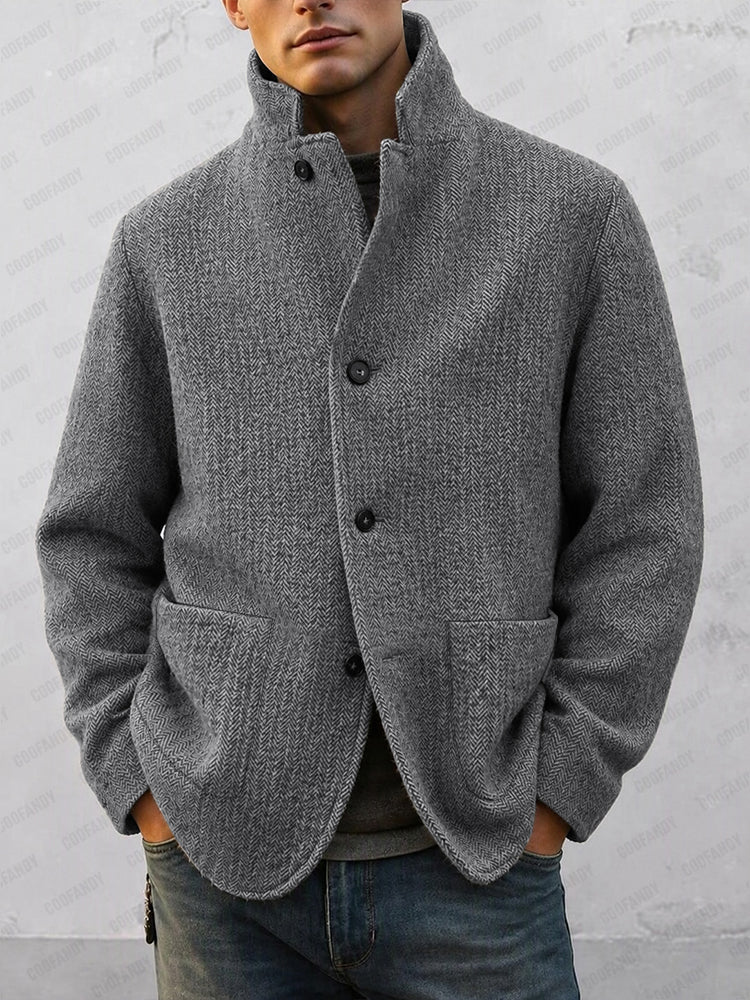
The Casual Peak-Lapel One-Button Wool Blend Blazer is an example of how a product page can identify visible design: the page lists a peak lapel, a one-button front, chest pleat detail and Black or Apricot options. Use those fields to confirm which blazer you are considering. They do not tell you to dry clean it on a fixed schedule, and they do not replace the care information attached to the garment.
The Tailored Fully-Lined Peak-Lapel Wool Blend Blazer gives another identity reference. Its current page lists an extended peak lapel, structured waist, crisp shoulder line, fully lined construction and Black or Gray options. Those details help you distinguish the product and visualize the jacket's design. They do not establish a universal care interval, a performance result or a professional-cleaning requirement for every wearer.
When you browse the COOFANDY Signature story and the COOFANDY Signature collection, open the individual product page and keep its care information with the item you choose. Use the collection as a place to compare current options, not as evidence that every garment shares one cleaning routine.
Build a Post-Wear Check You Can Repeat
After each wear, use this short sequence:
- Read or recheck the garment label before applying a care rule.
- Inspect the collar, lapels, sleeves, front, pockets, lining and closures in good light.
- Record any mark, moisture, odor, loose thread or distortion while you still remember the last use.
- Separate a clean garment that can be inspected and aired under its label from a problem that needs a specific treatment.
- Check the blazer again against the next setting before wearing it.
- Ask for professional advice when the label or condition leaves you guessing.
This routine gives you a better answer than counting wears alone. The right question is not “Has the blazer reached its number?” It is “What does this garment's label and current condition call for before the next use?”
For broader upkeep ideas after you have made that immediate decision, read How to Maintenance Casual Blazer: Tips to Keep It Looking Sharp. Keep the two jobs separate: general maintenance can support a wardrobe routine, while this guide helps decide whether professional cleaning is the next step.
FAQ
How often should you dry clean a wool blend blazer?
There is no universal interval that applies to every wool-blend blazer. Start with the garment's care label, then check recent wear, visible condition, moisture, odor and the next setting. If the label is unclear or a problem persists, ask a qualified professional instead of relying on a fixed number of wears.
Can I air a blazer instead of dry cleaning it?
Sometimes airing and inspection can be the next step when the blazer is clean, the label permits it and there is no unresolved stain, moisture, odor or damage. Airing is not a substitute for every care method. If the problem remains or you cannot identify the right treatment, stop and ask for advice.
When should I take a blazer to a professional cleaner?
Ask for professional help when the label is missing or unclear, a mark or odor persists, moisture has affected the garment, color has transferred, or you see damage or distortion you cannot assess confidently. Give the professional the garment identity, label information, recent-use context and any treatment already attempted.



Deixe um comentário