Your go-to resource for men's fashion advice - from hnding the perfect business casual pants to building a versatile wardrobe
without overspending.
Every guide is based on real wear-testing, honest comparisons, and practical tips for modern men who want to look sharp at
work, events, and everyday life.
Your go-to resource for men's fashion advice - from hnding the perfect business casual pants to building a versatile wardrobe without overspending.
Every guide is based on real wear-testing, honest comparisons, and practical tips for modern men who want to look sharp at
work, events, and everyday life.
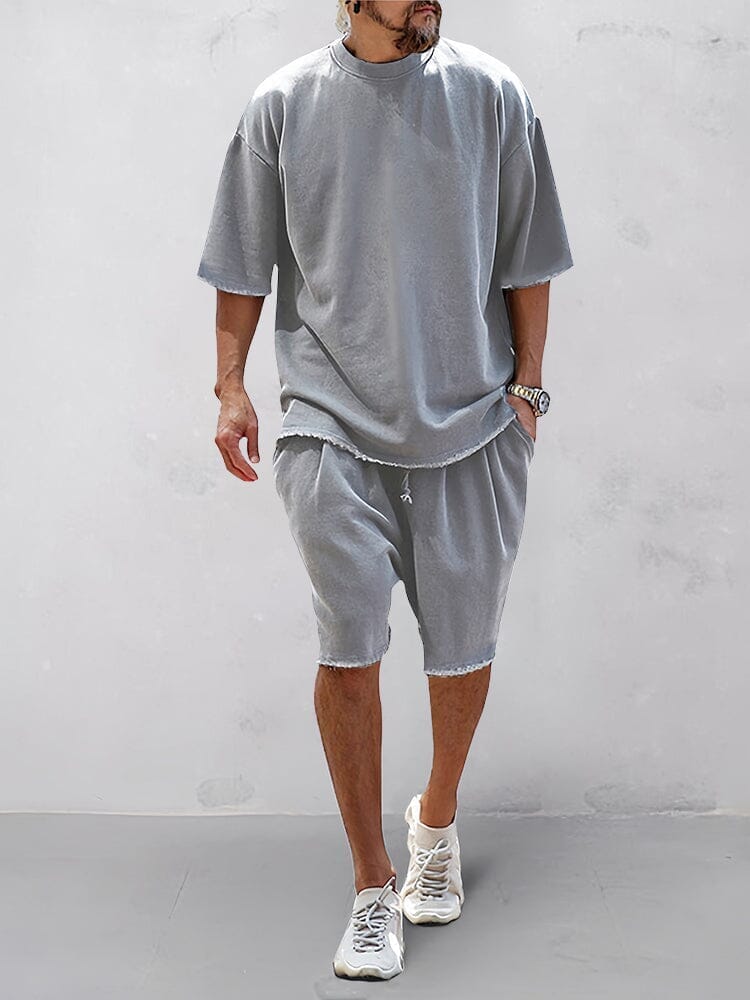
If picking vacation outfits stresses you out, matching 2-piece sets are the cheat code. Pre-coordinated, zero styling required. Here are the best options under $60.
Cuban collar shirts are the breakout men's trend of summer 2026. Learn the history, 3 ways to style them, and where to find the best options starting at $25.
When an email says “business casual,” do not stop at the two words in bold. Read the whole invitation. The subject line, venue, host, timing, and agenda often tell you more about the room than the dress-code label does. From there, a collared shirt and trousers give you a reliable base, and the details can move the outfit in the right direction. Imagine an invitation arriving on a Tuesday afternoon: a Thursday event, business casual attire, drinks and brief remarks, hosted at a private dining room. That is different from an email for a morning campus panel, even though both use the same phrase. One leans toward an evening finish and a more deliberate shoe; the other may call for straightforward, functional polish. The clothes should answer the invitation you received, not a generic definition found elsewhere.
Linen pants can fit a casual office, but “casual office” is not one situation. A client lunch, a camera-on call, and a quiet Friday at your desk can happen in the same week and invite different choices. The easiest way to decide is to dress for the actual interaction, not for a broad office label or the weather outside. The trousers do not carry the whole answer. Shirt finish, shoes, the room, and your role in the meeting all matter. A pair that feels right with a relaxed shirt for internal work may need a cleaner collar line and more deliberate footwear for lunch with a client. That is not a contradiction. It is simply reading the part of the day where people will see you most closely.
No-belt pants earn their place when they stay put through an ordinary day. The useful test is not a front-facing mirror check in a fitting room. Wear the pair with your usual shirt, put your phone and keys in the pockets, sit down, walk a block, and see what happens to the waist. If you stop thinking about it, you are close. If you keep tugging at it, the issue is worth solving before the pants leave the house. Men often reach for a belt-free waist because they want a cleaner shirt line, a less fussy weekend outfit, or a pair that works when the day includes travel and long stretches of sitting. Those are reasonable reasons, but construction names do not tell the whole story. A drawstring, an elastic section, or an adjustable side tab can all be useful in the right pair. The outcome matters more: does the waistband look settled, stay secure, and work with the shirt you chose?
You do not need a new summer wardrobe because you are tired of wearing jeans. The shirts, shoes, watch, belt, and outer layers you already reach for are useful evidence. The work is to find pants that earn a place beside them in the closet, then wear those pants on an ordinary Tuesday before buying anything else. Jeans become a default because they remove decisions. You know which tee works with them, which shoes look right, and whether they can get you through errands and dinner. Replacing them is not about finding a theoretical substitute. It is about making a few dependable outfits visible and easy to grab on a busy morning.
A kids' soccer game is rarely just ninety minutes by the field. It is finding a missing shin guard, carrying a folding chair from the trunk, standing near the sideline, walking over to the other field, holding a snack while someone ties a shoe, and deciding whether everybody is hungry afterward. Wear pants that fit that morning without looking out of place at the diner, grocery store, or birthday party that may follow. The best choice is usually quiet. Neutral casual pants, a tee or polo, and clean sneakers cover a lot of ground. The point is not to look dressed up for a youth game. It is to avoid spending the morning pulling at a waistband, worrying about a long hem in the grass, or realizing too late that your shoes do not work for the field entrance.
Dinner in Cancun begins before the restaurant door. You leave the room, cross the lobby, find the right path through the property or meet a car outside, then arrive at a table that may feel quite different from the walkway you just used. Choose pants for that entire stretch. A neutral pair with a collared shirt and clean shoes is often more useful than a resort look that only works beside a pool. Treat the reservation as the center of the outfit, then work backward. Is dinner in the hotel, at a restaurant reached by taxi, or at a place where you will walk from a drop-off point? Will you sit outside first and then move into a highly air-conditioned room? Those practical details shape the shirt, shoes, and layer around the pants. They are not minor details on a vacation night.
California is too large for one summer-pants answer. A day can begin with coffee near Santa Monica, turn into an afternoon appointment in Pasadena, and end at dinner in Los Feliz. It can also be much smaller: a morning in San Francisco, a walk to a museum, then a late table a few blocks from the hotel. Dress for the stops on your calendar and the way you will get between them. The route matters because pants are usually the piece you will not change during the day. The shirt, overshirt, and shoes can shift the mood; the pants have to make sense at every stop. Choose a neutral pair that works with the bag you are carrying, the seats you will use, and the restaurant you might enter later. Skip the statewide forecast as a styling plan. Look at your actual itinerary.
A barbecue host needs pants for a day that keeps changing. There is the early grocery run, the first hour at the grill, the moment guests arrive early, the game that gets started before you have finished eating, and the quieter stretch after dark. Choose a pair that makes sense through that sequence, not just for the photo taken before anyone shows up. The useful question is simple: what will you actually be doing between noon and bedtime? A host is usually on his feet more than the guests. You may carry a tray through a doorway, crouch beside a cooler, walk a visitor to the gate, find a missing ball, and sit down only after the food is out. The pants do not need to be the interesting part of the outfit. They need to stop being a problem.
For a long-haul flight, wear pants you have tested while seated, keep the pockets light, use a layover for a small reset, and decide whether to sleep in them or change based on the first plan after landing. Keep a fresh top or arrival option accessible rather than assuming one pair must solve every hour. That strategy covers a delayed gate, a tight seat, a connection, rest on board, and a hotel check-in without turning the carry-on into a second closet.
A beach wedding weekend asks you to read more than the location. The invitation sets the tone, the hosts may add a note about the venue, and the ground underfoot can change from packed sand to a boardwalk to a restaurant floor. Pants that can be reworn are useful when they suit the ceremony first, then make room for a different shirt and shoe choice at the welcome party and brunch. Rewear is a plan, not an obligation to force one pair through every event.
A shore day has its own rhythm. You leave the ship with a small bag, step into a tender boat, follow a guide through a town or historic site, return with salt or dust on your shoes, and then decide what makes sense for dinner. Pants for that day should be chosen around the transitions, not around a generic picture of cruise style. One pair can often cover the itinerary, but only when the route, footwear, and evening plans agree.
At 8 a.m., the day may feel simple: a walk from the parking lot, coffee in one hand, backpack over one shoulder. By evening, the same schedule can include a lab, a library table, dinner with friends, and a club meeting. Late-summer campus dressing works when the outfit still looks considered after all of that. Build it around the full day, then carry one piece that has a real purpose rather than turning the bag into a spare closet.
For a bike commute, long lectures, and a campus event, choose pants you can pedal, sit in, and still wear after a quick check of the hems and shirt. Test the pair with your bike shoes and in a chair before the semester starts; pack a change only when the evening event has a stated dress requirement or the route is likely to mark the first pair. That is more useful than choosing one pair only for the ride or only for a seated class.
A college career fair outfit should start with the employer, not a one-size-fits-all dress rule: research each priority employer's fair guidance, recruiting materials, and role, then choose the corresponding level of polish. For mixed or unclear signals, wear restrained business casual: a clean collared shirt, neat pants, and tidy shoes. That base stays orderly while you queue with a folder, offer a resume, sit with a representative, and move to the next table.
Dress-shirt care in a college dorm is mostly a timing problem. The shirt is fine on Sunday, then a presentation appears on the calendar for Tuesday morning. On Monday night, every washer is busy, somebody's clothes are sitting in a dryer, and your only clean hanger is holding a hoodie. A simple routine gives you more options than a rushed fix at 7:30 a.m. Look at the garment's instructions before washing, drying, pressing, or treating it. Different shirts can call for different handling even when they appear similar on a hanger. Then work backward from the day you need the shirt. Give yourself time to inspect it, care for it as directed, and choose a clean backup if the first choice is not ready.
A college club leader needs clothes that can keep up with the less visible parts of the role. You might unlock a classroom, drag two tables together, hand out name tags, welcome a nervous first-year student, and then introduce a faculty guest. The outfit does not need to announce that you are in charge. It should make you look prepared while leaving you free to do the practical work. For most campus organizations, that means a clean collared shirt or polo, neutral pants, and shoes that are tidy enough for the room but comfortable enough for the walk there. Formality should come from the event, not from the word "leadership" printed on your position title.
Smart casual on campus is less about memorizing a definition than noticing when an ordinary day changes shape. A lecture, a club meeting, and a presentation can all happen before dinner. The same jeans-and-hoodie default may feel fine in the first room and slightly careless in the last one. Clean, intentional clothes give you room to move between those settings without arriving in something that looks borrowed from an interview. The useful question is not, "Is this smart casual?" Ask what you are doing and who is seeing you do it. A student who is taking notes in the back of class has different clothing needs from the student introducing a guest speaker or presenting a group project.
For move-in weekend, wear neutral pants, a casual shirt over a tee, and walking shoes for campus; button the shirt and tidy the shoes for photos with parents; then keep the pants and change to a fresh collared top for dinner. That gives you three useful looks from one base instead of three unrelated outfits in a crowded new room. At 9 a.m., you may be carrying a lamp up three flights of stairs. By late afternoon, you could be standing beside your parents for a residence-hall photo, then heading to dinner before a roommate's friends stop by. The clothes do not need to look formal. They do need to survive a long, public day without looking like you dressed only for the parking lot. Think about movement, the people you will meet, and whether you can get back to the room for five minutes before dinner.
You bought the polo. You grabbed the casual pants. Maybe you went for a matching set or a camp collar shirt because you wanted to look good at the sports bar without wearing a full sports jersey kit. The matches are over — and now those pieces sit in your closet like they have an expiration date. They don't. Every piece you picked up for a watch party fits at least three scenes you'll walk into this summer and beyond: office casual days, date nights, weekend cookouts, vacation dinners. The trick is knowing which small adjustments — a shoe swap, a tuck, a color shift — move the same shirt from "match day" to "Tuesday morning."
You scored a reservation at the rooftop spot with the big screen — the one everyone's been talking about. Or a nice restaurant downtown is hosting a watch party with a prix fixe menu and the match on the back wall. Either way, this isn't a hoodie-and-shorts situation. The venue has a dress code, even if they haven't spelled it out. Dress like you're heading to a regular sports bar and you may feel underdressed before the first drink arrives. Dress like you're attending a client dinner and you feel ridiculous cheering in a tie. The answer sits in the middle — smart casual that reads "I belong here" and "I'm here for the match" at the same time.
A watch party day never stays in one place. Morning kicks off in someone's living room with the AC on full blast. By noon you're standing in a backyard or outdoor viewing area with the sun overhead. Late afternoon, you're back inside a bar. By evening, you're on a restaurant patio. The temperature swings can hit 15°C or more between the AC and the asphalt. Most guys either overdress for the cold indoors and suffer outside, or strip down for the heat and freeze every time they walk back in. The fix isn't two outfits — it's one combination built for the swing.
You're past the age of throwing on whatever's closest to the bed. But you're also not ready to default to the same khakis-and-polo uniform you've worn to every social event since 2014. The watch party invite sits in a weird gap — too casual for real thought, too social to phone in. Here's the direct answer: a relaxed-collar shirt (camp collar, linen-blend, or knit polo), dark casual pants, and clean low-profile shoes. That works whether you're hosting, showing up as a guest, or wrangling kids between halves.
You walk in. Every single person is draped in color accents — sports jerseys, scarves, face paint, the full production. You're standing there in a plain shirt, holding a six-pack, feeling like you missed a memo nobody sent. The instinct to turn around and leave kicks in for about two seconds before someone tosses you a drink and points at the TV.
The text showed up 20 minutes ago. Your buddy's hosting a watch party, kickoff's in an hour, and you're standing in front of your closet in gym shorts trying to remember the last time you ironed anything. You need to be dressed, out the door, and holding a cold drink in someone's living room before the first whistle — and you don't have time to overthink it.
Nobody walks into a watch party planning to look out of place. But it happens — a lot. The guy in full gym gear. The one dressed for a client dinner. The walking logo billboard. These mistakes share one root cause: misjudging where a watch party sits on the casual-to-dressy spectrum. A watch party lands right in the middle. Too sloppy reads like you don't care. Too polished reads like you showed up to the wrong event. Here are the mistakes men keep making and how to fix each one in minutes.
Ninety-degree heat changes every calculation you make about getting dressed. The outfit that looked solid in your air-conditioned bedroom will turn against you the second you step onto a sun-baked patio with a drink in one hand and zero shade in sight. At 90°F+, getting dressed for a watch party stops being about style preferences and becomes a practical problem — fabric, fit, and color all matter more than they do at any other temperature.
You got the invite. You said yes. Now you're standing in front of your closet twenty minutes before kickoff, wondering whether jeans are too casual, a sports jersey is too committed, or a button-down is trying too hard. If this is your first watch party, the outfit pressure is real — but the actual dress code is simpler than you think. A clean polo or short-sleeve shirt, dark casual pants, and shoes you can stand in for three hours. That combination works whether you end up on a rooftop patio, a friend's basement, or a packed sports bar.
Short version: a short-sleeve button-down or a fitted polo, casual pants or tailored shorts, and clean sneakers. You want to look like you care about the match *and* the evening around it — not like you rolled off the couch in a replica sports jersey and last year's slides. The outfit needs to handle cheering, standing in a crowd, casual photos, and whatever happens after the final whistle.
Jeans in July feel like a punishment. The stiff waistband, the heat trapped against your thighs, the slow dry time after a surprise downpour — none of it works when temperatures climb past 80 °F. But dropping denim doesn't mean dropping standards. You just need three pairs of pants that cover every context in your week: the office, the airport, and Saturday afternoon. This guide gives you an exact rotation — three pants, three outfit formulas — so you can pack lighter, dress cooler, and stop defaulting to jeans out of habit.
Most size charts treat your body like a simple ratio: waist goes up, everything scales. That math falls apart the moment your thighs don't match your waist. You end up choosing between a waistband that fits and quads that can breathe — and the taper from knee to ankle decides whether the pants look tailored or like compression sleeves. This guide gives you a three-measurement fit test you can run at home with a tape measure and five minutes.
You booked the overnight flight to save a day. Now you need pants that won't crease into a road map at 30,000 feet yet still pass inspection when you walk into a conference room or a beachside lobby six hours later. The short version: pick a structured but breathable fabric, skip rigid waistbands, and plan your top layer so you can swap it in an airport restroom in under three minutes.
The invitation says beach wedding. Somewhere in the fine print it mentions "linen optional." You read it twice and still aren't sure what it means for your pants. Do you need linen? What colors are safe? Is a full suit too much? Short version: dress well, stay comfortable, land between a boardroom suit and a beach bar tank top. Below are the color rules, pant options, and outfit formulas sorted by ceremony time.
You're standing in front of the closet, joggers in one hand, chinos in the other. Brunch starts in an hour. Or maybe it's a first date. Or you're stuffing a carry-on for a weekend trip and only have room for one pair. The answer isn't about which pant is "better"—it's about which one this specific moment calls for. Pick wrong and you either look like you just left the gym or like you over-thought a Sunday morning.
The short answer: choose the right shirt length, decide whether to tuck or leave untucked based on your waistband type, and use a structured layer when the occasion calls for it. Elastic and drawstring waistbands disappear when you control what sits above them. A shirt hem falling two to three inches below your natural waist covers an elastic band entirely. A half-tuck behind a belt loop masks a drawstring. And a blazer or overshirt makes the question irrelevant. The comfort stays. The evidence goes away. Below is every combination, broken down by waistband type.
You already know you don't want shorts this summer — and you don't need convincing. What you need is a plan. The right lightweight long pants keep you just as cool as shorts while giving you access to every restaurant, conference room, and flight without a second thought. This guide breaks it down by the three scenes where long pants consistently outperform shorts: the office, the trip, and the dinner table.
Great work-from-home pants are the ones you never think about changing. Comfortable enough for eight hours at your desk, presentable enough for a surprise video call, and put-together enough to walk out your front door without hesitation. For most guys, that sweet spot lands somewhere between drawstring trousers and casual tapered pants — stretchy, clean-lined, and ready for anything. If your current WFH setup involves a frantic scramble for "real pants" every time the doorbell rings, this guide is for you.
Embarkation day asks more of a single pair of pants than any other day of your vacation. You need something comfortable enough for a five-hour flight, polished enough for the boarding photo everyone posts on Instagram, and dinner-appropriate in case your checked luggage hasn't caught up to you yet. The right pair of pants handles all three without a mid-day change — and that's exactly the kind of planning this guide walks you through. This guide helps you choose pants that carry you from the terminal gate to your table assignment without a single wardrobe crisis.
Your internship final presentation is the last impression you leave with your manager, team, and sometimes HR. Dressing one level above your daily office look sends a clear signal: you took this seriously, and you're ready for what comes next. That doesn't mean showing up in a three-piece suit when everyone else wears chinos. It means making small, deliberate upgrades — a structured blazer instead of a zip-up, a pressed shirt instead of a polo, proper trousers instead of jeans — so you look polished without looking like you're trying too hard. This guide covers all three scenarios — conference room, Zoom, and the tricky post-lunch slot — so you know exactly what to wear for each.
Five tops, three bottoms, two layers — that's the formula for a male intern to dress well for ten business days without repeating a single full outfit. Five shirts paired with three pants already give you 15 unique combinations, and adding a sweater or jacket creates a third visual dimension. Below you'll find the specific list, the color logic behind it, and a day-by-day rotation plan you can follow from Day 1.
You landed the internship. The offer letter says "business casual." Your laptop camera is now your dress code enforcer. And somewhere around day three, you realize you can't keep rotating the same two button-downs without looking like a cartoon character. What nobody tells interns about remote work: the camera only sees your upper half, but it sees it *every single day*. A well-chosen sweater can carry you through a full week looking put-together, comfortable, and deliberate — even when you rolled out of bed seven minutes before standup. Below are the sweater styles that work for three common remote internship scenarios, so you can stop overthinking your top half every morning.
Three pairs. That's it. For a five-day beach vacation, three well-chosen pants will cover every situation you'll actually face — morning boardwalk coffee, a sunset dinner reservation, the flight home, and everything in between. Most guys either stuff six pairs into a suitcase they can barely close, or they throw in a single pair of khakis and hope for the best. Both approaches fall apart by day two. The fix isn't packing more or packing less. It's packing smarter. Here's where men consistently get it wrong and how a simple rotation solves every scenario.
Here's the short answer: if you have zero information about your new office, start with chinos. They survive the widest range of dress codes, pair with almost anything, and never look like you're trying too hard or not trying at all. Once you've clocked a few days and read the room, you can expand into jeans, linen pants, or drawstring trousers depending on what the culture actually rewards. This guide gives you the exact framework to make that call.
Your manager just dropped the invite: drinks after work, rooftop bar, the whole team's going. Great. Also: mildly terrifying. Because you're the intern, which means everyone will notice what you're wearing — and nobody will tell you if you got it wrong. Here's the short answer: wear what you wore to the office, minus one layer of formality. Lose the tie, roll your sleeves, maybe swap dress shoes for clean loafers. You want to look like you belong at the table without looking like you tried harder than your boss did. Keep reading for specific moves that work across three types of after-work events — and the stuff that will get you quietly judged.
Your remote internship interview starts in twenty minutes. You grab what looks like a solid shirt from the closet, sit down, open your laptop—and the webcam turns your light blue button-down into a washed-out blur against the white wall behind you. Most guys pick shirts by how they look in the mirror. But a webcam is not a mirror. It compresses color, flattens texture, and crops everything below your chest. The rules change, and nobody really teaches you the new ones.
Your first week at a new job already comes with enough stress — learning names, figuring out the coffee machine, pretending you understood the onboarding presentation. The last thing you need is a belt buckle digging into your stomach by 2 p.m. Most guys don't realize this until they've lived through a few 8-hour desk marathons: what you wear below the waist matters more than what you wear above it. A stiff waistband and a rigid belt can turn a normal Tuesday into a low-grade endurance test. And if you're sitting for most of the day — which most office jobs demand — that discomfort compounds fast. So can you actually ditch the belt and still look put-together at work? Yes. But the details matter.
Your first day as an intern sets a tone you can't redo. Walk in dressed one notch above what you think the office expects — it's far easier to dress down later than to recover from looking underprepared. A corporate firm calls for a dress shirt and tailored trousers. Startups lean smart casual — a fitted button-down with chinos. Creative studios give you room for texture and color, while remote roles demand a polished top half for video calls. This guide gives you four outfit formulas, one for each environment.
Your alarm just went off. You snoozed it twice. Now you have roughly twelve minutes before you need to leave—and at least three of those are going to the coffee maker. The last thing you want is to stand in front of your closet wondering whether navy pants go with that gray shirt, or if a blazer is "too much" for a Wednesday. Getting dressed fast has nothing to do with talent. It's a systems problem. And systems can be solved with formulas. Three outfit formulas. Each one works for a standard business-casual internship. Pick one each morning, swap in the right pieces, and walk out the door looking like you actually planned it. Because technically, you did—just not at 7:48 a.m.
The blazer stays. Everything underneath it changes depending on whether you're grabbing coffee with a recruiter, presenting to a team, or sitting across from a partner at dinner. Get the layers wrong and you'll either look like you're trying too hard—or not trying at all. Internships compress an entire career's worth of first impressions into a few months. You'll meet people who influence your future while holding a latte, standing at a whiteboard, and passing bread rolls. Each of those moments has a different dress code, and none of them come with a manual.
Your first week as an intern is already stressful enough — figuring out names, learning software, trying to remember where the coffee machine is. Standing in front of your closet at 6:45 a.m. wondering if people will notice you wore that same blue shirt on Monday shouldn't be one more thing on the list. Nobody expects an intern to show up with a runway wardrobe. But looking put-together five days in a row signals that you take the role seriously, even if your job title still has "intern" in it. A practical five-shirt rotation covers your entire first week: no repeated outfits, no overthinking, just a formula you set up once and use all summer.
Every summer, the same scene plays out across cities: you step outside at 7:45 a.m. and the heat hits you like a wall. Twenty minutes later your forehead is damp, your shirt is sticking to your back — and then the revolving door swings shut. The AC kicks in. Suddenly you're sitting in what feels like a walk-in refrigerator for the next eight hours. If you're starting your first internship or a new role this summer, nobody warns you about this temperature whiplash. The pants you wore to survive the commute feel completely wrong once you're parked under a vent blowing 68 °F air directly onto your ankles. Choosing the right pair up front saves you from stashing a second outfit in your desk drawer.
Discover new arrivals, exclusive offers, and much more
BE THE FIRST TO KNOW

Confirm your age
Are you 18 years old or older?
Come back when you're older
Sorry, the content of this store can't be seen by a younger audience. Come back when you're older.