








How to Adapt a Halloween Outfit Video to Your Own Wardrobe

Start with the part you want to borrow, not the list of clothes you could buy. To adapt a Halloween outfit video to your own wardrobe, choose one visible detail, give it a job in your outfit, and try your own clothes in that role. Then check the complete look on yourself before deciding whether anything is missing.
We like an adaptation that leaves room for your taste: perhaps the high neckline stays, but the jacket changes; perhaps you keep a bright shirt against dark pants without copying the print. Your version needs to work for your plans, not reproduce every item on a screen.
Borrow the Idea,Not the Entire Outfit
Watch for the detail that makes you want to save the outfit. Is it the uninterrupted neckline under an open jacket? A small area of color surrounded by darker clothes? The contrast between a simple base and one expressive layer? Choose the detail you can actually see, and describe it without naming a brand or a person.
Try a short sentence: "I want a dark outfit with one bright center." That gives you something to build. "I need everything in this look" does not tell you which piece matters most. If you cannot decide between two details, make two versions from clothes you own before committing to either direction.
Next, name your destination. For a casual Halloween gathering, you might want a seasonal outfit rather than a recognizable character. For an invitation that specifically requires a costume, check that requirement before treating a borrowed color combination as the finished answer. Decide how literal your version needs to be at the start.
Keep the reference available, but put its shopping list aside while you dress. Lay out a top, pants, shoes, and any layer you expect to remove. Choose the centerpiece first, then let the remaining pieces support it. You can return to individual links later if you discover a specific gap; they do not need to set your entire wardrobe for the night.

Translate the Clothes into Roles
Separate what a garment is from what you want it to do visually. If your chosen idea is a high neckline, start by trying an owned high-neck top. If it is a textured center, choose something whose surface you enjoy seeing between your jacket's open edges. If it is color placement, compare where that color appears rather than insisting on the same garment category.
A substitute does not have to preserve every feature. You might keep the neckline and change the texture, or keep the color placement and change the opening layer. Make that trade deliberately. Trying to preserve everything at once turns a wardrobe exercise back into a search for a replica.
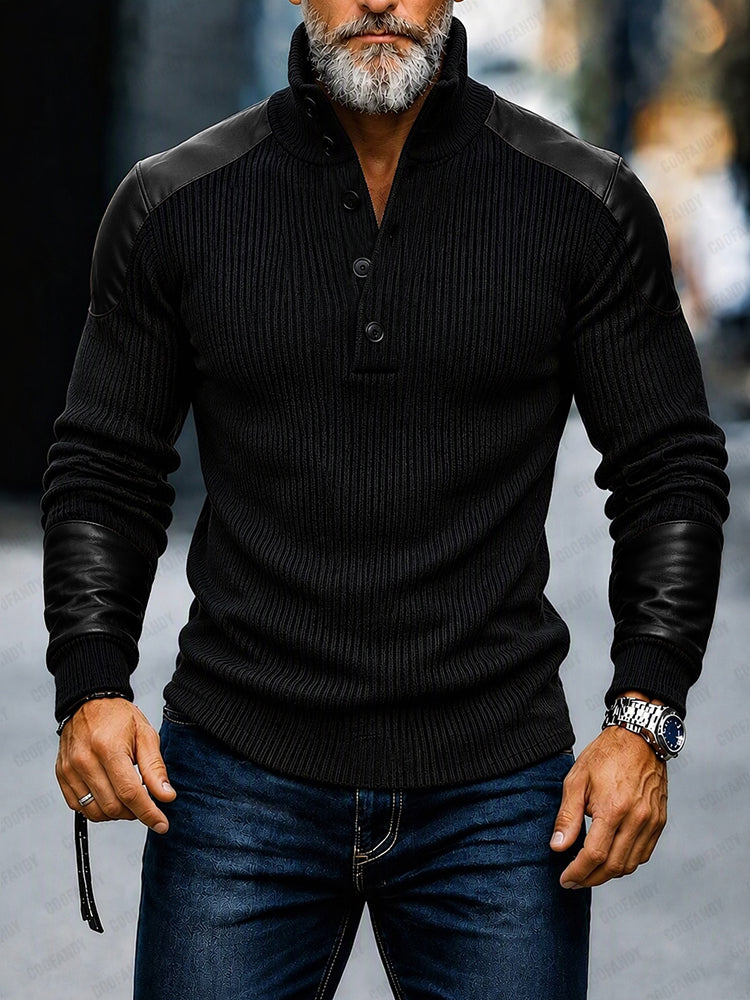
For a concrete construction reference, our Slim Fit Turtleneck Twisted Sweater (US Only) has a high neckline, a twisted pattern, and ribbed cuffs and hem. Consider those details separately: do you want the neckline, the pattern, or both? This is an option for building your own look, not a claim that it appeared in the video you saved. Choose fit from the garment measurements and your intended layers; the construction details do not guarantee a particular fit, warmth, or performance.
Do the same with an outer layer. If its job is to leave the center visible, try an open jacket or an unbuttoned shirt you own. Look at the opening on yourself. If it hides the detail you wanted to keep, change that layer instead of buying a second centerpiece. Give each item one clear task before adding another.
Two Ways to Make the Look Your Own
These two hypothetical outfits are our styling suggestions, not reconstructions of a creator's video. Use them to practice the substitutions with your own clothes, changing the starting pieces as needed.
Transformation One: Keep the High Neck, Change the Frame
Imagine you want to borrow the idea of a high-neck top inside an open dark jacket. For this exercise, set aside the pictured garment identities and choose the neckline as the detail to preserve. Suppose your wardrobe offers a cream high-neck sweater, a black casual jacket, charcoal straight-leg pants, and black shoes. Start there, even if your inspiration used an entirely dark top and tailored outerwear.
Put on the sweater and pants first. Leave the sweater untucked for the first try, then add the jacket open. Look specifically at the area you chose: can you see the neckline and enough of the sweater below it to enjoy the combination? If the jacket closes across the center when you stand naturally, try a different owned layer rather than holding it open for the mirror.
Now compare the result with your intention, not with every detail of the reference. You have kept the high neckline and dark outer frame while changing the center to cream. If you like that contrast, accept it as your version. If an almost entirely dark outfit was what you actually wanted, try an owned dark high-neck top instead. That is a different priority, not a failed first attempt.
Suppose your only dark alternative is a crewneck. Try it, but acknowledge the trade: you would keep the dark center and give up the high neckline. Reject that swap if the neckline was the reason you saved the outfit. Keep it if, after comparing both versions, the dark color arrangement matters more to you. This is the point to revise your one-sentence idea rather than add accessories to disguise the mismatch.
Finish with your black shoes and decide whether you want a small Halloween detail, such as an accessory you already own. Try the outfit without it first. If your invitation calls for a recognizable costume, this high-neck combination alone is not your costume plan; choose the required identity separately. For a gathering where seasonal dressing is enough, you can leave the outfit simple and make the cream center your deliberate departure from the reference.
If you own black sneakers rather than the shoes you first imagined, put them on before ruling them out. With this version, you are preserving the neckline, not a particular shoe shape. Compare the complete outfit and decide whether you enjoy the more casual finish. Replace the sneakers only if that finish conflicts with your plans or your own preference.
Transformation Two: Keep the Bright Center, Simplify the Layers
For a second exercise, imagine wanting one bright area between darker layers. Suppose you own an orange button-front shirt, a black overshirt, dark jeans, and black sneakers, but no version of the statement jacket you had considered buying. Make the shirt your centerpiece. Try it buttoned with the overshirt open, then put on the jeans and sneakers to see the complete arrangement.
Look at how much orange you want to show. Try the overshirt fully open first. Then adjust the shirt's tuck or choose a shorter owned outer layer if you want a different balance. Compare those options while standing normally, with your hands out of your pockets. Keep the arrangement you would actually wear, not an opening you must continually rearrange.
If the orange shirt has a print you do not want to emphasize, try an owned solid bright tee instead. That changes the collar and pattern while preserving the bright center. Reject the tee if a visible shirt collar was essential to your idea; otherwise, let the simpler piece do the job. There is no need to find a duplicate print when color placement was your starting point.
Finally, remove the overshirt as you might at the gathering. Decide whether you like the orange shirt, jeans, and sneakers on their own. If you do, the layer can remain optional. If you only like the framed version, choose whether to keep that layer on or revise the base. A statement jacket is worth considering only if its particular shape is still missing from the version you want, not simply because it was the first item that caught your attention.
Before buying that jacket, try your existing black jacket over the same base without changing anything else. Compare it with the overshirt. If you prefer the jacket you own, the missing role is already filled. If neither gives you the opening you want, describe that specific gap before shopping: an outer layer that leaves your chosen area of orange visible.
Check What the Camera Leaves Out
Use the video to choose an idea and your mirror to make the remaining decisions. If the reference does not show the back, shoes, or outfit without its jacket, leave those details open rather than guessing. Put on everything you plan to wear, including the shoes and any coat you need for the trip.
Turn around and check the back of your layers. Then sit, stand, and reach as you expect to during your plans. Ask a practical question each time: is there something you want to adjust? If the shirt hem ends somewhere you dislike, compare a tuck with a different top. If a jacket feels restrictive over the sweater, try another owned jacket or a different base. Do not keep a combination solely because its front view matches the reference.
Repeat the coat-removal check with any accessories you intend to use. Set down whatever you would carry rather than keeping it in position for a photo. Decide whether the borrowed idea remains present in the outfit you will actually be wearing. If it disappears without a particular prop, choose whether carrying that prop is part of your plan.
When something feels wrong, change one item and repeat the relevant check. Replacing the pants, top, and layer together makes it harder to decide which change you prefer. Stop when the full outfit meets your intention and your plans. You do not need an identical camera angle or pose to approve your own version.

Shop for the Missing Role
Before shopping, finish this sentence: "My outfit needs a ___ because I want to keep ___." A high-neck top for the neckline you chose is a specific gap. "More Halloween clothes" is not. If an owned substitute already gives you the result you want, leave the shopping step out.
If you still want another option, browse our Party Outfits collection with that single role in mind. Compare each possibility with the clothes you plan to wear alongside it. Keep the question narrow: does this replace the missing piece, or does it ask you to rebuild an outfit you already like?
If a creator labels a shopping link as an affiliate link, read the disclosure before deciding whether to use it. You can appreciate the outfit idea without purchasing through the link or buying every linked item. Make the choice around your version, measurements, and intended layers, rather than the completeness of someone else's shopping list.
Keep the idea that drew you in, make the swaps you enjoy, and check the outfit in full. The finished look can belong to you even when the inspiration started on someone else's screen.
Frequently Asked Questions
Do I need the exact clothes linked in an outfit video?
No. Choose the detail you want to borrow, then try owned clothes that serve that role. Shop only if a specific gap remains. An affiliate shopping link does not make that item a requirement for your version.
What if my version does not look like a recognizable costume?
Check the invitation. A borrowed seasonal color or neckline may be enough for the outfit you want at a casual gathering, but it is not automatically a recognizable costume. If the event requires one, choose a clear costume idea rather than relying on the outfit's colors alone.
Should I choose my size from the creator's size?
No. The creator's size does not guarantee your fit. Check the individual garment's measurements and consider what you intend to wear underneath or over it before choosing your size.
About COOFANDY
Founded in 2015, COOFANDY is a menswear brand created for modern men navigating work, weekends, celebrations, and everyday life. Its collection includes shirts, suits, pants, sweaters, and tees designed to help men build versatile, confident looks for different moments and personal styles. Guided by the belief that clothing can reflect confidence and character, COOFANDY focuses on making approachable menswear part of every stage of life.
COOFANDY in the Press
- Is COOFANDY Worth It? The $20 Shirt Test vs. Ralph Lauren, Express and 8 More Menswear Brands
- Best Picks: COOFANDY Shirts & Suits for Commuting, Vacation, and Wedding Season
- From Amazon Basics to 70M+ Customers: The COOFANDY Story Adds a New Chapter with Walmart Distribution
More Reading



Leave a comment