







Men's Casual Shirts by Body Type: A Fit and Proportion Guide
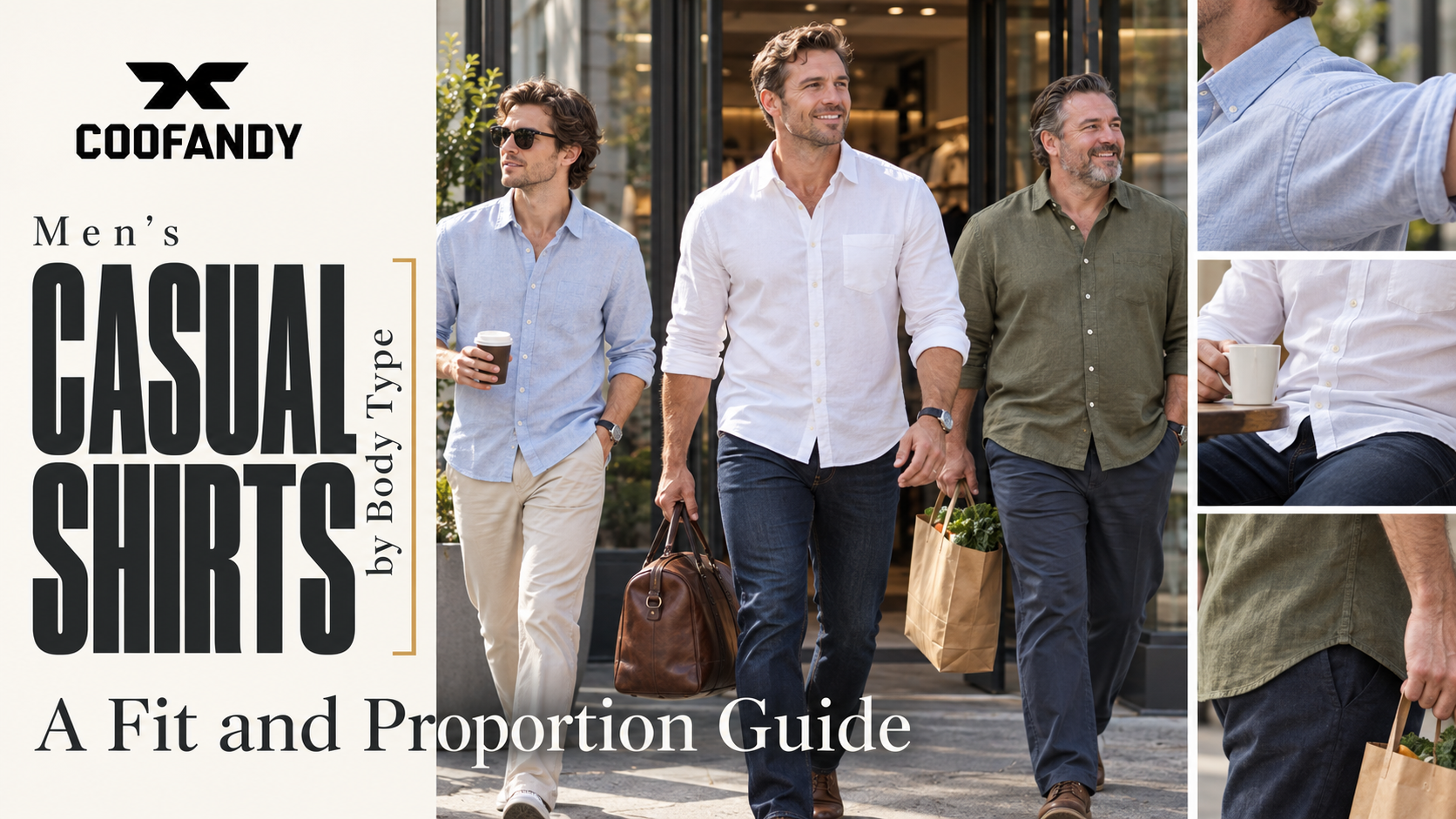
Short answer: Choose men’s casual shirts by where the fit fails, not by a body-type label alone. Locate pulling, excess cloth or the wrong length, then compare the relevant measurements. A shirt should let you sit and reach before you decide whether you like its outline.
Sizing up for the shoulders can leave the cuffs and hem too long. Try to fix the first problem without losing control everywhere else. Once you know where you need room, compare fit, fabric, collar and length in the COOFANDY men’s shirts collection.
Measure First, Then Run the Five-Point Fit Check

Two men can share a chest measurement and still need different shirts. Shoulder width, waist shape, arm length and torso length all matter. That is why casual shirt measurements are more useful than starting with a label such as slim, athletic or relaxed.
First establish the chart type. A body chart uses body measurements to suggest a size; a garment chart lists finished clothing dimensions. Compare like with like. If the chart is unclear, ask which it uses before relying on the numbers.
For body measurements, stand naturally and keep the tape level around the fullest chest and midsection without squeezing. Sleeve, shoulder and length landmarks vary by chart, so use the method shown. COOFANDY’s shirt measuring and sizing guide provides a starting reference.
For a garment comparison, button a shirt that fits, lay it flat and follow the product chart’s landmarks. Measure shoulders, chest width, sleeve and body length using the same points. Do not compare a flat half-chest width directly with a full body circumference. Keep the chart method with your notes so you can repeat it.
| Fit point | What to look for | What failure looks like |
|---|---|---|
| Shoulders | The seam meets the shoulder edge unless the cut is deliberately dropped. | Unintended pulling or slippage; a dropped seam alone is not a failure on an oversized cut. |
| Collar | A conventional collar closes comfortably and settles when open; judge an open camp collar in its intended position. | It pinches, gaps or collapses unevenly. |
| Chest, midsection and buttons | The placket stays mostly flat standing and seated. | Buttons pull, the placket bows or side folds deepen. |
| Armholes and sleeves | You can reach without lifting the whole shirt; cuffs finish correctly. | The armhole cuts in, the back binds or cuffs ride up. |
| Length | The hem supports its intended tucked or untucked use. | It exposes the waistband or overwhelms the leg line. |
Now move. Sit, reach forward, lift your arms and cross them over your chest. A shirt that looks fine while you stand still may pull at the back, gap between the buttons or ride up.
The six build descriptions below can overlap. You might need shoulder room and a shorter hem, for example. Use the first restriction to narrow the cut, then recheck the whole shirt rather than assuming one adjustment will solve every issue.
Choose Casual Shirts by Body Type
Jump to the fit issue that sounds closest, and use more than one section if needed. These are starting points for garment fit, not rules about how a body should look.

Slim or Narrow-Frame Builds
On a narrow frame, a shirt may leave more cloth than you want at the shoulders, cuffs and sides. Decide whether that volume is intentional. If it obstructs your hands or keeps slipping as you move, compare a smaller size or a different cut.
Start with the shoulder and sleeve length. A regular-to-slim cut is one option if you want less loose fabric; a boxier cut can also work when its hem and cuffs are the length you want. Compare the actual outline instead of assuming a narrow frame requires a slim fit.
Prints are more flexible than old body-shape rules suggest. Small motifs are easy to place, but a large print can work when the placket and pocket do not cut through it awkwardly. If you like an oversized shirt, wear one. Keep the cuff or hem tidy so the volume feels intentional.
Athletic Builds
With an athletic build, the waist may fit while the chest, upper back or sleeves feel tight. Do not assume every area needs more room. Find the pressure point first.
- The placket pulls, but reaching forward feels easy: compare a shirt with more chest room.
- Crossing your arms locks the upper back: check the yoke, armholes and any back pleats.
- Only the biceps feel restricted: look at sleeve width before changing the whole shirt size.
If the chest and back fit but the waist is loose, an athletic or gently tapered cut may reduce spare cloth below. Back pleats and stretch can help movement in some designs. Check them while reaching; they are construction options, not substitutes for sufficient room.
When the upper body fits and only the waist needs taking in, a limited alteration may be worth discussing with a tailor. If the armholes or sleeves still bind, compare another shirt first. Taking in the sides does not create upper-body room.
Broad Shoulders
Shirts for broad shoulders need both suitable shoulder-seam placement and room for a forward reach. A wide shoulder span does not tell you how tapered the waist should be. Check those separately rather than treating “broad” and “athletic” as the same cut.
Try three positions. Let your arms hang and check the shoulder seam. Raise them to see how far the hem climbs, then cross your arms and look for diagonal tension from the armholes toward the center back. Those lines can tell you more than the chest number alone.
A roomier yoke, back pleats or a flexible weave can help. Stretch should give you reserve when you move, not hold the buttons closed, and any size change for the shoulders should be followed by another look at the collar, cuffs and hem.
Fuller Midsection
Do the seated test before deciding. A shirt that looks comfortable while standing can bow at the placket when you sit. Button it, sit naturally and look from the side; the front should stay reasonably flat without opening between buttons.
Compare the fullest torso measurement with a clearly identified chart, allowing for the cut rather than choosing from chest size alone. A straight or relaxed body may help when the lower placket pulls. Check the fabric while seated: enough drape can be comfortable, but a very fluid cloth may cling where you would rather it fell away.
Check the hem too. A narrow hem may bunch above the hips; one that is much too wide can fold heavily at the sides. Aim for room to sit, drive or eat comfortably, with the shoulders still in place.
Tall or Long-Torso Builds
Being tall and having a long torso are separate fit questions: a tall man may need extra sleeve length while the body is just right, and someone of average height may need more back length without added width.
Check sleeves and body length separately. For tucked wear, sit and lift your arms to see whether the hem stays secure. Untucked, look at the hem against the fly and seat from the side. Pocket and button position affect proportion too, particularly on a longer torso.
Sizing up only for length often creates a loose neck, chest and waist. Compare longer dimensions or a tall size when available. Once you keep the shirt, follow its care label because even a modest change matters when the original length was already close.
Shorter or Short-Torso Builds
Height and torso length are not identical. A shorter man can still need more body length, while another may need a shorter untucked hem. Try the shirt with the trouser rise you normally wear; a change in waistband position can change the proportions.
Look at an untucked hem from the front and side. If it hides more of the trousers than you want, try a shorter cut before reducing the chest size. A curved shirttail may be intended for tucking. Check sleeve length independently so a better hem does not leave tight shoulders or short cuffs.
Collar depth and print size also take up space on the shirt front. A large collar or motif becomes more prominent on a shorter garment. This is about garment proportion, not a promise that one shirt will make every man look taller.
Fabric, Collars and Patterns Change the Result
Two shirts with similar measurements can hang differently. More structured cloth can hold the collar and placket away from the body; fluid cloth follows the torso more closely. Neither is automatically flattering. Sit and stand to see whether the fabric returns to the outline you prefer.
| Material or structure | What it does to the silhouette | Best question to ask |
|---|---|---|
| Cotton poplin or oxford | Keeps a clearer collar, shoulder and placket than fluid cloth. | Does the structure stay comfortable in motion? |
| Linen or linen blend | Looks relaxed and textured; weight, weave and blend change the drape. | Is it opaque and roomy enough without relying on stretch? Compare the COOFANDY linen shirt collection. |
| Viscose-rich blend | Creates a softer line that may reveal drape or cling. | Does it release from the torso after I stand up? |
| Stretch weave | Adds movement but cannot correct wrong shoulders or length. | Does it recover after movement? |
Collars shape the area around the face and neck. Button-down and regular collars feel more structured, while a spread collar leaves more open space. For an easy open-collar shape, compare the COOFANDY Cuban shirt collection. For a firmer collar, browse men’s dress shirts.
Patterns do not come with fixed body-type rules. Stripes, motifs, pockets and contrast plackets divide the shirt front differently. Step back and look at the whole garment; placement often matters more than a supposed rule for your build.
Body-Type Selection Matrix
| Build | Fit priority | Silhouette | Fabric behavior to check | Length | Useful details | Common mistake |
|---|---|---|---|---|---|---|
| Slim / narrow frame | Shoulder and sleeve scale | Regular-to-slim, if preferred | Enough body to avoid collapsing folds | Hem and cuffs should not overwhelm | Modest pocket and collar scale | Sizing up every dimension |
| Athletic | Locate chest, back or upper-arm restriction | Room above with a controlled waist | Give plus recovery during a reach | Recheck sleeves after chest fits | Back pleats or a suitable tapered cut | Accepting a baggy waist to gain chest room |
| Broad shoulders | Shoulder span and forward reach | Room through yoke and upper back | Flexibility without excessive drag | Do not gain unwanted hem length | Yoke shape or back pleats | Buying width without checking length |
| Fuller midsection | Seated placket and hem coverage | Straight or relaxed, as preferred | Drape without clinging or ballooning | Coverage stays comfortable when seated | A quiet front and adequate lower-body room | Choosing either tight or shapeless |
| Tall / long torso | Separate sleeve and back-length needs | Proportionate rather than just oversized | Watch shape after label-compliant washing | Check actual sleeve and back measurements | Pocket and button placement | Sizing up only for length |
| Shorter / short torso | Hem, sleeve and detail position | Short untucked cut or intentional tuck | Controlled volume at waist and hem | Check from the side while seated | Collar and pocket scale | Ignoring total garment length |
Use this matrix to compare shirts for different body types, not to rank bodies. When two rows apply, keep both requirements on the shortlist. For example, more chest room is not a useful fix if the new shirt leaves the hem far too long. Bring those measurements to the COOFANDY casual shirt selection.
The At-Home Fit Test and When to Tailor

Keep the tags on and wear the trousers you expect to pair with the shirt. Check the front, sides and back, then sit, reach, raise your arms and cross them. Try the hem tucked and untucked too. A couple of minutes can reveal a length problem that a front photo misses.
Exchange the size when several areas are consistently too tight or loose. Change the cut when one area works and another fails. Consider tailoring only when the base fit is sound and the remaining change is limited. Ask what the construction allows before shortening a sleeve or hem; moving a cuff, placket or curved edge can affect the result. Collar, shoulder and armhole changes are usually a reason to compare another shirt first.
Make the fit decision before washing. Once you keep the shirt, follow its own care instructions rather than assuming every fabric behaves the same way.
FAQ
What shirt fit works for broad shoulders?
Begin with enough yoke and shoulder width, then raise and cross your arms. If the back binds, compare another cut, back pleats or confirmed stretch. After sizing up, recheck the collar, sleeves, waist and hem.
What works for a fuller midsection?
Compare both chest and midsection using the product chart’s stated method, then sit during the try-on. If the shoulders fit but the lower placket pulls, try a straighter or more relaxed body rather than relying on chest size alone. Recheck the hem and sleeves before keeping it.
Should shorter men tuck in casual shirts?
It depends on the hem and setting. A longer curved hem often works better tucked; a short, controlled hem can work untucked. Let the garment length decide rather than following a blanket height rule.
Make the Final Fit Decision
Keep the shirt that passes your movement checks and has the outline you prefer. If the size chart is unclear or a second area fails after an adjustment, pause and compare another cut. You do not need to force a body-type label to make the choice.
Measuring reference
- COOFANDY. “COOFANDY Shirts Fit Guide: Find Your Perfect Size.” Official measuring and sizing guide. Check the product-specific chart again when you are ready to buy.

Leave a comment