








What to Wear for a Client Dinner Without a Full Suit

The reservation is made, but "dinner with the client" still leaves a wardrobe question unanswered. Are you hosting a working conversation, joining your manager at a formal restaurant or meeting a long-standing client somewhere relaxed?
When the host accepts separates, we'd build the outfit around the light-beige textured patch-pocket blazer in COOFANDY Signature, a pale-blue collared shirt, charcoal trousers and dark-brown leather shoes. Make the shirt-and-trouser base complete enough to wear without the jacket, then plan arrival and seating. If a suit is expected, wear the suit: this guide offers an alternative for dinners that allow one, not a way around the host's requirements.
Get a Useful Answer from the Host
Start with the person organizing the dinner. Ask, "Will a blazer with contrasting trousers be appropriate, and are guests expected to keep jackets on?" If you are attending with a colleague, also ask how your team plans to dress. You want one usable answer about this dinner, not a general definition of business casual.
Your role gives you another question to settle. If you are welcoming the client or making introductions, choose a complete arrival outfit before thinking about how relaxed the evening might become. If you are joining someone else's table, follow that host's direction rather than treating the restaurant's website photos as the final authority.
Check any published venue requirement too. When the venue and host seem to be describing different expectations, ask for clarification. Do not resolve the ambiguity by assuming the less demanding option will apply.
For a useful planning note, write down three things: the agreed ensemble, whether a jacket is required and whether the dinner includes anything beyond the meal. A presentation before dinner or a reception afterward may change what you need to carry or how long you want to keep the same outfit on. You can then make those decisions before leaving work.
Build the Jacket-Led Signature Outfit
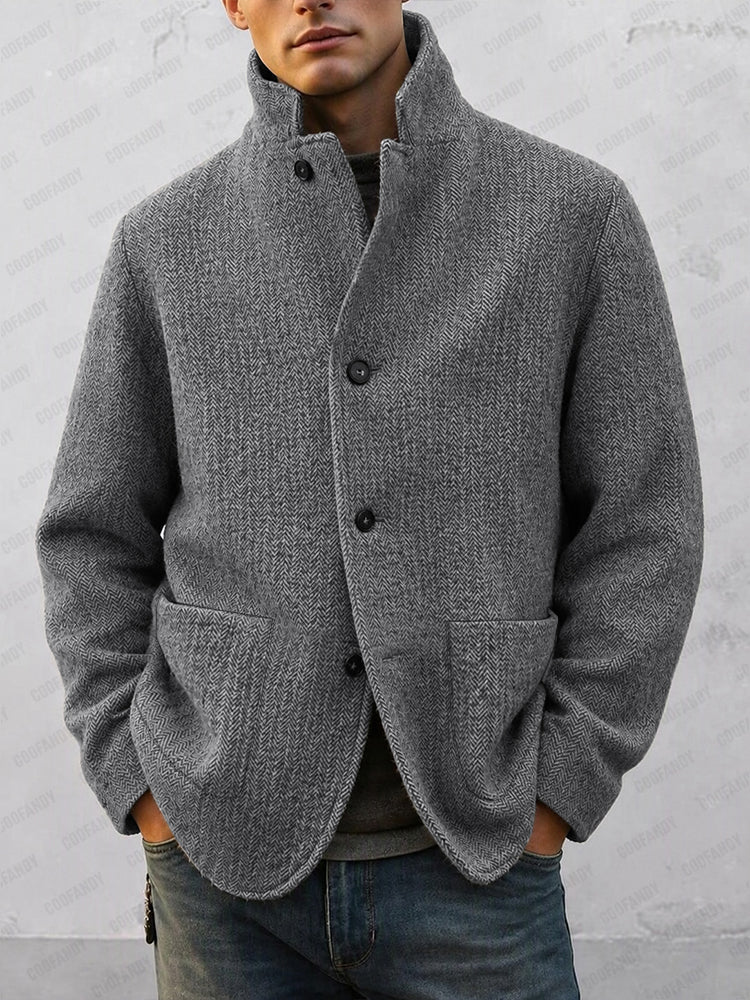
Use the Classic Textured Sheep Wool Blend Blazer (AMV007698) as the jacket in this example. It has notch lapels, a two-button front button, lower patch pockets and a fine vertical surface texture. Its composition is 56% polyester and 44% sheep wool. For this dinner, the light-beige color and texture give us the starting points for the rest of the outfit.
Put it over a pale-blue collared shirt with charcoal trousers and plain dark-brown leather shoes. Tuck the shirt, choose a belt that works with the shoes if your trousers need one, and keep jewelry understated. These supporting pieces are wardrobe suggestions; the Signature product here is the blazer.
The charcoal trousers make the light-beige jacket an obvious separate. The pale-blue shirt gives the front of the outfit a defined color without adding a busy pattern beside the jacket's texture. Try the outfit without a large shiny buckle before deciding to add one.
If you prefer a white collared shirt, substitute it without changing everything else at once. Compare the white and blue options with the blazer on and off. Keep the one you would be comfortable wearing for the whole conversation, not only for a standing arrival photo.
Explore the COOFANDY Signature collection with this specific light-beige blazer in mind. Other jackets should be considered on their own details, not assumed to share this one's fastening, pockets or composition.
Make the Shirt-and-Trouser Base Complete
The jacket may not stay on all evening. Build the shirt, trousers, belt and shoes as an outfit you can wear at the table if the host permits jacket removal. Do not rely on the blazer to hide an untidy shirt hem, overloaded pockets or a waistband you keep adjusting.
Try the base without the jacket before adding it back. Stand, sit and lean forward as though listening across a table. Check whether the shirt stays where you want it, whether you need to retuck it after sitting and whether the belt or trouser closure feels distracting. If a different shirt or trouser size solves the problem, make that change now.
For a dinner the host explicitly describes as shirt-only, another complete option is a white collared shirt, dark-navy trousers, a brown belt where needed and brown leather shoes. Keep the shirt tucked and bring an appropriate bag for work items. This is a deliberate shirt-led alternative, not permission to disregard a jacket requirement.
If you are uncertain whether that second outfit is acceptable, use the jacket-led route while you clarify the expectation. Do not replace the shirt with a tee simply because the room looks relaxed. A T-shirt belongs in this decision only when the actual client-dinner context welcomes it; it is not our starting recommendation for an unknown professional setting.
Rehearse the Dinner, Not Just the Mirror View
Give the outfit a seated check. Pull up a chair, place your hands where they would rest beside a plate and reach toward a glass. Notice a shirt cuff that gets in the way, fabric gathering at the waist or a jacket front you want to tug down every time you lean forward. Adjust the relevant piece rather than assuming another accessory will fix the combination.
Check the outfit once with the jacket open and once with the front button fastened. Choose how you want to wear it while standing, then see whether opening it before sitting gives you the arrangement you prefer. This is an outfit rehearsal, not a claim that the jacket will fit every body or remain comfortable throughout any meal.
Now add the items you will actually bring. Put a phone, keys, cards and work materials in your planned bag or usual carrying arrangement, then inspect the trouser and jacket lines again. Do not assume the patch pockets are the right place for everything just because they are visible. If something pulls a pocket out of shape, move that item elsewhere.
Before deciding to remove the blazer, look to the host's direction and any venue requirement. If jacket removal is welcome, use a suitable place offered by the venue rather than draping it where it interrupts another guest. If it is not welcome, keep the jacket on and leave the shirt-only branch for a different dinner.

Plan the Journey and the Jacket
An outfit for the table still has to get you there. Check the forecast, walking distance and transport plan separately from the dress code. The blazer's wool-blend composition does not establish that it will provide all the warmth or weather protection you need for the journey.
For a short arrival from a car, you might leave with the dinner outfit already assembled. For a longer walk or uncertain weather, plan an appropriate outer layer, umbrella or different transport. Try any outer layer over the complete outfit before choosing it; do not discover at the door that it crushes the arrangement you wanted underneath.
If you are travelling straight from work, choose a carrying plan for the blazer and any spare shirt. Ask whether the venue has a suitable place for outerwear or bags if that affects what you bring. Then work backward from the reservation: decide where you can change, whether you need time to check the shirt and where work items will go during dinner.
Avoid turning the commute into a reason to arrive in a different ensemble from the one you agreed with the host. If the logistics are impractical, change transport or ask about the arrangements first. If you need a different outfit, choose it deliberately rather than removing a required jacket halfway through the trip.

Choose Before the Workday Begins
Set out the full combination in the morning: Signature blazer, selected collared shirt, contrasting trousers, shoes and any belt or bag you will use. Check the shirt-only base, then put the jacket back on. One complete outfit is more useful than three possible jackets with no decision about the clothes underneath.
Your final choice should have a clear reason. Wear the light-beige Signature blazer outfit when the host welcomes separates and you want a jacket-led look. Use the shirt-led alternative only when that expectation is explicit. Return to a full suit when one is required, and ask again when the invitation remains unclear.
Find more about the series on the COOFANDY Signature page. For this dinner, keep the practical goal in view: arrive appropriately dressed, sit down in a complete outfit and leave your attention free for the people at the table.

FAQ
Can I take my blazer off at a client dinner?
Only when the host's expectations and venue requirements allow it. Build a complete shirt-and-trouser base in advance, then follow the host's direction at the table. Do not remove a required jacket simply because you prepared a shirt-only outfit underneath.
Can I wear a T-shirt to a client dinner?
Consider a T-shirt only when that specific professional setting explicitly welcomes it. For an unfamiliar client dinner, start with a collared shirt and clarify the expected ensemble. Adding a blazer does not override the host's or venue's requirements.


Leave a comment