










Burgundy Halloween Party Outfits

Build a burgundy Halloween party outfit by deciding where the color should live: in your main top, in a removable outer layer, or in one small accent. Then complete the outfit with trousers and shoes appropriate for the gathering. A burgundy knit with charcoal trousers is one starting point; a burgundy cardigan over ivory gives a different amount of contrast. You do not need to repeat the color in every garment.
We would try the clothes you already own before shopping for a seasonal piece. The useful question is not simply what goes with burgundy, but how much of it you want visible, and whether it will still be there after you take off your jacket. Choose that job first, then compare the actual garments together.
Decide Where You Want the Burgundy to Stay
Use a burgundy shirt or knit when you want the color to remain part of your indoor outfit. A neutral coat can cover it on the journey without changing the clothes you will wear at the party. This is the easiest placement to retain when you expect to leave outerwear at the door.
Use a burgundy cardigan, overshirt or jacket when you want to be able to remove the color. Build an ordinary outfit underneath that you would be happy wearing alone. You are choosing two visible states, not trying to make the outer layer responsible for every setting.
Choose a small burgundy detail when you prefer your familiar neutral clothes to lead. It might be a scarf for an outdoor portion or a pocket square in a jacket you expect to keep on. Select something suited to the actual clothes, rather than adding an accessory only because the recipe mentions one. A scarf is removable; a pocket square disappears with the jacket. Decide whether that matters to you.
Finally, check whether the invitation welcomes themed everyday clothing or requires a costume. Burgundy supplies a color direction, not a character identity. For an unclear invitation, ask whether your proposed outfit is enough. No color combination can answer the host's costume requirement on its own.
Three Complete Burgundy Party Outfits
Keep the color in a burgundy top
Try a plain burgundy crewneck or turtleneck with straight charcoal trousers, dark socks and black boots. Add a plain black or charcoal jacket with enough room for that actual top. This is our suggested evening combination when the gathering permits a knit and you want the seasonal color to remain indoors.
Begin with a quiet bottom half. If you choose a visibly ribbed knit, leave the trousers unpatterned so you can judge its surface without several competing details. Keep a substantial knit loose if it forms a thick roll when tucked. Check its length over the waistband and pockets instead of assuming an untucked sweater will work at any length.
With the jacket open, look at the amount of burgundy showing. Then close it and remove it. It is fine for the color to be hidden during travel and fully visible once you arrive. If the whole outfit feels darker than you wanted indoors, compare a lighter grey trouser you already own. You need not add orange or another festive color to create a change.
If a collared shirt is required, switch the knit to a burgundy shirt that meets the venue's rules, then repeat the jacket and trouser checks. That changes construction and fit even though it preserves the color placement. The knit version is not automatically suitable just because the palette is restrained.
Put burgundy in a removable outer layer
Wear a plain ivory crewneck with black straight trousers, black socks and black shoes, then add a burgundy cardigan or overshirt. Choose shoes allowed at the destination: dress shoes for a room that requires them, or your familiar black casual pair where permitted. Start with one burgundy layer rather than a matching scarf and hat.
The ivory top gives you a visibly different base from the dark-top recipe. Open the outer layer and inspect the line it makes around the top. If a cardigan's neckline and the crewneck compete, try a simpler neckline or another burgundy layer. If the sleeves pull when you reach forward, change the pairing rather than treating the open front as proof that the fit is adequate.
Take the burgundy layer off. The ivory, black trousers and shoes should remain a complete outfit. If you dislike the base, correct it now: use a top with a hem you prefer or trousers that work better with the shoes. Adding a more striking outer layer will not solve a base you do not want to wear alone.
This route deliberately allows the seasonal color to disappear. If you want burgundy to stay visible after removing the layer, choose the first recipe instead, or move the accent to an item you will actually keep wearing. You do not need to preserve the color at all costs; you need to choose the state you want.
Keep burgundy small around a familiar outfit
Start with a black collared shirt, grey trousers, dark socks, black dress shoes and a plain charcoal blazer. Try one burgundy pocket square if the jacket has a suitable breast pocket and you want that detail. This is a small-accent proposal for dinner or a gathering where ordinary evening clothes are welcome, not a costume claim.
Check the shirt and jacket first without the accessory. If they compete at the collar or the shirt bunches at the waist, change the underlying clothes before adding the square. Once the base works, arrange the square so it does not interfere with how you use the jacket. No special fold is required for this color-placement exercise.
If a pocket square is not your style, keep the same clothes and try a burgundy scarf for the portion when you will wear it. Remove it indoors if appropriate, then accept that the outfit becomes neutral. Do not wear an unwanted accessory all evening merely to keep the title's color in view.
If you expect to remove the blazer but still want burgundy indoors, this particular pocket-square version does not solve that problem. Return to a burgundy shirt or knit. That is a clearer change than adding several tiny accents and hoping one survives every layer change.

Compare the Actual Shade and Supporting Colors
Lay the burgundy garment beside the trousers and the top or jacket that will touch it. Compare them in the same light. Does the burgundy look more red, more purple or darker than you expected? You do not need an official color definition to decide whether you like that actual combination. Begin with the garment you most want to wear and change one neighbor at a time.
For a darker outfit, try charcoal or black around the burgundy. For a more obvious light-dark relationship, compare ivory or a lighter grey. These are our starting suggestions, not a claim that every shade or garment in those color families works identically. A plain pale top under a burgundy layer may give more contrast than you personally want; a darker base is a valid alternative.
Do not buy a second item solely because its color name sounds like a match. Wine Red, Burgundy and similar labels do not establish that separately made garments are identical. Use the selected product images and compare the real clothes when available. If exact matching matters to you, a name alone cannot settle it.
If two burgundy pieces look awkward together, keep one and replace the other with a neutral you own. For example, keep the cardigan and change the scarf, or retain the shirt and remove the pocket square. You may enjoy wearing multiple deep-red tones together, but make it a choice you have compared rather than an assumption based on labels.
Navy is another supporting option, but you do not need to add it to these recipes. If navy is already the main piece in your wardrobe, use the dedicated navy-and-burgundy guide in Related Reading rather than forcing a fourth color into an otherwise complete outfit.
Choose the Top for the Layer You Will Wear
Decide on the neckline and thickness before treating every burgundy top as interchangeable. A thick turtleneck used loose beneath a roomy jacket is a different proposition from a shirt tucked beneath a blazer. Try the actual top and outer layer together, close the jacket and reach forward. If the pairing crowds the arms or neck, change a layer rather than assuming a larger size will solve every shape issue.
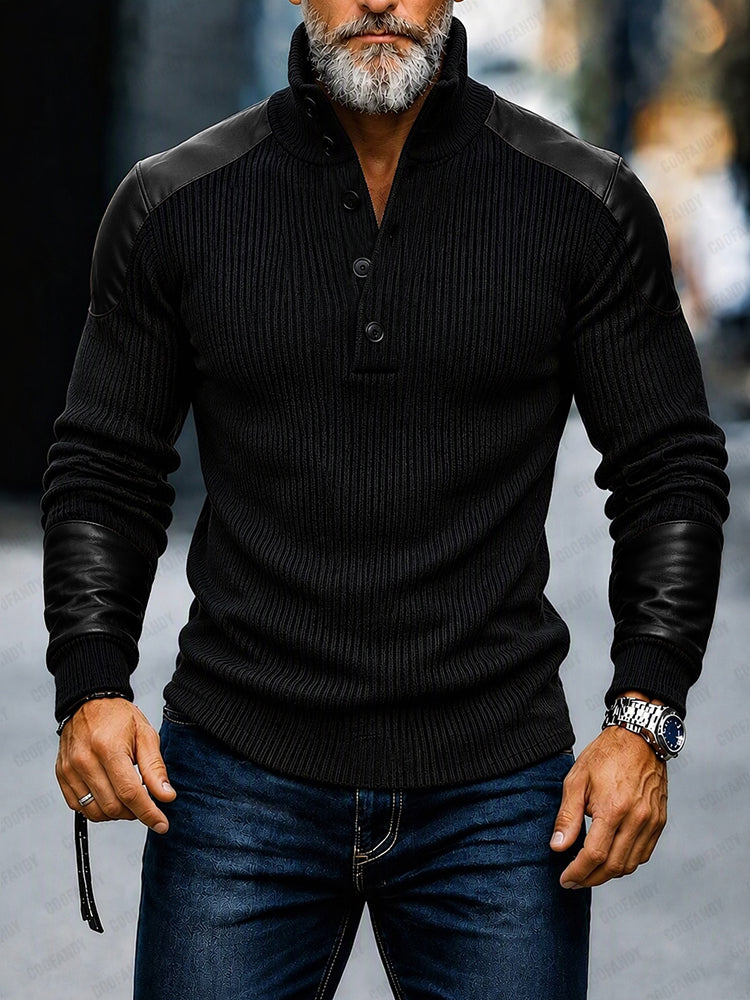
Our Ribbed Slim Fit Knitted Pullover Turtleneck Sweater (US Only) is an optional textured-top example. Its description lists a thick knit, turtle neckline, solid color, long sleeves, pullover construction and slight stretch, and its options include Wine Red. Compare the selected shade with your intended clothes; that product label does not guarantee an exact match to a burgundy item already in your closet.
Use the thick-knit description when planning the outfit. Do not treat this as a fine-gauge sweater guaranteed to tuck flat or slide under a close blazer. Keep it loose if the actual hem and trousers work together, or choose another top. The slim-fit cut and slight stretch do not select your size: compare your measurements with this product's chart and ask about unclear fit information.
A product example is not a promise of current availability or arrival before the party. Check the current option, destination information and care label before purchasing or cleaning; ask COOFANDY if instructions are unclear. For a fixed-date plan, keep an outfit you already own as the alternative.
Edit the Collar, Surface and Small Details
At the neckline, choose which feature should remain visible. A high knit collar does not need another shirt collar squeezed underneath for decoration. With the burgundy-shirt recipe, arrange the collar alongside the lapels, then turn your head and sit. If you keep adjusting it, try another shirt or outer layer before adding jewelry to the same area.
At the surface, decide whether burgundy or shine should draw attention first. A shiny burgundy top under another shiny layer can create more emphasis than you intended. Keep the piece you want to lead and compare a quieter neighboring surface. A plain jacket can frame a textured knit; you need not repeat the knit texture in a scarf as well.
For small details, look at the outfit without them, then add one. If the pocket square, scarf and socks all compete to repeat burgundy, remove the least useful item and reassess. Matching every accessory is optional, not the test of whether the outfit is finished. Let the largest visible pieces settle before working on details at the edges.
Finish with the trousers and shoes on. If a long hem bunches over the boots, change the trouser length or pair rather than letting the seasonal top distract from it. Sit down and use your pockets. The color may be the starting idea, but the ordinary actions of the evening still decide whether the clothes work for you.

Plan the Jacket-Off Version Before You Leave
Run one final comparison with the outer layer on and off. With the burgundy top, the color stays. With the burgundy cardigan, it leaves. With the pocket square, it stays only while the blazer does. Choose the version that matches your plans rather than adding duplicate accents to cover every possible state.
For a costume-required party, settle the character and its identifying details separately with the host. These three recipes are wardrobe outfits with a burgundy emphasis. Do not assume that a deep-red top makes a particular character recognizable or that a restaurant's usual clothing requirements disappear on Halloween.
Choose travel outerwear for the actual forecast and exposure, even when it covers the seasonal color. If you discover a genuine gap, browse our men's party outfits collection for that specific garment job. Check design and measurements instead of buying a second burgundy piece simply to repeat the first.
For an ordinary evening afterward, remove the seasonal accessory or wear the burgundy top with familiar neutral trousers. The same clothes can remain in your rotation. You have finished when the amount of color, the indoor outfit and the actual invitation agree—not when every piece matches.

Frequently Asked Questions
Is burgundy enough for a Halloween party without a costume?
It can be a seasonal color choice when the gathering welcomes themed everyday clothing. It does not identify a character or automatically satisfy a costume requirement. Ask the host if the invitation is unclear; the burgundy recipes here are clothing combinations rather than guaranteed costume ideas.
What if my burgundy layer comes off indoors?
Decide whether you are happy for the outfit to become neutral. If so, make sure the top, trousers and shoes work without the layer. If you want the color to remain, move it to a burgundy shirt or knit you will keep wearing. A pocket square disappears when its jacket comes off too.
Is a product labeled Wine Red the same shade as my burgundy clothes?
Not necessarily. The label does not establish an exact match across different garments. Compare selected product images and, when available, the actual clothes in the same light. If two deep-red pieces do not work together for you, keep one and use a neutral for the other.
About COOFANDY
Founded in 2015, COOFANDY is a menswear brand created for modern men navigating work, weekends, celebrations, and everyday life. Its collection includes shirts, suits, pants, sweaters, and tees designed to help men build versatile, confident looks for different moments and personal styles. Guided by the belief that clothing can reflect confidence and character, COOFANDY focuses on making approachable menswear part of every stage of life.
COOFANDY in the Press
- Is COOFANDY Worth It? The $20 Shirt Test vs. Ralph Lauren, Express and 8 More Menswear Brands
- Best Picks: COOFANDY Shirts & Suits for Commuting, Vacation, and Wedding Season
- From Amazon Basics to 70M+ Customers: The COOFANDY Story Adds a New Chapter with Walmart Distribution



Leave a comment