Your go-to resource for men's fashion advice - from hnding the perfect business casual pants to building a versatile wardrobe
without overspending.
Every guide is based on real wear-testing, honest comparisons, and practical tips for modern men who want to look sharp at
work, events, and everyday life.
Your go-to resource for men's fashion advice - from hnding the perfect business casual pants to building a versatile wardrobe without overspending.
Every guide is based on real wear-testing, honest comparisons, and practical tips for modern men who want to look sharp at
work, events, and everyday life.
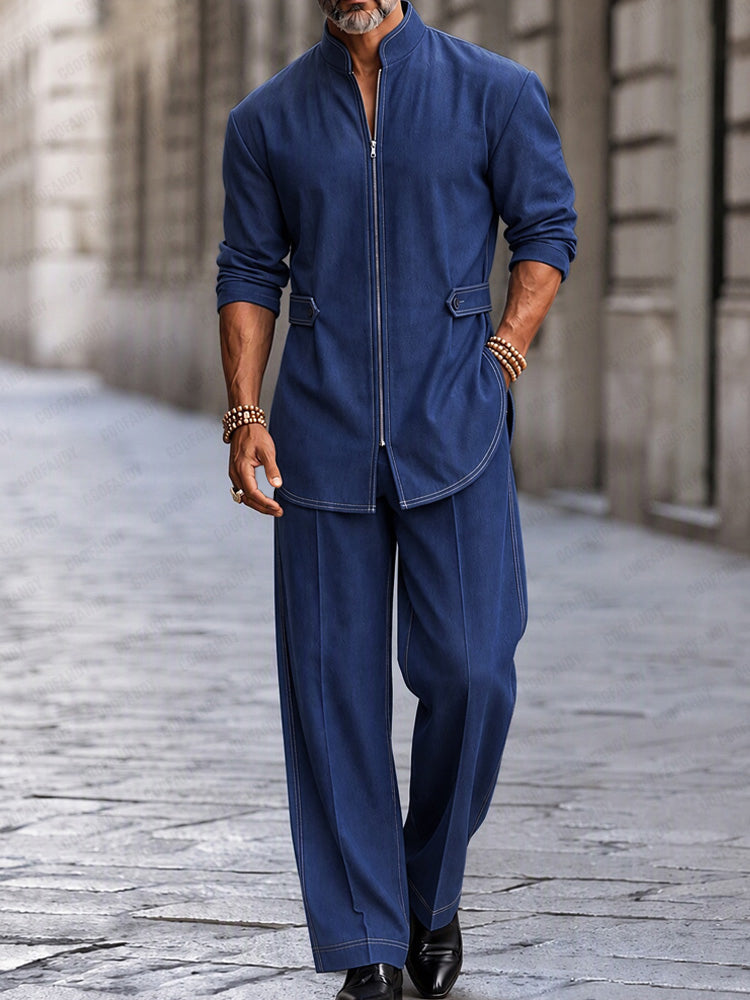
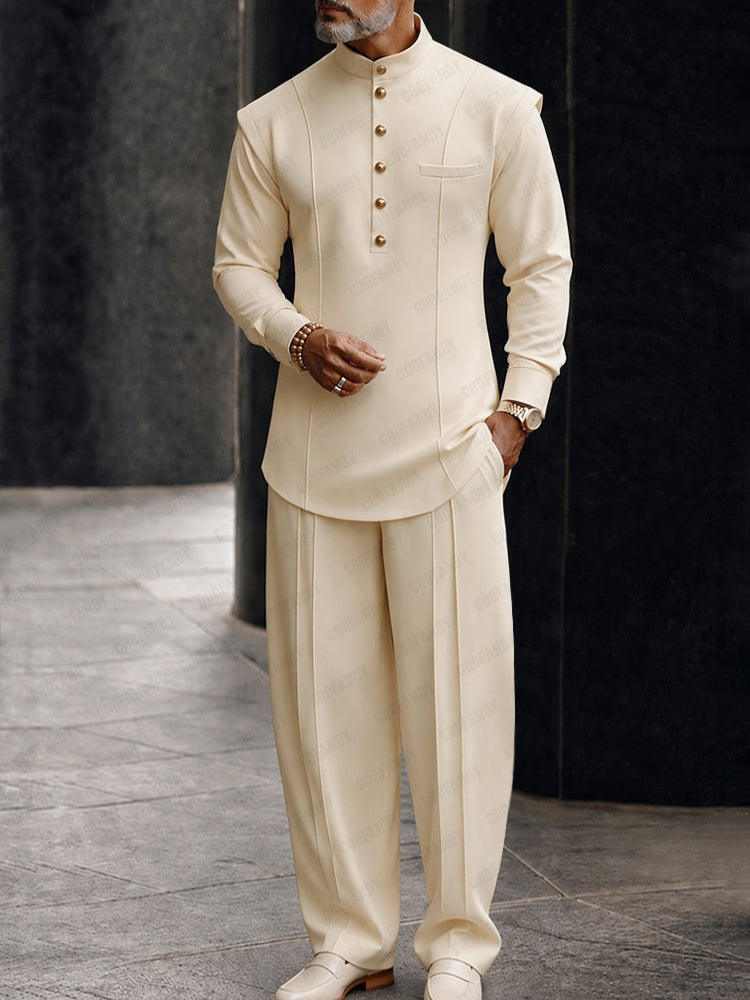
If picking vacation outfits stresses you out, matching 2-piece sets are the cheat code. Pre-coordinated, zero styling required. Here are the best options under $60.
Cuban collar shirts are the breakout men's trend of summer 2026. Learn the history, 3 ways to style them, and where to find the best options starting at $25.
You scored a reservation at the rooftop spot with the big screen — the one everyone's been talking about. Or a nice restaurant downtown is hosting a watch party with a prix fixe menu and the match on the back wall. Either way, this isn't a hoodie-and-shorts situation. The venue has a dress code, even if they haven't spelled it out. Dress like you're heading to a regular sports bar and you may feel underdressed before the first drink arrives. Dress like you're attending a client dinner and you feel ridiculous cheering in a tie. The answer sits in the middle — smart casual that reads "I belong here" and "I'm here for the match" at the same time.
A watch party day never stays in one place. Morning kicks off in someone's living room with the AC on full blast. By noon you're standing in a backyard or outdoor viewing area with the sun overhead. Late afternoon, you're back inside a bar. By evening, you're on a restaurant patio. The temperature swings can hit 15°C or more between the AC and the asphalt. Most guys either overdress for the cold indoors and suffer outside, or strip down for the heat and freeze every time they walk back in. The fix isn't two outfits — it's one combination built for the swing.
You're past the age of throwing on whatever's closest to the bed. But you're also not ready to default to the same khakis-and-polo uniform you've worn to every social event since 2014. The watch party invite sits in a weird gap — too casual for real thought, too social to phone in. Here's the direct answer: a relaxed-collar shirt (camp collar, linen-blend, or knit polo), dark casual pants, and clean low-profile shoes. That works whether you're hosting, showing up as a guest, or wrangling kids between halves.
You walk in. Every single person is draped in color accents — sports jerseys, scarves, face paint, the full production. You're standing there in a plain shirt, holding a six-pack, feeling like you missed a memo nobody sent. The instinct to turn around and leave kicks in for about two seconds before someone tosses you a drink and points at the TV.
The text showed up 20 minutes ago. Your buddy's hosting a watch party, kickoff's in an hour, and you're standing in front of your closet in gym shorts trying to remember the last time you ironed anything. You need to be dressed, out the door, and holding a cold drink in someone's living room before the first whistle — and you don't have time to overthink it.
Nobody walks into a watch party planning to look out of place. But it happens — a lot. The guy in full gym gear. The one dressed for a client dinner. The walking logo billboard. These mistakes share one root cause: misjudging where a watch party sits on the casual-to-dressy spectrum. A watch party lands right in the middle. Too sloppy reads like you don't care. Too polished reads like you showed up to the wrong event. Here are the mistakes men keep making and how to fix each one in minutes.
Ninety-degree heat changes every calculation you make about getting dressed. The outfit that looked solid in your air-conditioned bedroom will turn against you the second you step onto a sun-baked patio with a drink in one hand and zero shade in sight. At 90°F+, getting dressed for a watch party stops being about style preferences and becomes a practical problem — fabric, fit, and color all matter more than they do at any other temperature.
You got the invite. You said yes. Now you're standing in front of your closet twenty minutes before kickoff, wondering whether jeans are too casual, a sports jersey is too committed, or a button-down is trying too hard. If this is your first watch party, the outfit pressure is real — but the actual dress code is simpler than you think. A clean polo or short-sleeve shirt, dark casual pants, and shoes you can stand in for three hours. That combination works whether you end up on a rooftop patio, a friend's basement, or a packed sports bar.
Short version: a short-sleeve button-down or a fitted polo, casual pants or tailored shorts, and clean sneakers. You want to look like you care about the match *and* the evening around it — not like you rolled off the couch in a replica sports jersey and last year's slides. The outfit needs to handle cheering, standing in a crowd, casual photos, and whatever happens after the final whistle.
Jeans in July feel like a punishment. The stiff waistband, the heat trapped against your thighs, the slow dry time after a surprise downpour — none of it works when temperatures climb past 80 °F. But dropping denim doesn't mean dropping standards. You just need three pairs of pants that cover every context in your week: the office, the airport, and Saturday afternoon. This guide gives you an exact rotation — three pants, three outfit formulas — so you can pack lighter, dress cooler, and stop defaulting to jeans out of habit.
Most size charts treat your body like a simple ratio: waist goes up, everything scales. That math falls apart the moment your thighs don't match your waist. You end up choosing between a waistband that fits and quads that can breathe — and the taper from knee to ankle decides whether the pants look tailored or like compression sleeves. This guide gives you a three-measurement fit test you can run at home with a tape measure and five minutes.
You booked the overnight flight to save a day. Now you need pants that won't crease into a road map at 30,000 feet yet still pass inspection when you walk into a conference room or a beachside lobby six hours later. The short version: pick a structured but breathable fabric, skip rigid waistbands, and plan your top layer so you can swap it in an airport restroom in under three minutes.
The invitation says beach wedding. Somewhere in the fine print it mentions "linen optional." You read it twice and still aren't sure what it means for your pants. Do you need linen? What colors are safe? Is a full suit too much? Short version: dress well, stay comfortable, land between a boardroom suit and a beach bar tank top. Below are the color rules, pant options, and outfit formulas sorted by ceremony time.
You're standing in front of the closet, joggers in one hand, chinos in the other. Brunch starts in an hour. Or maybe it's a first date. Or you're stuffing a carry-on for a weekend trip and only have room for one pair. The answer isn't about which pant is "better"—it's about which one this specific moment calls for. Pick wrong and you either look like you just left the gym or like you over-thought a Sunday morning.
The short answer: choose the right shirt length, decide whether to tuck or leave untucked based on your waistband type, and use a structured layer when the occasion calls for it. Elastic and drawstring waistbands disappear when you control what sits above them. A shirt hem falling two to three inches below your natural waist covers an elastic band entirely. A half-tuck behind a belt loop masks a drawstring. And a blazer or overshirt makes the question irrelevant. The comfort stays. The evidence goes away. Below is every combination, broken down by waistband type.
You already know you don't want shorts this summer — and you don't need convincing. What you need is a plan. The right lightweight long pants keep you just as cool as shorts while giving you access to every restaurant, conference room, and flight without a second thought. This guide breaks it down by the three scenes where long pants consistently outperform shorts: the office, the trip, and the dinner table.
Great work-from-home pants are the ones you never think about changing. Comfortable enough for eight hours at your desk, presentable enough for a surprise video call, and put-together enough to walk out your front door without hesitation. For most guys, that sweet spot lands somewhere between drawstring trousers and casual tapered pants — stretchy, clean-lined, and ready for anything. If your current WFH setup involves a frantic scramble for "real pants" every time the doorbell rings, this guide is for you.
Embarkation day asks more of a single pair of pants than any other day of your vacation. You need something comfortable enough for a five-hour flight, polished enough for the boarding photo everyone posts on Instagram, and dinner-appropriate in case your checked luggage hasn't caught up to you yet. The right pair of pants handles all three without a mid-day change — and that's exactly the kind of planning this guide walks you through. This guide helps you choose pants that carry you from the terminal gate to your table assignment without a single wardrobe crisis.
Your internship final presentation is the last impression you leave with your manager, team, and sometimes HR. Dressing one level above your daily office look sends a clear signal: you took this seriously, and you're ready for what comes next. That doesn't mean showing up in a three-piece suit when everyone else wears chinos. It means making small, deliberate upgrades — a structured blazer instead of a zip-up, a pressed shirt instead of a polo, proper trousers instead of jeans — so you look polished without looking like you're trying too hard. This guide covers all three scenarios — conference room, Zoom, and the tricky post-lunch slot — so you know exactly what to wear for each.
Five tops, three bottoms, two layers — that's the formula for a male intern to dress well for ten business days without repeating a single full outfit. Five shirts paired with three pants already give you 15 unique combinations, and adding a sweater or jacket creates a third visual dimension. Below you'll find the specific list, the color logic behind it, and a day-by-day rotation plan you can follow from Day 1.
You landed the internship. The offer letter says "business casual." Your laptop camera is now your dress code enforcer. And somewhere around day three, you realize you can't keep rotating the same two button-downs without looking like a cartoon character. What nobody tells interns about remote work: the camera only sees your upper half, but it sees it *every single day*. A well-chosen sweater can carry you through a full week looking put-together, comfortable, and deliberate — even when you rolled out of bed seven minutes before standup. Below are the sweater styles that work for three common remote internship scenarios, so you can stop overthinking your top half every morning.
Three pairs. That's it. For a five-day beach vacation, three well-chosen pants will cover every situation you'll actually face — morning boardwalk coffee, a sunset dinner reservation, the flight home, and everything in between. Most guys either stuff six pairs into a suitcase they can barely close, or they throw in a single pair of khakis and hope for the best. Both approaches fall apart by day two. The fix isn't packing more or packing less. It's packing smarter. Here's where men consistently get it wrong and how a simple rotation solves every scenario.
Here's the short answer: if you have zero information about your new office, start with chinos. They survive the widest range of dress codes, pair with almost anything, and never look like you're trying too hard or not trying at all. Once you've clocked a few days and read the room, you can expand into jeans, linen pants, or drawstring trousers depending on what the culture actually rewards. This guide gives you the exact framework to make that call.
Your manager just dropped the invite: drinks after work, rooftop bar, the whole team's going. Great. Also: mildly terrifying. Because you're the intern, which means everyone will notice what you're wearing — and nobody will tell you if you got it wrong. Here's the short answer: wear what you wore to the office, minus one layer of formality. Lose the tie, roll your sleeves, maybe swap dress shoes for clean loafers. You want to look like you belong at the table without looking like you tried harder than your boss did. Keep reading for specific moves that work across three types of after-work events — and the stuff that will get you quietly judged.
Your remote internship interview starts in twenty minutes. You grab what looks like a solid shirt from the closet, sit down, open your laptop—and the webcam turns your light blue button-down into a washed-out blur against the white wall behind you. Most guys pick shirts by how they look in the mirror. But a webcam is not a mirror. It compresses color, flattens texture, and crops everything below your chest. The rules change, and nobody really teaches you the new ones.
Your first week at a new job already comes with enough stress — learning names, figuring out the coffee machine, pretending you understood the onboarding presentation. The last thing you need is a belt buckle digging into your stomach by 2 p.m. Most guys don't realize this until they've lived through a few 8-hour desk marathons: what you wear below the waist matters more than what you wear above it. A stiff waistband and a rigid belt can turn a normal Tuesday into a low-grade endurance test. And if you're sitting for most of the day — which most office jobs demand — that discomfort compounds fast. So can you actually ditch the belt and still look put-together at work? Yes. But the details matter.
Your first day as an intern sets a tone you can't redo. Walk in dressed one notch above what you think the office expects — it's far easier to dress down later than to recover from looking underprepared. A corporate firm calls for a dress shirt and tailored trousers. Startups lean smart casual — a fitted button-down with chinos. Creative studios give you room for texture and color, while remote roles demand a polished top half for video calls. This guide gives you four outfit formulas, one for each environment.
Your alarm just went off. You snoozed it twice. Now you have roughly twelve minutes before you need to leave—and at least three of those are going to the coffee maker. The last thing you want is to stand in front of your closet wondering whether navy pants go with that gray shirt, or if a blazer is "too much" for a Wednesday. Getting dressed fast has nothing to do with talent. It's a systems problem. And systems can be solved with formulas. Three outfit formulas. Each one works for a standard business-casual internship. Pick one each morning, swap in the right pieces, and walk out the door looking like you actually planned it. Because technically, you did—just not at 7:48 a.m.
The blazer stays. Everything underneath it changes depending on whether you're grabbing coffee with a recruiter, presenting to a team, or sitting across from a partner at dinner. Get the layers wrong and you'll either look like you're trying too hard—or not trying at all. Internships compress an entire career's worth of first impressions into a few months. You'll meet people who influence your future while holding a latte, standing at a whiteboard, and passing bread rolls. Each of those moments has a different dress code, and none of them come with a manual.
Your first week as an intern is already stressful enough — figuring out names, learning software, trying to remember where the coffee machine is. Standing in front of your closet at 6:45 a.m. wondering if people will notice you wore that same blue shirt on Monday shouldn't be one more thing on the list. Nobody expects an intern to show up with a runway wardrobe. But looking put-together five days in a row signals that you take the role seriously, even if your job title still has "intern" in it. A practical five-shirt rotation covers your entire first week: no repeated outfits, no overthinking, just a formula you set up once and use all summer.
Every summer, the same scene plays out across cities: you step outside at 7:45 a.m. and the heat hits you like a wall. Twenty minutes later your forehead is damp, your shirt is sticking to your back — and then the revolving door swings shut. The AC kicks in. Suddenly you're sitting in what feels like a walk-in refrigerator for the next eight hours. If you're starting your first internship or a new role this summer, nobody warns you about this temperature whiplash. The pants you wore to survive the commute feel completely wrong once you're parked under a vent blowing 68 °F air directly onto your ankles. Choosing the right pair up front saves you from stashing a second outfit in your desk drawer.
Starting an internship in June or July comes with a question nobody really prepares you for: *What pants do I actually wear every day?* You already know the obvious stuff—no gym shorts, no ripped jeans. But the middle ground is where most interns slip up. You end up wearing the same two pairs of chinos on repeat, or you overcorrect into full suit trousers that make you look like you're heading to a client pitch on a Tuesday morning. The practical answer: **you need three to four pairs of pants that cover every situation your first month throws at you.** Not ten. Not a full wardrobe overhaul. A small, deliberate rotation that keeps you looking put-together without overthinking it every morning.
Starting an internship means figuring out unwritten dress code rules with zero margin for error. You want to look polished—but you also want to stop overthinking every morning outfit decision. Here is the short answer: a mock neck works in most business casual and smart casual offices. It does not work when the dress code explicitly requires a collared shirt, or when you are meeting external clients for the first time. Everything in between comes down to reading the room. Below is a scenario-by-scenario breakdown of when a mock neck replaces a dress shirt, when it doesn't, and how to make the call in under 30 seconds before you leave the house.
You landed the internship interview at a tech company or creative agency — and now you're stuck between a navy suit (overkill) and a graphic tee (gamble). The right answer shifts depending on whether you're on a video call or walking into the office. What follows covers every stage — video screen, onsite visit, creative studio, startup coffee chat — so you look like someone who already belongs there.
A hotel-lobby-to-rooftop match-day outfit should look sharp at first glance and relaxed once the match starts. The simple formula is a short-sleeve shirt or polo with neutral trousers, clean shoes, and one controlled color or texture choice. Think arrival-ready, not overstyled: you want to look like you planned the night without making the outfit feel staged or overdone. For a rooftop arrival, subtle usually works better than literal. Let the outfit feel event-ready without looking like a costume.
A patterned shirt can give a football watch party outfit energy without making the look feel like a costume. The key is scale and balance: choose one patterned shirt, keep the pants or shorts neutral, and let the setting decide how bold the print should be. Small prints feel easier for dinner or hotel bars; bolder resort prints work better for patios, beach bars, and backyard parties. The pattern should feel like a style choice, not the only reason the outfit exists.
A beach-to-bar match-day outfit should move from sand, pool, or resort downtime into a bar setting without looking like you are still in swim mode. The simple formula is an open shirt over a tee or tank, tailored shorts or linen-style pants, and clean shoes or sandals that fit the venue. A coordinated set can also work when you want a one-decision outfit for vacation match day. At a beach bar, the most practical outfit is still regular resort casual: relaxed, clean, and useful after the match.
For an evening match-night plan, black and neutral outfits can feel more natural for evening settings than very bright palettes. Try a black camp collar shirt with stone pants, a dark polo with neutral trousers, or a clean set in beige, black, or navy. This approach works for hotel bars, rooftop watch parties, casual dinners, and night-out match plans without relying on loud graphics. The whole point is to keep the outfit evening-ready instead of making it feel like a costume.
You can dress for match day without wearing bright team colors. A neutral match-day outfit for men can use shape, texture, layers, and setting instead of loud color: think white shirt with navy pants, black polo with stone trousers, or a beige set with clean shoes. The result feels ready for the match while still working at dinner, a rooftop, or a casual party. This is the quiet route: no full color theme, no loud graphics, and no need to dress like the whole outfit is built for one match.
If you are going to an outdoor viewing area, outdoor screen, or public viewing area, dress for standing, walking, heat, and crowd movement before you think about color. A short-sleeve shirt, clean tee, tailored shorts, or light casual pants will usually work better than a heavy outfit built only for photos. Add simple shoes you can walk in and keep the look regular-clothes first, event energy second. Outdoor viewing areas can be energetic, but the outfit still has to work as regular clothes through walking, standing, and waiting.
For dinner after a football match, men should keep the match-day energy subtle and let the outfit become cleaner: a camp collar shirt, linen-style shirt, dark polo, or short-sleeve button-down with darker casual pants is the simple move. You can still look relaxed, but the outfit should feel ready for a restaurant, date, rooftop dinner, or small group plan after the final whistle. For dinner, regular clothes usually work better than full-theme styling. Let the outfit feel polished enough for the room.
A hotel bar match-night outfit should look cleaner than airport clothes but easier than a dinner jacket. Start with a dark polo, short-sleeve button-down, or matching-set separate, then pair it with relaxed trousers or clean casual pants. The goal is simple: look ready for the match, the lobby, and a drink with friends without changing your entire travel outfit. The reliable approach is subtle: regular menswear first, match-night mood second.
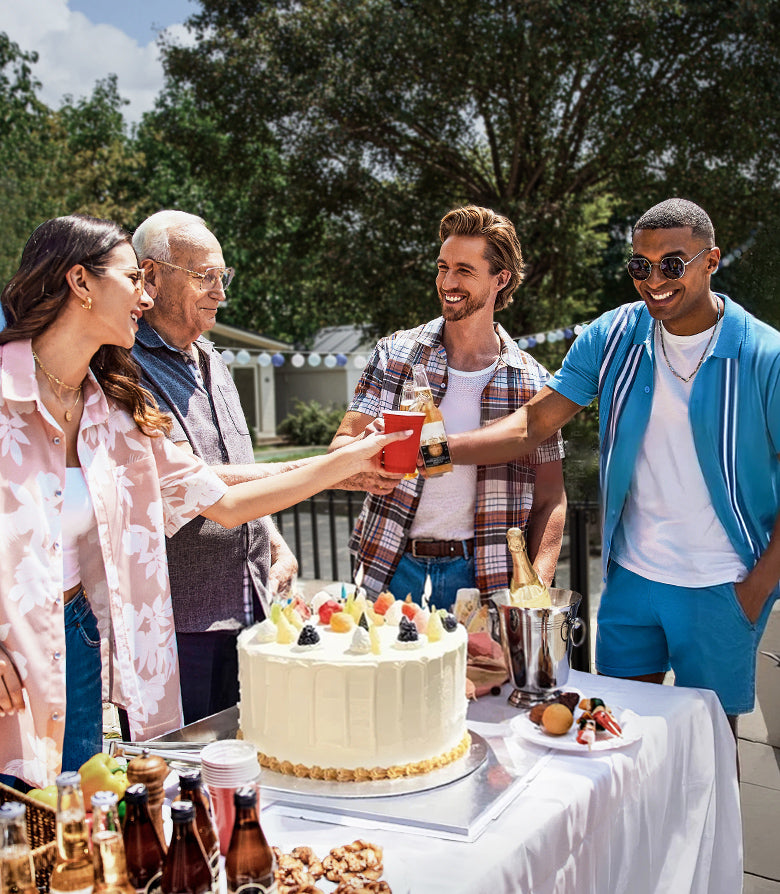
For a backyard football watch BBQ, men should wear an easy warm-weather top, comfortable bottoms, and shoes that can handle grass, patio seating, and standing around the grill. A camp collar shirt with tailored shorts, a polo with casual pants, or an open shirt over a tee will usually look more intentional than a random gym outfit while still feeling relaxed enough for a summer gathering. Think of this as regular backyard style with match-day energy: practical enough for the grill, clean enough for photos.
If you are hosting a football watch party at home, wear something relaxed enough for the kitchen but pulled together enough for the doorbell, group photos, and a quick run for extra drinks or snacks. A clean tee, polo, or open short-sleeve shirt with casual pants or tailored shorts is the reliable formula. You do not need a theme-heavy outfit to look ready for the match; you need a host outfit that can move, sit, and still look intentional. The outfit works when the clothes feel useful before, during, and after the match.
For many workplaces in 2026, business casual is less about one uniform and more about clean, adaptable outfits. Compare smart-casual options by dress code, fabric, fit, shoe pairing, and whether the pieces can move from work to weekend. A sharp shirt, comfortable pant, and coordinated color palette can often do more than a closet full of one-purpose pieces.
Men should choose basic separates when they want maximum mix-and-match flexibility, and coordinated outfits when they want faster decisions and a more intentional summer look. Neither approach is automatically better. The right choice depends on where you are going, how much time you want to spend styling, and whether the outfit needs to feel casual, polished, or vacation-ready.
For vacation, choose a linen set when you want warm-weather ease when the fabric and fit support it; choose a broader matching set when you want a coordinated outfit with stronger style impact; choose separate shirts and pants when flexibility matters most. The practical packing plan often uses one set plus a few separates, so you can repeat pieces without repeating the same outfit.
Before buying a men's linen set online, check six things: where you will wear it, how the fabric is described, how the top and bottom fit, whether the color works with your shoes, what the care label requires, and whether shipping and returns match your timeline. A good linen set should solve a real outfit problem, not create a sizing puzzle.
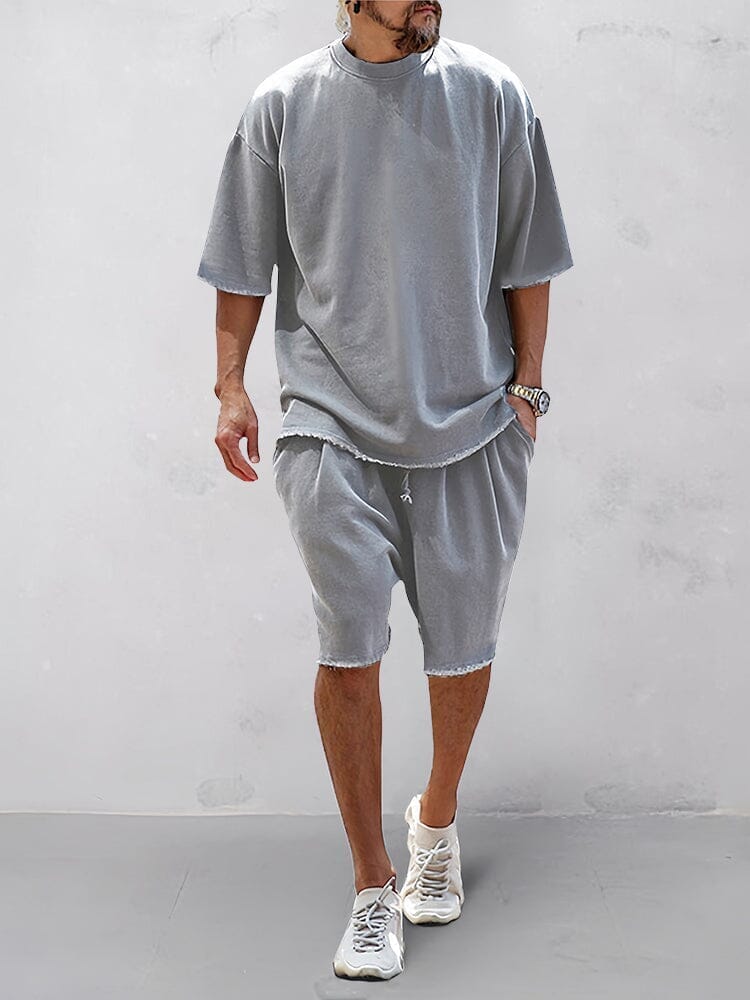
Men's matching sets are coordinated tops and bottoms designed to be worn together, but they can also be split into separate outfits. If you want an easier way to dress for vacation, weekends, casual dinners, or smart-casual plans, a matching set can reduce outfit decisions while still looking intentional. This FAQ answers the questions men usually ask before buying or wearing one.
Men should choose summer pants by scenario, not by one universal winner. Linen pants are strong for vacations, smart-casual dinners, and warm-weather styling. Chinos are One practical office-to-weekend option. Drawstring pants work works well for relaxed travel, casual Fridays, and comfort-focused days. Jeans still have a place when the setting is casual and the outfit needs structure. The right pair depends on dress code, movement, shoes, and how polished you need to look.
Discover new arrivals, exclusive offers, and much more
BE THE FIRST TO KNOW
Confirm your age
Are you 18 years old or older?
Come back when you're older
Sorry, the content of this store can't be seen by a younger audience. Come back when you're older.