










Men’s Halloween Party Outfits by Dress Code

Choose a Halloween party outfit by reading the invitation before choosing the festive detail. Find out whether the host wants a costume, themed everyday clothes or a particular level of evening dress. Then build a complete outfit that also meets the venue's rules. A Halloween graphic, a black outfit and a novelty suit are not interchangeable answers to those requirements.
We suggest treating the seasonal element as a second decision. First settle the clothing you need to wear; then add a permitted color, graphic or character detail. This is especially useful when the same evening includes dinner, an office gathering or a party with both costume and dress requirements. You can participate without guessing that the word “Halloween” overrides everything else on the invitation.
Read the Invitation in Three Parts
Look for three separate pieces of information: the theme, the requested clothing and the venue restrictions. “Halloween celebration” describes the occasion. “Costumes required” asks for something more specific. “Jacket and dress shoes” gives you clothing requirements. Read all of them together instead of choosing the phrase that best suits what is already in your closet.
If the invitation only says “dress up,” ask which meaning the host intends. A useful question is, “Do you mean a character costume, or a dressier outfit with a Halloween detail?” If it says “smart casual,” ask about the uncertain garments you actually want to wear: “Would a knit top, tailored trousers and dress shoes be suitable, or do you expect a collared shirt?” That gets you a usable answer instead of another ambiguous label.
For a restaurant or ticketed venue, check the venue's own requirements as well. Confirm footwear, whether the jacket must stay on and any limits on masks, props or face coverings. We are not assuming those restrictions exist everywhere; check the ones that apply to your destination. If the host's suggestion and the venue's rule appear incompatible, clarify the outfit before making or buying a costume.
Keep a short note of the answers. For example: “Themed clothes are fine; collared shirt required; no mask inside.” Now the outfit has a clear job. A printed sweater might have been your first idea, but a shirt with one permitted seasonal accent is the more useful starting point for that particular invitation.
Choose a Complete Outfit the Host Will Accept
Use the options below after confirming the relevant permissions. These are outfit proposals, not universal definitions of casual, cocktail or formal dress. A host's specific instructions take priority over our suggested combination.
| What has been confirmed | Start with this outfit | What still needs checking |
|---|---|---|
| Casual clothes and festive graphics are welcome | Graphic top, dark jeans, permitted sneakers, plain jacket | Graphic choice and any costume requirement |
| Dressier separates and knitwear are welcome | Plain knit, tailored trousers, dress shoes, suitable blazer | Room for the knit and whether a collar or tie is required |
| A suit-and-shirt outfit is expected | Matching suit, plain shirt, dress shoes, optional approved accent | Tie, specific formalwear and accessory instructions |
| A costume is required alongside normal venue rules | A permitted clothing base plus an agreed character detail | Whether the character concept and detail satisfy the host |
Casual gathering: let the top carry the theme
For a gathering that explicitly welcomes casual clothes, try a Halloween graphic top with straight dark jeans, familiar clean sneakers and a plain jacket. Pick sneakers only if that footwear is allowed. Keep the rest of the outfit simple while you decide whether the graphic supplies the level of participation you want.
Take the jacket off during your trial. The top should still be the item you want to wear at the gathering, rather than something you were relying on the jacket to hide. If the graphic feels too much, use a rust or burgundy top instead, provided themed everyday clothes are acceptable. If the host requires a costume, that color substitution does not answer the invitation; move to the character route rather than adding several unrelated festive pieces.
Look at the jeans with the top tucked and untucked if both are practical. Choose the version that leaves you able to sit and move without constantly adjusting the hem. If the jeans are too casual for the actual venue, replace them with permitted trousers and check the whole combination again. Adding a jacket alone is not a substitute for complying with an explicit no-denim requirement.
Dressier separates: confirm knitwear before choosing it
When the host accepts knitwear with dressier separates, our starting combination is a plain knit top, charcoal tailored trousers, dark dress shoes and a blazer that has room for the top. A burgundy knit is one seasonal option; a neutral knit with a small permitted accent is another. Choose the top for the outfit you are actually making, not just because it looks good beside the jacket on a hanger.
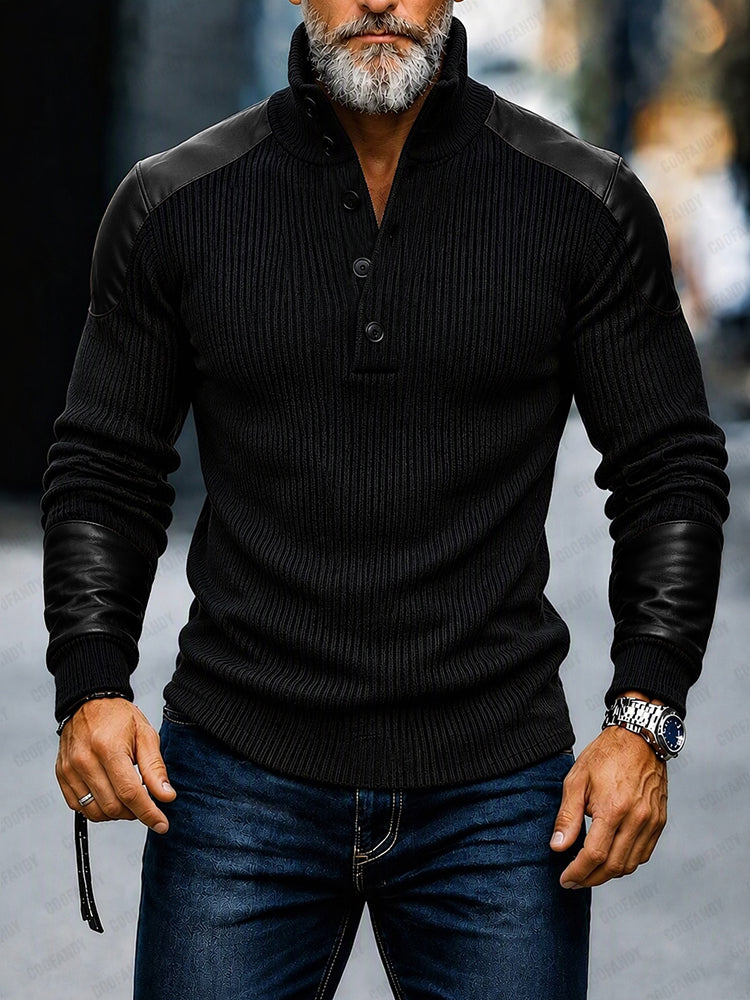
Our Ribbed Slim Fit Knitted Pullover Turtleneck Sweater is an optional example of a turtleneck design. The official description lists a thick knit, solid color, long sleeves and pullover construction; the product is marked US Only. Do not assume it will fit under your blazer. Try the actual combination, and switch to another permitted top if the jacket pulls, the sleeves feel crowded or the neckline is not what you want.
That correction may mean using a shirt you already own rather than buying a bigger blazer. If the host expects a collared shirt or tie, start with those requirements instead. The turtleneck suggestion is for the confirmed knitwear route, not an automatic substitute for cocktail, business-formal or black-tie instructions. Use our turtleneck-under-a-blazer guide for the general pairing checks, and judge the selected product by its own details and your trial.
Suit-and-shirt evening: keep the outfit coherent
If the host has asked for a suit-and-shirt combination, try a dark matching suit, a plain light shirt, dark dress shoes and the requested tie, if one is specified. Use a seasonal pocket square or another restrained detail only when it is permitted. You do not need a printed suit to acknowledge the occasion, and a printed suit is not automatically an acceptable answer to every formal instruction.
Check the shirt with the jacket open and closed. If a patterned shirt, tie and pocket square compete more than you want, keep one accent and return the others to plain alternatives. We would usually start with the simplest combination and add the approved festive detail afterward. That lets you see which addition helps without losing track of the required clothing.
If the invitation names a more specific code, such as black tie, ask for the actual expected garments rather than assuming this ordinary suit proposal is sufficient. A Halloween theme does not make the difference irrelevant. Likewise, do not remove a required tie because the party sounds relaxed; confirm any exception before relying on it.
Costume-required party: an agent built around permitted formal clothes
For a host who accepts an agent costume and permits sunglasses at the gathering, try a black matching suit, white shirt, black tie and dark dress shoes. The jacket and trousers provide the ordinary clothing base; the sunglasses provide the chosen identifying detail. Skip toy weapons and other props you do not need. This is our suggested application of the secret-agent idea in the easy costumes with normal clothes guide, not a promise that everyone will recognize it.
Check whether the sunglasses can be worn where the costume matters. If the venue bars them indoors, do not assume a plain suit still satisfies a character requirement. One alternative is a fictional reporter in the same suit, light shirt, tie and dress shoes, using everyday horn-rimmed glasses you already wear, if those are permitted and the host accepts the revised concept. Do not buy or wear glasses you cannot use safely just to complete it.
If neither identifying detail is allowed, settle a different concept or an exception with the host before committing. The ordinary suit remains a usable evening outfit, but that does not make it a completed costume. For more concepts, use the character guide rather than adding unrelated festive accessories to this one.

When Costume and Dress Requirements Collide
Dinner: a required suit, with an optional Halloween detail
Imagine the host confirms that the dinner requires a dark suit, collared shirt and dress shoes; costumes are encouraged but not required. The venue prohibits masks and toy weapons, and the host accepts a small seasonal accessory. Our resulting outfit is a dark matching suit, plain white shirt, dark dress shoes, the requested tie if specified, and a rust-colored pocket square. Bring appropriate outerwear for the journey, then remove it indoors.
We would reject a mask-based character or a novelty outfit that omits the required shirt. If your first idea was a graphic sweater, save it for another occasion: the pocket square adds the permitted seasonal element without replacing the shirt. If you prefer no accent, the ordinary suit meets these imagined instructions. You are not obliged to turn optional costume participation into a character.
If the host instead confirms that a recognizable costume is required, the agent combination above is one proposal only where sunglasses are permitted. Where they are barred, offer the reporter alternative with permitted everyday glasses. If the host rejects that concept, neither a pocket square nor an undecorated suit magically resolves the requirement; choose a different approved costume.
Office: ordinary work clothes first, an apron later
For a worked office example, imagine collared shirts, trousers and dress shoes are required during work, but the organizer permits an apron at the designated gathering. A chef-inspired outfit can start with a white collared shirt, navy trousers, dark dress shoes and a plain blazer. Keep the apron folded in your bag during work; at the gathering, remove the blazer if appropriate and add the permitted apron over the shirt. No cooking tools or food props are needed for this proposed look.
We would reject a plan that requires changing into a casual T-shirt where the workplace requires a collar. The apron supplies the agreed character detail while the shirt, trousers and shoes remain the permitted base. After the gathering, put the apron back in the bag and return to the ordinary work outfit. This is a conditional outfit example, not a rule that every office permits chef accessories.
If accessories are barred throughout, a specific alternative is a rust collared shirt, navy trousers, the same dress shoes and blazer, but only when the organizer agrees that themed clothing can replace the costume requirement. The changed shirt supplies the seasonal color, not a chef identity. If costumes remain mandatory and no acceptable clothing-only concept is agreed, the conflict is unresolved; do not present that non-costume alternative as compliance.

Check the Whole Evening, Not Only the Entrance
Try the outfit in the state you expect to wear indoors. Remove the travel coat, sit down and reach forward. With a knit and blazer, check the jacket's movement rather than relying on the sweater's fit label. With a suit, make sure the seasonal accessory does not prevent you from using a pocket, fastening the jacket or handling a drink.
For two venues, work from the stricter clothing requirement. If dinner needs dress shoes, use them for the outfit trial rather than planning to make a last-second change from sneakers. If you intend to change a top or accessory afterward, decide where the unused item will go. Carrying an awkward prop all evening is a different experience from wearing it briefly for a photograph.
Check the forecast for the journey and the trip home. Select outerwear for those conditions, even if it covers the festive detail outdoors. The color, neckline or holiday graphic does not establish the whole outfit's weather suitability. Indoors, your outfit can be festive; in transit, it still needs to work for the actual evening.

Fill One Wardrobe Gap and Keep a Fallback
Lay out the best permitted outfit you already own. Identify the missing job before browsing our men's party outfits collection: perhaps a plain top that works with your trousers, rather than another statement garment. An item being in a party collection does not mean it meets every venue's dress code.
For a new piece, compare your measurements with its individual chart and check current processing and delivery information for your destination. The US Only label on the featured turtleneck is a regional limit, not an arrival promise. Keep the existing outfit available for a date-sensitive event, and do not base the entire plan on an unconfirmed delivery.
Before buying, think of an ordinary second occasion for the garment. A top you would wear again may fill a genuine wardrobe gap; a required costume detail may instead be a deliberate one-event choice. Neither decision needs to be disguised as the other. Choose the route that serves your actual invitation and budget.
Your final question is simple: can you point to how the outfit satisfies the theme, the requested clothing and the venue rules? If one answer is still a guess, resolve it with the host. Once those answers are clear, choose the festive detail and enjoy the party without letting it undo the outfit you needed to wear.
Frequently Asked Questions
What does dress up mean on a Halloween invitation?
It may mean a character costume or dressier clothes. Ask the host which they intend, then confirm any required shirt, jacket, tie or footwear and the venue's restrictions. Do not assume that a Halloween theme replaces those clothing requirements.
Can I wear a turtleneck to a Halloween cocktail party?
Only when knitwear is accepted with the requested outfit. If a collared shirt or tie is required, follow that instruction instead. When a turtleneck and blazer are permitted, check the actual combination for crowded sleeves, pulling and a neckline you like; the knit's fit label does not guarantee room under the jacket.
What if costumes are required but masks are not allowed?
Choose a mask-free character idea that the host accepts and the venue permits. For a suit-based concept, confirm that its identifying detail can be worn where the costume matters; a plain suit alone is not automatically a completed costume. If no permitted concept meets the requirement, agree on another concept or an exception with the host before committing.
- Turtleneck Under a Blazer: The Complete Formula
- Fall Colors for Men: Oatmeal, Brown, Burgundy & Olive
- Easy Costumes With Normal Clothes for Guys: Halloween Outfit Ideas From Your Closet
About COOFANDY
Founded in 2015, COOFANDY is a menswear brand created for modern men navigating work, weekends, celebrations, and everyday life. Its collection includes shirts, suits, pants, sweaters, and tees designed to help men build versatile, confident looks for different moments and personal styles. Guided by the belief that clothing can reflect confidence and character, COOFANDY focuses on making approachable menswear part of every stage of life.
Leave a comment