







The Complete Guide to Business Casual for Men (2026)
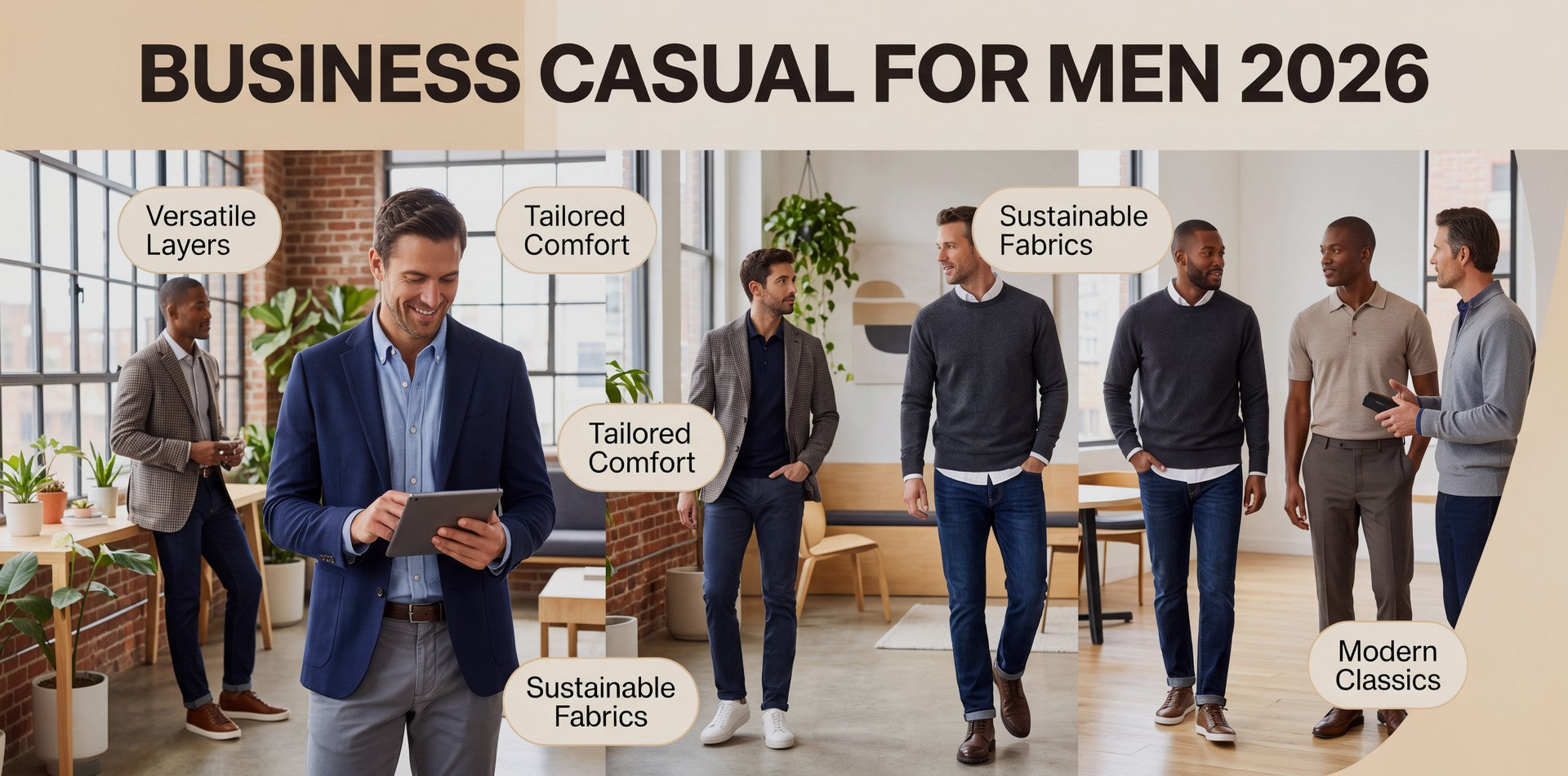
Business casual for men in 2026 means dressing within a professional middle zone: sharper than weekend casual, less formal than a full suit and tie. The safest formula is a clean shirt, tailored pants, polished shoes, and an optional knit or blazer layer. This guide breaks down the business casual dress code, where it sits between smart casual and business formal, which pieces matter most, and how to build five workday outfits without feeling overdressed or underprepared.
Quick Answer: What Is Business Casual for Men in 2026?
Business casual is a workplace dress code built around neat, structured, office-ready clothing without the full formality of a suit. For most men, that means button-down shirts, polos, knitwear, chinos or dress trousers, loafers or clean leather shoes, and optional layers like cardigans or unstructured blazers.
The main rule: every outfit should look intentional enough for a meeting, but relaxed enough for a modern office.
The 2026 Business Casual Formality Ladder
Business casual is easier to understand when you stop treating it as one outfit and start treating it as a range. A startup office, a client-facing sales role, and a corporate finance team may all say “business casual,” but each may expect a different level of polish.
Use this ladder to place your office culture:
| Dress Level | What It Usually Means | Typical Pieces | Where It Fits |
|---|---|---|---|
| Casual | Comfort-first, low structure | T-shirts, jeans, sneakers, hoodies | Remote days, creative offices, casual Fridays |
| Smart Casual | Clean and intentional, still relaxed | Knit polos, overshirts, dark denim, clean sneakers | Hybrid offices, team lunches, after-work plans |
| Business Casual | Professional without a full suit | Button-down shirts, chinos, trousers, loafers, cardigans | Most office days, internal meetings, business travel |
| Business Formal | Traditional corporate polish | Suit, dress shirt, tie, dress shoes | Interviews, presentations, formal client meetings |
According to one 2026 business casual style guide, modern office dressing has moved away from one rigid uniform and toward flexible combinations of shirts, trousers, layers, and shoes. That flexibility helps, but it also makes the boundaries more important.
Business Casual vs. Smart Casual vs. Business Formal
Business casual sits between smart casual and business formal. Smart casual can include more personality and relaxed fabrics; business formal requires a suit-level presentation. Business casual keeps the professional intent while removing the tie, the matching suit, and the stiffest parts of traditional office wear.
| Question | Smart Casual | Business Casual | Business Formal |
|---|---|---|---|
| Is a suit required? | No | Usually no | Yes or strongly expected |
| Are jeans acceptable? | Sometimes, if dark and clean | Usually only on relaxed office days | No |
| Are sneakers acceptable? | Often | Sometimes, if minimal and spotless | No |
| Best shirt choice | Knit polo, casual button-down, overshirt | Oxford shirt, dress shirt, refined polo | Dress shirt |
| Best pants choice | Dark denim, chinos, relaxed trousers | Chinos, dress trousers, tailored pants | Suit trousers |
| Best shoe choice | Clean sneakers, loafers, boots | Loafers, derbies, refined boots | Oxfords, derbies |
| Overall message | Stylish and relaxed | Capable and office-ready | Formal and authoritative |
Here’s the practical test: if you could walk into an internal meeting without thinking about your outfit, it is probably business casual. If the outfit looks more ready for brunch than a conference room, it may be smart casual. If it needs a tie or a matching jacket and trousers, it has moved into business formal.
The Business Casual Do/Don't Boundary
A good business casual outfit should be clean, fitted, and coordinated. It does not need to be stiff. It does need to show that you understand the room.
Do Wear
- Button-down shirts, Oxford shirts, dress shirts, or polished polos
- Chinos, dress trousers, or tailored casual pants
- Cardigans, fine-gauge sweaters, overshirts, or unstructured blazers
- Loafers, derbies, Chelsea boots, or clean minimal leather sneakers where allowed
- Belts that match the overall tone of the shoes
- Neutral colors such as navy, white, black, gray, olive, tan, brown, and light blue
Be Careful With
- Jeans: choose dark, clean, non-distressed denim only if your office allows it
- Sneakers: keep them minimal, clean, and low-profile
- Short-sleeve shirts: fine in warmer offices, but keep the collar structured and the fit neat
- Bold prints: use one statement piece at most
Usually Avoid
- Graphic tees
- Hoodies in client-facing settings
- Distressed jeans
- Athletic shorts or joggers
- Flip-flops or running shoes
- Shirts with pulling buttons, stretched collars, or sloppy hems
The point is not to erase personality. The point is to keep personality inside a professional frame.
The 5-Piece Business Casual Core Wardrobe
You do not need a crowded closet to dress well for the office. A strong business casual wardrobe can start with five flexible pieces that mix across the week.
| Core Piece | Why It Matters | Best Colors to Start With | Works With |
|---|---|---|---|
| Crisp button-down shirt | Sets the professional base | White, light blue, navy | Chinos, trousers, cardigan, blazer |
| Refined polo or knit shirt | Softens the look without losing structure | Black, navy, gray, beige | Chinos, tailored pants, overshirt |
| Tailored pants or chinos | Decides the outfit’s formality | Navy, charcoal, khaki, olive | Almost every shirt and shoe option |
| Cardigan or light sweater | Adds polish without suit stiffness | Charcoal, navy, camel, black | Shirts, polos, trousers |
| Loafers or clean leather shoes | Finishes the outfit | Brown, black, dark tan | Chinos, trousers, dark denim |
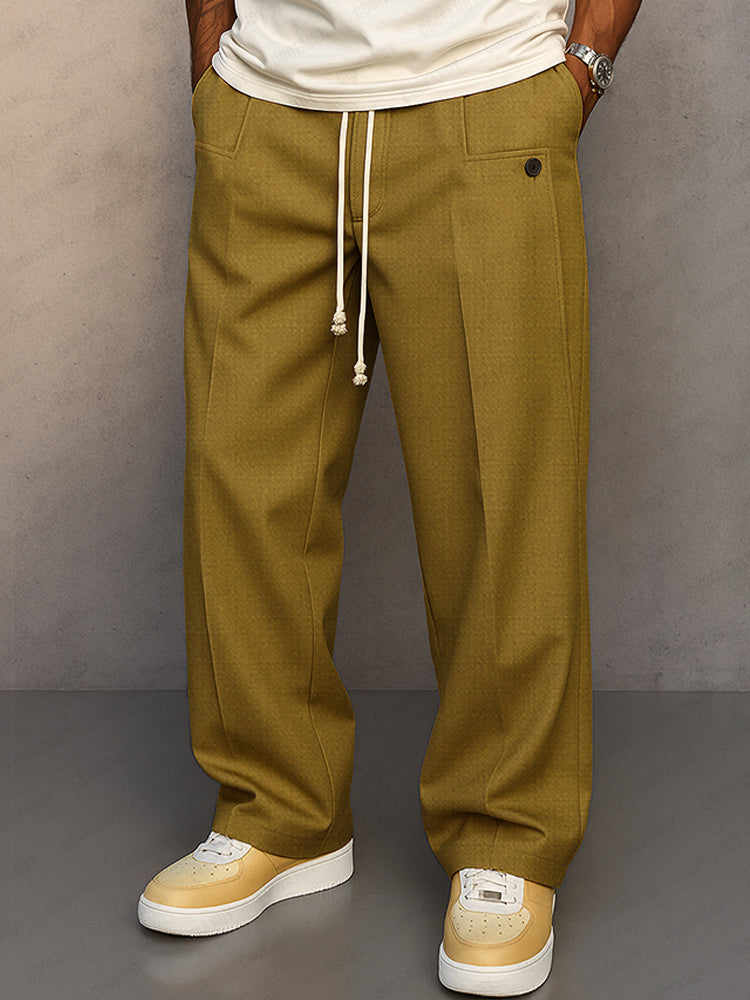
For pants, fit matters more than decoration. A straight or slim-straight cut usually reads more office-ready than a baggy shape, while a little room through the thigh keeps the outfit comfortable for long workdays. If you are building the pants side of your rotation, start with versatile neutrals and pair them with shirts and knit layers you already own.
How to Choose Shirts for Business Casual
A shirt sets the tone before any other piece. In 2026, business casual shirts are less about stiff dress shirts and more about structure, collar shape, and clean presentation.
Button-Down Shirts
A button-down shirt is the easiest business casual anchor. Choose one that sits cleanly across the shoulders, leaves room through the chest, and can be worn tucked or untucked depending on the office. White and light blue are the safest starters; navy, gray, and muted patterns add variety later.
Dress Shirts Without the Tie
A dress shirt can work without a tie if the rest of the outfit relaxes slightly. Pair it with chinos instead of suit trousers, or add a cardigan instead of a structured jacket. The look should feel intentional, not like you simply removed the tie from a formal outfit.
Polos and Knit Shirts
A polo can be business casual if it has a clean collar, a smooth fabric hand, and a tidy fit. Avoid athletic polos that look like golf course uniforms unless that is normal in your workplace. Knit polos are especially useful because they bridge smart casual and business casual without feeling too stiff.
How to Choose Pants for Business Casual
Pants decide whether the outfit lands in the right dress-code zone. Shirts get attention, but pants set the level.
Chinos
Chinos are the workhorse of business casual. They look more polished than jeans but less formal than suit trousers. Navy, khaki, olive, and charcoal can cover most office situations.
Dress Trousers
Dress trousers move the outfit up the formality ladder. They are useful for presentations, first weeks in a new office, client meetings, or any company where “business casual” still leans traditional.
Linen-Blend or Lightweight Pants
For warm climates, summer commutes, or offices with indoor-outdoor movement, lightweight pants can make business casual more wearable. Keep the color refined and the silhouette clean so the outfit still reads office-ready.
A simple rule: if the pants have a clean drape, a neat waistband, and a shape that works with loafers, they can usually be styled for business casual.
Business Casual Outfit Formulas for Monday to Friday
A repeatable formula saves time. Instead of asking “What should I wear?” every morning, decide the day’s level of formality and plug in the pieces.
Monday: Clean Start
Formula: Light blue button-down + navy chinos + brown loafers + leather belt
Why it works: Monday often sets the week’s tone. This outfit is polished without looking like you are trying to overcorrect after the weekend.
Color note: Blue and navy feel calm, professional, and easy to repeat.
Tuesday: Meeting Ready
Formula: White dress shirt + charcoal trousers + black or dark brown derbies + optional knit cardigan
Why it works: This is the sharper end of business casual. It is a good choice for team presentations, onboarding meetings, or client calls where you may be on camera.
Styling note: This look works best when the shirt, trousers, and shoes all sit in the same clean, office-ready range—structured enough for meetings, but not as formal as a suit.
Wednesday: Midweek Smart Casual Balance
Formula: Knit polo + olive or khaki tailored pants + loafers or minimal leather sneakers
Why it works: By midweek, comfort matters. The knit polo keeps the outfit relaxed, while the tailored pants keep it inside business casual territory.
Office check: If your workplace is conservative, choose loafers over sneakers.
Thursday: Layered and Polished
Formula: Oxford shirt + cardigan + dark chinos + Chelsea boots
Why it works: A cardigan gives structure without the formality of a blazer. It is especially useful in offices with strong air conditioning or shifting temperatures.
Color note: Charcoal, navy, camel, and deep green cardigans are easier to pair than bright seasonal colors.
Friday: Relaxed but Still Intentional
Formula: Refined polo or casual button-down + tailored pants + clean shoes
Why it works: Friday can be relaxed, but relaxed should not mean careless. Keep one structured element in the outfit, such as sharp pants or polished shoes.
Upgrade move: If your office allows denim, choose dark, straight-leg jeans and keep the shirt tucked or neatly layered.
2026 Update: Why Business Casual Feels Different Now
Business casual in 2026 is shaped by hybrid work, softer tailoring, and the blurred line between office and off-duty wardrobes. Many men are no longer dressing for five identical days in a cubicle. They are dressing for a mix of office hours, video calls, commutes, client moments, and after-work plans.
The FashionBeans business casual guide also reflects this broader shift: modern business casual is less about copying one corporate uniform and more about choosing the right pieces for the situation.
Three changes matter most:
- Softer layers are replacing stiff layers. Cardigans, knit polos, and unstructured jackets often feel more current than heavy tailoring.
- Footwear is more flexible. Loafers remain a safe choice, but clean minimal sneakers may work in relaxed offices.
- Fit carries the outfit. A simple shirt and pants can look sharp if the proportions are right; expensive-looking details cannot save a poor fit.
Business Casual Fit Checklist
Fit is the quiet difference between “office-ready” and “thrown together.” Check these points before buying or wearing a piece to work.
| Item | Good Fit Looks Like | Watch For |
|---|---|---|
| Shirt shoulders | Shoulder seam sits near the edge of your shoulder | Seams dropping too far down the arm |
| Shirt chest | Buttons sit flat without pulling | Gaps between buttons when sitting |
| Shirt length | Tucks cleanly or ends around mid-fly when untucked | Too short to tuck, too long to wear untucked |
| Pants waist | Secure without a tight belt pull | Waistband folding or sliding |
| Pants seat | Smooth with enough room to sit | Pulling across the hips |
| Pants break | Slight break or clean crop at the shoe | Excess pooling at the ankle |
| Sleeve length | Ends near the wrist bone | Sleeves covering the hand |
If you are unsure, start with slightly cleaner lines rather than oversized shapes. Business casual does not require a slim fit, but it does reward proportion.

Color Rules That Make Business Casual Easier
Color is where many outfits get noisy. The simplest approach is to build a neutral base and add one softer accent.
Start With These Core Colors
- Navy
- White
- Light blue
- Charcoal
- Khaki
- Olive
- Brown
- Black
- Gray
Use This 60/30/10 Rule
- 60% base color: pants or outer layer
- 30% secondary color: shirt or knit
- 10% accent: belt, watch strap, socks, or subtle pattern
Example: navy chinos (60), white shirt (30), brown loafers and belt (10). Easy. Repeatable. Professional.
How to Dress Business Casual by Office Type
Not every office uses the same definition. Read the environment before you decide how far to relax the outfit.
| Office Type | Safer Outfit Direction | What to Avoid First |
|---|---|---|
| Corporate or finance | Dress shirt, trousers, loafers, optional blazer | Sneakers, loud prints, untucked casual shirts |
| Tech or startup | Knit polo, chinos, clean sneakers or loafers | Hoodies in important meetings |
| Creative agency | Casual button-down, tailored pants, interesting texture | Looking like you ignored the dress code entirely |
| Sales or client-facing | Crisp shirt, sharp pants, polished shoes | Distressed denim, athletic footwear |
| Hybrid office | Comfortable layers, camera-ready shirts, flexible shoes | Clothes that only work from the waist up |
When in doubt, dress one level sharper for the first week. After you understand the room, you can relax the details.
What to Buy First: A Practical Shopping Checklist
Use this checklist to build a business casual rotation without duplicating pieces that do the same job.
- Two button-down shirts: one white, one light blue or navy.
- One refined polo or knit shirt: useful for warmer days and relaxed offices.
- Two pairs of pants: one navy or charcoal, one khaki or olive.
- One cardigan or light sweater: choose a neutral that works over several shirts.
- One pair of polished shoes: loafers or derbies are the safest starting point.
- One matching belt: keep it close to the shoe color.
- Optional blazer: useful if your office leans more formal.
For a simple starting point, build around pieces that can repeat across more than one outfit formula: a clean shirt, tailored pants, polished shoes, and one smart layer.
Common Business Casual Mistakes
Mistake 1: Dressing Like You Removed One Piece From a Suit
A dress shirt and suit trousers without the jacket can look incomplete. Add a cardigan, choose chinos, or switch to loafers to make the outfit feel deliberate.
Mistake 2: Treating Business Casual as Weekend Casual
A T-shirt, jeans, and sneakers may be accepted in some offices, but that does not automatically make the look business casual. Add a collar, cleaner pants, or sharper shoes.
Mistake 3: Ignoring Shoes
Shoes can pull the whole outfit up or down. Running shoes make even good pants look casual. Loafers or clean leather shoes make simple pieces look more professional.
Mistake 4: Buying Pieces That Do Not Mix
A loud shirt, unusual pants, and statement shoes may each look good alone. Together, they limit your weekly rotation. Build the base first, then add personality.
A Simple One-Week Business Casual Plan
Use this as a starter template, then adjust the formality for your workplace.
| Day | Shirt | Pants | Shoes | Layer | Best For |
|---|---|---|---|---|---|
| Monday | Light blue button-down | Navy chinos | Brown loafers | None | Normal office day |
| Tuesday | White dress shirt | Charcoal trousers | Dark derbies | Cardigan | Meetings |
| Wednesday | Knit polo | Khaki tailored pants | Loafers | Optional overshirt | Hybrid office day |
| Thursday | Oxford shirt | Olive chinos | Chelsea boots | Cardigan | Desk-to-dinner plans |
| Friday | Casual button-down | Dark tailored pants | Minimal leather sneakers or loafers | Light jacket | Relaxed office day |
This is the real advantage of business casual: once the pieces coordinate, getting dressed becomes a system rather than a daily decision.
Final Takeaway
Business casual for men in 2026 is not about memorizing one outfit. It is about understanding the formal middle: collared or refined tops, clean pants, polished shoes, and layers that match your office culture. Start with versatile shirts and pants, keep colors grounded, check the fit, and use repeatable formulas for each workday.
If you are building or refreshing your office wardrobe, start with the pieces that do the most work: shirts, tailored pants, and smart layers. Focus on items that can repeat across several outfit formulas instead of buying one-off pieces that only work once.
FAQ
Is business casual the same as smart casual for men?
No. Business casual is more office-oriented than smart casual. Smart casual can include relaxed pieces like dark denim or minimal sneakers more often, while business casual usually relies on collared shirts, chinos or trousers, and polished shoes. The two overlap, but business casual should look ready for a workplace setting.
Can men wear jeans for business casual in 2026?
Sometimes, but only if the office culture allows it. Choose dark, clean, non-distressed jeans and pair them with a button-down shirt, knit polo, loafers, or a smart layer. If you are new to the office or attending a meeting, chinos or tailored pants are the safer choice.
Are sneakers business casual?
Sneakers can work in relaxed business casual offices if they are clean, minimal, and not athletic-looking. White or neutral leather sneakers are easier to style than running shoes. For conservative workplaces, loafers, derbies, or Chelsea boots are more reliable.
What should a man wear on his first business casual office day?
Start one level sharper than you think you need: a button-down shirt, navy or charcoal pants, a belt, and loafers or derbies. You can adjust after seeing how your team dresses. The first day is not the time for distressed denim, loud prints, or experimental shoes.
How many pieces do I need for a business casual wardrobe?
A practical starter wardrobe can begin with five to seven pieces: two shirts, two pairs of pants, one knit or cardigan layer, one pair of polished shoes, and one belt. Choose colors that mix easily so the same pieces can create several weekday outfits.
This article provides a fantastic overview of updating modern business casual attire for 2026! Balancing flexible, well-tailored trousers with sharp blazers creates a versatile look that keeps you comfortable and professional all day long. For anyone looking to refresh their work wardrobe with premium formal shirts and structured outerwear, searching for a JadeBlue coupon code is a smart way to get great savings on quality menswear. Thank you for sharing such practical and forward-thinking style tips for the workplace! JadeBlue coupon code
Hinterlassen Sie einen Kommentar