









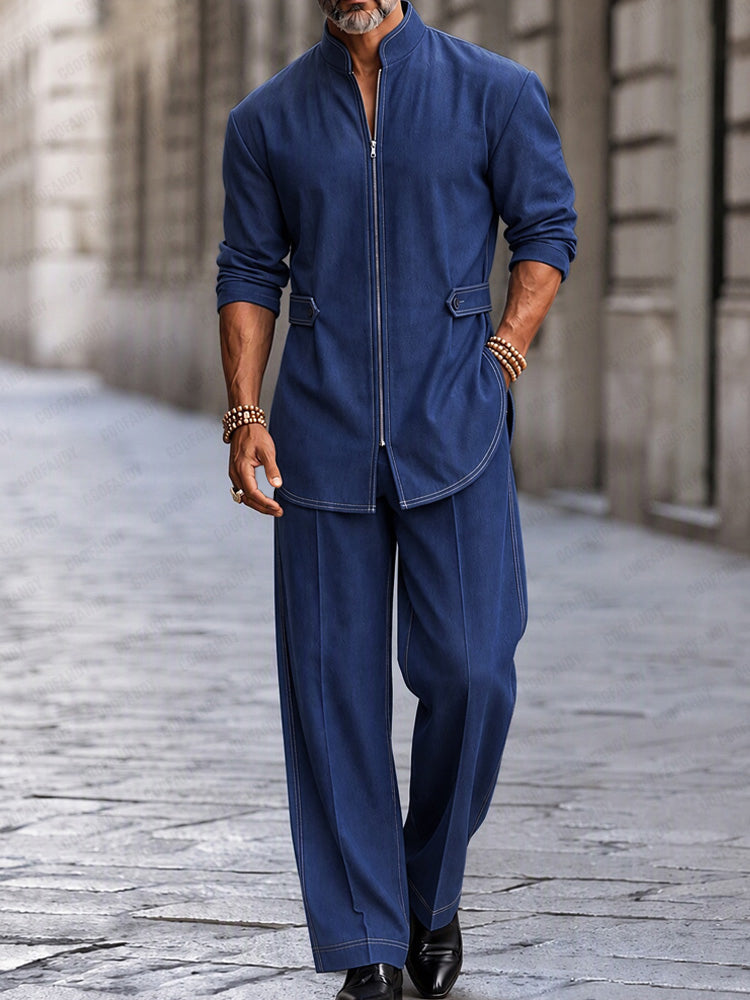
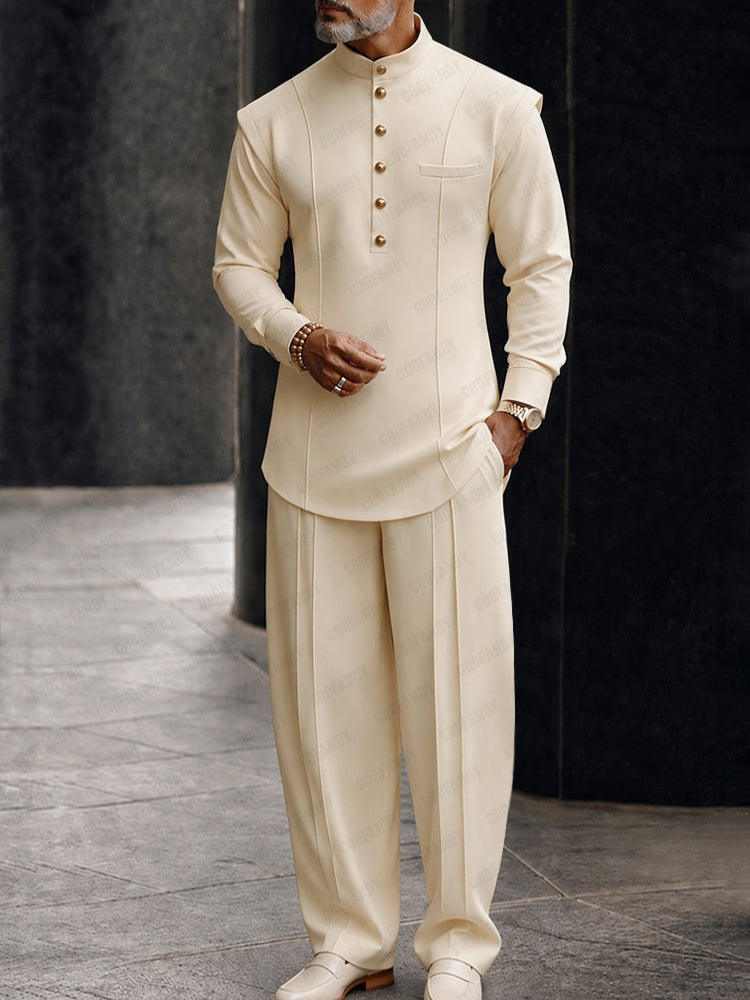
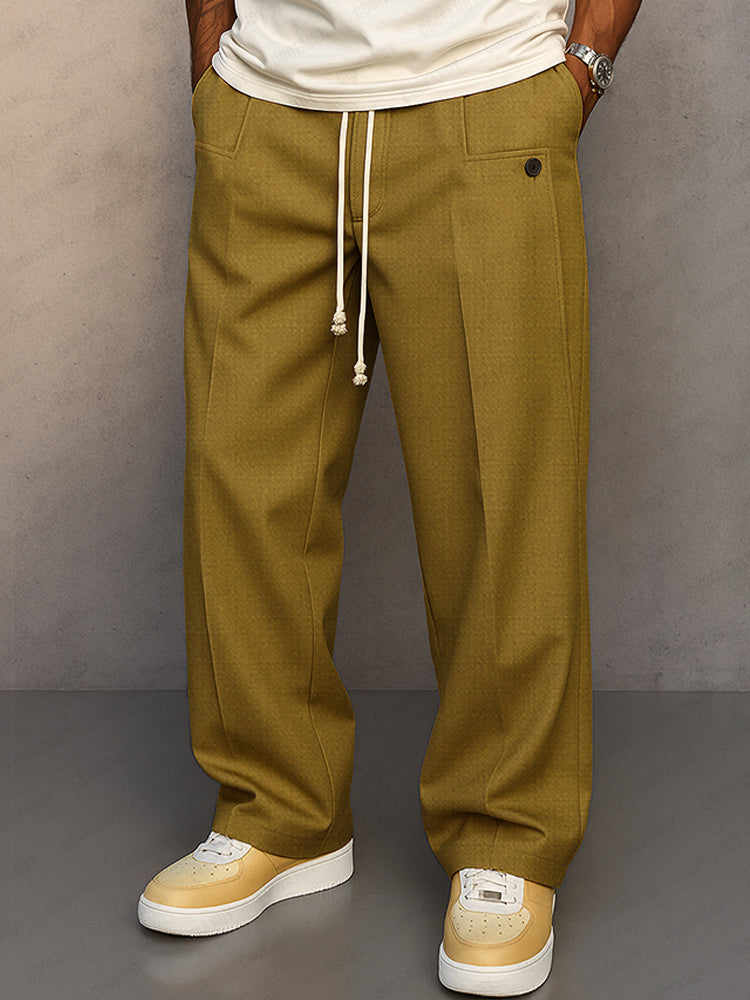
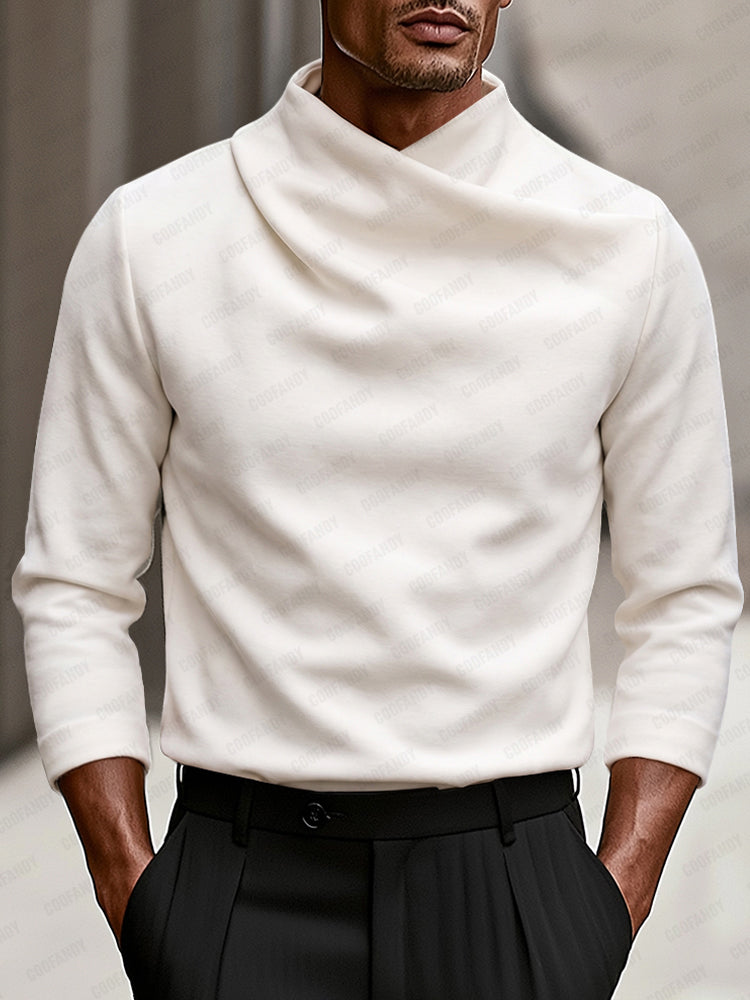
Hidden-Comfort Waistbands: How Men Can Wear Elastic or Drawstring Pants Without Showing the Waist
The short answer: choose the right shirt length, decide whether to tuck or leave untucked based on your waistband type, and use a structured layer when the occasion calls for it. Elastic and drawstring waistbands disappear when you control what sits above them. A shirt hem falling two to three inches below your natural waist covers an elastic band entirely. A half-tuck behind a belt loop masks a drawstring. And a blazer or overshirt makes the question irrelevant. The comfort stays. The evidence goes away.
Below is every combination, broken down by waistband type.
Why the Waistband Shows in the First Place
Most visibility problems trace back to three causes: a shirt that is too short, a tuck that pulls the waistband above the belt line, or a drawstring tie that bunches outward.
Elastic waistbands sit flat against the body but create a visible ridge if your top layer is thin or cropped. The fix is coverage — heavier fabric above, or a layer that breaks the silhouette at the hip.
Drawstring waistbands add a second challenge: the tie itself. A knotted drawstring can create a bump at center front even under a tucked shirt. The fix is technique — a flat bow, a tuck behind the waistband, or routing the cord ends through interior loops.
Tucked vs. Untucked: The Decision Table
Not every elastic or drawstring pant responds the same way to a tuck. Use this table to pick your approach before you get dressed.
| Waistband Type | Tuck Style | Best Shirt Type | When It Works | When It Doesn't |
|---|---|---|---|---|
| Covered elastic (looks like a standard waistband from outside) | Full tuck | Oxford, polo, dress shirt | Office, dinners, date nights | Never — this is the most versatile option |
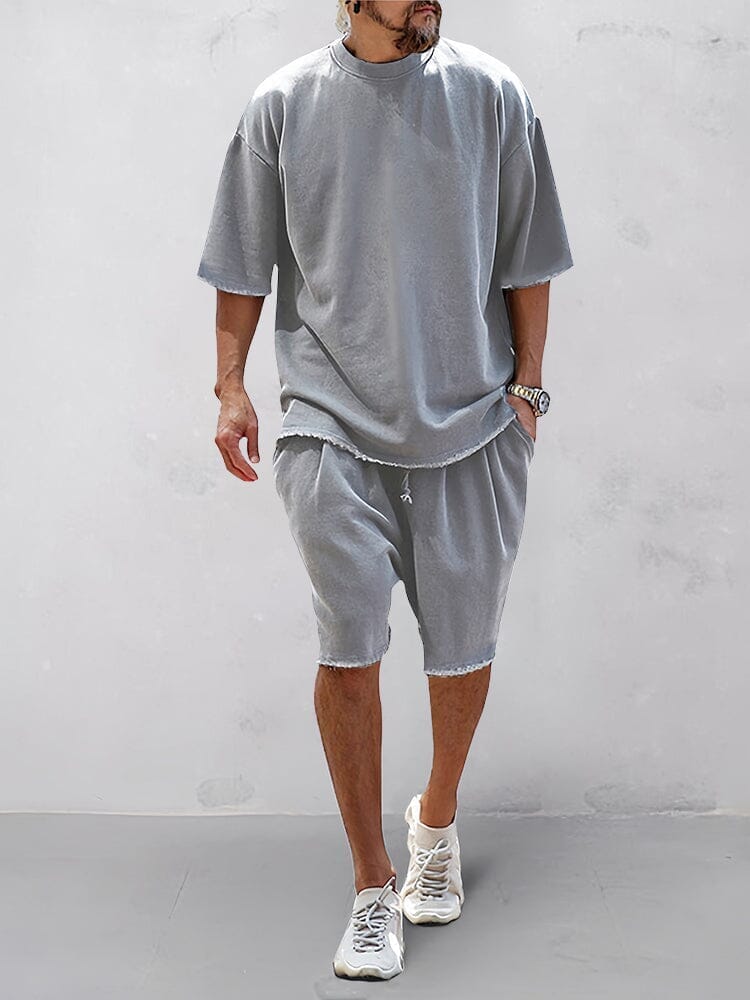
| Exposed elastic (visible elastic band, no outer fabric layer) | Untucked | Linen camp collar, relaxed tee, henley | Casual weekends, resort settings | Any occasion requiring a belt |
| Drawstring with flat front | Front tuck or half-tuck | Camp shirt, Cuban collar, casual button-down | Smart-casual events, warm-weather outings | Very formal settings |
| Drawstring with gathered waist | Untucked with structured layer on top | Overshirt, unstructured blazer, zip jacket | Layered looks, transitional weather | Minimal outfits with no outer layer |
The rule of thumb: If the waistband mimics a traditional trouser waist, tuck into it. If it reveals elastic or drawstring construction, cover it from above.
Shirt Length: The Measurements That Matter
Shirt length is the single biggest factor in waistband visibility. Too short and the elastic peeks out every time you reach for something. Too long and you look like you borrowed from a bigger closet. Here are the benchmarks:
-
For untucked wear: The shirt hem should fall about two fingers below your natural waist — roughly 2–3 inches. On most men, that puts the hem at the midpoint of the fly or just below the second belt loop. This length covers an elastic waistband completely while still looking intentional.
-
For tucked wear: Leave enough fabric to blouse cleanly above the waistband — about a finger's width of drape. This keeps the shirt from pulling free during movement and exposing the elastic edge.
-
For the half-tuck: Tuck only the front panel at center or slightly off-center. Back and sides stay out. This anchors the front while untucked sides drape over any gathered fabric at the hips.
Quick mirror test: Reach for a high shelf. If the elastic peeks out, the shirt is too short for untucked wear. Try the next size or a cut designed for untucked styling.
The Layering Strategy: Outerwear as an Eraser
A jacket, overshirt, or cardigan eliminates the waistband question. The outer layer breaks the eye's path from shirt to pant, and the waistband sits behind two layers instead of one.
Best outer layers for hiding the waistband:
-
Unstructured blazer: Soft shoulder, open front, vertical line away from the waist. Length should reach mid-hip — covering the waistband even when unbuttoned.
-
Overshirt or shacket: A heavier shirt worn open over a tee or henley. The hem falls naturally over any waistband — the easiest move for weekend and travel styling.
-
Lightweight zip jacket: Bomber-length or longer. The structured hem holds its position at or below the waist all day. Effective over exposed-elastic waistbands.
-
Knit cardigan: A cardigan that hits below the hip creates a relaxed vertical line and covers everything from drawstring ties to elastic ridging.
What to avoid: Cropped jackets that end above the natural waist — they frame the waistband instead of hiding it.
Drawstring Management: Three Tying Techniques
-
The internal route: Thread the cord ends back through interior loops or channels inside the waistband. You keep the adjustability with the clean front of an elastic-only pant.
-
The flat bow: Tie a flat bow, press it against the waistband, and tuck the loops downward between the fabric and your body. The profile stays flat under a tucked shirt.
-
The trim option: If the elastic alone holds securely, cut the cord ends shorter — leaving enough for future adjustment — and tuck the trimmed ends inside.
Waistband Visibility Checklist
Run through this list before you leave the house. If every box checks, the waistband is invisible.
- Shirt length: Hem falls 2–3 inches below natural waist (untucked) or blouses cleanly 1–1.5 inches above waistband (tucked)
- Fabric weight: Top layer is heavy enough that the elastic ridge does not telegraph through
- Drawstring profile: Cord is tied flat, routed internally, or trimmed — no visible bunching at center front
- Movement test: Raised both arms overhead without exposing the waistband
- Side profile check: Turned sideways in a mirror — no elastic or drawstring bump visible through the shirt
- Layering position: If wearing a jacket, the hem reaches mid-hip or lower and covers the waistband when unbuttoned
Footwear and Proportion
Elastic and drawstring pants often have a relaxed leg, and the wrong shoe can tip the silhouette toward loungewear.
Shoes that anchor the look:
- Leather loafers or suede drivers — upgrade drawstring linen pants into smart-casual territory
- Clean white leather sneakers — work with every elastic-waist pant in casual settings
- Chelsea boots — the slim ankle contrasts with a relaxed pant leg and adds structure
- Desert boots — bridge casual and dressed-up without competing with the relaxed waist
Shoes to reconsider:
- Slides or flip-flops (unless at a pool or beach) — they pull the outfit toward sleepwear
- Chunky running shoes — the athletic code clashes with the tailored illusion above the ankle
Putting It Together: Three Scenarios
Saturday errands: Drawstring linen pants, untucked camp-collar shirt (hem below the fly), suede loafers. Drawstring routed internally. No elastic or cord visible.
Weeknight dinner: Covered-elastic chinos, full tuck into a slim-fit Oxford, unstructured navy blazer. The blazer covers any hint of elastic, and the tuck looks identical to a belted trouser silhouette.
Working from home, then stepping out for coffee: Elastic-waist jogger-style pants, oversized henley falling below the hip, zip jacket. The desk-to-sidewalk transition takes zero wardrobe changes because the waistband was never visible.
Browse COOFANDY's men's pants collection for elastic and drawstring options with covered waistbands and internal drawstring routing — built to disappear under these styling techniques.
FAQ
Can you wear elastic waist pants to the office?
Yes, if the elastic is covered by an outer waistband mimicking a traditional closure. Pair with a tucked dress shirt and blazer. The visual result is indistinguishable from standard dress trousers — no one inspects waistband construction at work.
How do you keep a drawstring from showing through a tucked shirt?
Tie a flat bow and press it against the waistband, then tuck the loops downward between the cord and your body. Or thread the cord ends through the internal waistband channel so nothing sits on the outer surface. A medium-weight shirt fabric prevents any outline from telegraphing through.
What shirt length hides an elastic waistband when untucked?
The hem should fall two to three inches below your natural waistline — roughly at the midpoint of your fly. This covers the elastic band during normal movement and stays in place when you reach overhead or bend.
Do drawstring pants look too casual for a date night?
Not when styled intentionally. A drawstring pant in a structured fabric like cotton twill or ponte, paired with a tucked button-down and leather shoes, reads as relaxed-tailored. The drawstring stays hidden, and the silhouette does the talking.
Should you cut the drawstring off elastic waist pants?
Only if the elastic alone holds securely at your preferred fit. A better option: trim the cord ends shorter and tuck them inside the waistband. You keep adjustability for future use while eliminating visible bulk at center front.

Hinterlassen Sie einen Kommentar