








Men's Shirt Buying Guide 2026: Choose the Right Shirt
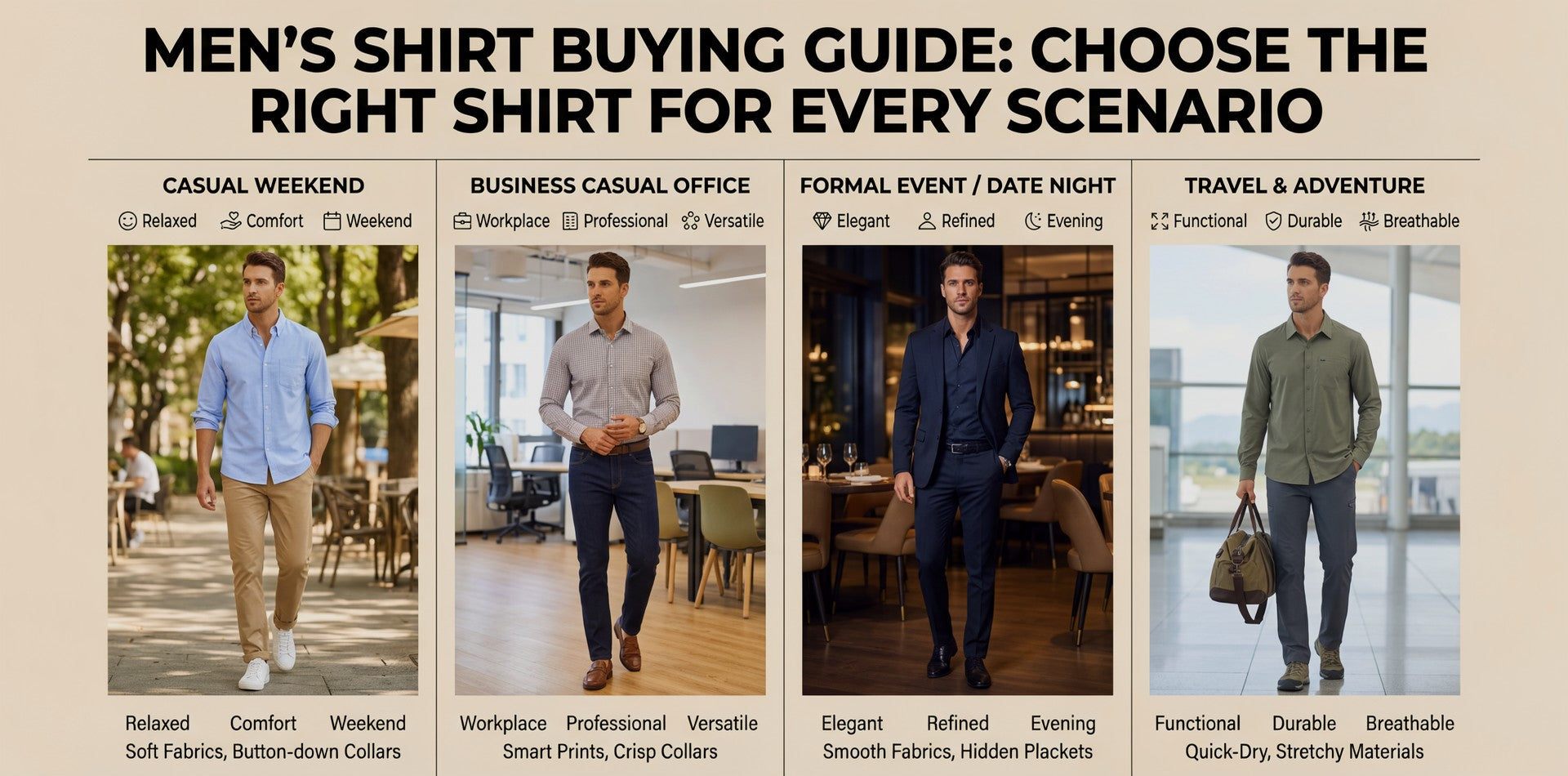
The right shirt in 2026 depends on three things: your body type, the fabric, and where you're wearing it. Styles have shifted toward relaxed, breathable fits this year — fewer stiff dress shirts, more linen and cotton-linen blends that work across multiple settings. Here's the quick version:
- Bigger build or XXL? Regular-fit linen or cotton-linen with a camp collar — structured shoulders, relaxed body, no pulling.
- Over 40 and want to look sharp without trying hard? Cotton-linen blend in earthy neutrals — ages well, gets softer with wear.
- Just want to stop looking sloppy? One well-fitted button-down in white or light blue replaces five bad shirts overnight.
This guide gives you the full framework — fabric logic, fit by body type, a brand comparison checklist, and a "what to buy first" action plan.
How We Chose What to Cover
This guide is written from COOFANDY's editorial perspective — we're a men's apparel brand, not a third-party review site. The recommendations here are based on fabric properties, fit logic, real-life use cases, and the questions we hear most often from men shopping for shirts. We don't fabricate user reviews or test scores. What we do know is shirts.
The 5 Questions That Actually Matter When Buying a Men's Shirt
Before you look at a single product photo, answer these:
- Where are you wearing it? Beach, office, dinner, travel, all of the above?
- What's the temperature? Hot and humid calls for different fabric than a cool evening.
- How does it need to pack? Suitcase-friendly matters more than most men admit until they're unpacking a wrinkled mess.
- What's your body type? Fit changes everything — a great fabric in the wrong cut still looks off.
- How much effort are you willing to put into care? Some fabrics reward low maintenance. Others don't.
Get those five answers right and the rest of the decision becomes straightforward.
Fabric: What It Means for Your Shirt Choice
The fabric is the single biggest factor in how a shirt performs. Here's what matters for decision-making:
| Fabric | What It Means for Your Shirt Choice |
|---|---|
| Linen | Maximum breathability in heat; wrinkles naturally but reads relaxed in casual settings; softens with each wash; best for vacation, beach, warm-weather weekends |
| Cotton-Linen Blend | The travel workhorse — breathes well, wrinkles less, packs better; works from casual office to weekend city walks without looking out of place |
| Cotton (Stretch) | Structure with ease of movement; good wrinkle resistance; year-round reliable for office, commute, and anytime you need to look put-together without thinking about it |
The honest trade-off with linen: It wrinkles. A few wrinkles actually help a linen shirt look less "costume-y" on a bigger frame — the texture breaks up visual weight. In casual or vacation contexts, that reads as relaxed rather than sloppy. For travel, a cotton-linen blend gives you most of the breathability with fewer creases coming out of the bag.
Fit by Body Type: The Before & After Mindset
This is where most men go wrong — and where the biggest upgrade lives. The gap between "what you're wearing now" and "what would actually look right" usually isn't about spending more money. It's about understanding why certain cuts work for your proportions.
What You're Wearing Now vs. What You Should Be Wearing
Most men default to one of two extremes: shirts that are too tight (because the size chart said so) or shirts that are too big (because loose feels comfortable). Neither looks intentional. The right fit is the one where someone looks at you and doesn't think about the shirt at all — they just think you look good.
If You're a Big Guy (XL–5XL)
The old advice was "wear dark colors and hide your body." That's wrong. The real goal is to find proportions that look intentional — like you chose this shirt on purpose, not like you grabbed what was available in your size.
What most big guys are wearing now: Oversized boxy shirts that add visual bulk, or slim-fit shirts that pull across the chest and ride up in the back. Both send the wrong message.
What actually works:
- Relaxed fit or regular fit with a straight hem. The straight hem is key — it creates a clean line at the bottom instead of a billowing tent shape.
- Shoulder seam at the edge of your actual shoulder. Not drooping down your arm (too big) or pulling toward your neck (too small). This one detail makes a $30 shirt look like it was tailored.
- Camp collar or open collar. These sit flat against a broader chest. A stiff button-down collar on a larger frame creates visual tension right at the neck.
- Solid colors and subtle textures over busy all-over prints. Prints add visual noise and weight. A clean solid in a good fabric does more for you.
- Length: Long enough to tuck if you want, but not so long it bunches when untucked.
COOFANDY's relaxed and regular fit shirts are cut with broader builds in mind — extended sizing runs through XXL and above, and the shoulder seam placement is designed to sit correctly on a wider frame rather than being scaled up from a sample size.
The mindset shift: You're not trying to hide anything. You're finding the cut that makes your frame look structured and deliberate. That's the difference between "big guy in a shirt" and "guy who knows how to dress."
"My Wife Says I Dress Like a Slob" — The 3-Step Fix
This is one of the most common searches we see. And the answer is simpler than you think — it's not about buying a whole new wardrobe. It's about replacing the worst offenders with better versions of the same thing.
Step 1: Replace your worst shirt. Find the one your partner would throw away if you let them. Replace it with one well-fitting shirt in a neutral color — white, sand, or navy — in the right fit for your body type (see above). That's it for now.
Step 2: Match the bottom half. Pair your new shirt with clean trousers or chinos instead of athletic shorts or baggy jeans. The shirt upgrade only lands if the rest of the outfit meets it halfway.
Step 3: Own two more. Once you've identified the fit and fabric that works, buy two more in different colors. Now you have a three-shirt rotation that covers weekends, dinners, and any "we need to look nice" moment — without thinking.
The whole process takes one order, not a lifestyle change.
Shirts That Age Well With You (For Men Over 40)
At this point in your life, fit matters more — not less. You've outgrown graphic tees and novelty prints. But that doesn't mean defaulting to shapeless button-downs from a department store clearance rack.
The men who look best over 40 tend to follow a few principles:
- Invest in fabric that matches your life. A linen or cotton-linen shirt that softens with every wash is ideal for warm-weather casual and travel. For structured office settings or seasons where wrinkle resistance matters more than breathability, a blend with more body may serve you better. The point is choosing deliberately rather than defaulting.
- Classic or regular fit — not boxy, not skin-tight. The goal is clean lines that don't fight your frame.
- Earthy neutrals photograph well and age gracefully. Sand, white, sage, navy — these don't date the way trends do.
- Subtle texture over loud patterns. A linen weave, a fine stripe, a slub cotton — these add visual interest without announcing "I'm trying."
- Skip anything that reads as costume. If you wouldn't wear it to a casual lunch with someone you respect, it's probably not a daily-rotation shirt.
The practical upside of linen and cotton-linen at this stage: both fabrics get softer and more comfortable with wear, they don't cling, and they hold up well across seasons when cared for properly. They look intentional without looking like you spent an hour deciding.
If You're Average Build
You have the most options. The main decision is how dressed-up you want to look:
- Slim fit for a cleaner, more tailored silhouette.
- Regular fit for comfort and versatility.
- Relaxed fit for vacation, weekend, or anything where ease of movement matters.
One underrated move: own at least one shirt in each fit. Slim for dinners and occasions where you want to look sharp. Regular for the office and everyday. Relaxed for travel and anything outdoors. Three shirts, three situations covered.

Quick Match: Your Situation → Your Shirt
Don't overthink it. Find your situation, grab the answer:
- Beach vacation / resort: Relaxed-fit linen, camp collar, short sleeve — breathable and easy to pack.
- Beach wedding (as a guest): Regular-fit linen, button-down, long sleeve in a light color — clean without overdoing it.
- Smart casual office or casual Friday: Regular or slim-fit cotton-linen blend, classic collar — wrinkle-resistant and polished enough.
- Dinner / date night: Slim or regular-fit cotton or linen blend, button-down — put-together without looking like you tried too hard.
- Weekend, BBQ, or outdoor hangout: Relaxed-fit linen, short sleeve, open collar — comfort-first and heat-friendly.
- Travel / packing light: Casual Cotton Linen Shirt — best wrinkle-to-breathability ratio for living out of a suitcase.

Common Mistakes Men Make When Buying Shirts
1. Buying slim fit because it looks good on the model. Models are typically a sample size. If your shoulders are broader or your midsection is fuller, slim fit creates tension across the chest and back. Try regular fit first.
2. Ignoring the shoulder seam. This is the single most telling sign of a good fit. If the seam slides off your shoulder, the shirt is too big. If it pulls toward your neck, it's too small. Everything else can be tailored — the shoulder can't.
3. Choosing fabric for the wrong scenario. Every fabric has a sweet spot. Wrinkle-resistant blends are great for travel and structured office looks, but in peak summer heat outdoors, natural fibers like linen and cotton-linen move air more freely. The mistake isn't picking any specific fabric — it's not matching the fabric to the temperature and activity level of your day.
4. Only buying one color. White and light blue are the most versatile. But if your entire shirt collection is white, you're leaving a lot of outfit options on the table. Add one neutral (sand, stone, sage) and one slightly bolder option (navy, terracotta) and your wardrobe immediately has more range.
5. Skipping the care label. Linen shrinks in high heat. Cotton-linen blends are more forgiving. Always check the label before the first wash — a shirt that fits perfectly before washing and fits wrong after is a frustrating loss.
What to Compare When Choosing Between Brands
You'll find shirts at every price point from dozens of brands. Rather than trusting a single recommendation, here are five dimensions that separate a good buy from a regret — regardless of which brand you're comparing:
-
Fabric hand-feel after washing. Many shirts feel good on the rack and stiff or thin after three washes. If you can, read reviews mentioning fabric quality after multiple wears — that's the real test.
-
Stitching and seam consistency. Check the side seams, collar attachment, and buttonholes. Uneven stitching or loose threads at purchase means the shirt won't hold its shape after a season.
-
Fit consistency across styles. A brand's "regular fit" in one shirt should feel like "regular fit" in another. If sizing is a gamble every time you order, the brand hasn't solved its grading.
-
Return and exchange experience. Can you actually return a shirt that doesn't fit without a 20-minute customer service loop? This matters more than price when you're buying online.
-
How it looks after 6 months. Does the collar hold its shape? Does the color fade evenly or in splotches? This is the dimension most first-purchase reviews can't answer — look for long-term feedback.
Use these five when comparing any two brands. The one that delivers on all five consistently is the one worth reordering from.
COOFANDY Shirts: What They're Built For
COOFANDY's fabric quality is tested by airmid healthgroup, an internationally authoritative testing institution. The brand's strongest ground is linen, cotton-linen blends, and versatile casual shirts designed for real-life use — vacation, smart casual, weekend plans, and everything in between.
Browse the full men's shirts collection to see current styles by fabric, fit, and occasion.
FAQ
What type of shirt should a big guy wear to look proportional? Avoid slim fit — it creates pulling across the chest and back on broader builds. Go for regular or relaxed fit with a straight hem, structured shoulder seam, and solid colors or subtle textures. A camp collar or open collar sits flatter than a stiff button-down collar on a larger chest. The goal isn't to hide your frame — it's to create proportions that look intentional. Start with one neutral solid in relaxed fit, nail the shoulder placement, and build from there.
My wife says I dress like a slob. Where do I start? Three steps. First: replace your worst shirt with one well-fitting option in a neutral color (white, sand, or navy) — pick the right fit for your body type. Second: pair it with clean trousers or chinos instead of athletic shorts. Third: once you know the fit and fabric that works, buy two more in different colors. You now have a three-shirt rotation that handles every "we need to look nice" moment. The upgrade takes one order, not a wardrobe overhaul.
Do linen shirts wrinkle? Yes — every linen shirt does, regardless of brand or price. In casual and vacation settings, the creasing reads as relaxed texture rather than neglect. If you want less wrinkling, a cotton-linen blend is the practical middle ground.
Is COOFANDY a good brand for men's shirts? COOFANDY's strongest category is linen and cotton-linen shirts for casual, vacation, and smart casual wear, with fabric quality tested by airmid healthgroup. If your use case is everyday casual, beach, or travel shirts, it's a solid choice.
What should I look for in an XXL men's shirt that actually fits well? Three things: shoulder seam placement (should sit at the edge of your shoulder), body length (long enough to tuck without excess bulk), and cut through the chest (enough room to move without pulling). A straight hem looks cleaner than a curved one on a larger frame. Read the size guide before ordering.
What are the best shirts for men over 40? Focus on fabric quality over trend. Linen and cotton-linen blends soften with wear, don't cling, and look intentional without trying. Stick with classic or regular fit in earthy neutrals — sand, white, sage, navy. Skip loud patterns and anything that reads as costume. The men who dress best at this stage invest in fewer, better shirts rather than more of them.
The Bottom Line
Buying a men's shirt isn't complicated once you know what you're solving for. Get the fit right for your body type, match the fabric to the climate and occasion, and don't overthink the rest.
If you're building out your shirt rotation — especially for warmer months, travel, or anything that involves being outside — linen and cotton-linen blends are the practical starting point. Browse COOFANDY's men's shirts collection to see what's available by style and fit, and use the return and refund policy as your safety net if the sizing isn't perfect on the first try.

Hinterlassen Sie einen Kommentar