










Men's Shirts That Survive the Wash: Shrink-Proof Picks Tested
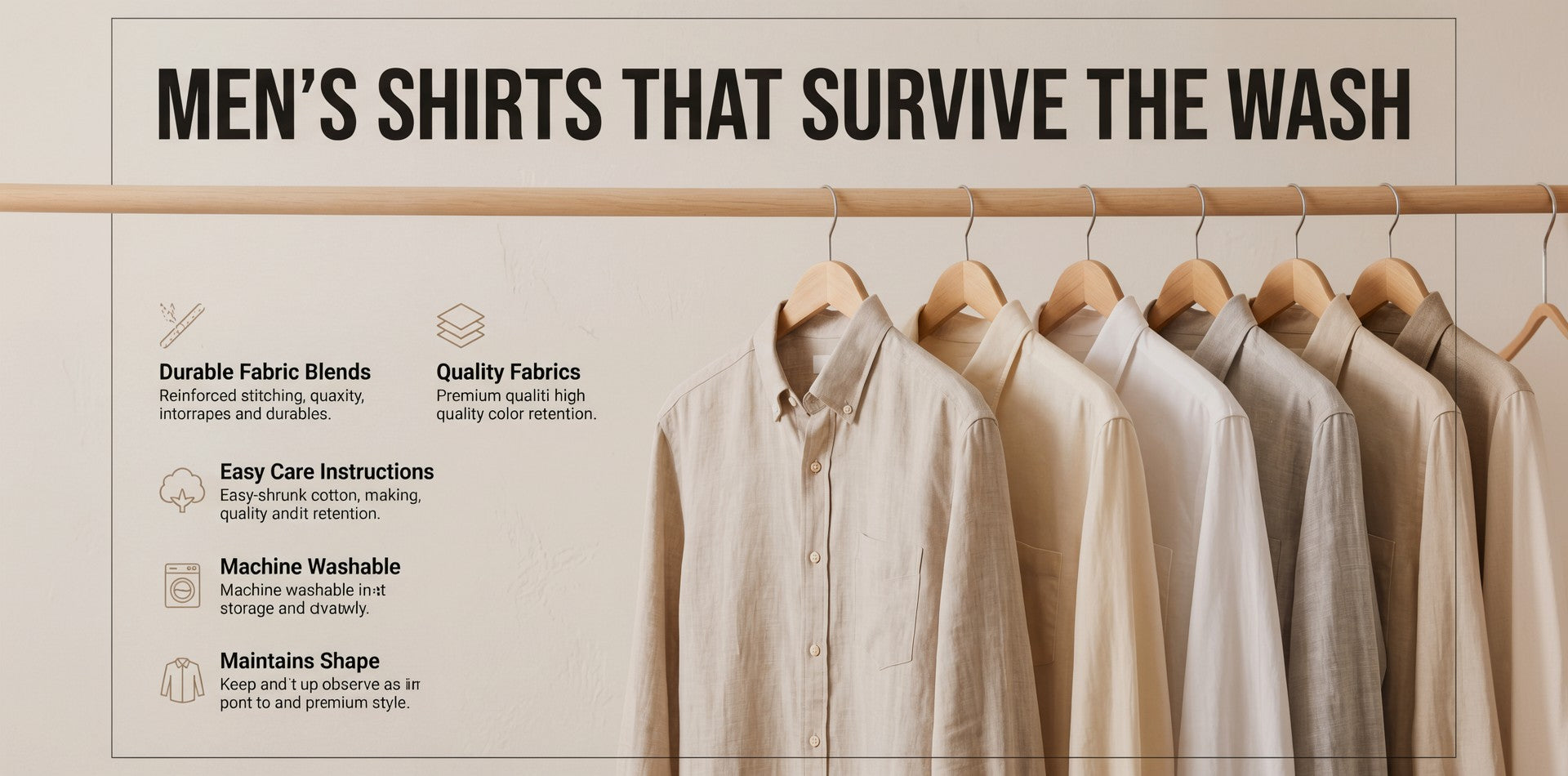
Shirt shrinkage happens because of one thing: heat applied to natural fibers that were stretched during manufacturing. When hot water or a high-temperature dryer hits cotton, linen, or rayon, the fibers contract back toward their original, un-stretched state. The result is a shirt that fit perfectly on Day 1 and fits like a child's shirt on Day 5.
The good news: shrinkage is predictable and preventable — if you understand the fabric and the wash process. This guide covers which materials resist shrinkage, which ones are risky, and the exact care steps that keep any shirt fitting the way it did when you bought it.

The Shrinkage Scale: Fabrics Ranked
Not all fabrics shrink equally, so check the care label on the Soft Solid Cotton Linen Shirt before washing. Here is what to expect:
|
Fabric |
Typical Shrinkage (First Wash) |
Risk Level |
Notes |
|---|---|---|---|
|
Pre-shrunk cotton |
1–2% |
Low |
Most quality brands pre-shrink; check the label |
|
Cotton-polyester blend |
1–2% |
Low |
Polyester resists shrinkage, stabilizes the cotton |
|
Cotton-linen blend |
2–3% |
Moderate |
The linen component adds slight unpredictability |
|
100% cotton (not pre-shrunk) |
3–5% |
High |
Buy pre-shrunk or expect to lose a half-size |
|
100% linen |
3–7% |
High |
Highest natural shrinkage; cold wash only |
|
Rayon / viscose |
3–8% |
Very high |
Hand wash or dry clean recommended |
The safest bets for everyday shirts are pre-shrunk cotton and cotton-polyester blends. [Source: Sewport — What Is Linen Fabric: Properties, How It's Made] These materials are engineered to have their shrinkage happen before the fabric reaches you.
At COOFANDY, our cotton-blend shirts use pre-shrunk fabrics as standard. Our Amazon reviews consistently mention durability through multiple wash cycles — one of the most common positive themes across our shirt reviews.
The 5-Step Anti-Shrink Wash Routine
Cold water. Always. Hot water is the primary cause of shrinkage. Set your machine to cold (below 86°F / 30°C). Every degree above that increases shrinkage risk.
Gentle cycle. Aggressive agitation stretches and compresses fibers unpredictably. The gentle or delicate cycle reduces mechanical stress on the fabric.
Skip the dryer — or use low heat. Air drying eliminates dryer-related shrinkage entirely. If you must use a dryer, select the lowest heat setting and remove the shirt while slightly damp. Over-drying is where most shrinkage damage happens.
Do not wring. Wringing twists fibers out of shape. Roll the shirt in a towel to absorb excess water, then lay flat or hang to dry.
Read the care label. This sounds obvious, but the care label tells you exactly what the manufacturer tested. If it says "dry clean only," the fabric was not tested for machine washing. Ignoring the label is the fastest path to a ruined shirt.
Which Shirts Hold Up Best After 10+ Washes?
Based on fabric performance and customer feedback data, the longest-lasting shirts share three traits:
Blended fabrics outperform single-fiber fabrics. A 60/40 cotton-poly or 55/45 cotton-linen blend gives you the softness of natural fiber with the dimensional stability of a synthetic or secondary natural fiber.
Heavier weight resists distortion. A 180–220 GSM shirt holds its shape better than a 120 GSM lightweight. The additional fiber density means less movement per wash cycle.
Quality construction at seams. Shrinkage often manifests first at seams — the side seams pull, the collar warps, the hem rides up unevenly. Double-stitched seams and reinforced collars resist this.
We designed our COOFANDY shirts with these three principles in mind. Our cotton-blend shirts sit in the 170–200 GSM range, use double-stitched side seams, and are pre-shrunk before cutting. The result: shirts that fit the same on wash number 1 and wash number 20.
Frequently Asked Questions
Can you unshrink a shirt that already shrank?
Sometimes. Soak the shirt in lukewarm water with a tablespoon of hair conditioner for 30 minutes. The conditioner relaxes the fibers. Gently stretch the shirt back to its original dimensions while damp, then lay flat to dry. This works best on cotton; results vary with linen and rayon.
Is "pre-shrunk" the same as "no shrink"?
No. Pre-shrunk means the manufacturer already applied the first shrinkage cycle during production. You may still see 1–2% additional shrinkage over time, but nothing dramatic.
Does fabric softener prevent shrinkage?
Not directly. Fabric softener coats fibers to reduce friction and stiffness, which can help maintain hand feel, but it does not prevent the thermal contraction that causes shrinkage. Cold water is more effective.
Are polyester shirts better if shrinkage is my main concern?
Polyester does not shrink — it is thermally stable. But 100% polyester shirts have drawbacks: they trap heat, do not breathe well, and can develop odor faster than natural fibers. A cotton-polyester blend gives you the best of both worlds.
Shop COOFANDY Cotton-Blend Shirts
The Complete COOFANDY Care Guide: Keep Your Clothes Looking New

Hinterlassen Sie einen Kommentar