








Resort Dinner Attire for Men Explained

Resort dinner attire for men is a setting decision, not a single uniform. A dinner by the pool, a restaurant inside a resort and an evening event with a stated jacket requirement may all use resort language while asking for different clothes.
Start with the invitation, host, venue and any exact dress-code wording. Then choose a shirt-first or more structured route, name the trousers and shoes that complete it, check the current product page and try the full outfit before the trip. If the category, size evidence or care requirement is still unclear, ask a question or wait rather than treating “resort” as permission to guess.
What Resort Dinner Attire Has to Answer
The phrase has to answer two separate questions: what kind of dinner are you attending, and what level of structure does the event expect? The location may provide useful context, but it does not answer either question by itself. A resort can host a casual outdoor meal, a restaurant reservation, a wedding-related dinner or an event with a defined formal category.
Use the setting as a starting point, then look for the evidence that changes the outfit:
- Invitation or host wording: Look for “resort casual,” “elegant casual,” “smart casual,” “jacket requested” or another exact phrase. Treat an unfamiliar term as a reason to clarify, not as a universal definition.
- Venue: Note whether dinner is outdoors, beside the water, in a hotel restaurant, at a private event or at a venue with an entry expectation. The room and the host's instructions can point in different directions.
- The rest of the plan: A daytime excursion, photographs, a second venue or travel between locations may change the layer and shoes you need. The dinner outfit still has to satisfy the dinner requirement first.
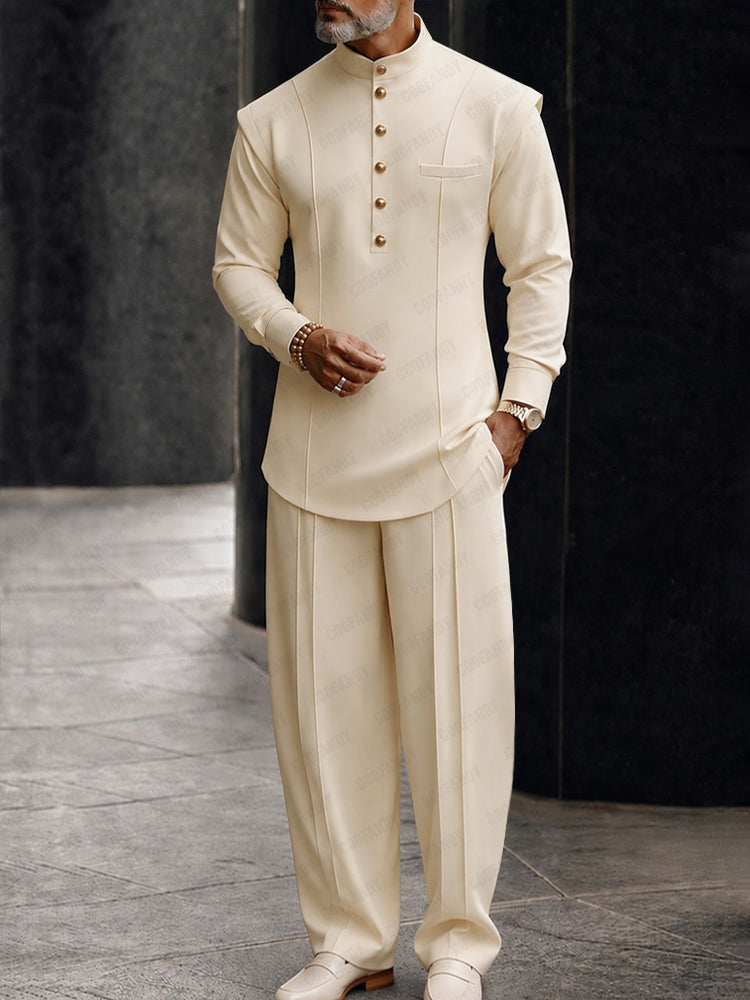
Your goal is to identify the garment category the event permits. A shirt-first plan may be right when the dinner is relaxed and the invitation allows it. A structured layer may make more sense when the venue or host expects a sharper outline. If the invitation requires black tie, formalwear or a matching suit, a casual resort interpretation does not replace that category.
For context on the collection itself before you inspect individual items, read What Is COOFANDY Signature. The collection name can help you find a direction, but it cannot decide the dinner's dress code or an individual garment's fit.
Read the Invitation, Venue and Host Context
When the dress code is written clearly, follow it before thinking about color or accessories. “Jacket required” is a different instruction from “resort casual.” “Elegant casual” may still need clarification if the host has not explained whether a jacket, closed shoes or a particular level of tailoring is expected. A resort label describes the setting; the invitation controls the category.
When the invitation is vague, use a short sequence instead of building from assumptions. First, check the restaurant or event information for a stated entry policy. Next, ask the host what he means by the phrase if the answer would change your garment category. Finally, compare the complete outfit with the people and places you already know will be part of the evening. A photo from the venue can help you understand the room, but it does not override a direct host instruction.
Also separate a transition problem from a dress-code problem. You may need an outfit that works from a daytime plan into dinner, but that does not mean one shirt must cover every part of the trip. Decide whether the layer is for the dinner itself, for travel between locations or for the temperature and movement you expect along the route. Keep each reason separate so that a product title or fabric label does not become a shortcut for a climate or comfort promise.
If you cannot identify the venue, the host's expectation or the category required for entry, pause at this stage. A more decorated shirt does not solve an unknown dress code, and a blazer does not automatically satisfy a matching-suit or formal request.

Resort Casual and a More Structured Dinner Route
“Resort casual” and a more structured resort-dinner route are useful working descriptions when the invitation does not give a precise uniform. They are decision branches, not rules that apply to every resort. Choose the branch that matches the evidence you gathered.
| Route | Main garment role | Supporting pieces | Condition that can change the plan |
|---|---|---|---|
| Resort casual | A clean shirt with a deliberate collar, hem and sleeve relationship | Trousers or tailored shorts that belong with the shirt, plus shoes appropriate to the venue | The restaurant, host or invitation expects a jacket or a more defined category |
| More structured dinner | A blazer or another permitted layer that gives the outfit a clearer outline | A shirt, trousers and shoes that support the layer without competing with it | The venue allows only a matching suit, formalwear or another specified category |
| Unresolved category | No purchase or styling commitment yet | Ask the host or venue for the missing instruction | The answer cannot be verified before the event |
For the shirt-first route, begin with the whole outfit rather than the shirt alone. Check whether the trousers, shoes and any outer layer create a coherent line when you stand and sit. A short-sleeve shirt can look intentional in a relaxed setting, but the same visible choice may feel incomplete when the invitation expects a jacket. The issue is the route and the requirement, not a universal ranking of sleeve types.
For the structured route, avoid adding a blazer simply because the dinner is on a trip. A layer is useful when it answers the venue and works with the clothes beneath it. Keep the rest of the outfit simple enough that the collar, lapel, trousers and shoes support the same level of structure. If you need to keep changing accessories to make the base outfit appear appropriate, return to the category question.

When a More Structured Layer Makes Sense
A blazer can be worth examining when the invitation permits separates, the venue calls for a sharper outline and you already know which shirt, trousers and shoes will support it. Check the shoulders, chest, sleeves, length and movement with your own reference garment and measurements. These are checks on your complete outfit and your size evidence; they are not promises about how a product will fit every person.
The current Casual Peak-Lapel One-Button Wool Blend Blazer page lists a peak lapel, a single-breasted one-button front, pleated chest detailing, two flapped side pockets and fully lined construction. It lists Black and Apricot color selectors and a professional-dry-clean-only care instruction. Those are page fields you can compare with the route you are planning. They do not establish formalness, fit, comfort, breathability, warmth, performance or universal resort-dinner suitability.
Use the page to ask a narrow question: does the visible role and the care requirement fit the dinner plan I can actually verify? If the answer depends on a measurement, open the current size information and compare it with a reliable garment or your own measurements. If the answer depends on whether a blazer is allowed, return to the invitation or ask the host. The product page cannot supply the missing category decision.
Use a Product Page as a Fact Sheet
Read the exact product page in the same order each time. Record the product identity, visible design details, color selectors, composition field, care instruction and current size information. Keep those fields separate from what you hope the garment will feel like or how it may perform in a particular climate.
The current Minimalist Front Pleats Linen Blend Shirt page lists a fold-down collar, front pleat detailing, button-front closure, short sleeves and a straight hem. It lists White and Beige color selectors, a composition field and machine wash cold with like colors. These details can help you decide whether the shirt has the visible role and care routine you are prepared to check for a relaxed or lightly structured dinner route. They do not prove fit, comfort, breathability, warmth, performance or formalness.
For either page, check four layers of information:
- Identity: Confirm the exact product name and destination before relying on a detail. Similar names or collection labels do not prove that two items share the same construction or care instruction.
- Visible role: Look at the collar, placket, sleeves, lapel, pockets, hem and other details the page actually shows or states. Treat an unshown feature as unknown.
- Size evidence: Compare the current size guide and measurements with a garment you already wear well. A letter size alone does not establish the right choice.
- Care and complete use: Check whether you can follow the listed care instruction and whether the garment has a clear job in the dinner outfit. Do not let a fabric name answer a climate question the page does not establish.
For a broader day-to-dinner packing context, read Men's Beach Vacation Shirt Capsule for a 5-Day Trip. Use that page for the packing decision it addresses. Resort dinner attire still requires its own invitation, venue and complete-outfit check.
Build the Complete Resort Dinner Outfit
Once the route is clear, assemble the entire outfit before deciding that you are finished. A dinner by the water may allow a shirt-first plan when the venue and host make that clear. A resort restaurant may call for a more structured layer, but only if separates are permitted. A hosted dinner or wedding-related event may have a defined category that overrides both shorthand routes.
Use this sequence:
- Name the setting and the exact instruction you are following.
- Choose the main garment's job: shirt as the visible center, or layer as the source of structure.
- Choose trousers and shoes before adding accessories. Check whether they support the same level of dress.
- Add the outer layer you will actually wear between the room, vehicle and dinner location.
- Sit, stand, walk, reach and look at the outfit without the final accessory. If the base combination is unclear, the accessory is hiding the decision.
For a relaxed dinner, test whether the shirt and trousers still look deliberate when you sit at a lower table or move between indoor and outdoor areas. For a structured dinner, test the shirt under the layer, the jacket with the trousers and the shoes you will use at the venue. If the route includes a second location, check that the outer layer and footwear remain appropriate without changing the dinner category.
The goal is a complete outfit with a clear reason for every piece. You do not need to add more clothing simply because the trip is special. You do need to know what the outfit is answering and what evidence would make you change it.

Know When the Resort Label Is Not Enough
Stop and ask for clarification when any of these conditions applies:
- The invitation says black tie, formalwear, matching suit or another defined category that your shirt-first or separate-blazer route cannot provide.
- The venue has an entry or jacket expectation you cannot verify.
- You do not have a reliable size reference or the current measurements conflict with the garment you are considering.
- You cannot follow the product's current care instruction for the actual trip.
- You are choosing from a title, collection label or fabric name because the page does not show the detail you need.
Waiting is a valid result. Ask the host, check the venue or choose a category with clearer evidence. If the answer remains unavailable, do not turn resort language into permission to improvise. A well-planned shirt or blazer is useful only when it belongs to the event, the complete outfit and the information you can verify.
Resort Dinner Attire Checklist
Before you commit, confirm:
- You know whether the dinner is relaxed, structured or explicitly formal based on the invitation, venue or host.
- You have separated the resort setting from the dress-code category.
- You have given the main garment a clear role and named the trousers, shoes and layer that support it.
- You checked the exact product page for identity, visible details, selectors, measurements and care.
- You tested the complete outfit standing, sitting, walking and transitioning between locations.
- You have a stop rule for an unresolved category, size question, care requirement or missing product detail.
When those checks are clear, explore the COOFANDY Signature page and browse the COOFANDY Signature collection with the dinner setting already defined. The pages can help you compare possibilities; the invitation, venue and exact product information still make the decision.
FAQ
What is resort dinner attire for men?
Resort dinner attire is clothing chosen for a dinner setting at a resort or warm-weather venue after checking the invitation, host and venue. It may be a shirt-first route or a more structured separate layer when the event permits it. The resort label alone does not establish a universal dress code, so follow any stated formal, jacket or matching-suit requirement.
What is the difference between resort casual and resort elegant for dinner?
Use “resort casual” as a working description for a deliberate shirt-and-trouser route when the invitation and venue allow it. Use a more structured route when the event calls for a sharper outline and separates are permitted. These are conditional planning terms, not universal categories. Let the host, venue and complete outfit decide which branch applies.
Can I wear a blazer to a resort dinner?
You can consider a blazer when the invitation or venue allows separates and your shirt, trousers and shoes support the layer. Check the shoulders, chest, sleeves, length and movement against reliable size evidence, then test the complete outfit. A blazer does not automatically satisfy formalwear or a matching-suit requirement.
What if the resort invitation does not state a dress code?
Check the venue information and ask the host what the dinner requires before buying or committing to a route. A photograph or resort label can provide context, but it cannot replace a direct instruction. If you cannot resolve whether a shirt, blazer, matching suit or formal category is expected, pause and wait for clarification.



Hinterlassen Sie einen Kommentar