








80s Fashion Men Can Borrow: Suits, Prep and Sportswear

A double-breasted suit, a bright polo and a hooded tracksuit can all suggest the eighties, but they tell different stories. The decade contained office tailoring, collegiate clothes, sportswear and distinctive music scenes. Recognizing the relationship between jacket, trousers and shoes is more useful than treating neon as a universal dress code.
This guide explores 80s fashion men can adapt through distinct routes, from tailoring and prep to sportswear and music-led clothing. It focuses mainly on American and British references, with Italian tailoring alongside them. Keep those settings in mind when choosing a look: tailoring for one city or a music scene in another does not amount to a worldwide uniform.
The eighties in brief
- For tailored 80s dressing, pair a navy double-breasted suit with a pale shirt, patterned tie and black lace-ups. The softer alternative is a stone jacket worn open over a cream tee, taupe pleated trousers and brown loafers.
- For collegiate prep, wear a color-block polo with tan chinos, a navy sweater and brown penny loafers. Drape the knit over the shoulders to strengthen the reference, or wear it normally when cool; a tuck makes the belt and waistband visible.
- The athletic combination is a color-block tracksuit, plain white tee, white sneakers and a simple cap. A partly open zip repeats the white from neckline to shoes; wearing the jacket with plain track trousers gives a quieter alternative to the full set.
- For a rock reference, combine a black biker jacket, graphic tee, washed straight jeans and ankle boots. For New Romantic shape, use an ivory full-sleeved shirt, dark vest, black straight trousers and plain boots; leave room inside the vest for the shirt fabric.
80s fashion men can recognize by silhouette
Early-decade variety and the growing shoulder line
The Fashion Institute of Technology's 1980–1989 fashion overview identifies fitness wear, classic American workwear, preppy styles and power dressing within menswear. Its early-decade examples include tracksuits, sports jerseys, polo shirts with raised collars and sweaters thrown over the shoulders. Those details show why a plain collegiate outfit can be as relevant as something fluorescent.
The same account places Thierry Mugler's wide-shouldered suit in 1980, while describing the pinstriped, double-breasted power suit as a mid-to-late-decade development. Trends overlapped rather than arriving in an orderly sequence. For dating an actual garment, a label, construction details and provenance matter more than a shoulder pad alone.
Music scenes supplied their own visual languages
FIT connects early-to-mid-decade goth clothing with punk's late-seventies foundations, and describes later-eighties hip-hop styling through sneakers, tapered denim, coach jackets, hoodies and jewelry. Its account also links Vivienne Westwood's 1981 Pirate collection to London's New Romantic scene. These were distinct communities and references, not a single dress-up kit.
The range of 80s fashion men wore provides useful direction: theatrical shirting changes the mood differently from a track jacket. A leather jacket can belong to several periods, while its companions make a particular reference clearer. The broader guide to clothing styles explains how such labels overlap beyond decade-based dressing.
Six routes into 80s fashion men can adapt
Compare men's eighties outfits by silhouette before choosing individual items. The final column pairs each reference with a complete combination you can wear today.
| Route | Recognizable relationship | A complete modern combination |
|---|---|---|
| Power dressing | Broad tailoring, double-breasted front, shirt and tie | Navy suit, pale shirt, patterned tie, black lace-ups |
| Soft tailoring | Relaxed jacket, open neckline, fluid trousers | Stone jacket, cream tee, pleated trousers, brown loafers |
| Preppy | Defined collar, knitwear, collegiate separates | Color-block polo, tan chinos, navy sweater, loafers |
| Athletic and hip-hop references | Coordinated sportswear, sneakers, purposeful accessories | Color-block tracksuit, white tee, leather sneakers, cap |
| Denim and rock | Casual denim, compact outerwear, substantial shoes | Faded jeans, graphic tee, biker jacket, black boots |
| New Romantic | Dramatic shirt detail beside tailored or theatrical layers | Full-sleeved shirt, dark vest, straight trousers, ankle boots |
80s fashion men can build into complete outfits
Power dressing: the double-breasted suit
FIT describes the mid-to-late-eighties power suit through pinstripes, a double-breasted front, wide lapels and wide ties. The effect comes from a continuous tailored outline, with the jacket and trousers carrying similar visual weight. A striped shirt and patterned tie can intensify that reference, but a plain shirt gives the same jacket a quieter setting.
The Classic Double Breasted Suit Set (US Only) combines an 80% polyester and 20% viscose fabric with a double-breasted jacket, flap side pockets and trousers with a hidden elastic waistband. The overlapping jacket front gives the outfit a clear tailored center. For a dressy dinner, pair the suit with a pale blue shirt, burgundy patterned tie, dark socks and black leather lace-ups. The jacket and trousers form a continuous outline, while the tie concentrates pattern near the face. Keep the shirt collar visible above the lapels and carry a plain coat for the journey.
The double-breasted front carries the strongest reference in this modern combination. Wear a wider-looking tie if you want the upper half to feel more pronounced, or a plain navy tie for a quieter dinner outfit. A pale shirt separates the jacket opening from the tie without introducing another large pattern. Leave enough room for the shirt through the sleeves and chest, and set the trouser hem against the lace-ups. The set is a US-only option.
Soft tailoring: less structure, more drape
The V&A's account of Giorgio Armani credits his designs for the 1980 film American Gigolo with showcasing unstructured tailoring, a soft palette and understated dressing. This is an important counterpoint to the idea that every eighties suit was rigid and aggressively padded. For 80s fashion men can interpret quietly, the reference is relaxed elegance rather than office armor.
For an evening terrace dinner, wear a stone-colored soft jacket over a cream crewneck tee, taupe pleated trousers, brown loafers and a narrow leather belt. The pale layers and open neckline relax the tailored outline, while the pleats give the lower half more room to drape. Brown shoes connect the warm neutrals at ground level. Leave the jacket open so the cream tee provides a continuous lighter area through the center.

When choosing a jacket for this direction, examine its actual construction and drape; a light color does not make a structured blazer unstructured. A roomy sleeve and fluid trouser line help carry the idea. You can retain that ease without reproducing an entire screen costume or adopting accessories unrelated to the clothes.
Preppy: polos, knitwear and collegiate contrast
Early-eighties prep used familiar collegiate pieces, with FIT specifically documenting polo shirts and shoulder-draped sweaters. The collar and knitwear provide the recognizable relationship. Pastels are one possible palette, but navy, cream and tan make the reference more restrained. The outfit need not include a raised collar to work as a modern interpretation.
The Classic Soft Color Block Polo Shirt is made from 65% cotton and 35% polyester, with short sleeves, a button closure and color-block design. The collar gives the neckline definition; the blocks supply the contrast that a plain polo would leave to accessories. For a weekend lunch, pair the polo with straight tan chinos, a navy crewneck sweater, brown penny loafers and a brown belt. The quiet trousers leave the color blocks prominent, while the navy sweater relates the darker parts of the top to the rest of the outfit.
The tan chinos give the polo's blocks a calm background. Drape the sweater over your shoulders for a stronger collegiate reference, or wear it normally when the afternoon cools. A tucked hem shows the brown belt and lengthens the visible chino line; a loose hem makes the same loafers feel less formal. The short sleeves keep the polo easy to wear on its own after lunch, with the knit carried in your bag.

Sportswear, denim and expressive shirts
Athletic and hip-hop styling: related, not identical
Sportswear's casual use and hip-hop's styling innovations intersect, but they should not be collapsed into one anonymous trend. The Museum at FIT's Fresh, Fly, and Fabulous exhibition emphasizes remixing, customization and individual expression. Its examples include Nike Air Jordan high-tops dated 1985 and a Dapper Dan bomber-style printed jacket dated 1987, illustrating a wider vocabulary than tracksuits alone.
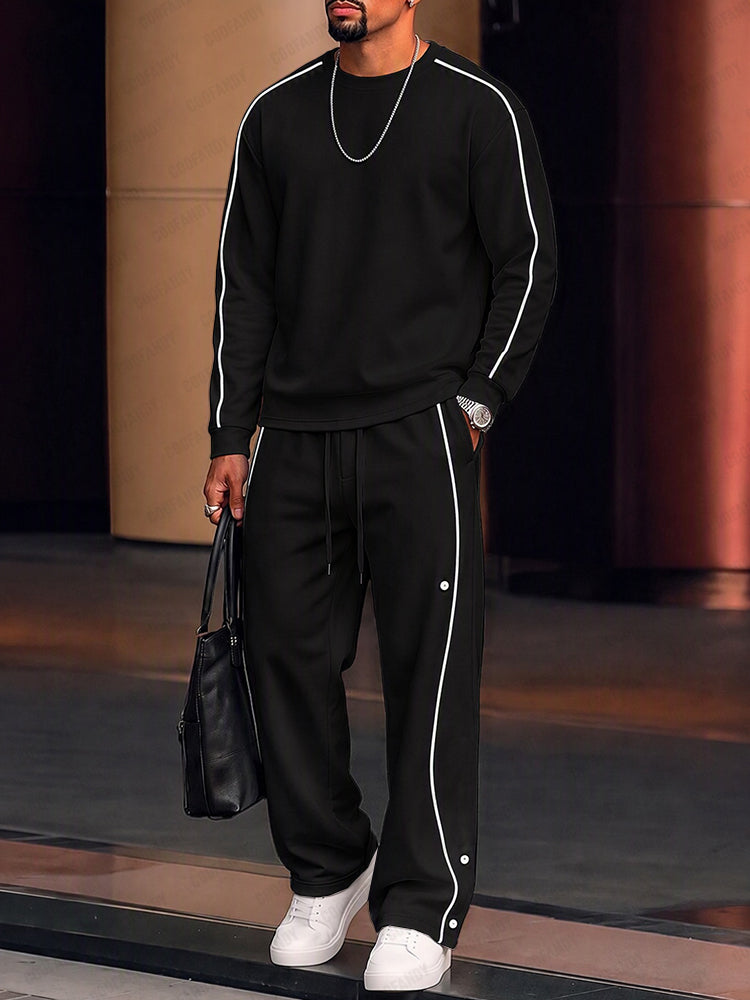
The Relaxed Fit Colorblock Tracksuit Set is made from 100% polyester, with a zip-front drawstring hooded jacket, elastic cuffs and hem, and drawstring-waist trousers. The coordinated color blocks carry the sportswear reference across the upper and lower halves. For an informal weekend outing, wear it with a plain white tee, white leather sneakers, a simple cap and a digital watch. Leave the zip partly open to show a strip of white at the center, then repeat that white in the shoes for a clear connection from neckline to ground.
With the jacket fastened, the color blocks read as a coordinated whole; worn open, the white tee gives the outfit more separation at the waist. Keep the tee shorter than the jacket or tuck it lightly so several hems do not compete. A simple cap extends the sporting shape without adding another large graphic. For a quieter alternative, wear the jacket with plain track trousers, keeping the coordinated set for days when you want the full color-block effect.

Denim and rock: casual clothing with a harder edge
FIT includes classic American workwear among the decade's menswear directions and identifies distressed, tapered jeans within its hip-hop discussion. Denim therefore crosses several scenes; it is not exclusively a rock signifier. A faded jacket, graphic tee and jeans can look simply casual, while black leather and boots shift the emphasis toward a rock interpretation.
For a gig, wear a black biker-style jacket over a graphic tee, washed straight jeans, a plain black belt and lace-up ankle boots. The hardware and graphic keep the detail above the waist, while the jeans give the jacket a softer surface to sit against. Trade the leather for a denim jacket when you want a more casual workwear emphasis. The same boots still give the lower half a substantial finish.
A faded wash works best alongside the jacket and shoe you want to emphasize. With a short black jacket, leave the tee just visible at the waistband so the upper half stays compact above straight denim. With a longer denim jacket, a tucked tee separates the two jean layers more clearly. A single cuff can expose the boot top and bring the black footwear into the silhouette.
New Romantic: expressive shirting and theatrical shape
The New Romantic reference differs from both collegiate prep and the biker silhouette. FIT's connection between Westwood's Pirate collection and London bands and club-goers provides a specific early-eighties anchor. Historical-looking volume and expressive shirt details make a more useful starting point than adding shine indiscriminately to any dark outfit.
For an evening event with a creative dress code, pair an ivory full-sleeved shirt with a dark tailored vest, black straight trousers and plain ankle boots. A softly tied neck scarf continues the theatrical shape around the collar; leave it off when the shirt already has ruffles or a tied neckline. The dark vest contains some of the shirt's volume while leaving the full sleeves visible. Plain boots carry the dark line down from the trousers.

Leave enough room in the vest for the shirt sleeves and gathers. If they bunch beneath a jacket, use the vest as the outer layer indoors and carry a roomier coat for travel. This keeps the shirt volume visible without compressing it.
Which pieces actually carry the reference?
Jackets and trousers establish the silhouette
Start by reading the outer shape. A broad double-breasted jacket over tailored trousers suggests a different direction from a short zip jacket over jeans. Higher rises and pleats can support particular interpretations, but they are not universal requirements. A full trouser leg also differs from merely buying a larger waist size.
For modern wear, preserve the volume you enjoy while choosing usable lengths. A strong shoulder does not require sleeves covering the hands, and relaxed trousers need not drag under the heel. These practical distinctions let the chosen outline remain intentional rather than converting every period reference into contemporary slim tailoring.
Shoes and accessories clarify the scene
Leather lace-ups support the formality of a shirt-and-tie suit; loafers relax collegiate separates; sneakers reinforce sportswear. Within hip-hop references, FIT's specific examples are more informative than calling every bulky trainer an eighties shoe. An identifiable period-inspired silhouette can contribute more than sheer size.
Try accessories with the outer layer fastened as well as open. A scarf knot may need more space beneath the theatrical shirt's collar, while a cap needs clearance from a tracksuit hood. For a bag carried across the body, check whether the strap pulls a soft jacket away from the neckline you intended to show.
80s fashion men can wear beyond a theme night
Decide how visible you want the reference to be. At dinner, the soft jacket and pleated-trouser combination can carry it quietly. At a themed event, a stronger shoulder, fuller shirt sleeve or shoulder-draped sweater can make the chosen direction more obvious. Greater historical detail is optional, not a measure of dressing better.
- For everyday wear: retain the route's main relationship, such as a collared polo with chinos, while using shoes you genuinely wear.
- For a themed evening: choose a specific scene and compatible accessories rather than combining six unrelated signatures.
- For smart settings: let the actual dress code decide between a tee, collared shirt and tie; a decade label does not override it.
If your starting question is what to do with garments already in your wardrobe, the companion guide to dressing eighties with normal clothes covers that closet-first approach. Choose the suit, collegiate layers or sportswear combination that best suits your plans.
Where the eighties ends and the nineties begins
There is no clean wardrobe reset between the decades. FIT's examples already place hoodies, caps and sneakers within eighties hip-hop, so those items cannot automatically mean nineties. The useful comparison is between particular combinations: a wide-lapel business suit and tie projects something different from layered flannel and loose denim.
For a closer look at grunge, athletic, preppy and minimal directions in the following decade, explore the 90s men's outfit guide. Keep the comparison specific rather than treating eighties clothes as uniformly bright or nineties clothes as uniformly dark.
COOFANDY Through an Eighties Lens
Founded in 2015, COOFANDY offers shirts, suits, pants, sweaters and tees in its core menswear range. The three options here bring that everyday range to tailoring, collegiate layers and coordinated sportswear. A suit gives you a continuous tailored outline, a polo works beneath knitwear, and a matching set makes a coordinated base. These are current clothes to style with an eighties influence, rather than original garments from the period.
Before adding one, test your existing shirt and tie under a jacket, polo with chinos, or tee beneath sportswear. Keep the combination if it suits the occasion. Otherwise, compare the candidate's measurements and care needs with the garment it would replace.
Frequently asked questions
Recognizing the decade
What did men actually wear in the eighties? Several wardrobes coexisted: suits for formal work, collegiate polos and knitwear, denim, athletic clothing and music-led outfits. FIT documents both sportswear and tailoring, so neither neon nor a padded jacket describes everyone. Occupation, place, age and social scene all affected the clothes a man wore.
Did eighties menswear always use bright colors? No. A navy double-breasted suit with a pale shirt can evoke the decade through cut and styling. For a quieter dinner outfit, compare it with the stone jacket, cream tee and taupe trouser formula. Choose according to the venue's formality, not a requirement to add neon.
Which jeans suit an eighties-inspired look? Straight or tapered jeans can support several references, with lighter washes working in many casual interpretations. Consider the jacket and footwear as well as the denim. FIT specifically mentions distressed, tapered jeans in its hip-hop discussion, but that example should not become a rule for every man or scene.
Modern outfits and party ideas
Is there 80s fashion men can recreate with modern clothes? Yes. Start with the shape you want: a double-breasted front, a collar beneath knitwear or coordinated sports layers. Compare garment measurements with clothes that already fit, leaving space for the shirt or tee underneath. A retro name matters less than the jacket length, trouser line and neckline you can actually wear.
What is a good outfit for an eighties party? Choose the direction you enjoy: a double-breasted suit and tie, polo and shoulder-draped knit, coordinated tracksuit and sneakers, or an expressive shirt with dark tailoring. Carry one reference through the whole outfit. That gives a clearer result than adding every recognizable accessory to the same base.
Find the reference you want to wear
Explore 80s fashion men can wear now through the route that fits your plans: structured tailoring, soft drape, collegiate layers, sportswear or expressive shirting. Keep its defining shape visible and complete it with useful shoes and outerwear. Test that combination before adding another accessory.
References
- Karina Reddy. “1980–1989.” Fashion History Timeline, Fashion Institute of Technology. Published May 29, 2020; updated August 18, 2020. Supports the discussion of menswear routes, power suits, preppy clothing, music scenes and the Westwood collection.
- Victoria and Albert Museum. “Five iconic Giorgio Armani looks from the V&A collections.” Published September 4, 2025. Supports the account of unstructured tailoring, soft color and Armani's designs for the 1980 film.
- The Museum at FIT. “Fresh, Fly, and Fabulous: Fifty Years of Hip Hop Style.” Exhibition February 8–April 23, 2023; curated by Elena Romero and Elizabeth Way. Supports the discussion of individual expression and the dated 1985 sneaker and 1987 jacket examples.


Laissez un commentaire