











How to Refresh a Smart Casual Wardrobe Without Replacing Everything

Refresh a smart-casual wardrobe by starting with the clothes already in it. Remove the pieces that need repair or no longer serve a role, identify the one gap that blocks the combinations you actually need, and test the smallest change against your existing shirts, layers, trousers and shoes. Sometimes the right answer is to keep or repair what you own. Sometimes it is one replacement or one complementary addition. If the role, condition or dress code is still unclear, pause before buying.
Start With a Wardrobe Audit, Not a Shopping List
A wardrobe can feel stale for several reasons. You may have enough clothes but repeat the same combinations. One useful layer may be damaged, a shirt may have no partner, or the setting you dress for may have changed. Those problems can look like “I need new clothes” until you separate them.
Begin with a quick audit of the smart-casual clothes you actually wear. Pull out the shirts, layers, trousers, shoes and finishing pieces that belong to your life. You do not need to empty every closet. Make five small groups:
| Group | What to ask | First decision |
|---|---|---|
| Worn and useful | Do I reach for this, and does it still serve a real setting? | Keep it in the test group. |
| Useful but tired | Is the problem a loose button, small repair, care issue or temporary presentation problem? | Repair or care for it before shopping. |
| Uncertain | Do I avoid it because of condition, fit, color, compatibility or the setting? | Identify the reason instead of replacing it automatically. |
| Rarely used | Does it have a genuine role, or was it bought for a situation that never arrived? | Keep it aside while you test its role. |
| Clearly failing | Is it damaged, unsuitable for the settings you now attend, or impossible to combine with what you own? | Consider replacing it; name the failure first. |
Take a photo of three combinations you already wear or would realistically wear. The goal is to see where the wardrobe stops working. If several combinations fail because one layer is missing, that is useful evidence. If they fail because a shirt needs care or the dress code is unclear, another shirt may only hide the issue.
Write down the most repeated problem in one sentence: “I cannot add a layer to these shirts,” “I have trousers but no shirt I want to wear with them,” or “I am unsure whether these clothes fit the setting.” A sentence gives the refresh a job. Without one, shopping tends to become a search for a new item that feels different rather than a solution that gets used. For a shirt-specific gap check, read Do You Need More T-Shirts? Build a Better Shirt Rotation while keeping this article's cross-category focus.

Find the Role That Is Actually Missing
An item and a role are not the same thing. A wardrobe may contain several shirts but still lack a shirt that works with the trousers you wear most. It may contain a blazer but lack a layer that makes sense for your actual settings. It may contain plenty of color but lack a quiet anchor that lets the rest of the clothes combine.
Look at the combinations you want to repeat, then ask which role stops them. Common roles include:
- Anchor shirt: a shirt that gives a pair of trousers a starting point without demanding a complete new outfit.
- Flexible layer: a jacket or overshirt that can be added or removed while keeping the rest of the combination usable.
- Trousers partner: a lower-half option that gives several existing shirts somewhere to go.
- Finishing piece: a belt, shoe, knit layer or other final element that resolves a practical gap rather than simply adding decoration.
Next, separate a role gap from a condition or styling problem. If an item would work after a repair, it is not necessarily a replacement gap. If the item works with one pair of trousers but not the others, the problem may be compatibility rather than quality. If you own a good layer but never wear it because the setting is more relaxed than you thought, the answer may be a dress-code check.
Use a small test before naming the gap. Put the item you think is missing on a note, then list at least three existing combinations it would need to support. If you cannot name three realistic uses, keep the idea open. The role may be too narrow, or the problem may belong somewhere else. A smaller role can be worth filling, but know why it matters before asking one purchase to refresh the wardrobe.
This is also where you decide whether “smart casual” describes the setting or only the mood you want. A workplace, client meeting, dinner, travel day and weekend gathering can use different boundaries. Do not use a broad label to force every garment into the same answer.
Choose Keep, Repair, Replace, Add or Pause
Once you have named the failing role, choose the smallest decision that addresses it. These five choices are deliberately separate. “Replace” is for a garment that cannot reasonably do its job. “Add” is for a complementary role that is genuinely absent. “Repair” comes before replacement when the existing piece is still useful. “Pause” is a valid outcome when the evidence is incomplete.
| Decision | Evidence that supports it | Action | Stop condition |
|---|---|---|---|
| Keep | The garment serves a real setting, combines with existing pieces and has no unresolved condition issue. | Return it to regular rotation and test a different combination around it. | Pause if the supposed versatility depends on a setting you do not actually attend. |
| Repair | The role is useful, but a fixable issue keeps the garment out of rotation. | Identify the repair or care task and complete it before evaluating a replacement. | Stop if the damage affects structure or you cannot tell whether repair is appropriate. |
| Replace | The garment repeatedly fails a necessary role because of condition, compatibility or a changed need. | Replace one failing role, using the existing wardrobe as the compatibility test. | Stop if you cannot explain the repeated failure in concrete terms. |
| Add | Existing clothes work individually, but one complementary role is missing from several combinations. | Add one piece and test it against at least three combinations. | Pause if it creates only one attractive outfit or requires several more purchases. |
| Pause | The dress code, condition, use frequency or role is unresolved. | Gather the missing information and keep wearing the combinations that already work. | Resume only when the decision can be tied to a real use. |
Do not let a new arrival decide which category it belongs to after the fact. Decide the role first, then ask whether your current wardrobe can support it. A product that looks appealing may still be a poor refresh if it has no partners, solves no recurring problem or moves the wardrobe toward a setting you do not need.
Test One Change Against What You Already Own
The smallest-change test turns a purchase idea into a wardrobe question. Choose one proposed change, whether it is a repair, a replacement or an addition. Then build three combinations using clothes you already own. Change only the proposed piece while keeping the rest of each combination recognizable.
For each test, record four observations:
- Compatibility: Which existing shirt, layer, trouser or shoe does it work with?
- Frequency: Would you wear those combinations in real settings, or are they only attractive in theory?
- Adjustment: Does the change require another item, a different care routine or a dress-code assumption?
- Return path: Can you remove the new layer or change one element without the whole combination failing?
For example, if you think you need a new layer, test it with the shirt and trousers you wear most, a more relaxed combination and one setting that requires a little more structure. If it only works when you also buy new shoes and a new shirt, it is not yet a small change. If your current layer works after a minor repair, finish that repair and run the test again before replacing it.
Write down what changed in each combination. “The jacket fills the missing layer role” is more useful than “it looks better.” The first statement can be checked against your closet; the second can change with the moment. If all three combinations still feel wrong because the dress code is unclear, pause and resolve the setting before adding another item.
This process does not require every new piece to work with everything. It asks for enough use to justify the role. A narrowly useful item may be sensible when the setting is important and recurring. It should not be described as a universal smart-casual solution just because it works in one photograph or one imagined outfit.

Use Signature Examples to Fill a Role, Not Rebuild the Closet
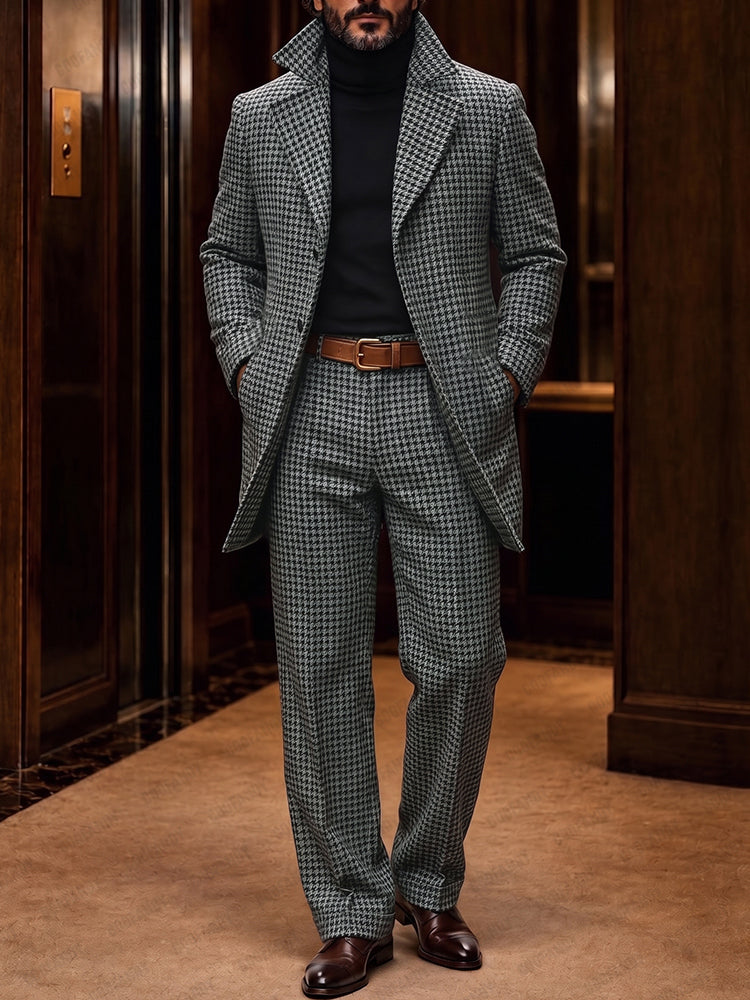
Once you have identified a genuine gap, use the product page to check whether a garment matches the role you described. The Casual Peak-Lapel One-Button Wool Blend Blazer is a bounded example for a missing structured layer. Its current page identifies a peak lapel, one-button front, chest pleat detail and fully lined construction, with Black or Apricot options. Those details help you compare the garment with the layers and colors already in your wardrobe. They do not guarantee a smart-casual result for every wearer or setting.
The Vacation Casual Hidden Placket Linen Blend Shirt is a bounded example for a shirt role. Its current page identifies a Cuban collar, hidden button placket, short sleeves, side slits, back pleats and a straight hem, with Olive Green or Black options. Use those visible fields to ask whether the shirt fills the role you named and whether your existing trousers and layers can support it. Do not turn the product description into a promise about comfort, fit, performance or universal suitability.
These examples show the decision order. Name the missing role, list the combinations it must support, then compare the exact product identity and visible design fields with that requirement. If the role remains unclear, use the COOFANDY Signature collection as a browsing destination and keep the decision open. A collection can show current options; it cannot tell you which role your wardrobe lacks.
Check the Dress Code Before You Call It Smart Casual
“Smart casual” is a useful starting label, but it is not a complete dress code. Before buying or replacing anything, name the actual setting, the expected level of formality and the pieces people will see most. A relaxed dinner, a client meeting and a travel day may all call for different combinations even when someone describes each as smart casual.
Use the page Smart Casual vs Business Casual: What to Wear on a Date or for a Client Meeting when you need to separate those settings. This guide addresses the decision before that occasion choice: whether your existing wardrobe has a real gap and what the smallest change should be. The dress-code page helps you test the setting; it does not turn every refresh into an occasion outfit list.
If you cannot answer what the setting expects, pause. A garment can be clearly identified and still be the wrong decision for an unknown dress code. Resolve the setting first, then return to the three-combination test with that boundary in view.
Set a Stop Rule for the Refresh
A refresh should have a stopping point. Without one, every mismatch can become another purchase. Stop when the proposed item has no clear role, works with only one existing combination without serving an important, recurring setting, or requires several other items before it becomes usable.
Pause when the garment condition is unresolved. A missing button, care question, odor, stain, damaged closure or altered shape can change the decision. If you cannot tell whether an existing item should be repaired, replace it, or ask for qualified help, do not use a new purchase to avoid the question.
Pause when the dress code is unresolved. A wardrobe refresh cannot decide whether a setting is smart casual, business casual or more formal. It can help you act once that boundary is clear. Also pause when your proposed change is based on a fixed number of pieces, a seasonal formula or the idea that every wardrobe should look the same. The useful measure is repeated use in your actual life.
Resume only when you can answer three questions:
- What role is missing or failing?
- Which existing combinations will the change support?
- What evidence would tell me to stop?
If you cannot answer all three, keeping or repairing what you own may be the most useful decision for now.

A 30-Minute Wardrobe Refresh Checklist
Use this short route when your wardrobe feels stale but you do not want to replace everything:
- Gather the rotation. Pull together the shirts, layers, trousers, shoes and finishing pieces you use for the setting in question.
- Sort the problems. Mark each piece as keep, repair, uncertain, rarely used or clearly failing.
- Name one blocked role. Write the combination you want and the exact role that prevents it from working.
- Check the current item first. Look for a care, repair, fit, compatibility or dress-code problem before adding a replacement.
- Choose one route. Select keep, repair, replace, add or pause. Do not combine several routes just because a new item is available.
- Run three combinations. Test the proposed change against existing clothes and record compatibility, frequency, adjustment and return path.
- Check the setting. Confirm the actual dress code before calling the result smart casual.
- Set the stop rule. Pause if the role, condition or use remains unclear, or if the change creates a chain of new purchases.
- Browse with a job. If you still have a defined gap, visit the COOFANDY Signature page or COOFANDY Signature collection and compare exact product pages against that role.
The purpose of the checklist is to make the next decision smaller. A wardrobe refresh may end with a repair, a new combination, one replacement, one complementary addition or no purchase. Each can be a successful result when it answers the problem you actually found.
FAQ
How do I refresh a smart casual wardrobe without replacing everything?
Start with the clothes you already wear. Audit the real rotation, identify the one role that blocks useful combinations, and decide whether to keep, repair, replace, add or pause. Test one change against at least three existing combinations before buying more. If the role, garment condition or dress code remains unclear, pause and gather that information first.
What should I replace first in a smart casual wardrobe?
Replace the item that repeatedly fails a necessary role after you have ruled out a repair, care issue, compatibility problem that can be resolved with what you own, or unclear dress code. Do not start with the item that is simply newest or most noticeable. Name the failure, list the existing combinations the replacement must support, and stop if the proposed change creates a need for several more purchases.
How many new pieces do I need for a wardrobe refresh?
There is no universal number. Begin with one role and test the smallest change against your existing clothes. You may need a repair, one replacement, one complementary addition or nothing at all. The useful stopping point is when the real gap is resolved for your settings, not when you reach a predetermined item count.



Deixe um comentário