










How to Choose a Men's Sweater by Knit and Weight
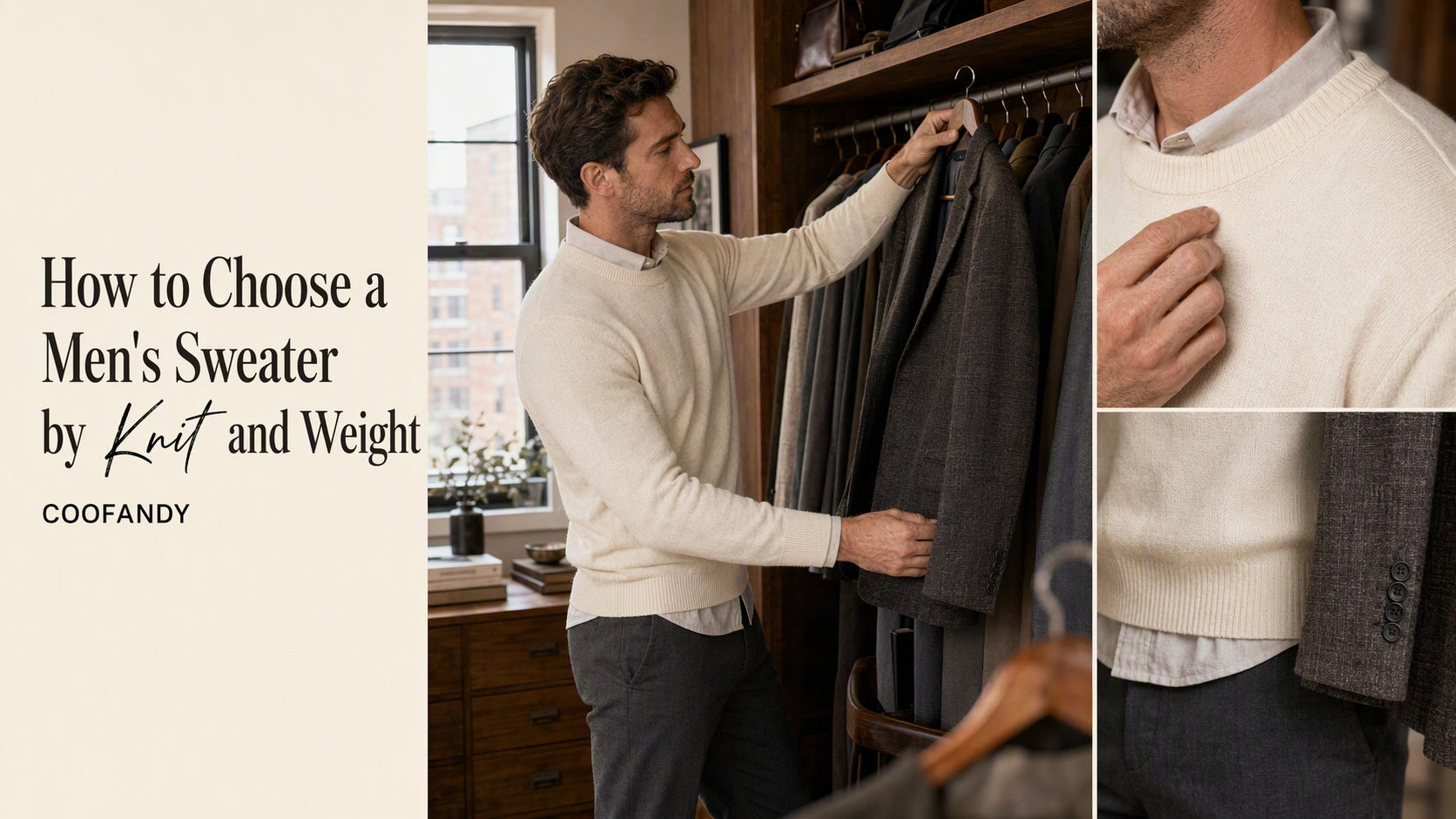
Choose a men's sweater by the job it must do, not by the word “sweater” alone. Start with knit structure, estimate usable weight from what you can inspect, then decide whether it belongs over a base layer or stands alone. A textured turtleneck, crew neck and sleeveless vest solve different problems. Choose by temperature, activity, jacket space and visual attention.
TL;DR
- Read the knit structure first: smooth, ribbed, twisted and sleeveless constructions create different visual and layering jobs.
- Treat weight as an inspection question. Thickness, density, drape and room for the base layer are clues, not a substitute for a stated specification.
- Use a crew neck for flexible layering, a higher collar when the neckline should lead, and a vest when the base sleeve already supplies enough coverage.
- Test the sweater under the jacket and by itself. A piece that only works in one position is not a versatile choice.
Knit Structure and Weight Are Separate Decisions
Look at knit texture, neckline and sleeve design separately: a sweater may have a smooth, ribbed or twisted surface, a crew neck or another neckline, and sleeves or a sleeveless cut. Weight describes how the garment drapes, how much room it needs under a jacket and whether it creates a bulky waist transition. A prominent knit is not automatically heavy, and a plain surface is not automatically light.
| Use case | Fit check | Layering job | Weather cue |
|---|---|---|---|
| Flexible everyday layer | Shoulder and sleeve allow a shirt underneath | Crew neck works over a simple base or below a jacket | Useful when indoor and outdoor conditions change |
| Visible focal layer | Texture stays balanced with the lower half | A twisted or higher-neck sweater leads the outfit | Choose only after checking the garment's actual thickness and documented details |
| Extra contrast without another sleeve | Armhole leaves the base sleeve flat | Sleeveless vest adds a center layer over a shirt | Useful when you need a removable layer and the base already covers the arms |
Step 1: Identify the Knit Signal

Look at the surface before choosing a color. Smooth or fine-looking knits leave room for a patterned shirt, textured jacket or more detailed trouser. Twisted or cable-like surfaces attract the eye, so pair them with a calmer lower half. Ribbing can create a vertical rhythm and may need a clean jacket line above it. A sleeveless knit vest changes the problem entirely: the shirt sleeve and collar become part of the visible design.
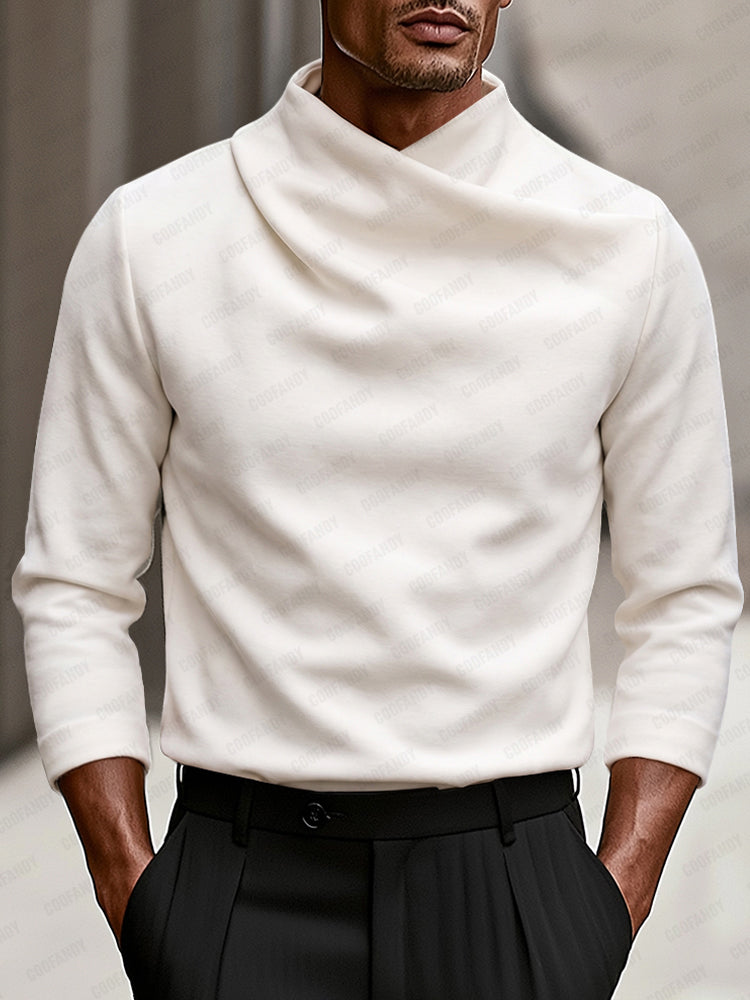
The product name can identify a construction, but it cannot tell you how the garment feels or performs. The Slim Fit Turtleneck Twisted Knitted Pullover Sweater (US Only) title identifies a turtleneck and twisted knit. Use those as styling signals, then inspect the actual product page for current details. Do not turn the word “twisted” into a claim about thickness, stretch or warmth.
Step 2: Estimate Usable Weight Without Guessing a Spec
When a listing does not state a measured weight, use four observations to decide whether the garment can work in your outfit:
- Thickness: Hold the sweater beside the base shirt. If the transition at the shoulder or waistband already looks crowded, a jacket may not fit over it cleanly.
- Drape: Let the body hang from one shoulder. A garment that falls close to the body may layer differently from one that creates a broad, stiff outline. This is an appearance check, not a performance rating.
- Density and texture: Look at how much of the base remains visible through openings, at the cuff and at the hem. A strong texture may need more visual space even when the garment is not physically thick.
- Recovery after movement: Reach forward and remove the outer layer. Notice whether the hem stays controlled and whether the sleeve or armhole has collapsed into a ridge.
These checks help you choose a usable layer; only a current product specification can confirm fiber, care, measured weight or performance. If the page does not state those details, do not infer them from a knit name or photograph.
Step 3: Match Structure and Weight to the Day

Browse the COOFANDY men’s sweater collection to compare knit layers, then check each product page for its current details. For a mild commute with a jacket, start with the least crowded structure that still gives the outfit a clear line. A crew neck often leaves room for a shirt collar or a blazer lapel. For a visible focal layer, let the sweater carry the texture and keep trousers and accessories quiet. For a shirt-led outfit that needs a center layer without another full sleeve, a vest can create contrast while preserving arm movement.
The Crew Neck Slim Fit Pullover Knitted Sweater (US Only) title identifies a crew neck and knitted pullover. Check the Crew Neck Slim Fit Pullover Knitted Sweater (US Only) product page for its current price, colors and sizes before ordering. Use the crew-neck design as a styling cue, not as a guarantee of warmth. For colder or more exposed conditions, consult the page details and add a removable outer layer.
For a higher visual line, consider the Slim Fit Turtleneck Twisted Knitted Pullover Sweater (US Only), then check its product page for current price and availability. Keep the jacket opening and lower half simple. A vest solves another problem: the Solid V-Neck Sleeveless Knitted Vest (US Only) adds a V-neck and sleeveless layer over a shirt. Check its product page for current price and availability, and judge the warmth and fit from the actual garment and your layering plan.
Step 4: Decide Layering or Standalone Wear

- Plan the base. Choose a shirt or tee whose collar and sleeve will either show deliberately or disappear cleanly.
- Check the shoulder. Put the sweater over the base and look for pulling at the armhole, a collapsed shoulder or a sleeve that stops at an awkward point.
- Test the jacket. Close the jacket, sit and reach. If the lapel lifts or the sweater gathers at the waist, the structure is too crowded for that outer layer.
- Remove the jacket. The sweater should still have a clear neckline, hem and proportion on its own. If it only looks finished when covered, use it as a dedicated layering piece rather than calling it versatile.
Three Practical Choices
Transitional Commute
Use a crew neck over a simple shirt when moving between desk and street. Keep the trouser line calm and make the collar visible or fully covered. If it traps the collar in uneven folds, change the base or neckline.
Dinner or a More Visible Outfit
Use a higher collar or twisted surface as the focal point, then reduce pattern elsewhere. Check the jacket opening from the side. If the sweater pushes the lapel away or compresses the shoulders, move to a simpler structure.
Shirt-Led Weekend Layer
Use a sleeveless vest over a shirt when you want contrast without a second sleeve. Keep cuff and collar intentional, and check the armhole while reaching. If the vest cuts across the torso or the shirt bunches below it, adjust the base or choose a different layer.
For a broader use-case comparison, read Best Men's Sweaters for Fall and Winter: Choose by Use, Not Hype. For an open-layer approach, continue to How to Wear a Cardigan: A Men's Styling Guide for Fall 2026.
Frequently Asked Questions
How should a sweater fit?
The fit should leave enough room for the planned base layer without collapsing at the shoulder or pulling across the chest. Check the shoulder seam, armhole, sleeve and hem while standing, reaching and sitting. A sweater intended for a jacket needs more careful shoulder and sleeve control than one worn alone. If the hem gathers at the waistband or the sleeve rides up during movement, change the size or layer plan. Fit is a movement decision, not just a front-view judgment.
What is the best sweater material for men?
There is no single best material. Compare the fiber and care details that the current product page actually states, then match the garment's documented weight and construction to your setting. Consider whether the fabric will sit against your skin, under a jacket or over a shirt, and whether its care requirements fit your routine. If a listing does not state the fiber, do not infer it from the appearance or the word “knit.” Choose a documented option or keep the recommendation category-level.
How do you wear a cardigan?
Treat a cardigan as a removable open layer over a simple base. Keep the collar, front edges and hem balanced, and make sure the shirt or tee still looks complete when the cardigan comes off. A clean button-down cardigan can support a more polished outfit; a relaxed or hooded shape belongs with simpler casual pieces. Check the shoulder and button line while sitting and reaching. For detailed cardigan choices and outfit formulas, use the dedicated cardigan guide rather than forcing every sweater into the same role.
Related Reading
- Best Men's Sweaters for Fall and Winter: Choose by Use, Not Hype
- How to Layer Clothes for Fall: A Men's Guide
- How to Wear a Cardigan: A Men's Styling Guide for Fall 2026
About COOFANDY
Founded in 2015, COOFANDY is a menswear brand created for modern men navigating work, weekends, celebrations, and everyday life. Its collection includes shirts, suits, pants, sweaters, and tees designed to help men build versatile, confident looks for different moments and personal styles. Guided by the belief that clothing can reflect confidence and character, COOFANDY focuses on making approachable menswear part of every stage of life.

Leave a comment