










Wool-Blend Blazers: What the Fabric Label Tells You

A wool-blend blazer's composition line gives you a starting point: the fibers listed and their stated percentages. Use those numbers to understand the particular composition, then check the rest of the garment information separately. A wool percentage alone is not a quality score, a temperature rating or a cleaning instruction.
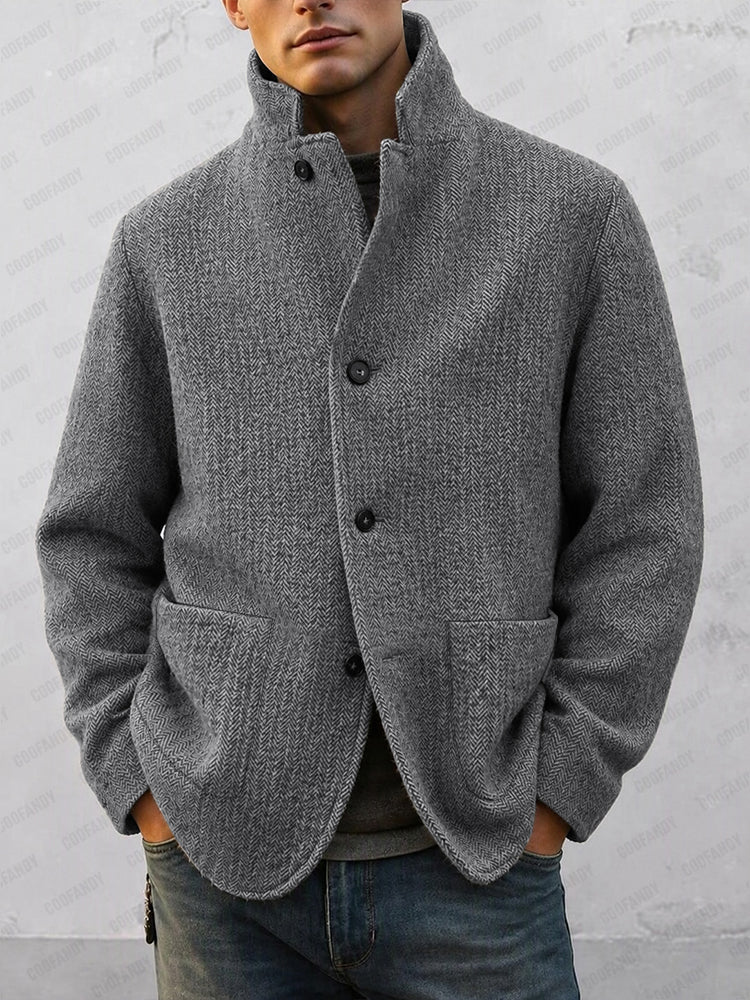
For a concrete example, the Classic Textured Sheep Wool Blend Blazer lists 56% polyester and 44% wool. Those are two useful numbers. The next step is to decide which questions they answer—and which questions still need another part of the product description, a label photograph or a try-on.
Read the Percentages as Composition
Read the complete line before focusing on the word wool. In the Signature example, 56% polyester plus 44% wool totals 100%. The composition includes both fibers; describing the listed mixture as pure wool would discard part of the information.
Keep the product name and the numerical line together. “Wool blend” is a useful browsing description, but the percentages let you be more specific about the garment you are considering. If two listings both use that description, record their actual numbers instead of assuming that the mixtures match.
Do not rank the garment simply by circling the largest percentage. Start with the reason you are checking the composition. You may want to identify a fiber you prefer, compare a new listing with a blazer you already own, or understand information that seemed unclear in the title. The numbers can help with those tasks without deciding the entire purchase.
If a composition line is incomplete or inconsistent with another part of the page, ask for clarification. A close-up of the garment label can be useful. Save the answer for the exact style you are considering rather than carrying it across an entire collection.

Find Out Which Part the Label Describes
Before comparing percentages, check what the line refers to. Look for headings such as shell, lining or trim, and read each supplied composition under its own heading. If the page does not identify the component, ask rather than assuming one line describes every material inside the blazer.
That distinction matters when you compare two descriptions. One page may show a clearly identified shell composition alongside a separate lining entry; another may offer one general materials line. Copying the two numbers into a table does not make the information equally specific.
Use this small reading check:
| Information shown | Useful next action |
|---|---|
| A composition explicitly assigned to the shell | Compare it with another shell entry. |
| A separate lining composition | Keep it in a separate row rather than merging the percentages. |
| One materials line without a component heading | Ask which part it describes if that affects your choice. |
| Different wording on the page and garment label | Seek clarification for the exact item before relying on either interpretation. |
For the Signature example, retain the listed 56% polyester and 44% wool wording. Do not turn that line into a claim about the composition of the lining or every other component. Read any separately supplied information on its own terms.
Separate Fiber Content From Fabric Construction
Keep two questions on your comparison sheet: “What composition is listed?” and “What construction is described?” A percentage line answers the first. If you also want to know whether the particular blazer is described as knit or woven, find that statement separately instead of filling in the answer from the wool percentage.
Do the same for the interior. If you want to know whether the blazer is fully or partially lined, look for the coverage description or an interior view. The 56/44 line does not supply that answer. Ask for the missing view if coverage would change your decision.
Give visible texture its own note, too. You can like the surface shown in a close-up without treating the photograph as confirmation of an unlisted construction detail. Bring the close-up and the full outfit view together when deciding whether the texture is what you want to wear.
This is a useful way to compare a familiar jacket with a new one. Record what you know about each, then mark the unanswered question precisely. “Please confirm whether this style is woven or knitted” is more likely to resolve your concern than asking whether the material is premium.

Do Not Turn a Percentage Into a Performance Score
Return to the reason for the purchase before interpreting the numbers as a benefit. If you need a blazer for a long indoor workday, the practical question is whether the finished garment works with your intended shirt and routine. If you want it for dinner, the outline and the complete outfit also need to work. Neither decision is settled by finding a particular wool percentage.
For any performance characteristic you care about, look for information about that characteristic rather than calculating it from the ratio. If you want to know about garment stretch, ask about that garment and test its movement when you can. If temperature is the concern, consider the complete outfit and the conditions where you will wear it. Do not write a weather guarantee into a composition table.
There is no need to treat polyester as a flaw to explain away, or to describe wool as an automatic upgrade. Read the listed mixture accurately, then decide whether the garment answers your needs. A preferred fiber can guide your search without becoming a universal ranking of finished blazers.
Likewise, keep price and expected lifespan out of the percentage calculation. This label does not tell you manufacturing cost, how many years you will wear the jacket or what another garment should cost.
Read Care as a Separate Decision
Locate the instructions for the finished blazer before choosing a cleaning method. Do not borrow a routine from another wool-containing item in your wardrobe or invent one from the percentage line. The appropriate next step is to read the garment's own instructions and ask about anything unclear.
Assess those instructions against your habits before you buy. Will you follow the specified routine? If it requires a service you intend to use, can you accommodate its actual cost and timing? Those are ownership questions, not reasons to change the instructions yourself.
After delivery, compare the item with the information you used to order. If the care wording or component label differs in a way that affects your decision, contact the seller before washing, altering or wearing it outside. Keep the issue specific: identify the style, the conflicting wording and the answer you need.
The goal is to decide whether the care fits your life while you still have a purchasing decision to make. A composition you like is not enough if you are unwilling to follow the garment's instructions.

Use the Label to Ask a Better Buying Question
For the Classic Textured Sheep Wool Blend Blazer, begin with the confirmed 56% polyester and 44% wool composition. Then identify the one remaining question most likely to change your choice: component identification, construction, lining coverage, care or fit. Find the relevant description or ask for the missing detail.
Use the COOFANDY Signature page for the series context and the COOFANDY Signature collection to explore current designs. Check each product's own information rather than assigning this example's ratio to another blazer.
The most useful label reading ends in an action. Continue when the composition and the rest of the garment information support your plan. Ask when one important answer is missing. Wait when the information remains inconsistent. The numbers should make the decision clearer, not replace it.
FAQ
Is more wool always better in a blazer?
No universal ranking follows from the wool percentage alone. Read the complete composition and consider the particular garment's construction information, fit, care and intended use. A preference for a fiber is a valid shopping criterion, but it does not settle every aspect of the blazer.
Does wool blend mean the entire blazer has the same composition?
Do not assume that it does. Check whether a listed composition refers to the shell, lining or another component, and read separate entries separately. If the page does not identify the component and the answer matters to you, ask for clarification about the exact style.



Leave a comment