







Men's Lightweight Travel Pants: How to Choose by Climate, Trip and Features
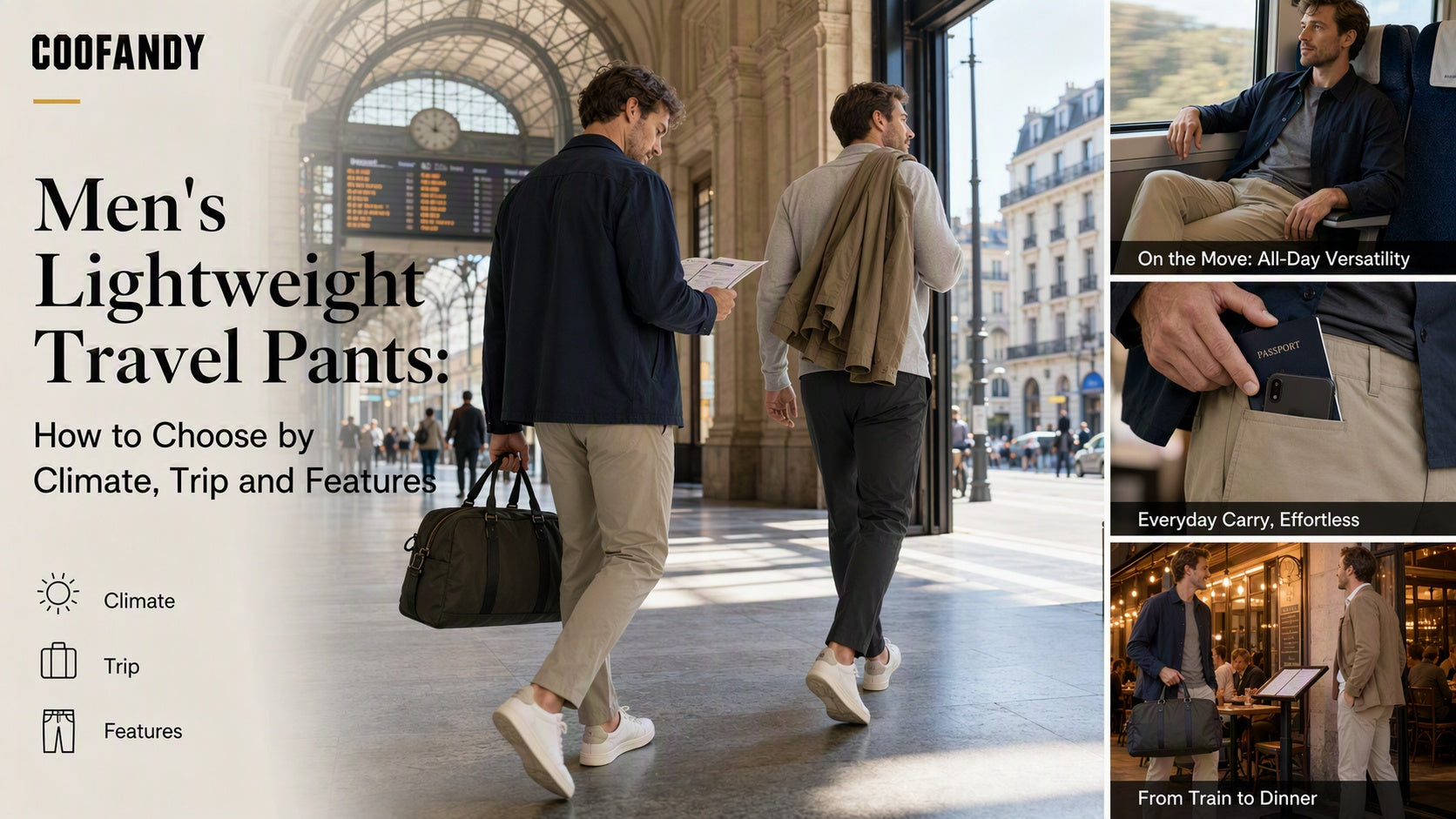
A long flight and an afternoon of city walking ask different things of men's lightweight travel pants. Add dinner, a small suitcase and limited laundry, and the lightest pair may not be the most useful one.
Short answer: Choose for the hardest part of the trip first: prolonged sitting, heat, walking or a dress code. Then check loaded pockets and the laundry plan. At COOFANDY, we would rather narrow the brief than add features you will never use. For the rest of a warm-weather suitcase, see our men's hot-weather travel outfits.
Scope: This is a buying checklist for lightweight travel pants, not a tested lightweight-product ranking. The COOFANDY examples below illustrate listed fabric and construction; this guide has no verified garment weights, overnight-drying times or long-flight comfort scores.
Build Your Trip Profile First
Before comparing fabrics or pockets, picture a normal travel day: the early flight, warm station platform, unexpected rain and an evening when you would rather not return to the hotel to change.

Jot down these seven details:
- Climate: Will it be humid, dry, mild, or cool and changeable?
- Transit: What is the longest stretch you will spend sitting?
- Walking: Are you taking short rides between stops or walking most of the day?
- Formality: Will the pants need to work at dinner or in a business-casual setting?
- Laundry: Will you have a machine, hotel laundry, or only a sink?
- Luggage: Are you checking a bag, using a carry-on, or packing very light?
- Security: Which items need to stay on your body in airports, stations and crowds?
Mark each demand from 0 to 2: 0 means irrelevant, 1 useful and 2 essential. Do not total the scores. Use them to identify deal-breakers, then name the three demands most likely to affect your day.
For a ten-hour flight followed by hotel laundry, seated fit may outweigh drying speed. With one spare pair and sink washing, drying becomes essential. If heat, hiking and a strict dinner dress code all make the essential list, consider two pairs rather than forcing a compromise.
Three Trip Priorities: What to Choose First
| Trip priority | Start with known details | Rule it out when… | What remains unproven |
|---|---|---|---|
| Prolonged sitting | Compare waist adjustment, rise and seat dimensions; shortlist the cut that matches a comfortable pair. | The seated fit pulls at the crotch or the waistband presses even after adjustment. | A stretch percentage or elastic waist does not establish hours of comfort. |
| Sink washing with one spare pair | Choose only care directions that allow your intended wash and dry method. | The required care is unavailable on the trip, or your rehearsal leaves critical areas damp on your schedule. | No fiber name alone establishes overnight drying. |
| City walking followed by dinner | Match the actual dress code; choose a leg shape and pocket layout that work with both pairs of shoes. | Movement binds, or the style misses the restaurant’s requirements. | A crease line does not establish wrinkle recovery; a travel label does not prove rain protection. |
Rank the Features Before Comparing Fabrics
Translate those trip demands into features. A low packed volume helps with a small bag; stretch is useful only if the cut already lets you move. Neither tells you whether the waistband will stay comfortable through a long meal.
| Requirement | What to inspect | The tradeoff to remember |
|---|---|---|
| Low weight | The whole garment, including waistband, pockets and hardware | Very light fabric may have less structure or durability |
| Breathability | Weave density, airflow and room through the leg | A close cut can still feel hot |
| Drying behavior | Main fabric, waistband, pocket bags and seams | Thick details may stay damp after the legs feel dry |
| Stretch | Movement and recovery at the seat and knees | Stretch will not fix a cut that is too narrow |
| Wrinkle recovery | Appearance after sitting, folding and hanging | A sharper look may need a denser fabric |
| Abrasion resistance | Seat, inner thigh, knees and pocket edges | Tougher construction can add warmth or bulk |
| Packability | Folded volume in your own packing cube | Light fabric does not always pack small |
Use the same essential/useful/not-needed labels from your trip profile. A secure pocket may be essential in transit, while fast drying can be optional if hotel laundry is part of the plan. Do not let an appealing extra compensate for an essential feature that fails.
Check fabric, waistband, pocket closures, care instructions and fit rather than relying on the word “performance.” The COOFANDY men's pants collection lets you compare those details across styles.
Choose Fabric by Climate and Activity

The fiber label helps, but it does not tell the whole story. Weight, weave, cut and construction can make two fabrics with similar percentages feel quite different on the body.
| Trip condition | Candidate to compare | Priority during a try-on | Reason to reject it |
|---|---|---|---|
| Hot and humid | Open, light linen blend or another airy construction | Room through the legs; comfort with damp fabric | Cling, poor coverage or a bulky waistband |
| Dry heat | Light cotton blend, linen blend or synthetic blend | Coverage and comfortable movement in your full outfit | Fabric or fit that feels stifling |
| Mild city weather | Light cotton blend or a restrained stretch trouser | Seated fit and appearance with dinner shoes | A technical look that misses the dress code |
| Cool or changeable weather | A denser pair with room for a layer | Comfort both indoors and with your planned base layer | Too warm inside or insufficient weather protection |
| Light outdoor activity plus city time | A movement-friendly pair with suitable construction | Stride, seam pressure and pockets under load | Treating casual trousers as protective outdoor gear |
Use the fiber label to narrow the field, not to predict the trip. Nylon or polyester with elastane is one stretch-fabric option; cotton and linen blends offer others with different textures. Check the actual drying behavior before calling any of them quick-drying. Stretch amount and recovery need a try-on too.
Sit for ten minutes, lift each knee and take a long step. Look for pulling and fabric that stays bunched after you stand. A lighter label is not much use if the cut keeps catching at the thigh.
Before Keeping: A Quick Fit and Pocket Check

Keep the tags on and follow the seller’s try-on conditions. Spend about ten minutes standing, sitting and moving with your usual shoes, then check the pocket layout below. This is a suggested screening interval, not a comfort certification or a reason to ignore return conditions.
Start with the rise. When you sit, the waistband should stay put without pulling down at the back. Look at the seat and crotch next. Sharp horizontal lines usually mean the cut needs more room, even if the fabric stretches. Walk up a flight of stairs or take a long stride. The knees and thighs should move without tugging the waistband along with them.
Waistbands also change how the pants feel and how formal they look:
- A fixed waistband gives you a traditional trouser line, with little room for adjustment.
- A partly elastic or expandable waist can ease pressure while keeping the front relatively clean.
- A full elastic waist with a drawstring gives the most adjustment and usually looks more casual.
For a long flight, prioritize the rise, waistband pressure and seat. On a walking-heavy day, add thigh room, knee movement and seam placement. If one pair must do both jobs, test both kinds of movement rather than relying on a stretch label.
Design the Pockets Around What You Carry
Pockets behave differently once they are full. Load them with the phone, wallet, keys or passport you plan to carry.
| Item | What the pocket needs to do | A common problem |
|---|---|---|
| Passport | Stay flat, secure and easy to reach at checkpoints | A deep pocket can be awkward while seated |
| Phone | Hold the device without letting it slide out | The phone may press against the hip or thigh |
| Wallet | Stay closed in crowded places | A thick back pocket is uncomfortable to sit on |
| Keys | Stay away from the phone | Scratching and noisy movement |
| Boarding pass | Come out quickly | Valuables may be exposed when everything shares one pocket |
A zipper helps stop an item from falling out, but location still matters. Check each pocket standing, seated and walking. If the phone swings, the passport bends or the zipper presses into your leg, try another layout.
Keep important documents and a backup payment method secure rather than loading every valuable into one trouser pocket. Check your destination’s document requirements separately; a pocket layout is not a travel-document checklist.
After Keeping: Rehearse Packing, Sitting and Laundry
Once you have decided to keep the pants, rehearse the parts of the trip that matter. Use the same routine if comparing two pairs; the suggested intervals below are personal comparison tools, not standard tests.
- Pack and recover: fold into your usual packing cube, leave under a similar load for several hours, then hang for about 30 minutes. Note the folded volume and remaining creases.
- Sit and move: wear your travel shoes and carry your usual bag. Sit through a meal or about an hour, then walk and use stairs with normal pocket items. Record waistband pressure, pulling and how the full outfit works.
- Wash only as permitted: follow the garment label, including drying directions. The FTC’s care-label guidance explains the role of these instructions. If sink washing is essential, confirm that your intended method is allowed.
- Check drying and rewear: inspect the waistband, pockets and seams as well as the legs. Record room conditions, elapsed time and any damp areas; once fully dry, check shape and movement again.
A “dry by morning” result applies to your room and method, not every destination. If the waistband remains damp on your planned schedule, allow more drying time or pack another pair. Do not build a one-spare-pair laundry plan around an unverified drying claim.
Match the Pants to Four Common Trips
Use these specification examples to compare waist design, composition and pocket layout for the priorities above.
Long Flight Followed by City Days
The waistband must stay comfortable for hours, while the pants still need to work after the airport. Look for a stable rise, moderate stretch and a clean straight or tapered leg.
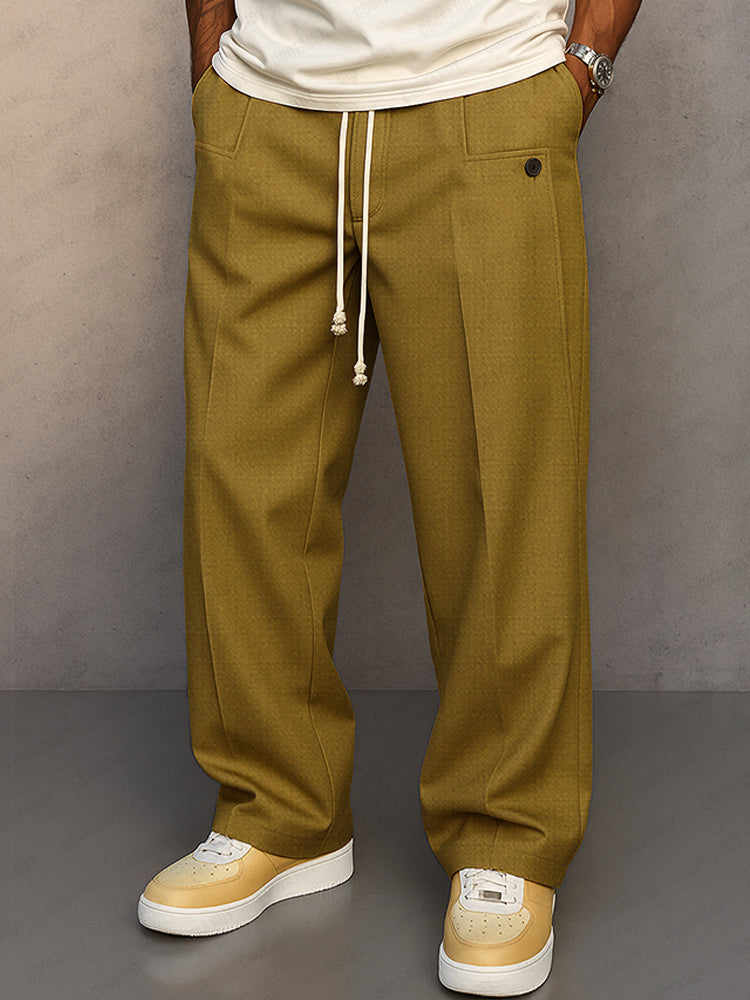
One option to compare is the Comfy Urban Style Drawstring Pants. The product page lists 95% polyester and 5% spandex, an elastic waist with an adjustable drawstring, two slant pockets and two back pockets. The adjustable waist makes this a candidate for the seated-fit check, not a verified flight-comfort pick.
Hot, Humid Travel
Give the thighs room and check the waistband when seated. Extra pockets add layers, so keep them only if you use them. After you decide to keep the pair, notice whether damp fabric clings during normal wear.
Compare warm-weather cuts in the COOFANDY men's linen pants collection. The Casual Loose Linen Blend Pants are listed as 70% viscose and 30% linen with an elastic waist and adjustable drawstring. Consider this if you want that viscose-linen composition; do not choose it for an overnight laundry deadline without a successful rehearsal.
City Sightseeing With Dinner Plans
Here, a clean front and quiet pocket design help. Choose a neutral color and a leg shape that works with walking shoes and smarter shoes for dinner. Use your packing-rehearsal notes to decide whether the finish is tidy enough for dinner.
The Comfort Waist Business Casual Pants fit that direction. The page lists 100% polyester, an elastic waist with adjustable drawstring, two side pockets, one back pocket and a front crease line. The crease line is a listed styling detail; choose a different pair if its actual appearance misses your dinner dress code.
Light Outdoor Activity Plus City Time
For easy paths and city stops, check full strides, stair climbing and loaded pockets. Surface wear around the seat and inner thigh is worth watching over time; a first try-on cannot establish abrasion resistance. A subdued color can make the same pair easier to wear later in town.
Still, there is a limit to the one-pair idea. Pants that feel right on a trail may look out of place at a sharper dinner. When the itinerary pulls in opposite directions, a second pair can be the simpler choice.
Make the Final Packing Decision
Use the rehearsal notes rather than starting another test. Keep the pair in your packing plan only if it meets your essential requirements for sitting, movement, pocket use, dress code and available laundry facilities.
If one requirement fails, make one clear change: change the cut for thigh pulling, the waistband for pressure, or the laundry plan for slow drying. If outdoor demands and a formal dinner conflict, pack a second pair instead of expecting one trouser to do both jobs.
FAQ
How light should travel pants be?
This guide sets no universal weight target. Compare measured whole-garment weights in the same size when available; if a listing omits weight, treat it as unknown rather than treating “travel” as proof of lightness. Prioritize enough coverage, useful pockets and the fit your itinerary needs, then compare folded volume for your bag.
Are travel pants good for long flights?
They can be. The rise, waistband, seat and knees all need to stay comfortable while you sit. Stretch and wrinkle recovery help, but they cannot rescue the wrong cut. Use the seated part of the after-keeping rehearsal above; no short home check guarantees comfort for an entire flight.
Do travel pants need zippered pockets?
Not always. One secure, well-placed pocket may be enough for a passport or wallet. Open pockets are handy for low-risk items. Too many zippers add hardware and can press against the body when you sit.
Can one pair work for dinner and walking?
Yes, when the dress code is smart casual and the pants move comfortably without looking too technical. A clean silhouette and restrained pockets help. For rugged activity plus formal dining, two pairs usually make life easier.
Choose men's lightweight travel pants around the demands you marked essential. If a pair misses one, change the cut, the laundry plan or the number of pairs you pack. A useful trip wardrobe does not have to depend on one do-everything trouser.
Lascia un commento