










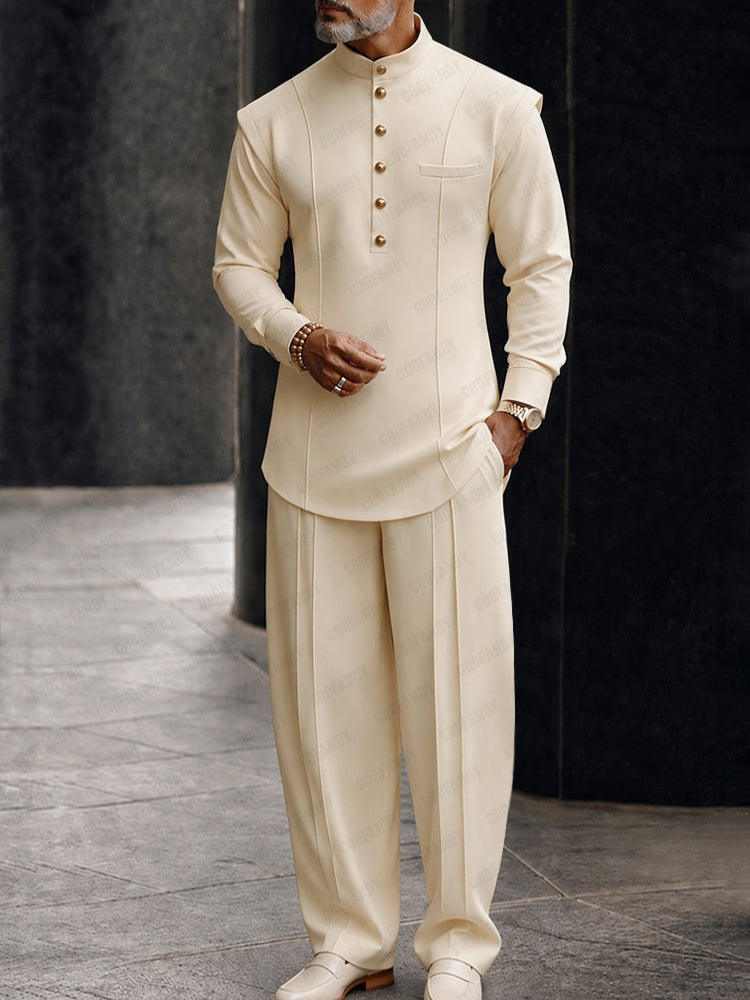
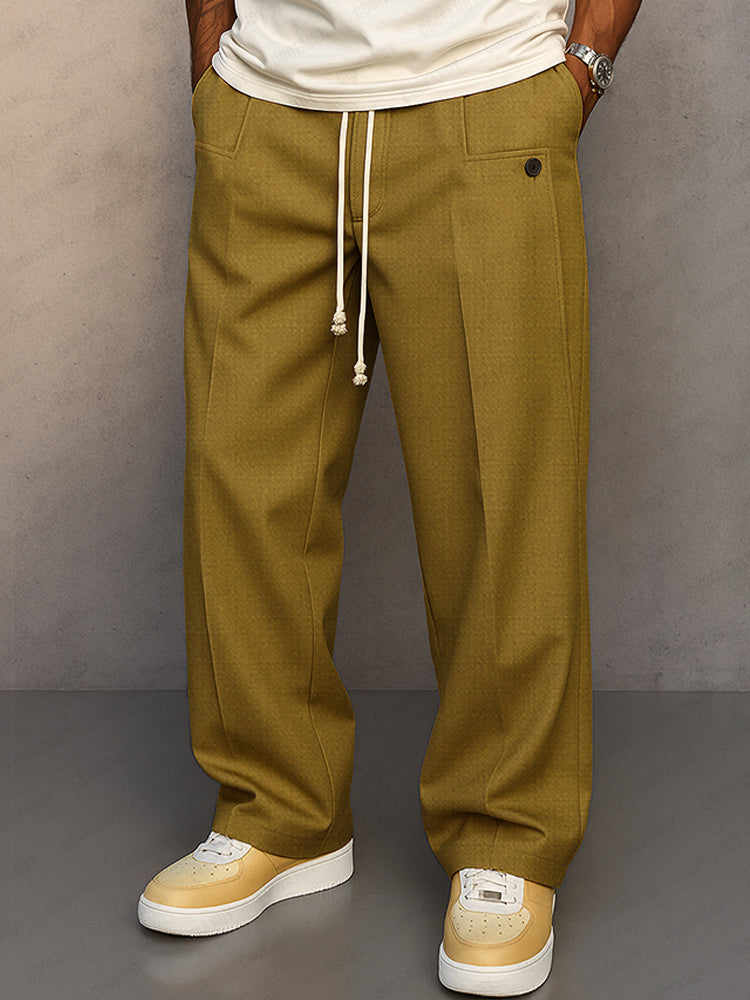
Pants for Athletic Builds: A Thigh-to-Taper Fit Test You Can Do Before Buying Online
Most size charts treat your body like a simple ratio: waist goes up, everything scales. That math falls apart the moment your thighs don't match your waist. You end up choosing between a waistband that fits and quads that can breathe — and the taper from knee to ankle decides whether the pants look tailored or like compression sleeves. This guide gives you a three-measurement fit test you can run at home with a tape measure and five minutes.
Fit Check First
Before you buy pants online for an athletic build, do not start with waist size alone. Start with three checks: thigh room, knee width, and leg opening. The right pair should let the thigh move without pulling, then taper cleanly below the knee so the shape still looks intentional.
Treat every number in this guide as a starting point, not a guarantee. Product measurements and return policies still matter.
Why Standard Sizing Fails Athletic Builds
Pants are graded on a linear scale: as waist size goes up, hip, thigh, and leg opening all grow proportionally. That works if your body grew the same way. Athletic builds break the formula.
Common patterns:
- 31–33" waist with 25–27" thighs. You size up for the thighs and get a waistband that gaps at the back.
- Plenty of hip room, zero quad room. Relaxed-fit pants give you space everywhere except mid-thigh — the one place you need it.
- Taper designed for slim frames. A 6.5" leg opening looks clean on narrow calves. On muscular calves, it creates visible tension lines below the knee.
The fix isn't buying bigger pants. It's measuring the right points and checking those numbers against actual garment dimensions.
The Three-Number Fit Test
Grab a fabric tape measure. If you don't have one, use a non-stretch string and lay it against a ruler.
Mid-Thigh Circumference
Stand with your weight evenly split. Wrap the tape around the thickest part of your thigh — roughly halfway between your hip crease and the top of your kneecap. Don't flex. Most athletic men land between 24" and 28".
This is the choke point. If a pant's thigh dimension is less than your measurement plus 1.5–2" of ease, the fabric will pull every time you sit, climb stairs, or get in and out of a car.
Knee Circumference
Sit with your knee bent at 90 degrees. Measure around the kneecap at its widest. This seated number runs 1–2" larger than standing.
The knee is where taper starts on most pants. If the fabric is already tight here when you're seated, every inch of taper below that point amplifies the restriction.
Desired Leg Opening
Take a pair of pants that fits the way you want from the ankle down. Lay them flat. Measure straight across the hem — that flat number doubled gives you the circumference. Most men with athletic calves feel comfortable at 7–8" flat (14–16" circumference). Under 6.5" flat, tension starts showing on muscular lower legs.
Your existing comfortable pair is the most honest reference point you have.
How to Use These Numbers When Shopping Online
Find the Garment Measurements
Look for a size chart that lists actual garment dimensions — not just body measurements. "Fits waist 32–34" tells you less than "Waist: 34", Thigh: 26", Leg Opening: 7.5"." Some brands list these under a separate tab or in customer reviews where buyers share their own measurements.
Run the Comparison
| Your Body | Minimum Garment Dimension | What to Check |
|---|---|---|
| Mid-thigh circumference | Your thigh + 1.5" to 2" ease | Can you sit without the side seam pulling? |
| Knee circumference (seated) | Your knee + 1" ease | Does the knee area allow bending without binding? |
| Preferred leg opening | Match your reference pair ± 0.5" | Will the taper look proportional to your lower leg? |
Calculate the Taper Ratio
This ratio tells you more than any fit label on a product page:
Taper ratio = thigh circumference ÷ leg opening circumference
- Under 1.5 — Minimal taper. Straight-leg look. Forgiving on athletic builds but can look boxy.
- 1.5 to 1.8 — Moderate taper. Clean shape without compression. This range tends to work best for muscular legs.
- Above 1.8 — Aggressive taper. Strong V-shape from thigh to ankle. Looks sharp on leaner athletic builds; feels restrictive on heavier quads and calves.
If a brand lists thigh and leg opening dimensions, you can calculate this before adding anything to your cart.
Cuts Ranked for Athletic Builds
| Cut | Thigh Room | Taper | Athletic-Build Verdict |
|---|---|---|---|
| Athletic fit / athletic taper | Built for larger thighs, tapers below knee | Moderate | Best starting point — designed for this body type |
| Straight fit | Consistent width from thigh to ankle | None to minimal | Reliable thigh room, but can look shapeless if too wide |
| Relaxed taper | Extra room through hip and thigh, narrows at ankle | Moderate to strong | Good option when athletic-fit isn't available |
| Slim fit | Narrower thigh and leg | Moderate | Often too tight through the quad; sizing up risks waist gap |
| Skinny fit | Minimal room everywhere | Aggressive | Rarely works on athletic builds without heavy stretch content |
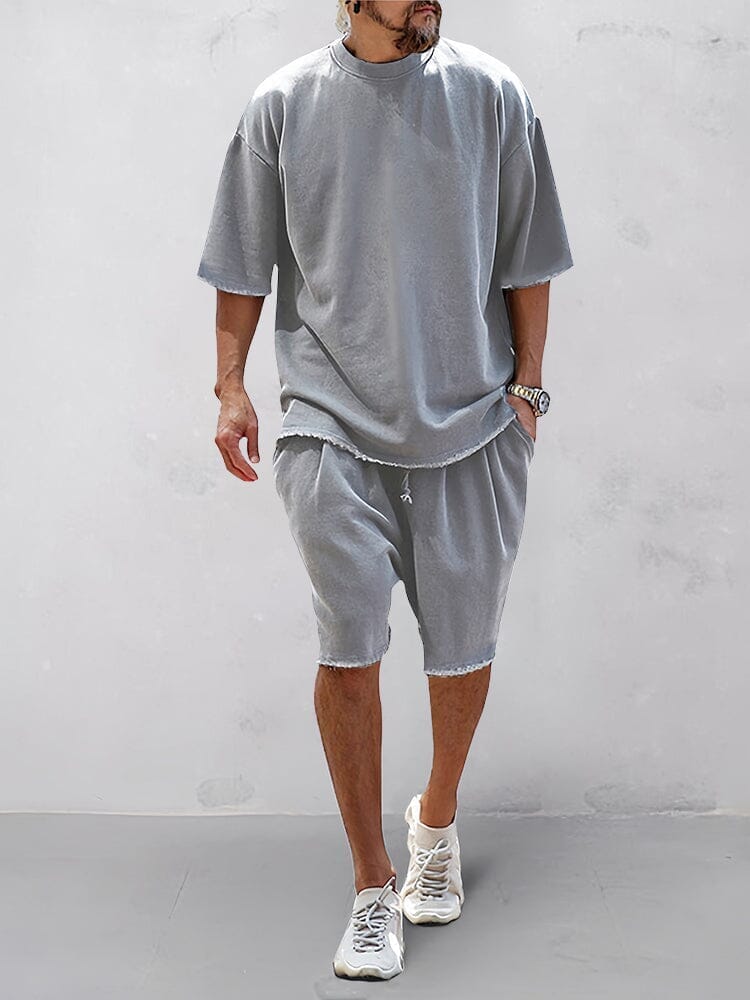
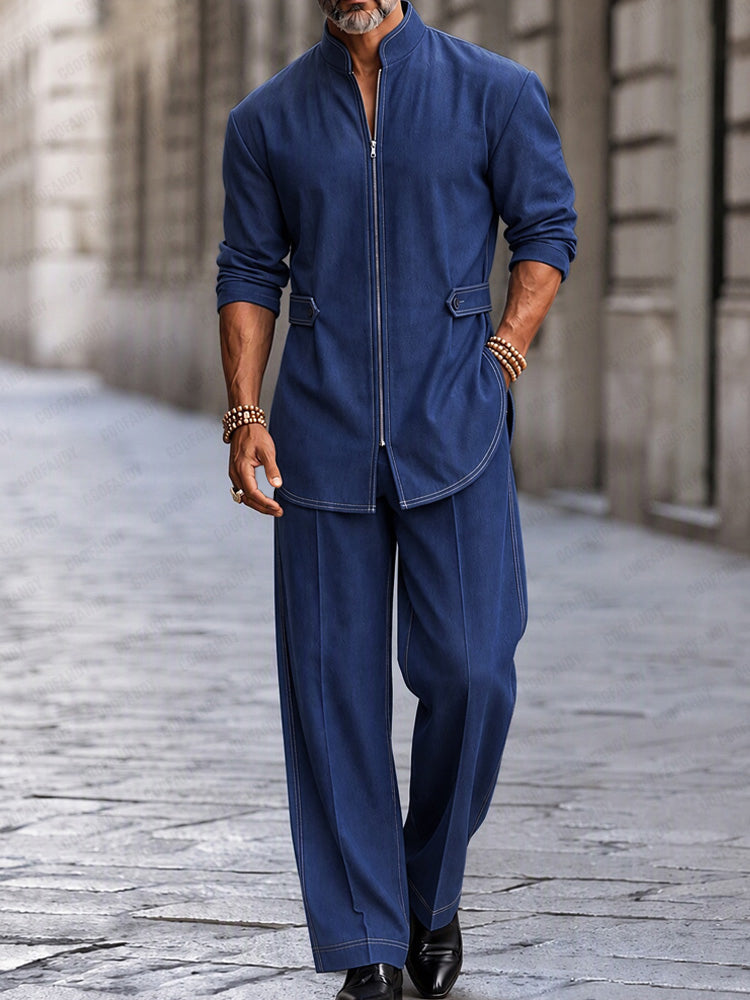
COOFANDY men's pants include elastic and drawstring waistband options that reduce the waist-sizing conflict athletic builds face — when the waistband adjusts, you can pick your size based on thigh fit instead of forcing a waist compromise. Before choosing Casual Solid Elastic Waist Cotton Linen Straight Pants for its loose cut, check the size chart against your three measurements; the fit label alone does not confirm thigh room or taper.
What to Avoid
- Sizing up two sizes for thigh room. You get quad space but also excess fabric at the waist, hip, and seat. The pants look borrowed, not fitted.
- Ignoring the rise. Low-rise pants on big thighs create a pulling point at the crotch. It's uncomfortable and it wears the fabric out faster.
- Trusting fit labels across brands. "Slim fit" at one brand might be another brand's regular. Always compare garment dimensions, not names.
- Skipping stretch content. 2–3% elastane gives meaningful extra room without the pants losing shape over a day of wear. Check the fabric composition before you buy.
FAQ
How much extra room should pants have in the thigh for an athletic build?
Add 1.5 to 2 inches to your mid-thigh circumference — that's the minimum garment thigh measurement to look for. This gives enough ease to sit, squat, and move without the side seam pulling. If the pants contain 2% or more elastane, you can get closer to 1.5 inches of ease.
What leg opening width works best for muscular calves?
Most men with athletic calves find 7 to 8 inches (flat measurement) comfortable — that's a 14–16 inch circumference. Below 6.5 inches flat, the taper starts fighting your calf muscle and creates visible tension lines. Measure a pair you already like and use that as your baseline.
Do stretch pants fix the athletic-build fit problem?
They help, but they don't replace correct sizing. Stretch (typically 2–3% elastane) adds functional ease and makes sitting more comfortable. But if the garment's thigh dimension is two inches too small, stretch just turns the pants into compression wear. Confirm the base measurements work first, then treat stretch as a comfort bonus.
Should athletic guys avoid tapered pants entirely?
Not at all — just pick the right taper ratio. A moderate taper (1.5 to 1.8) creates a clean, proportional shape on muscular legs. Aggressive tapers above 1.8 start binding at the calf. Straight-fit pants work too, but moderate taper tends to look more intentional.
How can I tell if an online size chart shows body or garment measurements?
Check the labels. Body measurement charts say "your body" or "measure yourself." Garment measurement charts say "flat measurement" or "garment dimensions." If the chart lists "Waist: 32" and your waist is 32 inches, it's probably a body chart. If it says "Waist: 34" for a size labeled "32," it's showing garment dimensions with ease built in. When in doubt, contact the brand's support team and ask.

Lascia un commento