







Men's Linen Pants: How to Choose Fit, Fabric Weight and Style
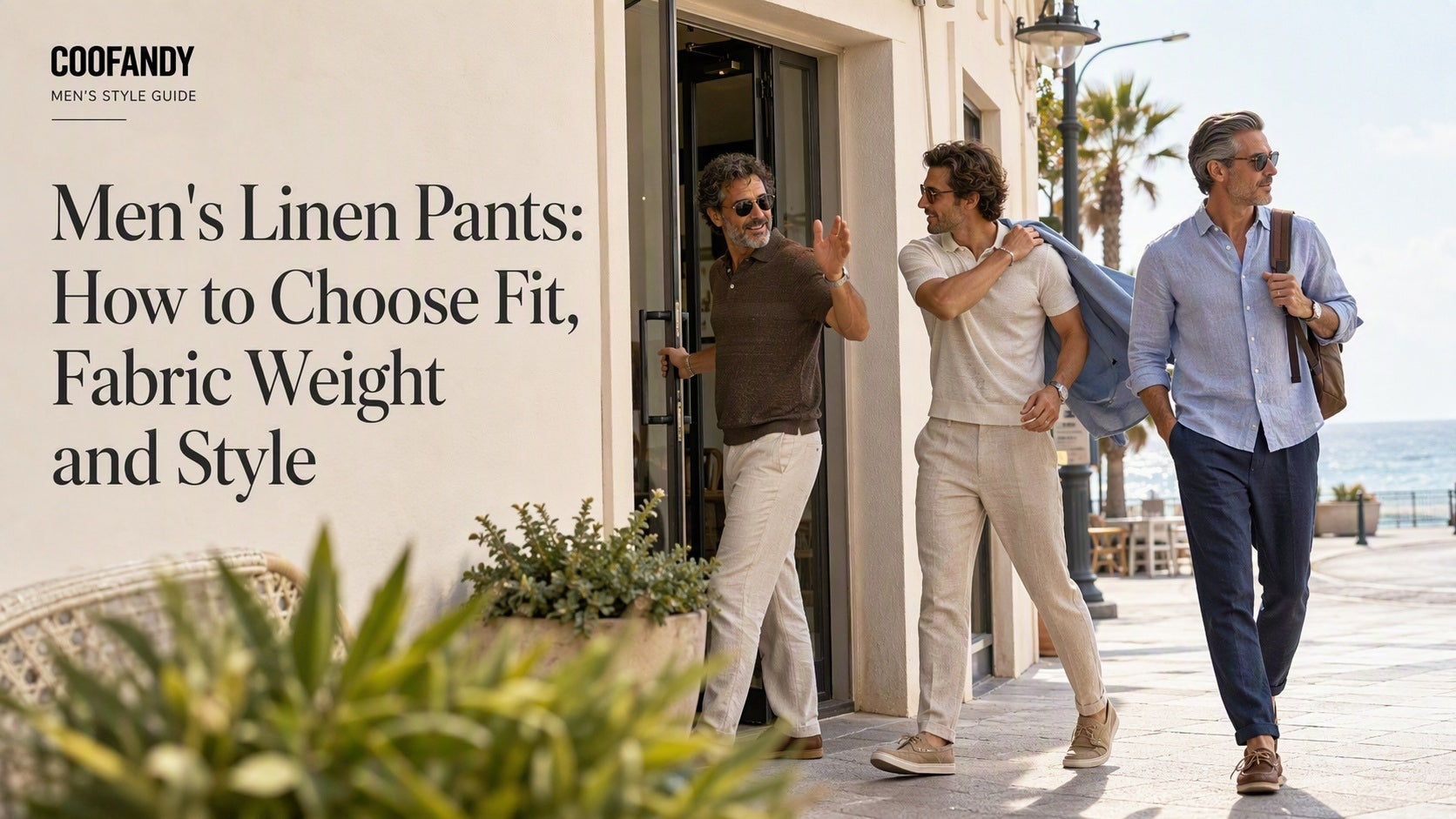
Men's linen pants should feel easy, but they should not make you spend the day fixing the waistband or wondering what shows through in sunlight. A good pair stays comfortable when you sit, hangs cleanly when you stand, and works with the shirt and shoes you already planned to wear.
Short answer: Look for a secure waist, enough rise and thigh room to sit comfortably, and fabric that stays acceptably opaque in motion. At COOFANDY, we would settle those points before choosing a color. Use the COOFANDY men's linen pants collection to shortlist cuts, then compare the measurements on each product page.
When Linen Pants Make Sense
Linen earns its place on warm days when shorts feel too casual and heavier trousers feel like too much. Think about a resort breakfast, a long travel day, dinner near the water or an office where the dress code has some breathing room.
For cold wind or rough physical work, an airy casual pair may not provide the coverage or durability you need. Formality is a separate question: linen can be tailored, but relaxed drawstring pants are not a substitute for the suit an invitation requires.
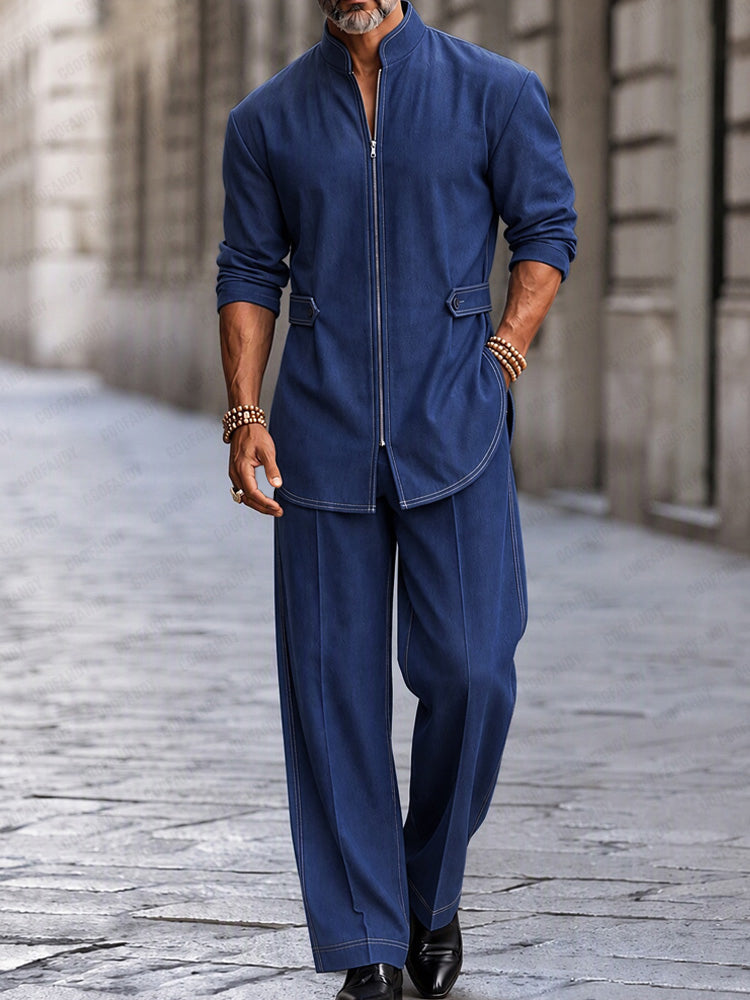
The setting matters more than the word “linen.” A drawstring waist and relaxed leg feel right at a boardwalk lunch. For a casual office or date, a darker color, cleaner waistband and neater hem usually look more at home.
If the main job is a flight, city walking or sink-laundry travel, use the travel-pants checklist to decide whether seated fit, pockets or the laundry plan should lead the purchase.
How Should Men's Linen Pants Fit?

The waistband should stay put without being cinched tightly, and it should remain comfortable in a chair. Use our size guide as a starting point, then check the product-specific chart. If it lists body measurements, use the waist position and method shown; do not substitute a trouser-waist measurement for a natural-waist measurement. If it lists the garment, compare a pair laid flat using the same method.
Rise is the distance from the crotch seam to the top of the waistband. Too little room here can pull the back waist down when you sit; excess rise may leave a low-hanging crotch when the waist sits where you want it. Those are clues, not a diagnosis. Seat shape, thigh room and where you wear the waistband can produce similar folds.
Check the seat and thighs together. Pocket edges should lie reasonably flat, with no hard pulling when you sit or make a shallow squat. If the waist fits but the seat binds, try a different cut before a larger waist.
Leg shape changes the mood of the whole pair:
- Straight: falls relatively straight from the knee to the hem; thigh room still varies.
- Tapered: narrows below the knee and leaves less fabric around the shoe.
- Relaxed: gives the seat and thigh more room; the waist and hem still need definition.
- Wide-leg: makes volume part of the look and pairs best with a top that fits cleanly at the shoulder.
Check the knee and leg-opening measurements when they are listed. A narrow opening can catch on a fuller calf, while a very wide hem may cover a low-profile shoe. For most outfits, a slight break or no break is easy to manage. A full break suits some straighter, heavier styles, but soft linen can look untidy when too much of it pools at the ankle.
For inseam, lay a comfortable pair flat and measure from the crotch-seam junction to the hem along the inside leg. Measure front rise from the top of the waistband to that junction along the front seam. Keep the tape relaxed and follow the product chart’s method; body and garment measurements are not interchangeable.
Fabric Composition, Weight and Opacity

Pure linen and linen blends are both worth comparing. Cotton, viscose or other partner fibers can change the feel, but weave and finishing matter as well. A collection name is only a browsing aid: open each listing in the COOFANDY cotton-linen pants collection and read its actual percentages.
Fabric weight may be listed in GSM, or grams per square meter. ASTM D3776/D3776M describes ways to measure fabric mass; it does not set shopping thresholds for linen pants. Compare published weights only alongside weave, color and lining. If weight is not given, inspect the finished pair instead of guessing a number.
How to Shortlist Online When GSM Is Missing
If GSM is not published, treat fabric weight as unknown. Shortlist by full composition, lining details, garment measurements and construction photos; then confirm coverage on the actual pair.
- Read composition and lining separately. A linen percentage does not tell you whether the trousers are lined. Ask the seller when the lining or pocket-bag details are missing.
- Compare the rise, thigh and leg-opening measurements with a pair that fits, using the same measuring method. Eliminate a cut that already misses those dimensions.
- Use close-ups to inspect construction such as seams, pocket placement and visible layers—not to calculate GSM or prove opacity. Ask for a fabric-weight specification if weight is a deal-breaker.
- Confirm try-on and return conditions before ordering. If the missing information matters and you cannot assess the pair under those conditions, choose a better-documented option.
| What you can check | How to compare it | What it cannot prove |
|---|---|---|
| Published GSM | Compare the same unit and similarly constructed trousers | A higher number does not guarantee opacity or quality |
| Drape and structure | Look at how the leg hangs and whether the cloth clings | Photographs do not establish fabric weight |
| Finished coverage | Check the seat, thighs and pocket bags in bright light while moving | A loose swatch cannot predict coverage under tension |
A heavier number does not settle the opacity question. Weave density, color, pocket bags, seam allowances and stretch across the seat all matter. Cream and white reveal contrast more readily than navy, olive or charcoal. Partial lining may help, though it also adds warmth.
Try the window test at home, wearing the underwear you intend to use. Look from the front and rear, then bend your knees. If contrast at the pocket bags or underwear bothers you, try a darker shade, denser cloth or lining. Judge coverage on your body rather than using the hanging fabric as the final answer.
Waistbands, Closures, Pockets and Lining
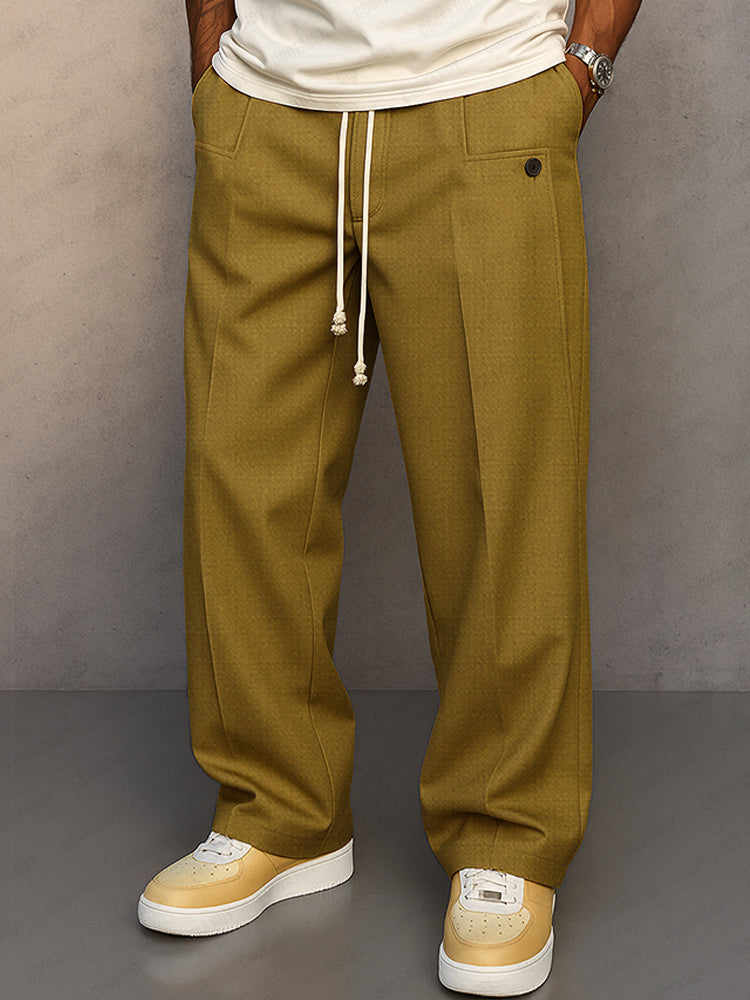
A fixed waistband with a fly and belt loops looks closest to a conventional trouser. Side elastic adds some give while keeping the front clean. A full elastic waist with a visible drawstring feels more relaxed, which can be exactly right for travel or a beach weekend.
Small details change the impression. A short tonal cord is quieter than a long contrasting drawstring. A tidy fly and welt-style rear pockets add structure. Large patch pockets, exposed elastic and a bulky bow at the waist make the casual side more obvious.
Put your phone and keys in the pockets before deciding. The side seam should not pull forward, and the contents should feel secure when you sit. Neutral-colored pocket bags or partial lining can improve coverage in pale colors, but extra layers reduce some of linen's airy feel.
Two listings illustrate why composition and construction need separate checks:
- Casual Straight Linen Drawstring Pants (US Only): listed regular fit, 70% viscose and 30% linen.
- Casual Straight-Leg Cotton Linen Pants: 55% cotton and 45% linen, with an adjustable elastic waistband and two side pockets.
These two examples separate the fabric decision from the fit decision. Prefer the feel of one blend? You still need the right rise and thigh room. Check both before treating a similar product name as a substitute.
Neither example supplies a verified garment weight or opacity result in this guide. Choose between their listed composition and waist details first; leave coverage to the bright-light try-on.
Choose Linen Pants by Occasion
Picture the actual day before choosing the most relaxed or most tailored-looking pair.
| Occasion | Look for in the pants | Easy pairings |
|---|---|---|
| Beach or resort | Relaxed or straight leg, adjustable waist, light-to-midweight fabric, sand or washed tones | Camp-collar shirt or tidy tee; leather sandals, espadrilles or canvas slip-ons |
| Travel | Straight or relaxed-tapered cut, secure waist, working pockets, midweight blend | Knit polo or short-sleeve shirt; minimal sneakers |
| Casual office | Straight or tapered leg, clean waistband, dependable coverage, navy, olive, charcoal or tan | Tucked button-down or fitted polo; loafers or simple leather shoes |
| Date | Clean straight or tapered shape, little ankle break, richer neutral color | Textured polo or open-collar shirt; loafers or clean sneakers |
| Summer wedding | Tailored-looking waistband, neat drape, enough coverage, dress-code-appropriate color | Collared shirt, optional lightweight blazer, loafers or dress shoes |
For work, think beyond the temperature. A pair can be comfortable at a desk and still feel too relaxed for a presentation or client lunch if the drawstring and full elastic waist are prominent.
If you are dressing for a wedding, read the invitation before the product page. Linen separates often suit casual, outdoor, destination and resort celebrations. They do not replace a suit when the invitation asks for one, and they are not black tie. If the wording is vague, asking the couple or venue is better than guessing.
How to Style Men's Linen Pants Without Looking Sloppy
Relaxed fabric needs a little definition somewhere. It can come from a collar, a clean shoulder line, a simple tuck or a hem that lands neatly above the shoe. You do not need all of them at once.

Start by balancing volume. A relaxed or wide leg usually looks better with a shirt that fits properly through the shoulders. A straight or tapered pair gives you more room to wear an easy camp-collar shirt. When looking through our men's linen shirts, compare shirt length and shoulder shape with the trouser cut instead of trying to match fabric names.
Shoes matter because soft fabric can bunch on top of a bulky sole. Loafers, low-profile sneakers, espadrilles and streamlined sandals are easier partners when the hem has little or no break. For a tonal outfit, leave enough difference between the shades to keep the shirt and pants distinct.
A few combinations we would reach for:
- Resort day: sand straight-leg pants, a navy knit polo and brown leather sandals.
- Travel arrival: olive drawstring pants, a white tee with a firm neckline and minimal sneakers.
- Casual office: navy tapered linen-blend pants, a light-blue button-down and brown loafers.
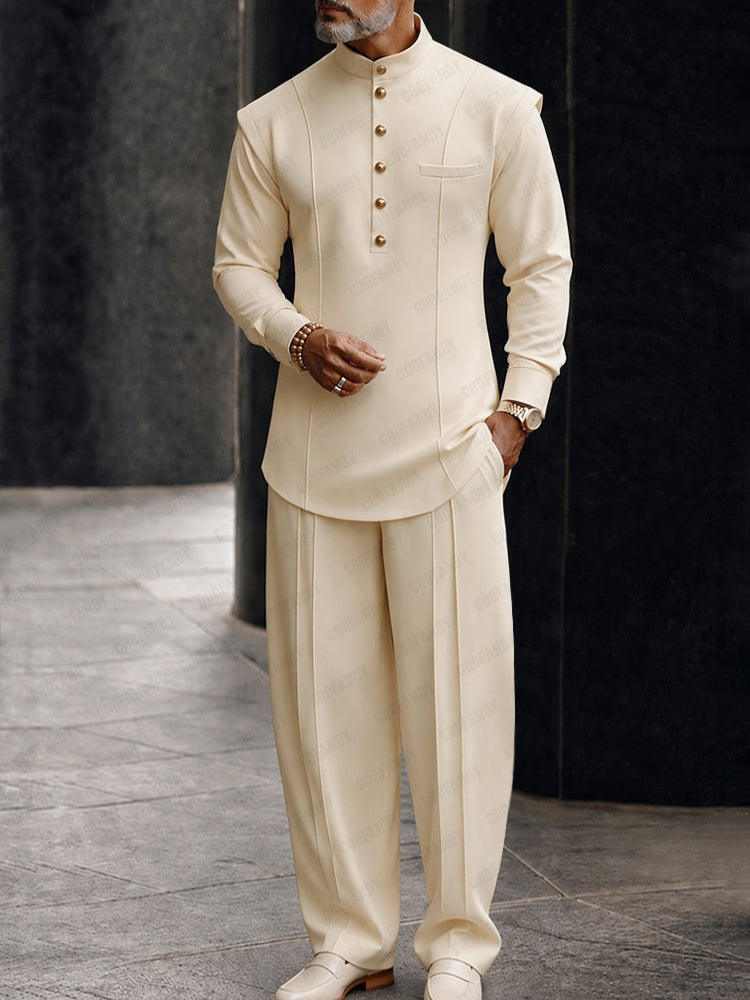
- Summer dinner: cream straight pants, a dark open-collar shirt and suede loafers.
If the outfit starts to resemble sleepwear, look at the waist and the amount of fabric first. A large drawstring bow, a loose top and excess cloth around the ankle can all add to that feeling. Tuck or change the shirt, shorten the visible cord, or try a cleaner hem. Often one adjustment is enough.
The At-Home Try-On Test and Common Mistakes
Give the pants five minutes before removing the tags. A front-facing mirror pose misses too much.
- Stand naturally. Is the waistband level? Do the front, seat and legs hang without strong pull lines?
- Sit in a normal chair. The waist should not dig in, and the pockets should stay reasonably flat.
- Make a shallow squat. Check thigh room, crotch pressure, rear drag lines and coverage.
- Walk with your phone and keys. Notice slipping, twisting or a loaded pocket pulling the side seam.
- Use bright backlight. Check pale areas, pocket bags and underwear contrast from both sides.
The location of the problem usually tells you what to change. Tightness everywhere points toward size. A comfortable waist with pressure at the crotch or thigh points toward the cut or rise. Good fit with poor coverage calls for a darker color, denser fabric or lining, rather than simply sizing up.
If you plan to hem the pants, settle the seat and rise first. A shorter leg will not fix pulling at the crotch. Pin the proposed length with your usual shoes, and avoid a permanent alteration until you have checked the care instructions and decided to keep the pair.
Care and Final Buying Checklist
Check the care label before the first wash, including drying and ironing instructions. Smooth the waistband and legs while damp if the label allows, then dry as directed. For a sharper crease, use the permitted pressing setting rather than adding heat until the fabric looks smooth. Our linen-pants care guide explains the general routine.
Before buying, or before taking off the tags, check these points:
- The waist stays comfortable when you stand and sit.
- The rise, seat and thighs let you move without pulling or sagging.
- Coverage still feels right in strong light and under tension.
- The waistband and closure fit the occasion.
- Your everyday pocket items do not distort the side seams.
- The hem works with the shoes you intend to wear.
- The care instructions fit the way you actually do laundry.
A little rumpling may be a tradeoff you accept. A rolling waistband or uncomfortable seat is a reason to keep looking. Make that distinction before the color persuades you.
FAQ
Should linen pants be loose?
They need enough room for air and movement, but they should not hang from an oversized waist. Look for a secure waistband, a smooth seat, comfortable thighs and a leg that falls without deep folds.
What weight linen is best for pants?
There is no single best GSM for every pair. If it is listed, compare it alongside weave, color and lining. If it is missing, leave weight unknown and shortlist by composition, garment measurements and construction details; request missing specifications before buying when they are essential. Confirm coverage in bright light while standing and seated on the actual garment.
Are linen pants appropriate for a wedding?
They can be right for many casual, outdoor, destination or summer weddings. Choose a clean waistband, neat fit, enough coverage, a collared shirt and polished shoes. The invitation still decides: linen separates do not meet a suit or black-tie requirement.
What underwear works under light linen pants?
Choose smooth, close-fitting underwear near your own skin tone rather than defaulting to white. A low-contrast shade and unobtrusive seams may show less through pale fabric. Check the combination in daylight while standing and seated.

Lascia un commento