








Types of Jackets for Men and How to Style Them

The main types of jackets for men include bombers, Harringtons, varsity jackets, truckers, shirt jackets, utility styles and insulated or weather-oriented designs. Their differences become easier to recognize when you look at the collar, fastening, pockets and hem rather than the product name alone.
Not every label describes the same thing. Denim and suede describe materials or surfaces; bomber and trucker describe shapes. A suede bomber therefore belongs to both descriptions, while two denim jackets can have quite different cuts.
Once you recognize the shape, the useful question is what to wear with it. A short bomber over fine knitwear creates a different outline from a field jacket over an Oxford. The combinations below connect those design differences to shirts, trouser shapes and everyday plans.
Key Takeaways
- Wear a short bomber or Harrington with a controlled inner hem and straight trousers, keeping the jacket's waistband connected to the trouser line.
- Pair chore and field jackets with fine knitwear or a shirt and pleated trousers when you want less of a head-to-toe workwear look.
- Try a trucker over an Oxford with olive chinos instead of automatically adding another denim piece.
- Give a bulky puffer a steady base with straight trousers; its name does not establish down content, warmth or waterproof performance.
The Main Jacket Types at a Glance
Use this table as a visual starting point, not a set of compulsory specifications. Designers borrow details between styles, and retailers sometimes use several names for one garment. The silhouette and construction should support the label rather than the other way around.
| Style | Common identifying details | A useful outfit direction |
|---|---|---|
| Bomber | Short body, often gathered or ribbed hem and cuffs | Fine crewneck and straight trousers |
| Harrington | Short zip-front shape, often a small standing collar | Striped tee and chinos |
| Varsity | Athletic ribbing, often snaps or contrasting panels | Plain Oxford and dark jeans |
| Trucker | Panelled front, commonly chest pockets and buttons | Oxford and non-denim trousers |
| Shirt jacket | Shirt-like collar and fastening, room for layering | Fine knit and pleated trousers |
| Chore | Work-shirt collar and practical patch pockets | Smooth knit and stone trousers |
| Field or barn | Utility pockets; longer, roomier shapes are common | Shirt or thin crewneck and straight pants |
| Biker or racer | Asymmetric biker front or simpler racer closure | Henley or fine knit and clean trousers |
| Puffer or quilted | Filled sections or stitched quilting | Uncomplicated top and straight pants |
| Fleece | Pile surface, with varied collars and fastenings | Henley and clean jeans |
| Parka | Longer body, frequently a hood | Controlled inner layers and straight trousers |
| Windbreaker, rain shell or softshell | Different lightweight or protective constructions | Simple layers chosen for the actual conditions |
Blazers are jackets too, but their lapels and tailored construction put them in a different styling family. Pea coats, trenches and longer overcoats sit alongside these categories rather than needing to become extra entries in a short-jacket list. If you are deciding how many pieces to own, the separate guide to building a useful fall jacket rotation addresses that wardrobe question.
Bomber, Harrington and Varsity Jackets With Cleaner Trouser Lines
Bomber With a Fine Crewneck
Try a dark bomber over a cream fine-gauge crewneck and charcoal straight trousers. The knit supplies a light area inside the jacket without the bulk of a cable-knit sweater. Let its hem meet the upper part of the trousers rather than hang far below the bomber's waistband. You can leave the jacket open to show the contrast, or close it without trapping a large fold of knit above the hem.
Straight trousers give the gathered jacket a consistent line beneath it. Extremely tight calves make the upper half look much larger; excessively wide trousers can make a generous bomber feel shapeless. Start with room through the thigh and a fairly even leg, then finish with simple sneakers or plain boots. This is an easy lunch or weekend outfit without relying on a hoodie.
Harrington With a Striped Tee
A navy Harrington, restrained striped tee and straight chinos make a lighter-looking combination. The jacket's small collar frames the tee rather than sitting over another folding collar. Keep the stripes confined to the top: plain trousers allow the pattern to remain a detail instead of turning the whole outfit into competing lines.
Stone chinos create clear contrast, while navy chinos make the outer shape more continuous. Choose according to the result you want, not a rule that colors must always differ. A short tee works untucked; a long one may need a tidy tuck so it does not leave a loose panel below the jacket.
Varsity With an Oxford
A varsity jacket can work over a plain Oxford and dark straight jeans, taking the outfit away from an entirely athletic direction. Keep the shirt collar contained inside the jacket neckline and avoid a large graphic underneath contrasting sleeves. With the shirt tucked, the jacket's ribbed hem becomes the main horizontal edge. Simple shoes keep the combination casual enough that the Oxford does not look like an unfinished office outfit.
Trucker and Shirt Jackets Beyond the Usual Tee-and-Jeans Formula
Trucker With an Oxford and Olive Chinos
The familiar denim jacket and jeans combination needs little introduction. For a more distinct alternative, wear a blue trucker over a pale Oxford and olive chinos. The woven shirt brings a smaller collar and cleaner front into the opening, while non-denim trousers prevent the jacket and lower half from blending into one large denim surface.
Tuck the shirt when its tails are long, keeping the trucker's shorter body visible. An open jacket exposes the shirt's vertical line; fastening it shifts attention toward the chest panels and pockets. Keep the chinos straight or gently tapered rather than very narrow. Brown boots are one possible finish, but the shirt-and-trouser relationship does the main styling work.

Shirt Jacket With Knitwear and Pleated Trousers
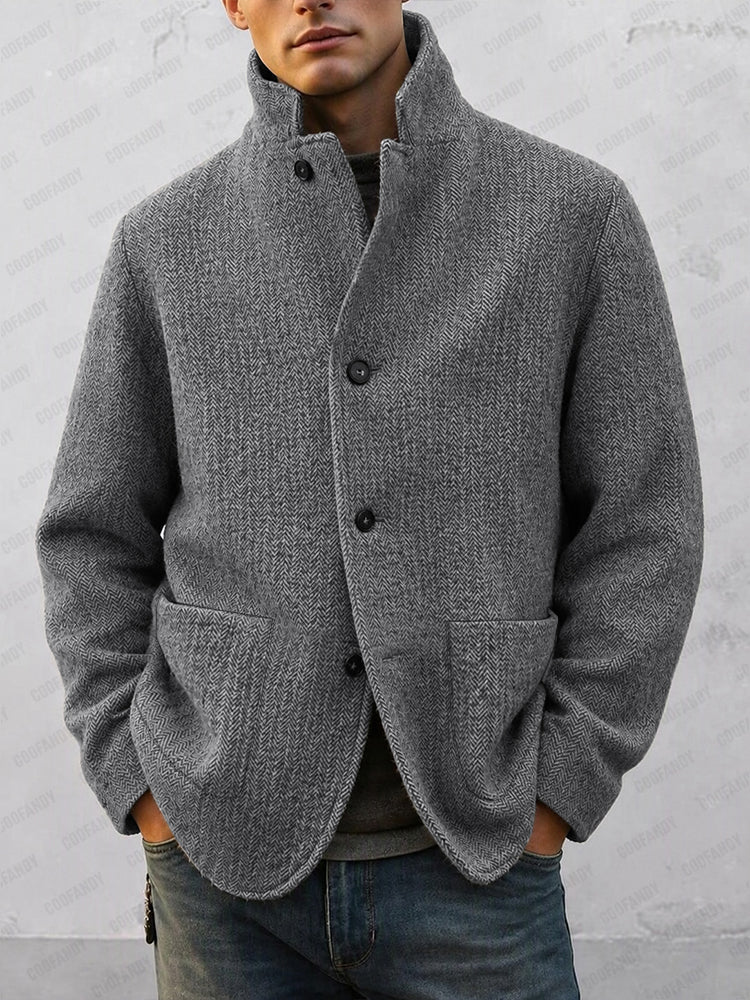
A plain shirt jacket over a fine knit and dark pleated trousers offers a softer alternative. Choose the knit's neckline to sit below the jacket collar, leaving one clear opening around the face. A bulky rollneck is not necessary just because the outer layer has room. A smooth crewneck often makes the pocketed front easier to read.
Let the knit finish near the waistband so the pleats remain visible. Those pleats provide room through the upper leg, balancing a relaxed shirt jacket without requiring wide hems. Wear the outer layer open to keep the waistline clear. The important change from tee and jeans is the combination of a smoother inner surface and a more defined trouser front, not simply a darker color palette.
Chore, Field and Barn Jackets With Softer Layers
Chore Jacket With Fine Knitwear
Try a chore jacket over a plain fine knit with stone pleated trousers. Patch pockets already add practical detail across the torso, so a heavily textured sweater or cargo trousers are optional rather than automatic partners. A relatively smooth top lets the pocket shapes stand out, while the lighter trousers move the outfit away from a uniform workwear appearance.
Leave enough room for the knit without letting both hems gather at the same point. If the jacket extends below the hips, a shorter inner hem preserves a clear division when it is open. The trousers should hang from the waist rather than pull across the pleats. This combination suits a casual day out when you want the jacket's utility character without matching it with every rugged item you own.

Field Jacket With a Striped Shirt
A field-style jacket over a finely striped shirt and dark straight trousers changes the visual balance again. The shirt's small pattern appears mainly in the center; the jacket's larger pocket layout stays on either side. Keep the trousers plain and skip a patterned scarf. There is already enough information in the shirt and front panels.
Barn Jacket With Corduroy Trousers
For a barn-style jacket, try a thin crewneck and dark straight corduroy trousers. Put the stronger texture below the waist rather than adding a thick knit under a roomy coat-like body. A restrained upper half makes a contrasting collar easier to accommodate when the jacket has one. Barn and field labels overlap in retail use, so judge the actual length, pocket arrangement and room for layers rather than expecting every example to share the same construction.
Biker and Racer Jackets Without Repeating the Same Rugged Look
Biker With a Henley
An asymmetric biker jacket, plain Henley and dark grey straight trousers create a relaxed outfit without adding distressed jeans. The Henley's short placket gives the center a little detail but does not introduce another broad collar beneath the jacket's lapels. Keep its buttons fairly restrained and let the asymmetric fastening remain the dominant line.
Straight trousers reduce the contrast between a substantial upper layer and the ankles. Plain boots can continue the clean outline; they do not need heavy buckles or extra hardware. If the jacket already has several zips, keep the belt and other visible accessories quiet. You are choosing where the metal details appear rather than trying to remove all of them.

Racer With a Fine Knit
A simpler racer-style jacket works with a fine crewneck and light chinos. Its cleaner front needs less visual editing than a heavily detailed biker, so the pale trousers can become a larger part of the outfit. Keep the knit close enough to the waist that it does not hang below a short jacket. Leather, faux leather and suede-like finishes can all appear in different jacket shapes; identify the actual material separately and never assume a fashion motorcycle-style jacket provides riding protection.
Puffer, Quilted, Fleece and Shell Jackets in Everyday Outfits
Puffer and Quilted Jackets
A puffer over a plain crewneck and straight trousers keeps the clothing underneath legible. Choose trousers with enough room through the thigh to support the fuller jacket rather than narrowing the whole lower half. If the puffer is cropped, avoid a very long sweatshirt hanging underneath; a controlled inner hem keeps the short silhouette intentional.

For a less voluminous quilted jacket, try an Oxford and chinos. The shirt collar gives the outfit a different character from the crewneck combination, while the chinos keep it useful for everyday errands or a casual lunch. Quilting describes stitching and construction, not a guaranteed amount of insulation. A thin quilted jacket and a heavily filled puffer should not be treated as interchangeable merely because both have stitched sections.
Fleece and Parka Outfits
Fleece over a Henley and clean straight jeans gives the pile surface room to be the main texture. Skip heavily distressed denim if you want a quieter result. With a longer parka, use a simple inner layer and trousers that fall cleanly below its hem. Adding an oversized hoodie, long tee and very wide cargo trousers can create several competing volumes; choose that deliberately rather than assuming a large coat requires more bulk everywhere.
Lightweight Shells
A lightweight shell can sit over a plain tee or thin knit with uncomplicated casual trousers. Keep the inner layer suitable for the day when the shell comes off. For rain, wind or sustained time outdoors, choose the garment by its stated specifications and the conditions, not by whether it resembles a windbreaker. The 50–60-degree layering guide discusses weather decisions separately; these outfit ideas are not temperature ratings.
COOFANDY Jackets Styled as Complete Outfits
COOFANDY, founded in 2015, centers its brand story on helping men feel confident through work, family and social life. That approach is useful here: the jacket should connect with clothes you actually wear, rather than require a separate wardrobe around every new style. Its emphasis on design and accessible clothing offers a starting point for building those combinations, not a promise that every jacket performs the same job.
The Coofandy Casual Button Denim Jacket combines 100% cotton with a roomier classic cut and double-needle stitching. Wear Blue over a pale Oxford and olive chinos for the trucker-inspired outfit direction, keeping the shirt tucked when its tails extend below the jacket. The non-denim trousers give the cotton outer layer a distinct role instead of repeating the same fabric from shoulders to shoes.
The Utility Lightweight Pocket Jacket has a 95% polyester, 5% spandex composition, snap-button closure, one chest pocket and two slant pockets. Try Navy Blue over a pale fine knit with stone pleated trousers. Its practical pocket arrangement introduces utility detail without requiring cargo pants underneath. Keep the knit's hem controlled so the jacket opening reveals the trouser waist rather than several overlapping edges.
For a different surface, the Retro Faux Suede Workwear Jacket uses 95% polyester and 5% spandex with a matte faux-suede finish. Its relaxed fit, stand collar, button front and symmetrical flap chest pockets suit a plain crewneck and dark straight trousers. Coffee can become the outfit's main warm color, leaving the other pieces restrained. This is faux suede, not animal suede, and the workwear styling does not establish protective riding performance.
Conclusion
Understanding types of jackets for men is most useful when it changes how you combine clothes. A bomber's short hem, a trucker's front panels and a field jacket's pockets each suggest different ways to arrange the layers underneath. Keep familiar combinations as options, then try an Oxford instead of a tee, pleated trousers instead of jeans, or a smooth knit instead of a chunky one. Identify the shape, choose the outfit and check any performance requirements separately. You do not need every jacket type to make the ones you own more versatile. To explore more options, browse men's jackets and compare their shapes with the outfits you plan to wear.
FAQ
What is the difference between a bomber and a varsity jacket?
Both can have short bodies and ribbed edges. Varsity jackets commonly add athletic stripes, snaps or contrasting panels, while bomber designs vary widely in collars and fastenings. These details overlap, so compare the actual garment rather than relying on one feature.
Is denim a jacket type or a fabric?
Denim is a fabric. A trucker is a familiar jacket shape often made in denim, but denim can appear in other silhouettes. Likewise, a trucker-style jacket need not always use denim.
Does a puffer jacket always contain down?
No. The raised sections do not identify the filling. Check the specific garment's composition and construction; a puffer appearance does not establish down content, a temperature rating or waterproof performance.
Is a blazer a jacket?
Yes. It belongs to the tailored jacket family, alongside sport coats and suit jackets, although retail naming can overlap. Its lapels and construction generally call for a different outfit discussion from utility jackets or lightweight shells.


Lascia un commento