







Men's Linen Shirts: The Complete Guide to Fit, Fabric and Styling
Short answer: Choose a men’s linen shirt by occasion, fit and coverage. For relaxed weekends, compare open-collar or short-sleeve styles; for a casual office, start with a tidy long-sleeve cut and check the dress code. Read the full fiber composition and care label before choosing a color.
A men's linen shirt can work at the beach and at dinner, but the same cut will not suit every plan. Start with the occasion: an open camp collar and roomy body feel casual, while a tidier collar and shoulder line work more easily with tailored trousers.
At COOFANDY, we would settle the fit before the color. Use the occasion guide below to narrow the shape, then check shoulder room, chest movement and hem length.

Quick Guide: Start With the Occasion
Think about the whole outfit. A roomy silhouette can look easy at a resort but unfinished with office trousers; a crisp, buttoned-up shirt may be more than you need at the beach.
| Occasion | Formality | Sleeve | Collar | Fit | Easy colors |
|---|---|---|---|---|---|
| Beach or resort | Very relaxed | Short or rolled long sleeve | Cuban/camp | Relaxed | White, sand, light blue |
| Weekend | Casual | Short or long sleeve | Button-down or standard collar | Regular or relaxed | Blue, beige, olive, stripes |
| Casual office | Smart casual | Long sleeve | Standard or button-down | Regular, with a clean outline | Light blue, stone, navy |
| Summer event | Dress-code dependent | Usually long sleeve | Standard or button-down | Regular, not oversized | White, pale blue, deeper neutrals |
Use the table as a starting point, but follow the dress code. Cocktail, formal and black-tie invitations may call for more than a casual linen shirt.

How Should a Men's Linen Shirt Fit?
A little room through the body helps, but “relaxed” does not have to mean oversized. Check the shirt buttoned and in motion, not only hanging straight in front of a mirror.
For a conventional set-in sleeve, the shoulder seam should sit near the shoulder edge. A deliberately dropped shoulder is different: judge that cut by whether the sleeves and body still move comfortably. Do not reject an intentional oversized shape on seam position alone.
On a standard collared shirt, fasten the top button once to check for pinching or a wide gap. Then open it and see whether the collar settles. Skip the closed-neck check on a camp collar designed to lie open.
Next, look at the chest and placket. The button line should stay fairly straight. Gaping or diagonal pulls can signal insufficient room; heavy folds may come from spare cloth or the armhole shape. Recheck while moving before deciding whether to change the size or cut.
Use regular fit as a starting point, then adjust for the shape you want. Long sleeves should finish near the wrist; short sleeves need room around the upper arm. A tucked hem must stay inside the waistband when you reach. For untucked wear, check the length from the side as well as the front.
Reach forward and lift both arms. If the upper back pulls while the chest feels comfortable, compare the shoulder and armhole shape before simply sizing up. Our casual-shirt fit guide by body type explains how those proportions interact.
Check the waist separately. Sit with the shirt buttoned: the lower placket should not gap or force the hem upward. When the shoulders fit but the middle strains, a straighter cut may work better than a larger version of the same shirt.

How to Choose Linen Fabric, Weave and Weight
“Linen” in a product title does not always mean 100% linen. Read the percentages, then check the weight, weave, drape, opacity, and care instructions. Those details say more about everyday wear than the name alone.
Weight describes how much fabric mass there is per unit of area; weave describes how the yarns are arranged. They answer different questions. If GSM is listed, compare it alongside construction. If it is absent, do not invent a number from the photo: inspect whether the collar holds, the body clings and the fabric gives enough coverage.
| Fabric direction | What it may offer | What to check on the finished shirt | Where to start |
|---|---|---|---|
| 100% linen | Distinct linen texture and visible rumpling | Weave, weight, daylight coverage and the feel of creases | Resort or weekend wear; a neater cut for dinner |
| Linen-cotton blend | A familiar shirting feel with linen texture | Whether the cloth holds its outline without feeling stiff | Everyday wear or a casual office |
| Linen-viscose blend | Often a more fluid drape | Cling when seated and whether the hem falls back after movement | Relaxed shirts and vacation outfits |
| Linen with spandex or elastane | Potential give through the fabric | Actual stretch and recovery; percentage alone is not a stretch rating | A candidate when movement is a priority |
Compare the complete composition, not just the word “linen.” A cotton-led blend, a linen-led blend and a viscose-led blend are different starting points. For a closer look at the tradeoffs, read our 100% linen versus linen-blend comparison.
Hold the shirt toward a bright window to spot contrast between the body, doubled placket and pocket. Then put it on. Fabric that looks opaque while loose may reveal more where it stretches across the chest or back.
White needs the closest look. Under it, an undershirt near your skin tone is usually less visible than bright white. For easier coverage, try a mid-tone blue, beige, or another slightly deeper shade.
Choose the Collar, Sleeve Length and Color
Once the fit and fabric feel right, the smaller details decide how you will wear it.
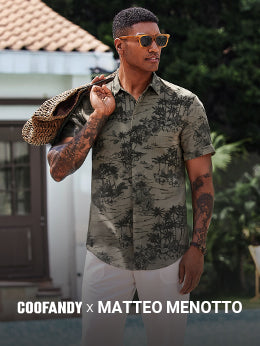
A standard collar dresses up or down easily. A button-down stays neat for smart-casual outfits, while a Cuban or camp collar feels at home on resorts and relaxed weekends.
Long sleeves adapt through the day: keep them down for work or an event, then roll them neatly later. Short sleeves are more casual, and the opening should follow the arm without squeezing or standing away.
For a first linen shirt, white, beige, and light blue are easy choices. White feels crisp but needs an opacity check; beige is relaxed, and light blue works for weekends or smart-casual plans. Try prints and darker shades once you know your preferred collar and fit.
Long sleeves offer more arm coverage, but sleeve length alone does not establish a UV-protection rating. Do not treat an unrated linen shirt as tested sun-protective clothing.
How to Style Men's Linen Shirts
Let the shirt set the mood, then choose pants and shoes that belong in the same setting.
Beach or resort
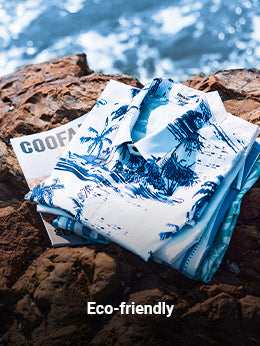
Wear a short-sleeve camp-collar shirt untucked with tailored swim shorts, sandals and a simple sun hat. For a conventional button-front alternative, compare our short-sleeve linen-cotton shirt, listed as 55% linen and 45% cotton. With that shirt, try sand drawstring pants and slip-ons.
Weekend
A regular or relaxed shirt works well with chinos, flat-front shorts or clean five-pocket pants. Leave a short, even hem untucked; tuck a longer hem if it overwhelms the pants. Roll long cuffs evenly, add low-profile sneakers and keep accessories simple—a watch is enough.
Travel
For a travel day, pair a long-sleeve shirt with lightweight trousers and supportive sneakers. Keep the collar open and carry a crossbody bag rather than filling the shirt pocket. Our long-sleeve half-button blend lists 67% viscose, 30% linen and 3% spandex. If that blend appeals, check its movement and drape while seated before packing it.
Casual office
Choose a long-sleeve shirt with a tidy collar, then add chinos or lightweight tailored trousers. Tuck it in, keep the sleeves down, and finish with loafers and a belt in a similar tone. The 100% linen COOFANDY classic button-up has a conventional collar, button front, and cuffs. If you choose white, check it in daylight before the first office wear.
Summer event
For a relaxed outdoor celebration, try a tucked long-sleeve shirt with tailored trousers and loafers. One understated accessory is enough. Keep the sleeves down for the ceremony. If the dress code welcomes linen, compare the long-sleeve options in the COOFANDY collection. For a formal wedding, you may still need a jacket or a different dress shirt.
Washing, Shrinkage and Wrinkle Control
Before the first wash, read the label. Blends, dyes, and trims can change the recommended care, even within one collection.
- Use the wash temperature and cycle on the label; do not assume every linen blend needs the same settings.
- Take the shirt out promptly so damp creases do not settle deeply.
- Reshape it while damp, especially the collar, placket, cuffs, and hem.
- Dry and press as directed, staying within the recommended heat.
Our linen shirt care guide gives a general routine. The pure-linen and 55/45 linen-cotton product pages checked for this guide both list cold machine washing. Follow the sewn-in label for drying and ironing; ask us if it is unclear.
For a neater finish, focus on the collar, placket, cuffs and hem, using only the steam or iron setting the label permits. Hanging after unpacking may soften some packing folds; it will not necessarily remove deep creases.
The 60-Second Buying Checklist
Before checkout, take one last look:
- Does the shirt suit the occasion and dress code?
- Do the shoulder and chest measurements work for you?
- Can you sit and reach without pulling at the buttons?
- Does the fiber blend match the texture and drape you want?
- Are you comfortable with the weight and opacity?
- Will the collar, sleeves, and hem work with your usual outfits?
- Do the care instructions fit your routine?
Ready to compare specific shirts? Our seven COOFANDY linen-shirt picks narrow the options by composition, closure, listed sizes and price. Use the COOFANDY men’s linen shirt collection if you want to browse beyond that shortlist.
FAQ
Are linen shirts supposed to fit loose?
They should have enough room for comfortable movement, but they do not have to be oversized. Keep the shoulder line neat and check that the placket stays closed when you sit or reach. A relaxed fit can have more volume; it should still look intentional.
What color linen shirt is least see-through?
Mid-tone and darker colors often show less than white or very pale shades. Fabric weight, weave, fit, lighting, and your undershirt also make a difference. Check the shirt in daylight. Under white, a skin-tone undershirt is usually the least noticeable.
Should men tuck in a linen shirt?
Tuck it in for a casual office, tailored trousers, or a dressier summer event. Leave it untucked at the beach, on vacation, or during a relaxed weekend, as long as the hem is short and even enough to sit neatly outside the pants.
Do linen shirts shrink?
They can change after washing or drying, especially if the heat is higher than the label recommends. Follow the garment instructions and reshape the shirt while it is damp. Before ordering, check the product measurements rather than automatically sizing up.

Dejar un comentario