









Mock-Neck vs Turtleneck: Which Layer Works Better?
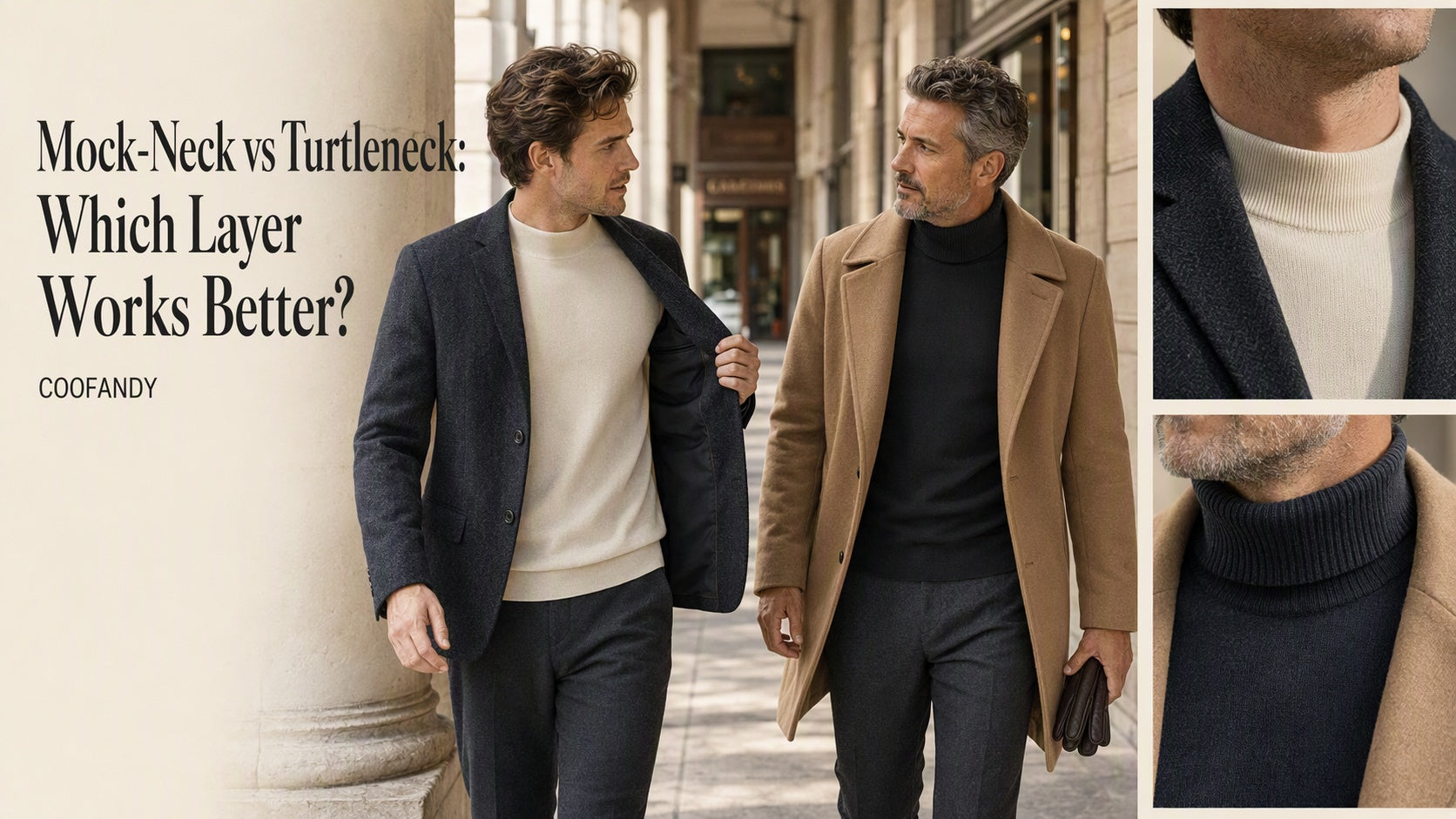
A mock neck and a turtleneck solve different collar problems. A mock neck rises partway up the neck and usually leaves a shorter, cleaner edge. A turtleneck rises higher and creates a more continuous vertical line. Choose between them by the space under your jacket, the amount of neck coverage you want, the formality of the setting and whether the top must stand on its own. Neck height is a style and coverage signal; it is not a guarantee of warmth.
TL;DR
- Choose a mock neck when a shorter collar will sit more easily under a trim jacket.
- Choose a turtleneck when you want a stronger vertical line and more visible neck coverage.
- Check the actual collar, lapel and shoulder space together; a neckline that looks good alone can crowd a jacket.
- Judge warmth by the garment's documented material and weight, not by the word “turtleneck” or “thermal” in a name.
The Difference in One View
The distinction is collar height. A mock neck stops below a traditional turtleneck height, so less fabric rises toward the jaw. A turtleneck extends higher and may fold or sit close to the neck. Both can be slim or relaxed, and neither automatically makes an outfit formal.
| Use case | Fit check | Layering job | Weather cue |
|---|---|---|---|
| Trim blazer or light jacket | Collar clears the lapel without pushing into it | Mock neck keeps the neckline visually clean | Useful when you need a removable, lighter-feeling layer |
| Roomier blazer or coat | Turtleneck has space to rise without folding into the lapel | Higher collar becomes the visible focal line | Works for exposed neck coverage, subject to the garment's actual material and weight |
| Standalone top | Shoulder and hem balance the higher neckline | Either collar can anchor simple trousers | Choose by the documented garment details and the day's conditions, not the neckline alone |
Step 1: Identify the Collar You Can Actually Wear

Put the jacket on before you decide. Close it, turn your head and raise both arms. A mock neck should keep a clean edge without disappearing into the lapel. A turtleneck should rise without folding into a thick ridge or forcing the lapel away from the chest. If the collar presses when you look down, the jacket and neckline are a poor pair even if each piece looks good separately.
Then check your base layer. A mock neck over a thin tee can look intentional when collar space remains. A turtleneck usually needs a flatter base so the neck does not collect competing edges. Avoid a shirt collar underneath unless the extra height is deliberate and comfortable.
Step 2: Separate Coverage From Warmth

More neck fabric changes the amount of skin covered and the strength of the vertical line. It does not prove a warmer garment. Warmth depends on the actual material, thickness, construction, fit and the air between layers. For that reason, use “coverage” when comparing the necklines and reserve “warmth” for information the product page explicitly documents.
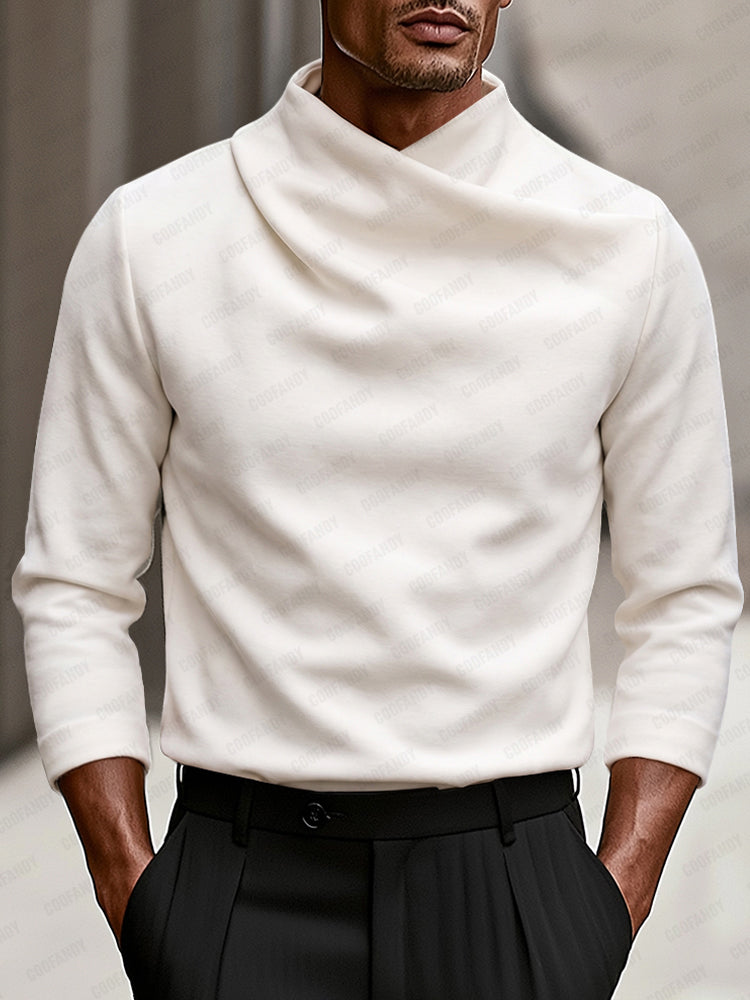
The Modern Stretch Crossover Mock Neck Top is a casual mock-neck option made from 92% polyester and 8% spandex. That composition alone cannot tell you how warm it will feel or how it will fit under your jacket. For a turtleneck example, see the Slim Fit Turtleneck Twisted Knitted Pullover Sweater (US Only) ,whose product description identifies a turtleneck design. A product name is not a warmth rating; check the fabric and how the knit layers under your jacket before choosing it for the weather.
Step 3: Choose by Formality and Visual Line

Formality comes from the complete outfit. A mock neck can read polished under a simple blazer when collar and shoulder are clean. A turtleneck can look refined under a tailored jacket, but a thick fold or crowded lapel can make it look heavy. Either neckline benefits from a simple lower half.
Use a turtleneck when the uninterrupted line helps the outfit: a quiet jacket, clean trousers and one restrained accessory. Use a mock neck when you want a shorter break at the neck or when the jacket already supplies a strong lapel. If the outfit has a bold jacket texture, the shorter collar often keeps the face area calmer. These are styling decisions, not claims about a product's performance.
Step 4: Run the Four-Movement Test
- Close the jacket. Check that the lapel and collar keep their intended shape.
- Turn and look down. The neck should not press, fold sharply or leave an uncomfortable gap.
- Reach forward. Watch the shoulder and sleeve; a tight collar often becomes more obvious when the jacket moves.
- Remove the jacket. Make sure the neckline and hem still look complete on their own. If the top only works while covered, choose a simpler base or a different collar.
When Each Layer Works Best
Under a Trim Blazer
A mock neck is usually easier when the lapel sits close to the neck. Keep the rest of the outfit quiet so the shorter collar looks intentional. A common failure is a collar edge disappearing under the lapel on one side; adjust the garment or choose a roomier jacket before adding accessories.
Under a Roomier Jacket or Coat
A turtleneck can become the visual column, provided the neck has room to rise and the shoulder is not compressed. Keep the jacket opening clean and avoid another high, bulky layer. If the lapel lifts or the folded collar dominates the face, switch to a mock neck rather than forcing the combination.
Worn Alone
Start with the neckline that matches the amount of visual attention you want. A mock neck can support a simple trouser and shoe combination without becoming the whole outfit. A turtleneck can carry more of the focal role, so reduce competing patterns and check the hem-to-trouser proportion. In either case, verify the product's actual material and weight before making a weather decision.
For a complete jacket proportion walkthrough, read Turtleneck Under a Blazer: The Complete Formula. For broader sweater choices, use Best Men's Sweaters for Fall and Winter: Choose by Use, Not Hype, and browse the men's blazer collection when the jacket is the limiting layer.
Frequently Asked Questions
Is a mock neck the same as a turtleneck?
No. A mock neck rises partway up the neck and usually ends at a shorter collar height. A turtleneck rises higher and may fold or sit closer to the jaw. The difference is visible coverage and collar behavior, not an automatic promise of warmth or formality. To choose, put the actual jacket on and check the space around the lapel. If a higher collar crowds the jacket, the shorter mock neck is the more useful option for that outfit.
Who should wear a mock neck?
Anyone who wants a shorter, cleaner neckline can try one, especially when a blazer or jacket has limited room near the lapel. The useful test is practical rather than based on a body-type rule: close the jacket, turn your head and reach forward. If the collar stays comfortable and visible without bunching, it is working. Choose a documented material and weight that suit the day; the neckline alone cannot determine warmth or performance.
What is the difference between a mock neck and a turtleneck?
The main difference is height and coverage. A mock neck leaves a shorter edge; a turtleneck creates a higher, more continuous line. A turtleneck can become the focal column under a roomier jacket, while a mock neck often keeps a trim blazer visually lighter. Neither category guarantees a particular level of warmth, stretch or comfort. Compare the actual garment details, then use the four-movement test before deciding which layer works in your outfit.
Related Reading
- Turtleneck Under a Blazer: The Complete Formula
- Best Men's Sweaters for Fall and Winter: Choose by Use, Not Hype
- How to Layer a Sweater Over a Dress Shirt
About COOFANDY
Founded in 2015, COOFANDY is a menswear brand created for modern men navigating work, weekends, celebrations, and everyday life. Its collection includes shirts, suits, pants, sweaters, and tees designed to help men build versatile, confident looks for different moments and personal styles. Guided by the belief that clothing can reflect confidence and character, COOFANDY focuses on making approachable menswear part of every stage of life.

Dejar un comentario