









What a Back Pleat Does in a Mens Shirt
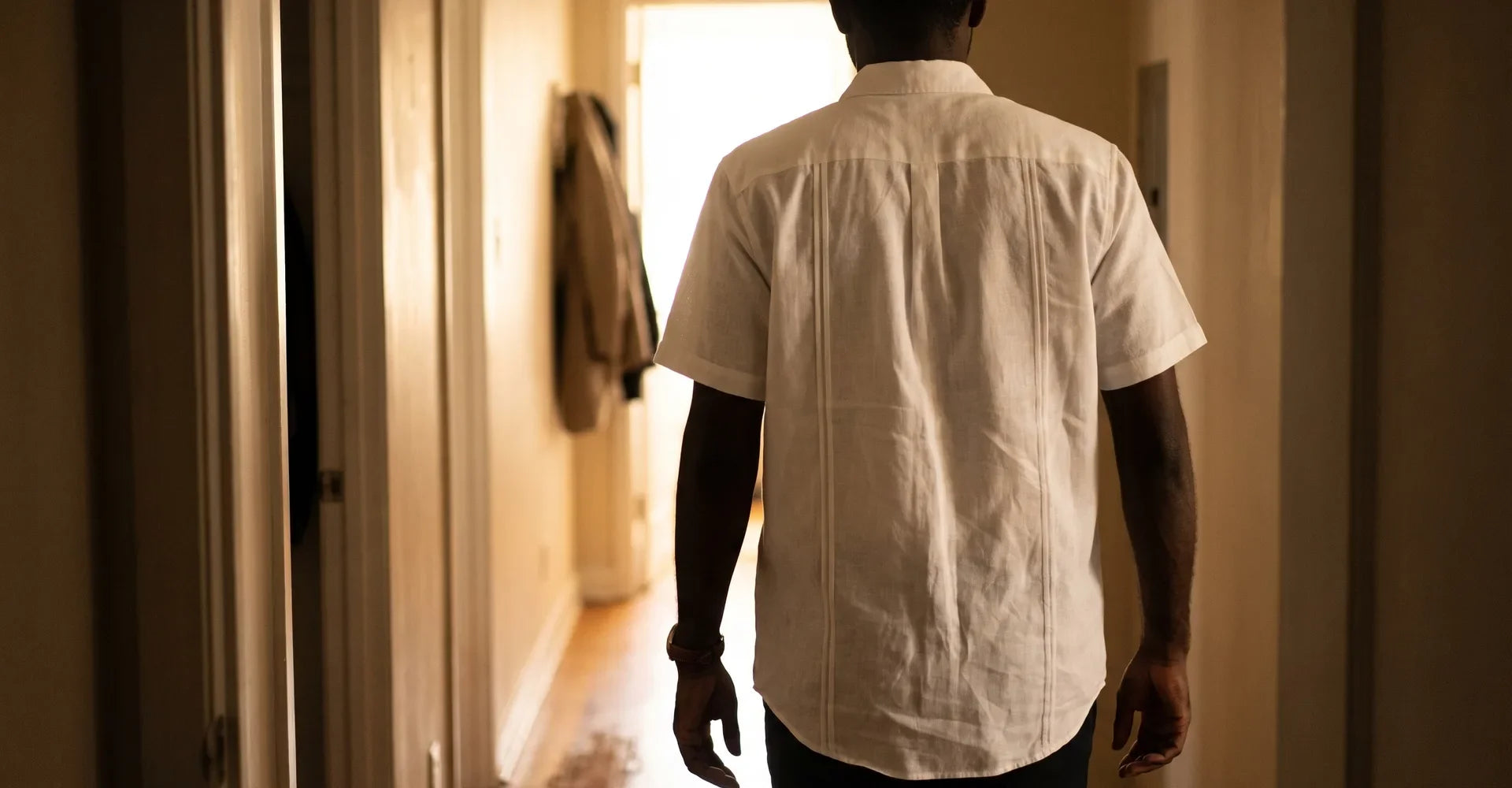
A back pleat is a fold of extra fabric, usually just below the panel across a shirt's shoulders. That folded fabric can provide room across the upper back as you reach forward. It is not the same as stretchy fabric, and its presence does not tell you whether the whole shirt fits.
When you compare shirts, look at the back construction, then try the movements you expect from your day. A useful pleat should work with the shirt's cut, not persuade you to overlook a tight chest or an uncomfortable shoulder. Here is how to read that detail without making it a shortcut for quality or size.
What a Back Pleat Adds
Turn the shirt around and find the yoke: the panel across the upper back and shoulders. A pleat below it folds some of the back fabric together instead of leaving the entire panel flat. Look for a deliberate fold attached at the top, not just a crease left by storage.
The useful distinction is between extra cloth and elastic stretch. A pleat provides folded fullness; whether the fabric itself stretches is a separate question. Do not infer a stretch fiber, a particular fabric composition, or a measurable range of movement from a back photograph.
Think of the pleat as one part of the shirt's shape. During a try-on, watch what the fold does when you bring your arms forward, then lower them again. Does the back still feel easy? Does the cloth settle in a way you like? Those observations are more useful than assuming every visible pleat provides the same amount of room.

Box Pleats, Side Pleats and Plain Backs
The three back treatments below describe where folds appear. They do not rank shirts from basic to premium, and they are not interchangeable with labels such as slim, regular, or relaxed fit.
| Back treatment | What to look for | What to compare during a try-on |
|---|---|---|
| Center box pleat | A box-shaped arrangement of folds below the middle of the yoke | Whether the central fullness moves and settles as you want |
| Side pleats | Folds positioned toward the sides below the yoke, near the shoulder blades | Whether the upper back feels easy when your arms come forward |
| Plain back | No added back pleats | Whether the shirt's overall cut gives you enough room without them |
Choose the appearance you prefer only after checking movement. If you like an uninterrupted back, try a plain-back shirt; do not reject it simply because it lacks a pleat. If you like a visible central fold, compare a box-pleated shirt in the same way. Neither choice relieves you of checking the front and shoulders.
Keep the comparison fair. Wear the same undershirt and use your intended tuck. Two shirts with different cuts cannot tell you that one pleat type alone caused the better result. Write down which complete shirt works, rather than turning a successful try-on into a rule about every shirt with that detail.
Back Pleats Are Not Darts
A pleat supplies folded fullness. A dart is a stitched shaping detail. Both can appear as vertical features on the back, but they serve different purposes; a line in a photograph is not enough to identify either one confidently.
Check the construction close up. Is there an actual fold below the yoke? Is the visible line stitching used to shape the back? If the detail remains unclear, ask for a closer rear view or a description of the construction. Do not treat a center seam in a split yoke as a back pleat: that seam joins the two parts of the upper panel.
The difference matters when deciding what you want changed. Before asking to make a shirt narrower, show the tailor where you see surplus cloth and where you need movement room. Ask what the proposed adjustment would change. "Make the back slimmer" is a less useful brief than explaining that you like the shoulders but dislike how the lower back looks when tucked.
Check the Shirt While You Move
We recommend checking the shirt on its own before adding a jacket. This keeps the question focused on the shirt's back instead of the interaction between two layers. Button and tuck it as you intend to wear it, then work through three ordinary positions:

- Stand at rest. Let your arms hang naturally. Look at the back and front without pulling the hem into a more flattering position. Note any area that already feels tight.
- Reach forward. Reach as you would for a keyboard or something on a table, not through an exaggerated overhead stretch. Notice whether the upper back feels restricted and whether the fold changes. Stop if you feel pain or see obvious seam strain.
- Sit, then stand again. Sit normally, bring your arms forward once more, and return to a relaxed stance. Check whether you are satisfied with how the fabric settles.
Use the observations to choose your next comparison, not to diagnose a guaranteed cause. If the shirt looks acceptable at rest but feels restrictive during an ordinary reach, compare another cut. If the front buttons are already pulling at rest, do not use the back pleat as evidence that the shirt is roomy enough overall.
If movement feels easy but you dislike the amount of cloth at the back, compare a different cut or back treatment. Avoid sewing the pleat closed as your first experiment. First establish whether you can get the appearance you want in another shirt without sacrificing the movement you just checked.
Read the Back View Before Buying
A rear photograph can help you identify a visible fold and its position. It cannot show how that shirt feels on you. A styled image is also not a measurement of usable room or proof that a pleat opens freely throughout an ordinary movement.
Before choosing online, look for a clear back view, the relevant size information, and a description of the back detail. If an important detail is missing, ask a specific question: "Does the back have a center box pleat, side pleats, or no pleats?" Ask whether the measurements provided are for the body or the finished shirt before comparing them with a shirt you already own.
That attention to construction fits the focus of COOFANDY Signature, our premium menswear collection, with its design focus on fabric, fit, and finishing details. As you explore the Signature collection, use the same questions: what detail can you actually see, what information is listed, and what still needs a try-on? The collection name alone cannot establish a particular shirt's back construction or fit on you.
Pressing and Alterations
Before pressing, read the garment's care label. Do not choose an iron temperature or washing method solely because the shirt has a pleat. Treat a deliberate fold as a construction detail to understand, rather than automatically flattening it as an unwanted wrinkle.

For an alteration, take the actual shirt to a tailor and demonstrate the movement you want to preserve. Ask how the proposed change would affect the back before approving it. A neat-looking back at rest is only part of your decision; the shirt also needs to work when you sit and reach. Choose the complete fit you prefer, not the feature with the most impressive name.
FAQ
Does a shirt need a back pleat?
No. A plain-back shirt may give you the room you need through its overall cut. Compare how the complete shirt looks and feels at rest, while reaching forward, and while seated rather than choosing on pleat presence alone.
Is a back pleat the same as stretch?
No. A pleat provides folded fabric, while stretch concerns the fabric itself. A visible back fold does not establish fiber content or how much the fabric stretches.
Can a back pleat fix a shirt that is too tight?
Do not rely on it to solve an overall fit problem. Check the front and shoulders as well as the back. If normal movement feels restrictive or the front pulls at rest, compare another size or cut instead of assuming the pleat makes the shirt suitable.

Dejar un comentario